Khajuraho: A Journey Through India’s Most Intricate Temples
The travelogue below narrates a round trip from Pune to Khajuraho by train during November of 2025. I dedicated two full days to exploring its legendary temple complexes built between the 9th and 11th centuries by the warrior kings of the Chandela dynasty. The temples of Khajuraho represent a perfect blend of spirituality, art, and engineering excellence
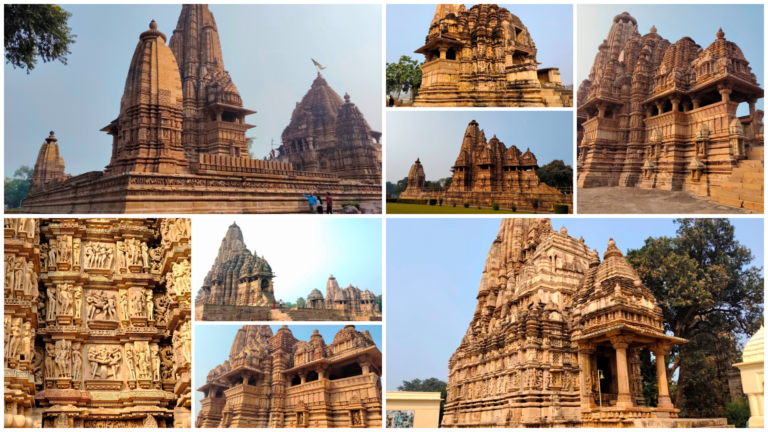
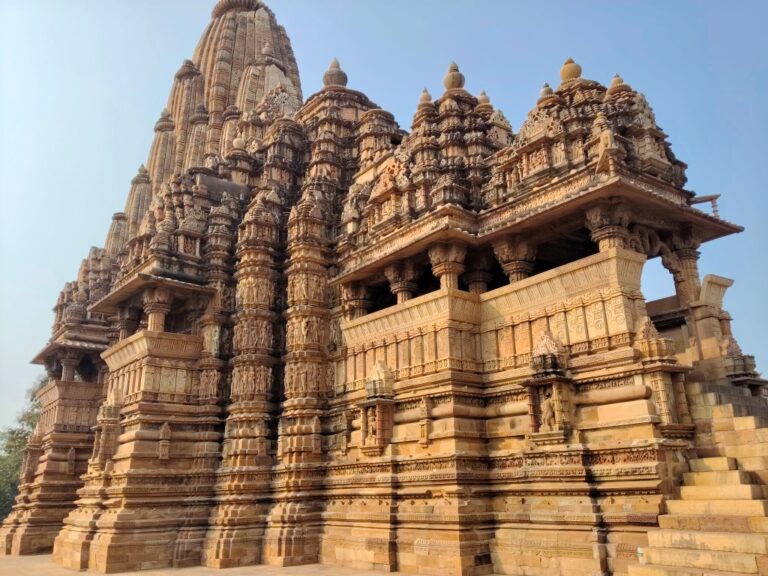
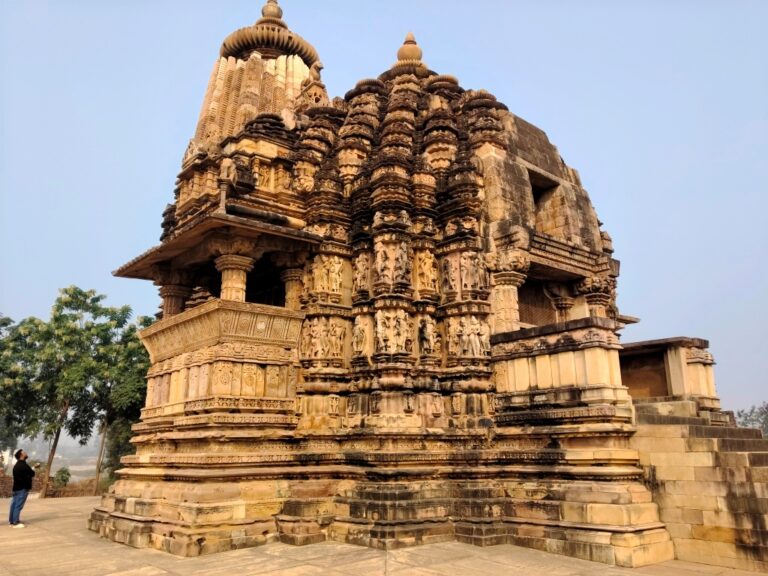
Khajuraho, after the Taj Mahal, ranks among the most frequently visited heritage destinations in India. This small temple town in Chhatarpur district of Madhya Pradesh stands as a remarkable example of Indo-Aryan (Nagara) temple architecture. Nestled amid the hillocks of the Vindhya Range and nourished by the Narmada and Chambal river systems, Khajuraho feels both timeless and serene. Although historical records suggest that 85 temples once stood here, only 25 temples survive today, preserved in varying degrees and celebrated worldwide for their exquisite sculptures and architectural brilliance.
History of Khajuraho: Myths, Kings, and Rediscovery
The roots of Khajuraho stretch back to the 9th century A.D., when the Chandela dynasty—descendants of the Moon-born ‘Chandra Kula’—rose to power in central India.
Legend has it that their founder, Chandravarman, was the son of Hemavati, a priest’s daughter from Kashi, and the Moon God himself. Hemavati, seeking solace after her divine encounter, settled in the lush gardens of Khajurvatika (now Khajuraho). Chandravarman grew up to become a mighty ruler, honoring his mother’s wish to build eighty-five temples and lakes in the region. So goes the enchanting tale, still recited during the light and sound show at Khajuraho.
History, however, tells a more grounded story: the Chandelas were once feudatories of the Pratiharas and claimed independence as the empire declined. Over time, Khajuraho slipped into obscurity, overtaken by jungle, until its rediscovery in 1838 by British Captain T.S. Burt revealed its extraordinary treasures to the world.
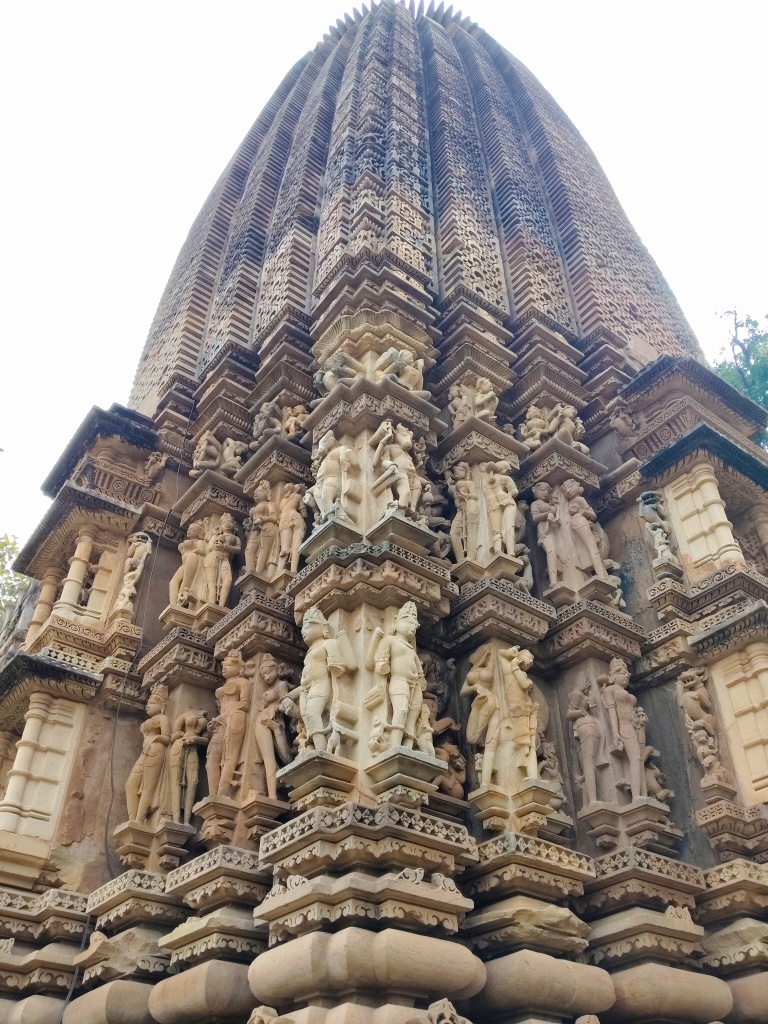
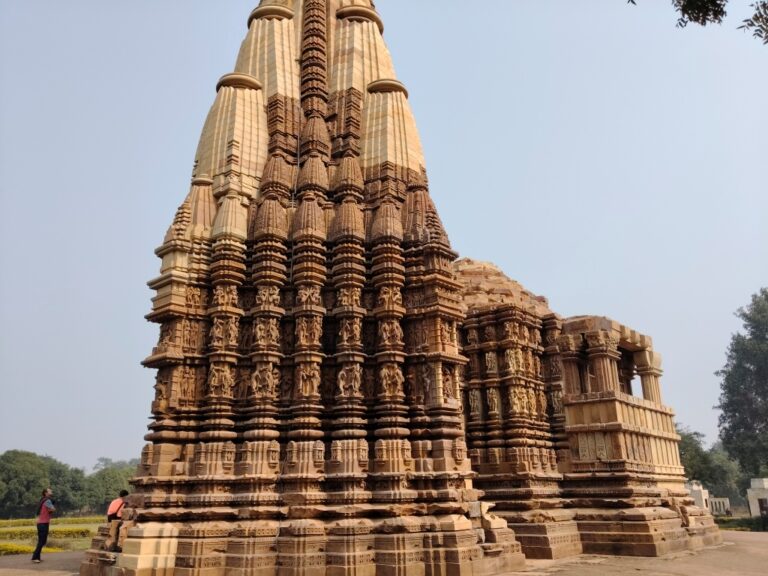
Architecture of Khajuraho Temples: Nagara Style at Its Finest
The temples were built using fine-grained sandstone in pale yellow and pink hues, quarried from Panna, located on the eastern bank of the Ken River. Artisans carved massive stone blocks near the quarries and transported them to the site, where they assembled the structures using an interlocking mechanism.
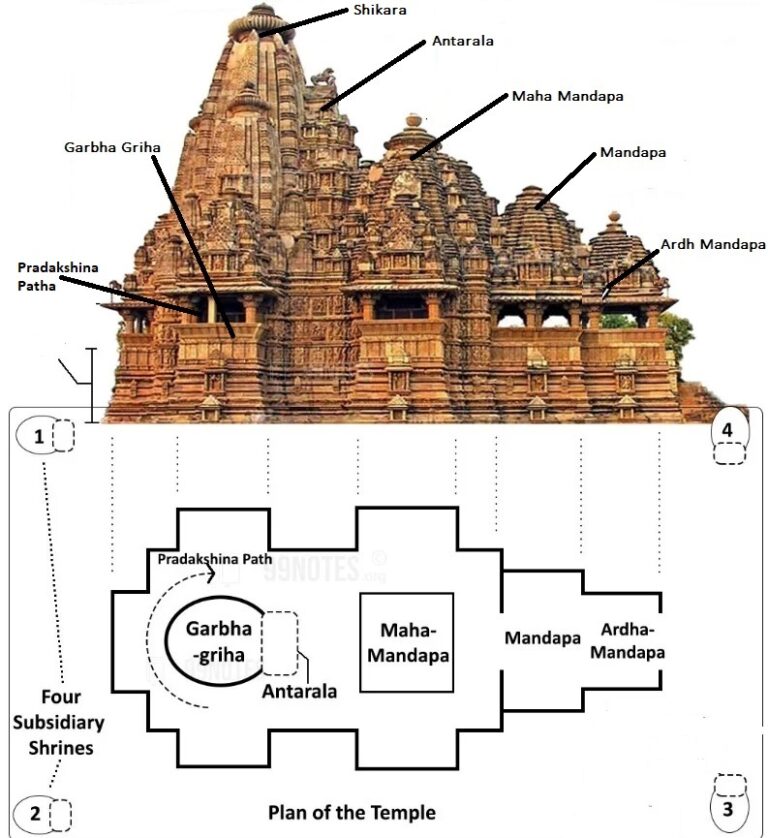
Most Khajuraho temples follow a standardized five-part plan:
- Ardha Mandapa – Entrance porch
- Mandapa – Assembly hall
- Maha Mandapa – Larger Assembly hall
- Antarala – Vestibule
- Garbhagriha – Sanctum sanctorum
- Pradakshina Patha – (circumambulatory passage) often surrounds the sanctum. Each section features its own intricately decorated roof. This is absent in some of the smaller temples
Almost all of the temples have 4 subsidiary smaller temples on the corners of the platform.
Theories behind the Erotic Sculptures of Khajuraho
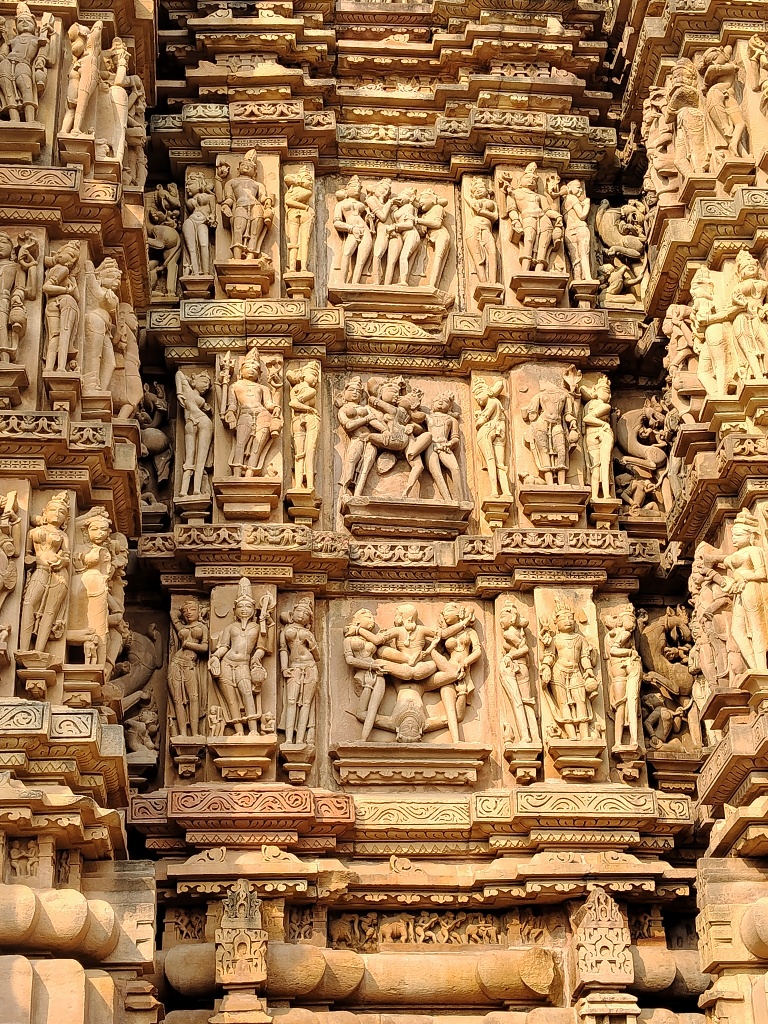
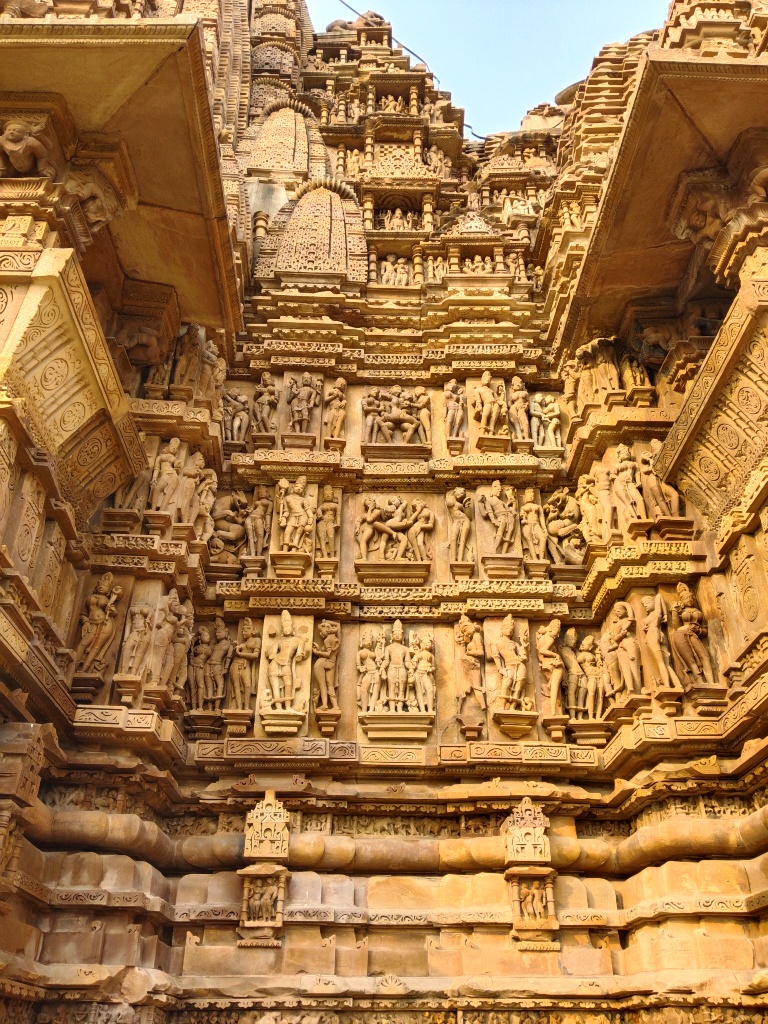
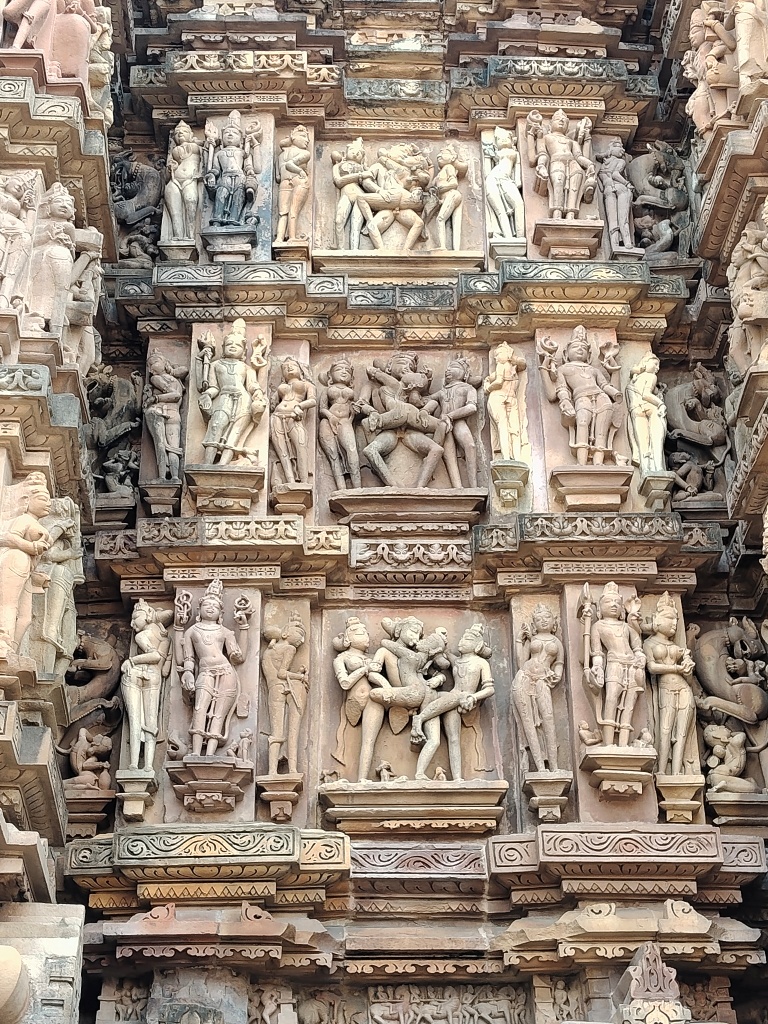
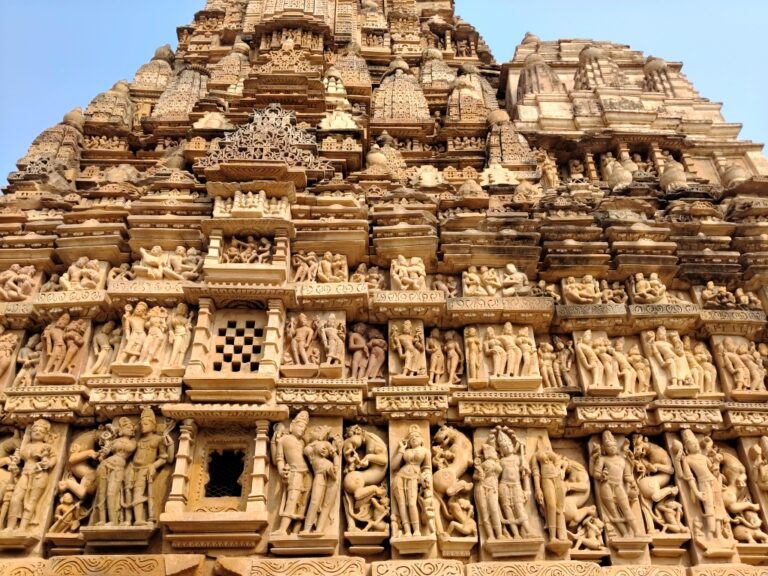
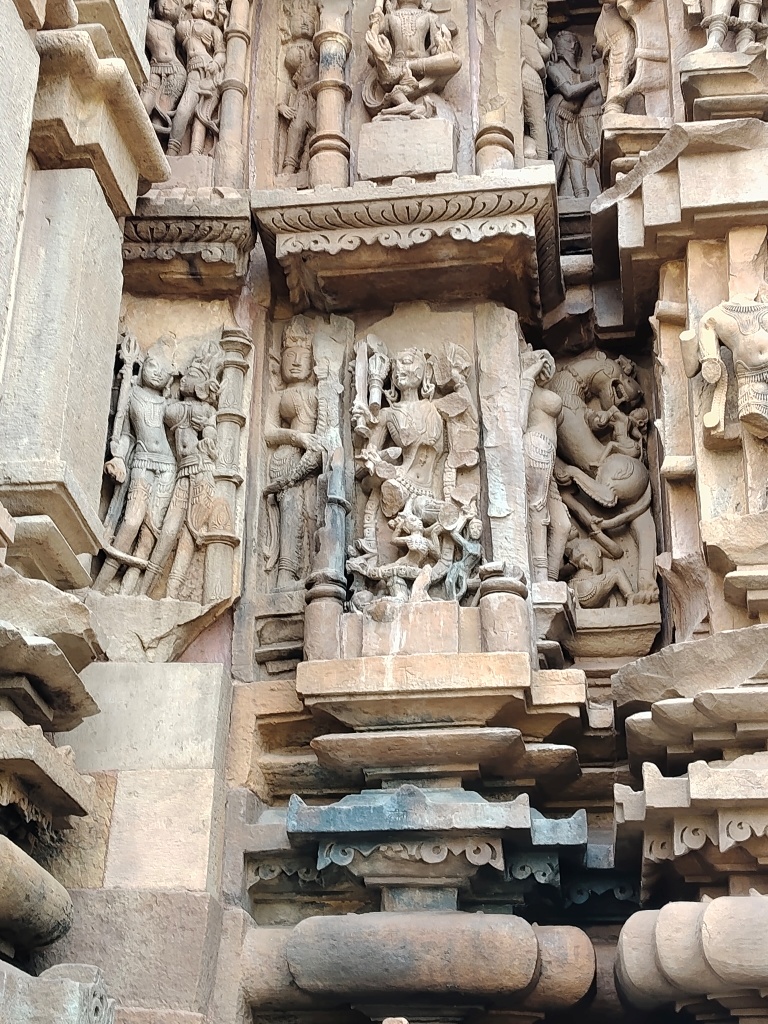
The erotic sculptures of Khajuraho remain one of the greatest enigmas in Indian temple architecture. These carvings instantly attract attention and provoke curiosity—especially because temples are traditionally associated with worship, discipline, and spiritual restraint. The natural question arises: why do such explicit images exist in a sacred space?
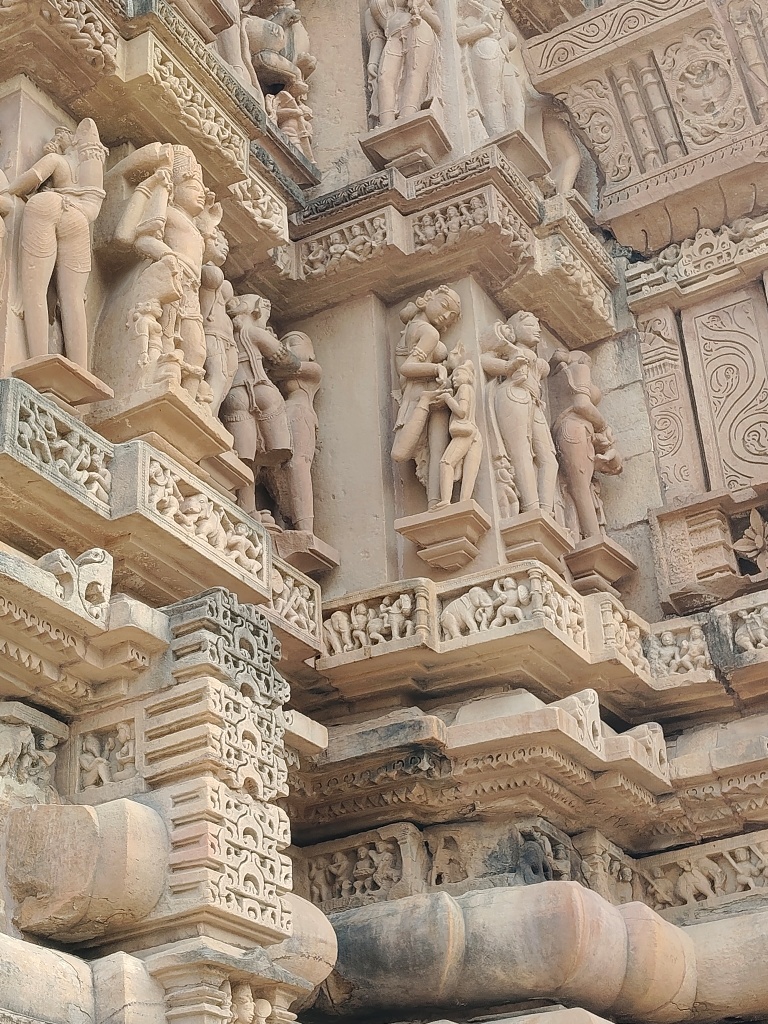
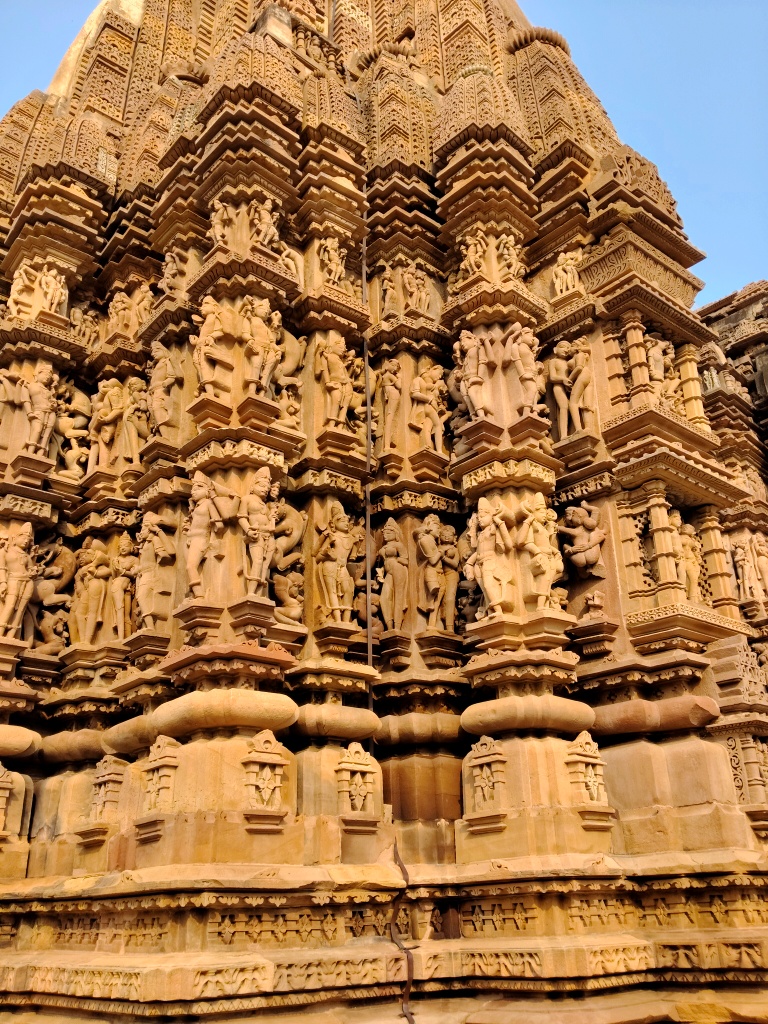
It is important to note that erotic sculptures account for barely 10% of the total carvings. Also, these figures appear only on the outer walls of the temples and are never found inside the sanctum, where the deity resides. There are 3 major theories to explain their purpose.
1. The Protective Barrier Theory
One theory suggests that temples, as abodes of divine power, naturally attract celestial beings such as Indra and Varuna, who are also associated with natural forces like rain, lightning, and storms. According to this belief, the presence of erotic imagery on the outer walls repelled these powerful beings, preventing destructive natural forces from affecting the sacred space. In this sense, the sculptures acted as a protective barrier, ensuring the sanctity and safety of the temple.
2. The Spiritual Test of Devotion Theory
Another widely accepted explanation views the erotic carvings as a test of the devotee’s spiritual maturity. As worshippers circumambulated the temple, they encountered these sensual images. A sincere devotee, having control over worldly desires, would remain unmoved and continue inward toward the sanctum. Those unable to overcome sensory distractions would turn back, failing to reach the deity. In this interpretation, spiritual elevation requires mastery over the senses.
3. The Social and Demographic Theory
A more realistic theory links the sculptures to the socio-political realities of medieval India. During an era of frequent warfare among kingdoms, rulers required larger populations to sustain their armies and kingdoms. Since temples served as major public gathering spaces, the sensual carvings may have subtly encouraged procreation among the populace. While this explanation is often presented humorously, it reflects an attempt to understand the sculptures within their historical context.
Khajuraho Itinerary & Travel Planning (From Pune)
If you truly want to experience Khajuraho’s wonders, you’ll need at least two days to soak in all its attractions—but with the long journey from Pune, I set aside five days in total for my adventure, allowing plenty of time for travel.
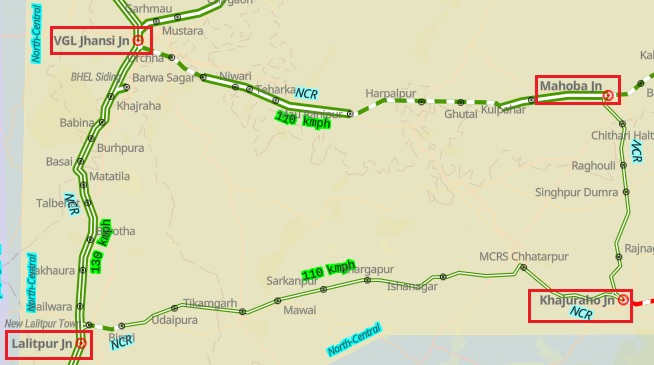
I visited Khajuraho in November, traveling solo by train from Pune, and dedicated two full days to exploring its legendary temple complexes.  Since, there’s no direct train linking Pune to Khajuraho, so I had to get creative. The most practical route is to reach Jhansi first, and then continue by road or rail into Khajuraho. For those traveling from Delhi, things are a bit easier: the Khajuraho Vande Bharat Express runs daily and is your best bet for a quick and comfortable journey. The train takes the Jhansi >> Lalitpur >> Khajuraho route.
Pune to Jhansi:Â From Pune, I had two direct trains to Jhansi:
- Goa Express – Departs 4:30 AM, reaches Jhansi at 11:00 AM the next day (19 hours)
- Jhelum Express – Departs 5:20 AM, arrives 1:50 PM the next day (21 hours)
Both options meant a long overnight ride and midday arrival — effectively consuming two days just in transit. I explored a Mumbai route for a faster connection. The Gorakhpur Special from Kalyan goes directly to Khajuraho, but ticket availability was a challenge, especially boarding from an intermediate station.
The winning combination turned out to be the below. This superfast connection cut several hours off the journey and offered a far more comfortable overnight ride.
- Pune → Kalyan via Chennai Express (12164). 11:45 AM departure, 2:17 PM arrival (2.5 Hours)
- Kalyan → Jhansi via Rajdhani Express (22221). 4:45 PM departure, 5:00 AM arrival (12 Hours)
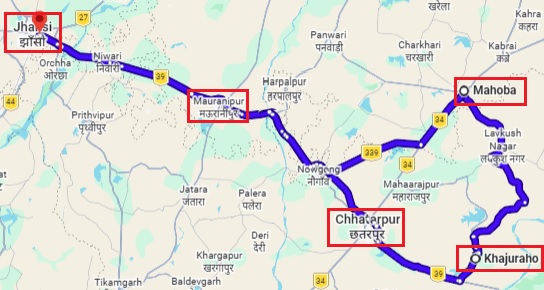
Jhansi to Khajuraho: From Jhansi, Khajuraho is about 170 km away. I had two options with their own Pros and Cons
- Road (Bus/Taxi):Â Pros: Fast – about 3 hours journey, frequent departures. Cons: Direct buses are less. Need to change from Mahoba or Chhatarpur.
- Train:Â Pros: Direct. Cons: Limited schedules, longer route, more time – about 4.5 hours
Although trains were available in the morning from Jhansi Station, they required waiting at the station for 3 hours. To save time, I chose the road route, reaching Khajuraho by bus.
Return Journey (Khajuraho to Pune): For the return journey to Pune, I had early morning train options from Khajuraho. Since I had spare time, I opted for train.
- Khajuraho → Jhansi via Khajuraho–Udaipur Express (19665)
- Jhansi → Pune via Hadapsar Special Fare Express (01924). Seasonal Train. Runs during festive season (eg- Diwali) only on specific day of week.
🚉 Day 1: Pune to Jhansi via Kalyan – A Smooth Start to the Journey
I began the journey on Chennai Express (12164), which departs Pune at 11:45 AM and arrives at Kalyan at 2:17 PM. I deliberately chose this train to maintain a comfortable buffer window before my connecting Rajdhani Express, knowing that long-distance trains often run late.
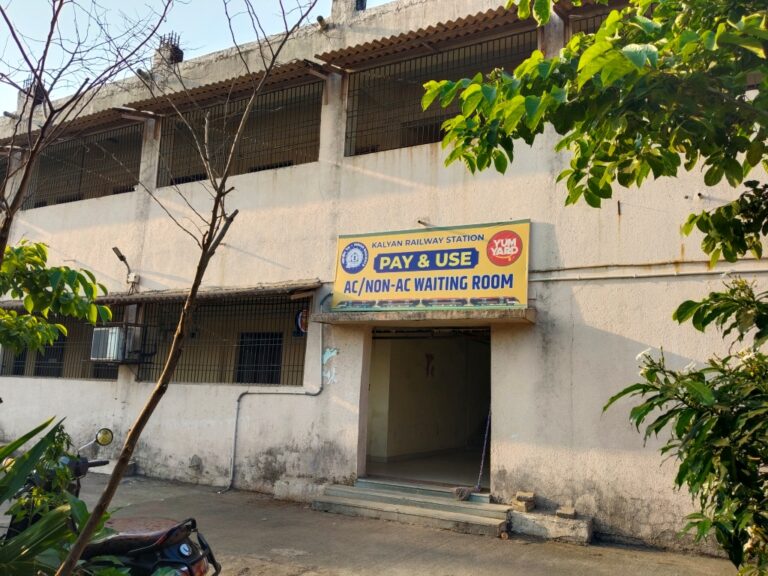
Chennai Express reached Pune about 15 minutes behind schedule—nothing unusual. By the time I arrived at Kalyan, the delay extended to around 30 minutes. Despite this, I still had 1 hour and 45 minutes in hand before my next train, which was more than sufficient. I spent the waiting time at the AC Waiting Room, located at the end of Platform No. 1. The facility was clean, well-maintained, and equipped with hygienic washrooms—ideal for freshening up before a long overnight journey.
Right on time at 4:45 PM, the Rajdhani Express (22221) rolled into the station. I had booked my favorite berth—a side lower. Apart from offering an excellent window view, it allows easy movement within the coach and feels far less confined than upper berths. Soon after departure, the train staff served evening snacks followed by dinner. With an early-morning arrival ahead, I turned in early. The gentle rhythm of the train and the anticipation of exploring Khajuraho helped me drift off quickly. I set my alarm for 4:30 AM, ready to wake up just before reaching Jhansi.
🛕 Day 2: Jhansi to Khajuraho – On the Road to Timeless Temples
The alarm rang sharply at 4:30 AM, pulling me out of a comfortable sleep. I freshened up quickly as the Rajdhani Express rolled into Jhansi right on time at 5:00 AM, reinforcing why it remains one of the most reliable long-distance trains in India.
November greeted me with a crisp early-morning chill. I slipped on my jacket and woolen cap before stepping out of the station into the still-sleeping city. I boarded a shared e-rickshaw to the new bus stand ( Mirjapur – Jhansi Hwy, Talpura). The 15-minute ride took me through empty roads, illuminated by streetlights, giving Jhansi a calm, almost cinematic feel. The ride cost me just ₹20. At the bus stand, I tried my luck searching for a direct bus to Khajuraho, but none were available at that hour. A quick conversation with a few bus drivers clarified my next move—travel to Chhatarpur first, then switch buses for Khajuraho.
Jhansi to Chhatarpur by Bus : Most buses operating on this route are privately run. They charge around ₹120 per seat till Chhatarpur, but patience is key—you have to wait until all seats fill up. Chhatarpur lies about 130 km from Jhansi, and the journey takes roughly 2 hours, including a 20-minute tea break at Mauranipur. By 9:00 AM, the bus dropped me at Chhatarpur Bus Depot.
Hunger kicked in immediately. Just outside the bus depot, a small food stall bustled with activity, rolling out hot, stuffed parathas priced at ₹30 each. Fresh, hot, and filling—they hit the spot perfectly on a chilled winter morning.
Change Bus from Chhatarpur to Khajuraho: Mini buses to Khajuraho depart every 30 minutes from Chhatarpur, so I didn’t have to wait long. Many passengers got down at Bageshwar Dham, a famous temple dedicated to Lord Hanuman. The temple is known for its self-manifested deity and is currently managed by Dhirendra Krishna Shastri Maharaj, whose online presence has drawn massive attention nationwide. En route, I also passed Khajuraho Airport—small but functional. Despite Khajuraho’s size, it enjoys daily flight connectivity to major North Indian cities like Delhi, Varanasi, and Mathura, reflecting its global tourism importance. By 11:00 AM, I was dropped at Khajuraho Bus Stand.
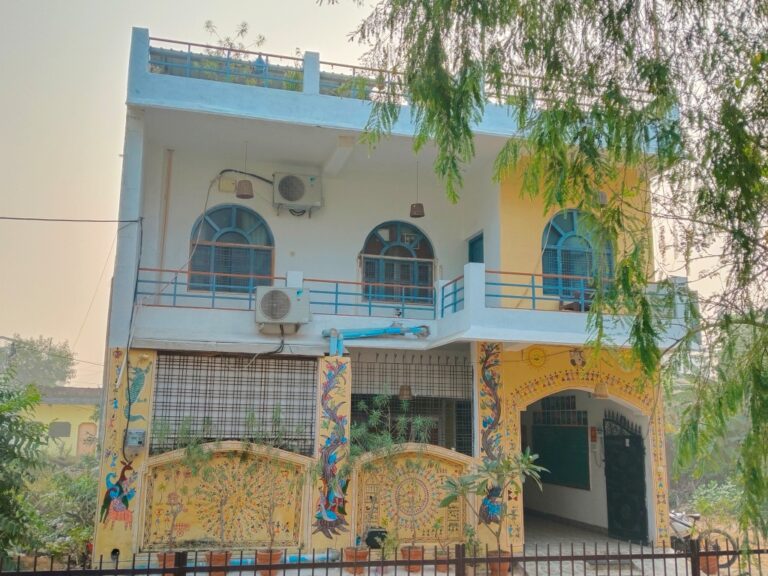
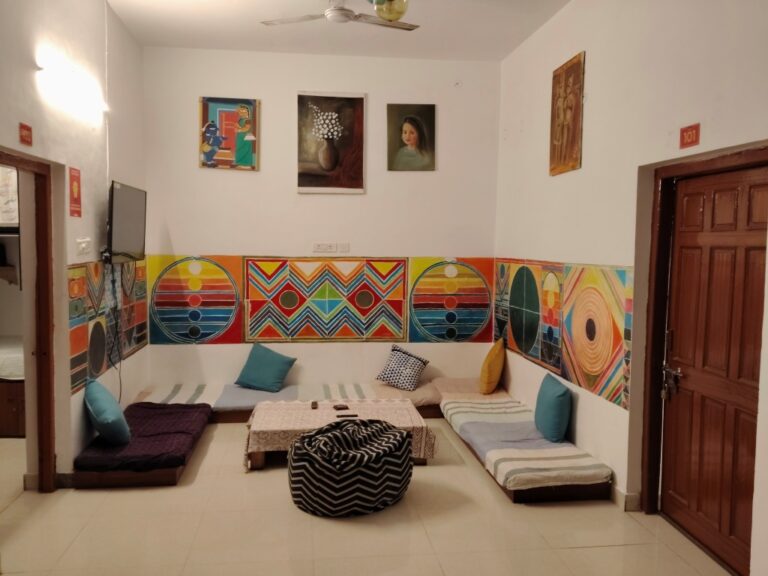
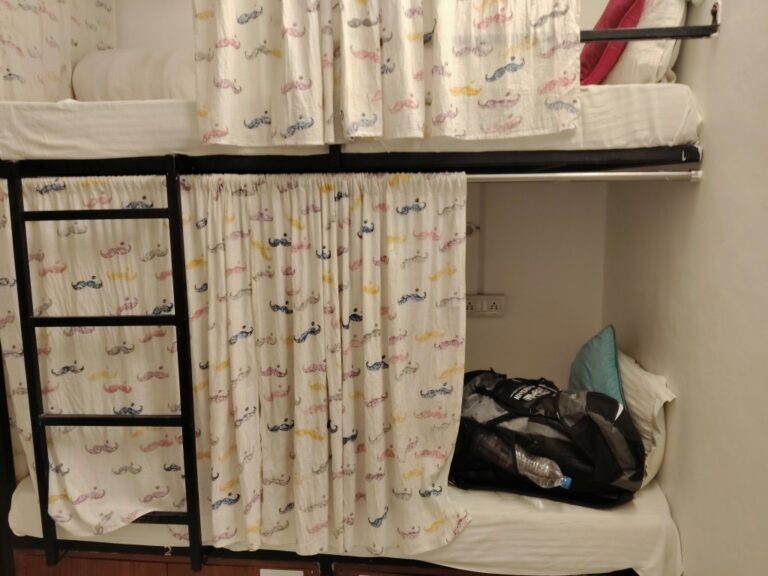
Check-in at Moustache Hostel, Khajuraho: Moustache Hostel is located about 800 meters from the bus stand—a comfortable 15-minute walk. However, a bit reluctant walking with a backpack, I happily accepted an e-rickshaw ride for ₹20. Check-in was smooth. I paid ₹700 for two nights in a shared dormitory and was shown to my bunk bed—my home for the next couple of days. After a quick shower and refreshment, I was ready to explore.
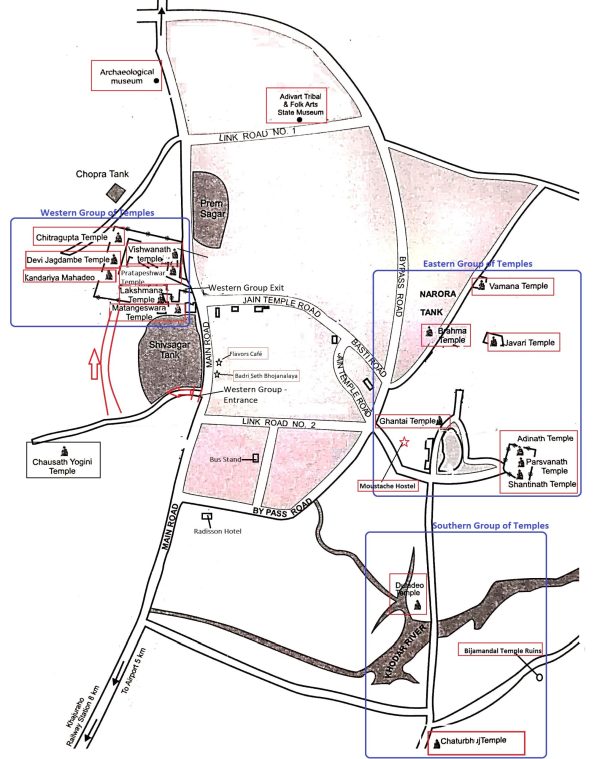
Renting a Cycle & Planning Temple Visits: Khajuraho’s temples are divided into three main groups – Western Group, Eastern Group and Southern Group. Although all temples lie within an 8 sq. km area, I didn’t want to exhaust myself by walking everywhere. The hostel offers scooters (₹500/day) and cycles (₹100/day) on rent. I chose a cycle, reliving memories of my college days cycling around Lucknow. Nostalgia won!!
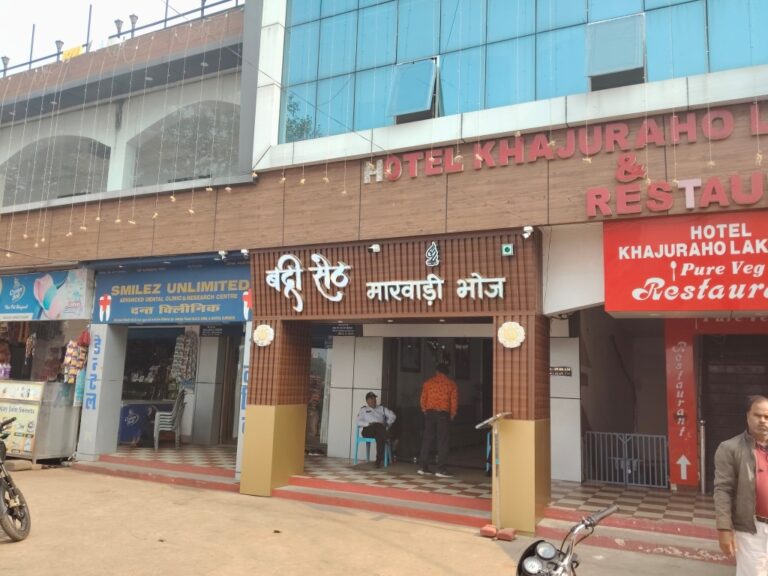
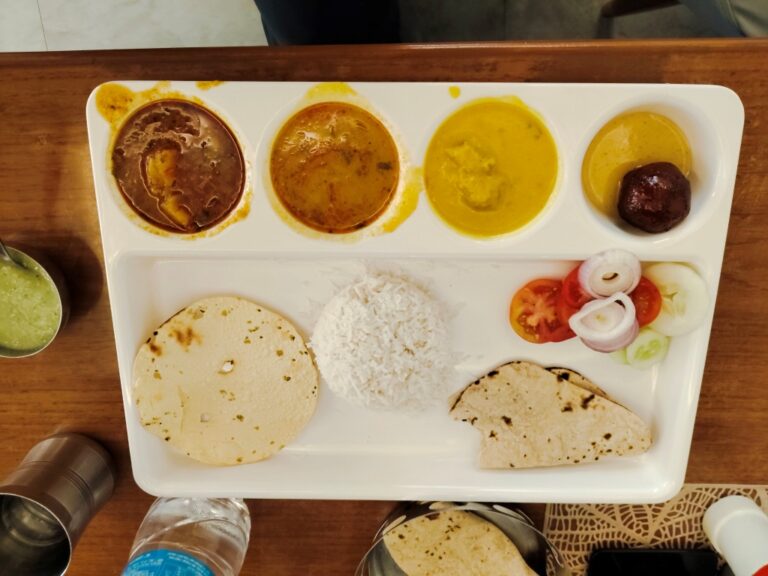
When I stepped out, it was noon, and the morning parathas were long gone from my stomach. A quick search led me to Badri Seth Bhojanalaya, a pure vegetarian restaurant located right opposite the Western Group of Temple’s entrance. The glowing online reviews were spot on. The restaurant impressed me with its clean ambience, warm service, and delicious food. I ordered a veg thali for ₹200, and it turned out to be so good that I returned here for dinner and lunch the next day as well. The restaurant also houses a small sweet shop serving freshly made sweets. I tried rasmalai which tasted amazing—don’t miss the sweet corner if you visit this restaurant.
Entering the Western Group of Temples
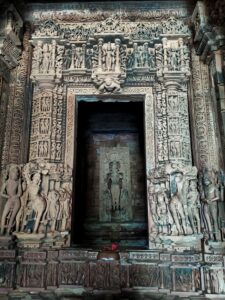
After lunch, I parked my cycle in the free parking area and purchased entry ticket online. The main entry gate of the Western Group is about 1 km away. If you don’t feel like walking, the tourism department operates electric autos that ferry visitors for just ₹5 per person. I decided to walk and before entering the main cluster, visited the Chausath-Yogini Temple, a hidden gem that’s slightly off from the Western Group of Temples.
1. Chausath Yogini Temple (Late 9th Century)
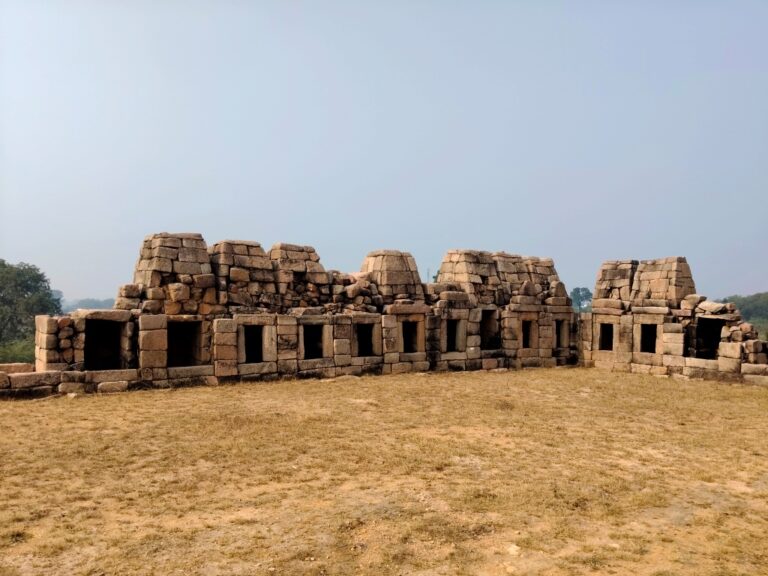
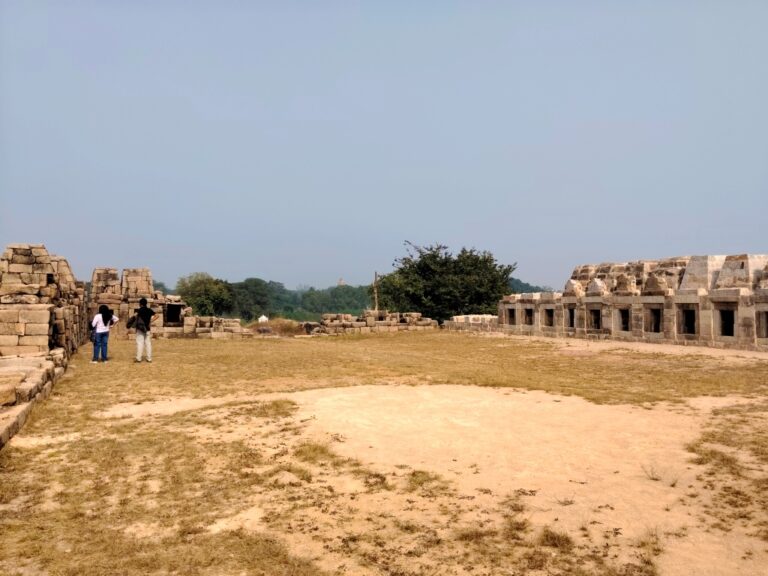
Standing as one of the oldest shrines in the area, dating back to 885 AD. Unlike other circular yogini temples, the one in Khajuraho is rectangular and dotted with a series of small, individual cells, each entered through a tiny doorway and capped with a simple curvilinear sikhara. The largest shrine, facing the entrance, serves as the main sanctum, quietly commanding attention amidst the weathered stones. It was a serene place to begin my exploration, steeped in antiquity and mystery.
2. Lakshmana Temple (AD 930-950)
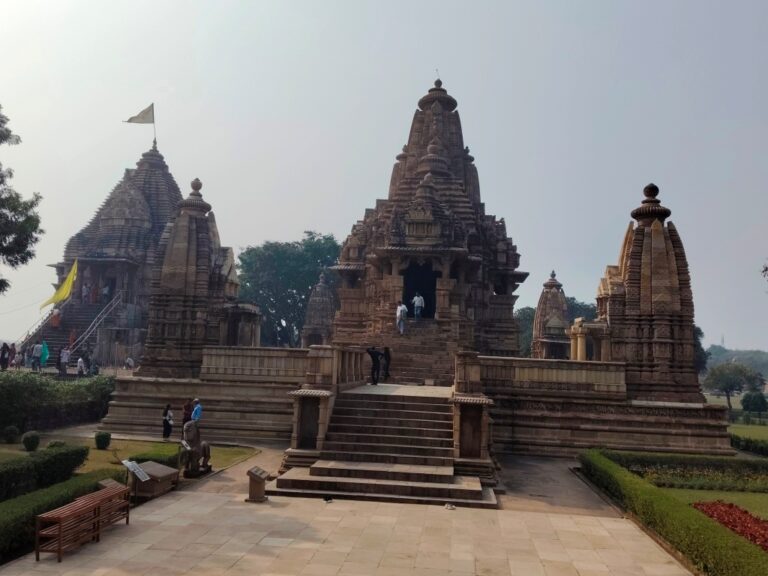
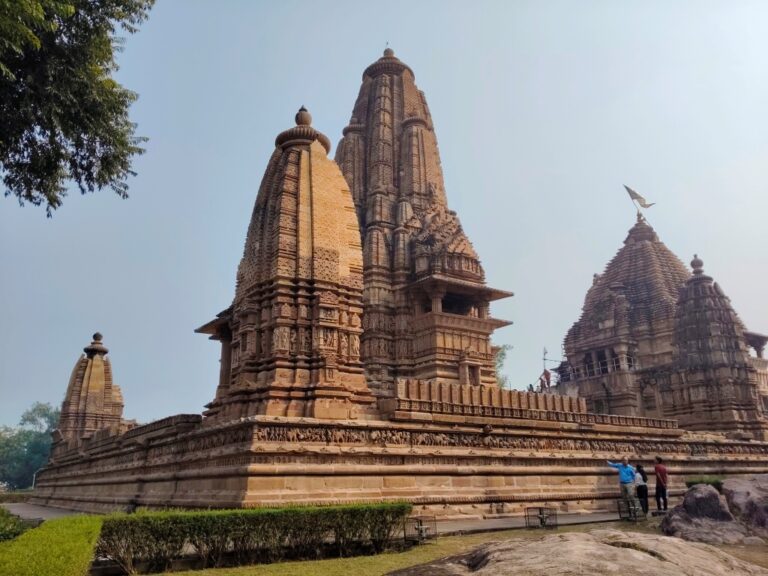
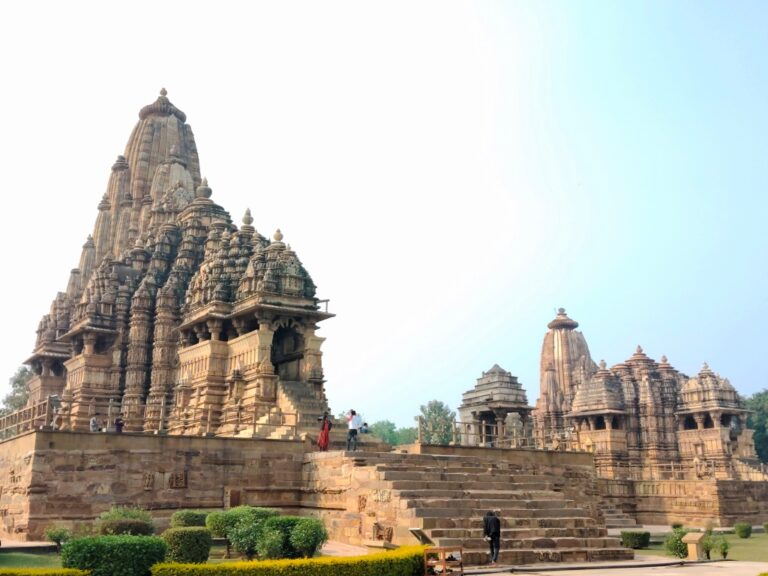
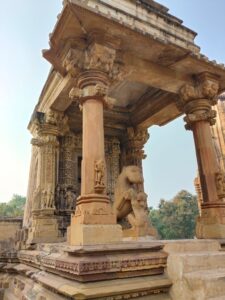
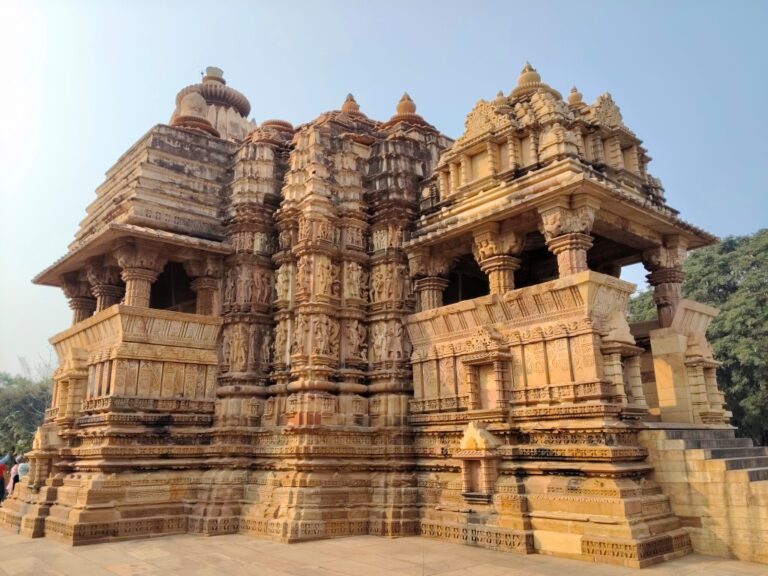
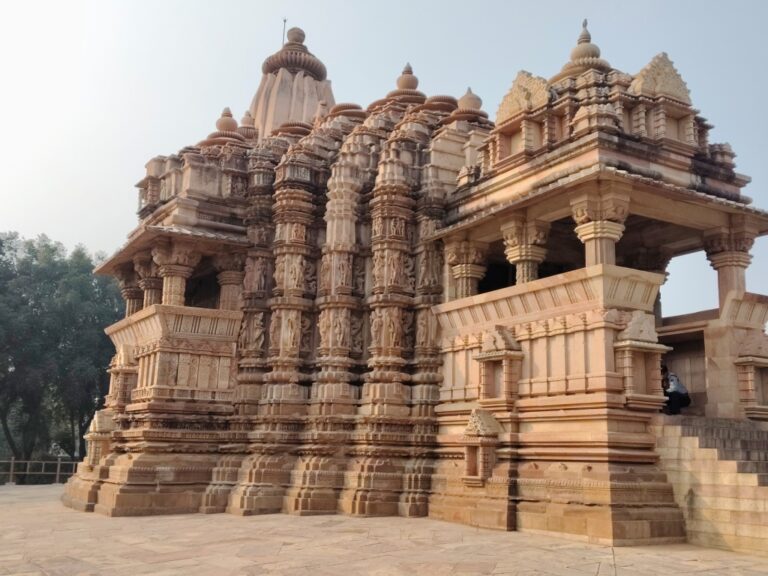
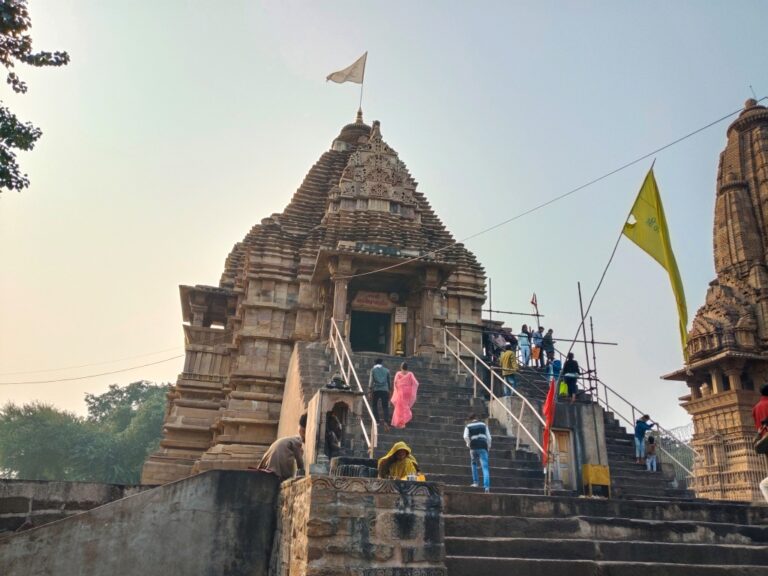
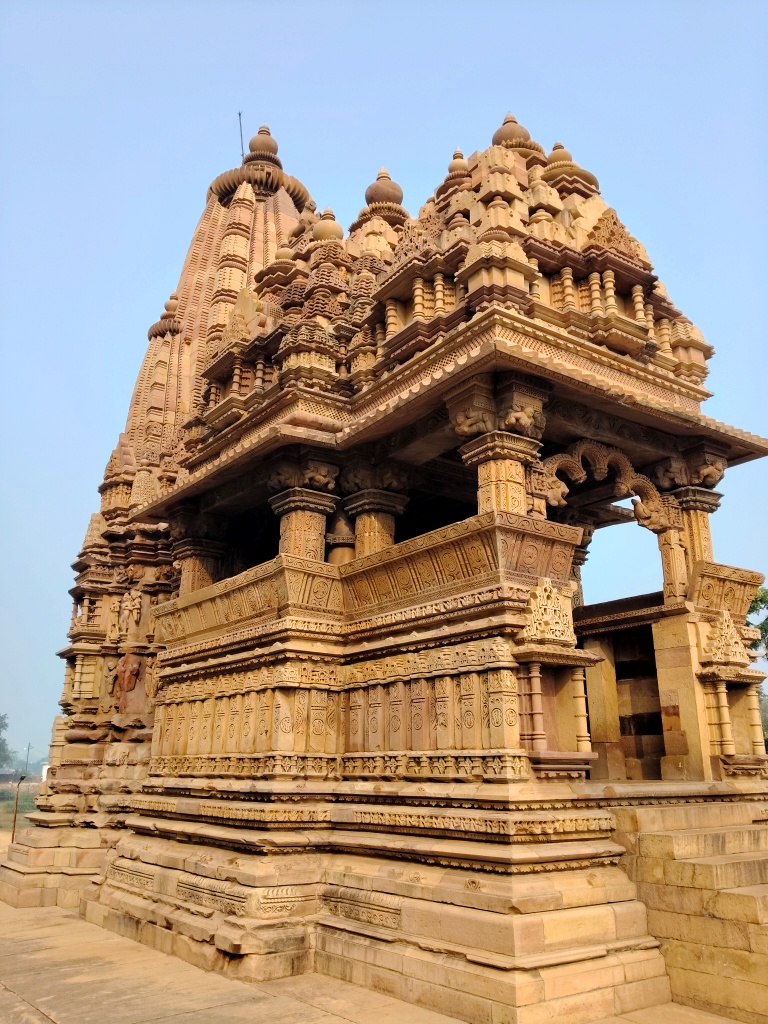
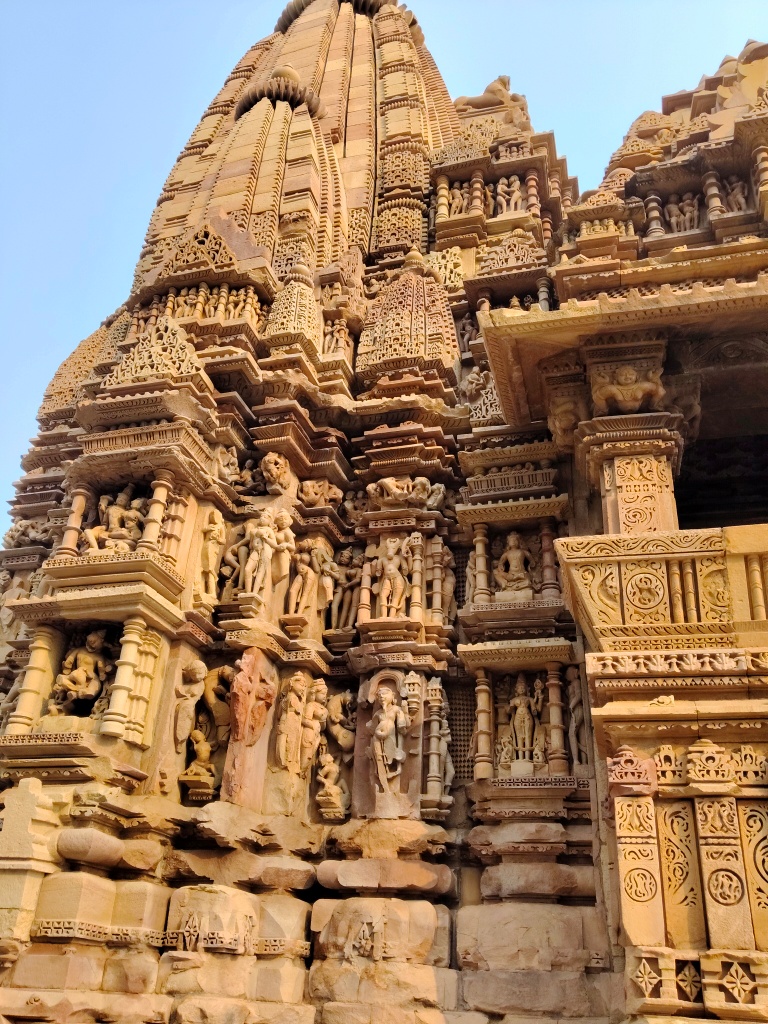
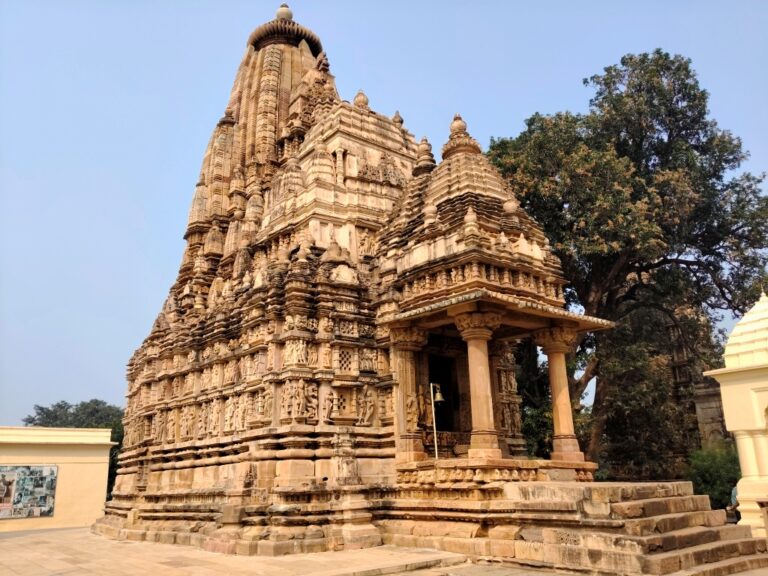
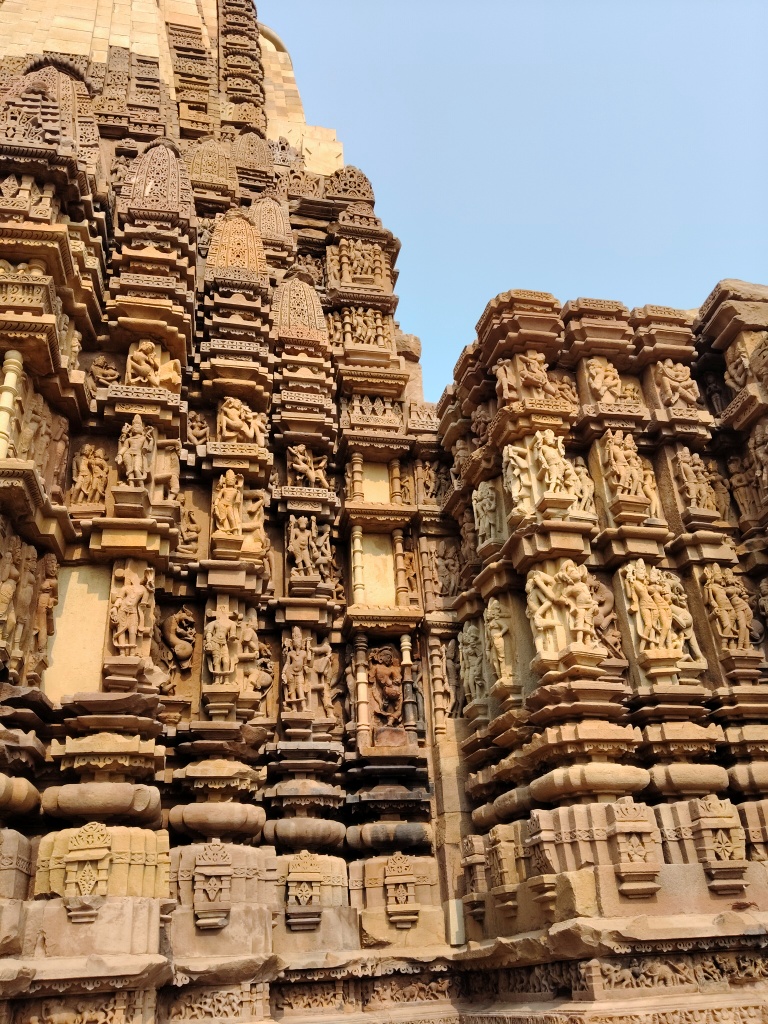
A quick walk from Chausath Yogini Temple made me to enter the main complex of Western Group of Temples. Entering the main complex, the first structure that caught my eye on the right was the majestic Lakshmana Temple, nestled at the heart of a vibrant cluster near Shiv Sagar lake. Attributed to King Yasoverman and dedicated to the enigmatic triple-headed, four-armed Vaikuntha form of Vishnu, the temple stands as one of the earliest and best-preserved Chandella monuments. Built on a high terrace, the main temple is flanked by four simpler subsidiary shrines. As I wandered, I marveled at the abundance of carvings—majestic animals, fierce battles, lively dancers, musicians, and even intimate scenes, all etched into the stone.
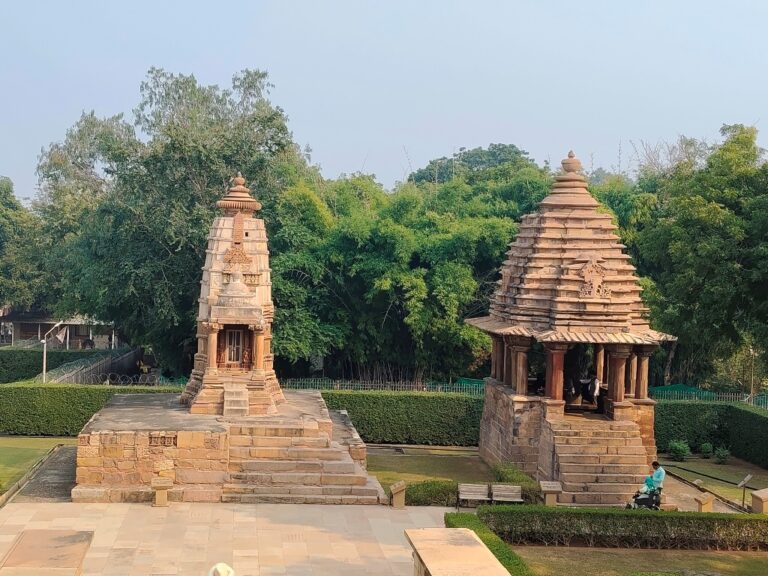
3. Laxmi and Varaha Temples (AD 900-925)
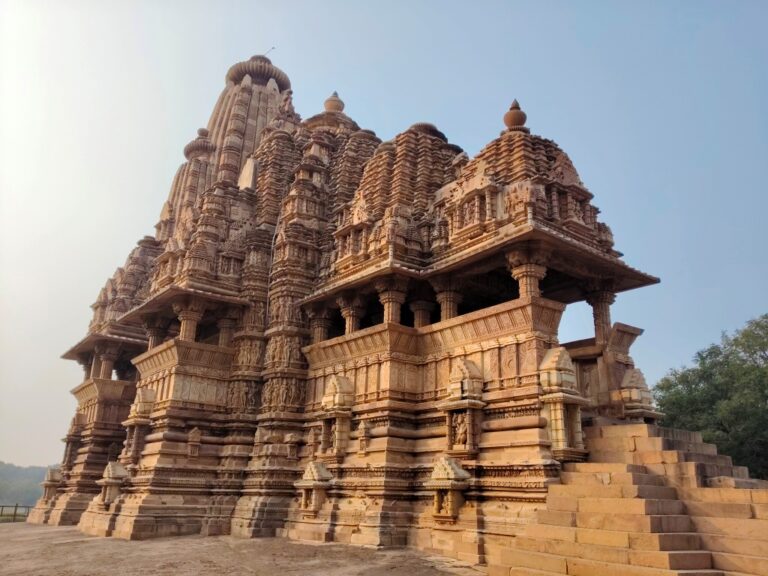
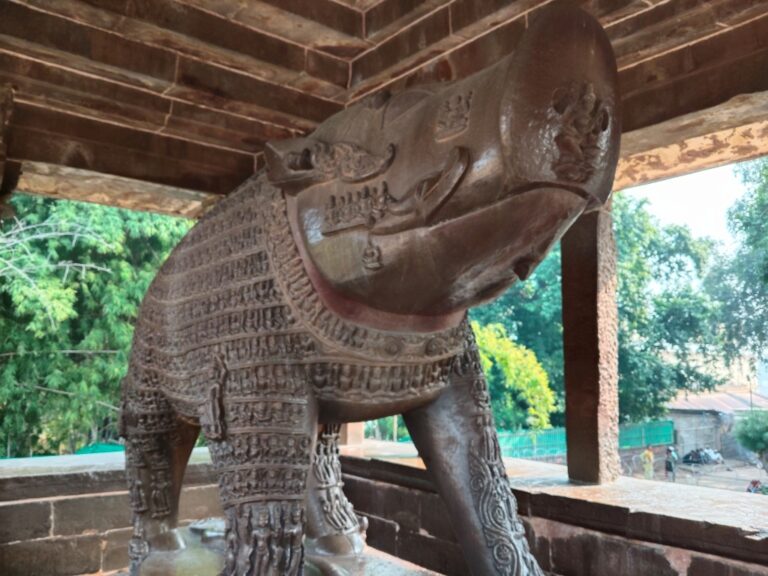
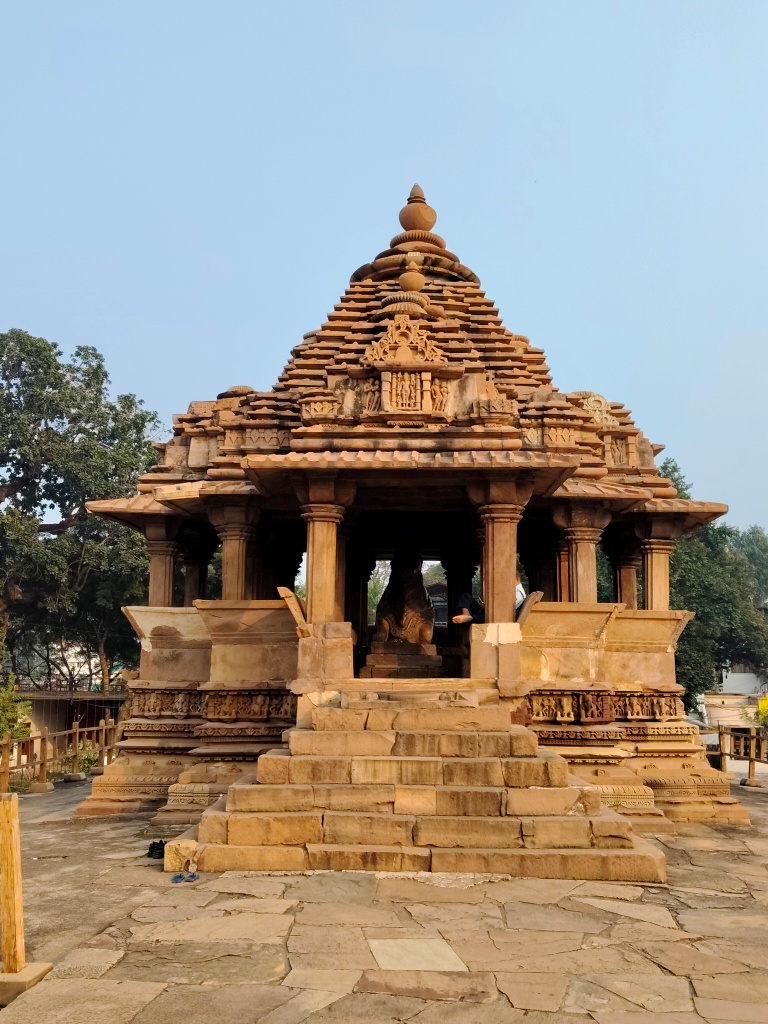
Directly opposite the Lakshmana Temple stood the modest Laxmi Temple and the remarkable Varaha Temple, both among the oldest in the compound. The Varaha Temple, with its oblong pavilion resting on fourteen pillars, immediately drew me in. Inside was a massive, highly polished sandstone boar—Varaha, Vishnu’s third avatar—measuring over 2.5 meters long and exquisitely carved with 675 tiny figures in twelve rows, each representing a different deity. The ceiling overhead was delicately etched with a lotus flower, making this temple a quiet but profound testament to ancient craftsmanship.
4. Kandariya Mahadeva Temple (c. 1025-50)
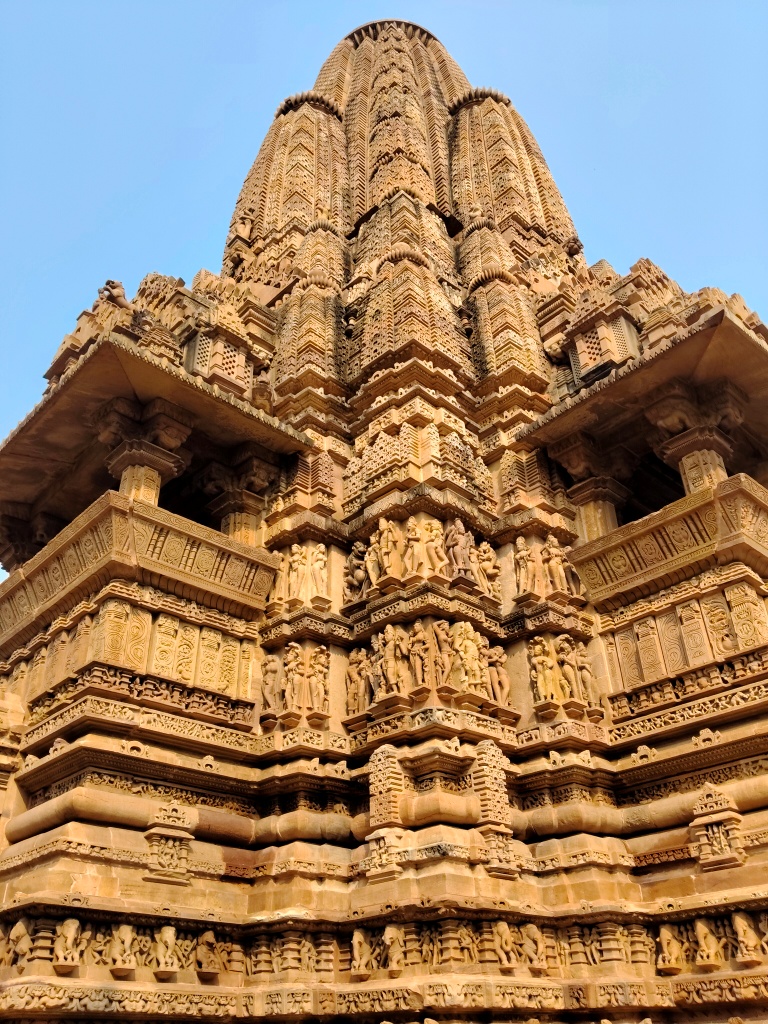
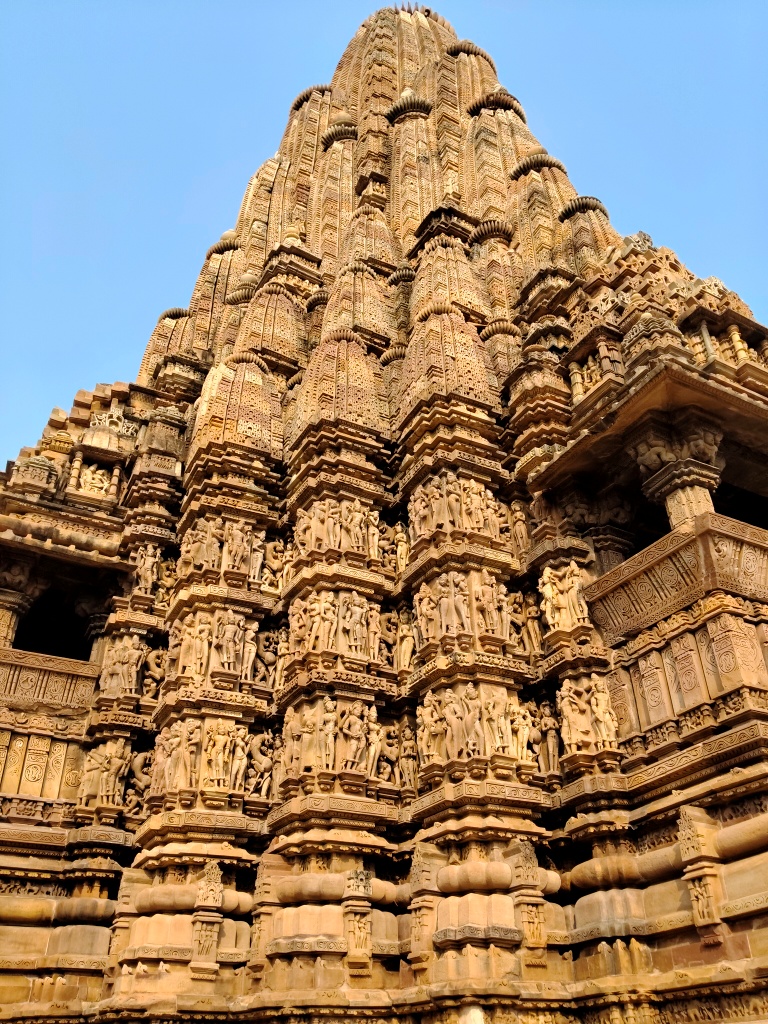
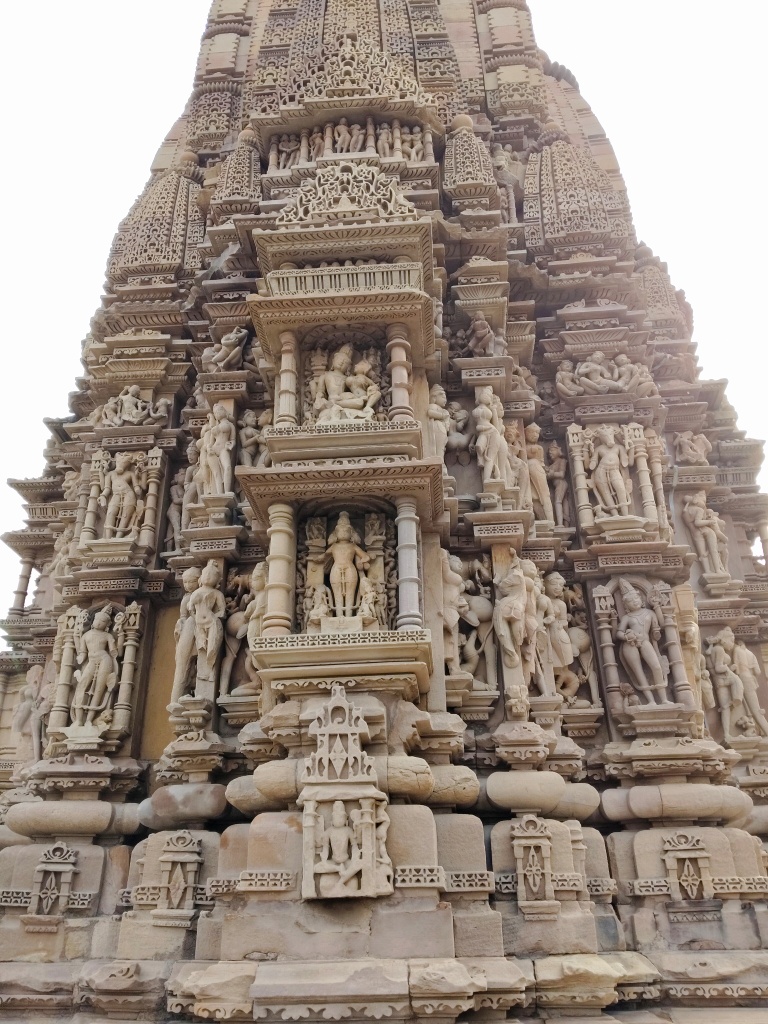
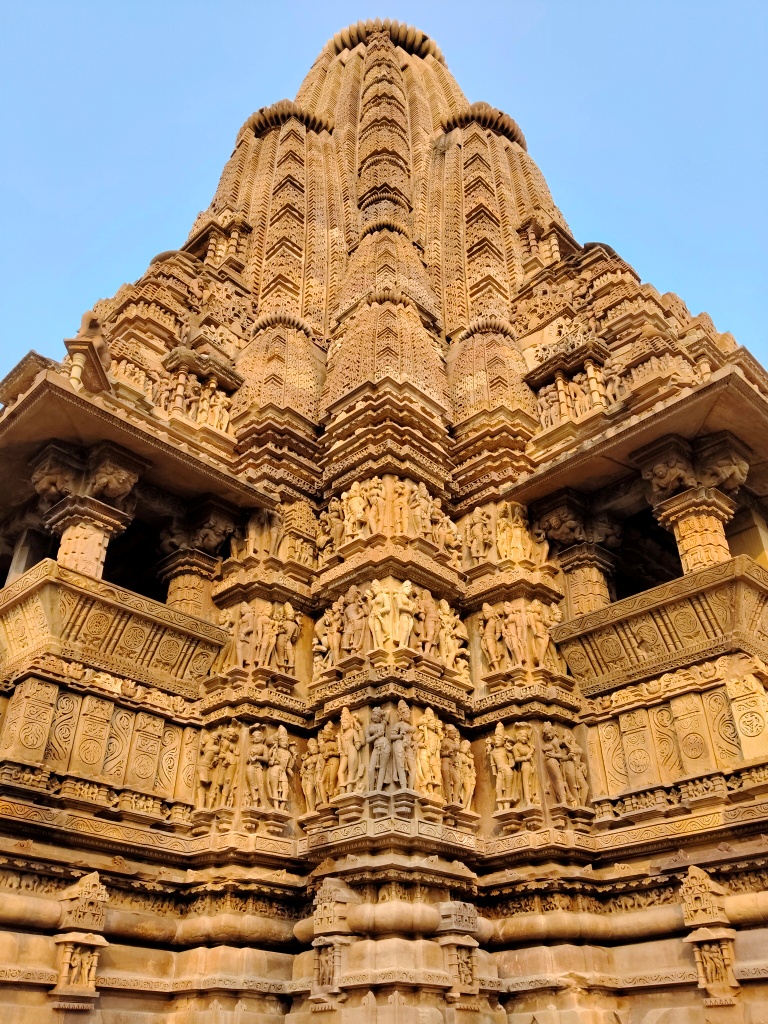
After visiting the Lakshmana Temple, I returned back toward the entry gate and walked anticlockwise to visit the next temple in the complex—the Kandariya Mahadev —the grandest and most magnificent of Khajuraho’s shrines. This colossal structure brought to life all six essential elements of a classic Khajuraho temple, each section’s roof rising like a mountain peak, collectively forming a cascades of Mount Kailash. The Temple is adorned with  elaborate sculptures—over eight hundred in total, showcasing slender, animated apsaras in dramatic poses, courtly processions, hunters, dancers, musicians, and lovers. The platform also hosted the Mahadev Shrine and the Jagadambi Temple, each adding to the sense of spiritual grandeur.
5. Ruined Shiva Temple (Mahadeva Shrine)
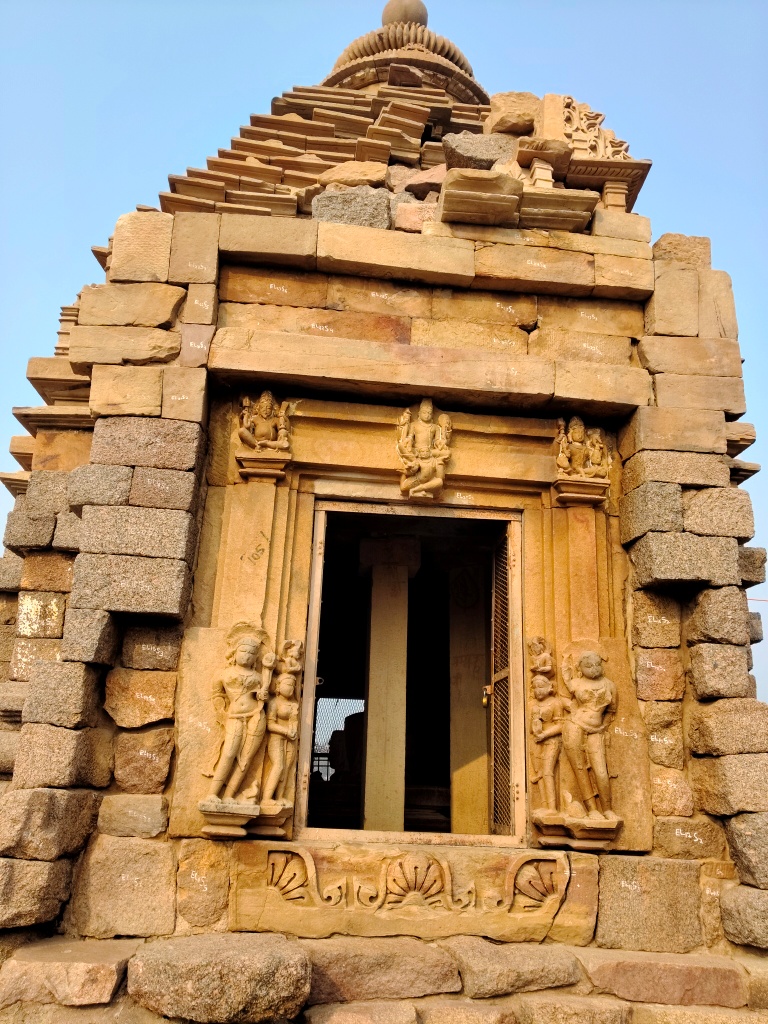
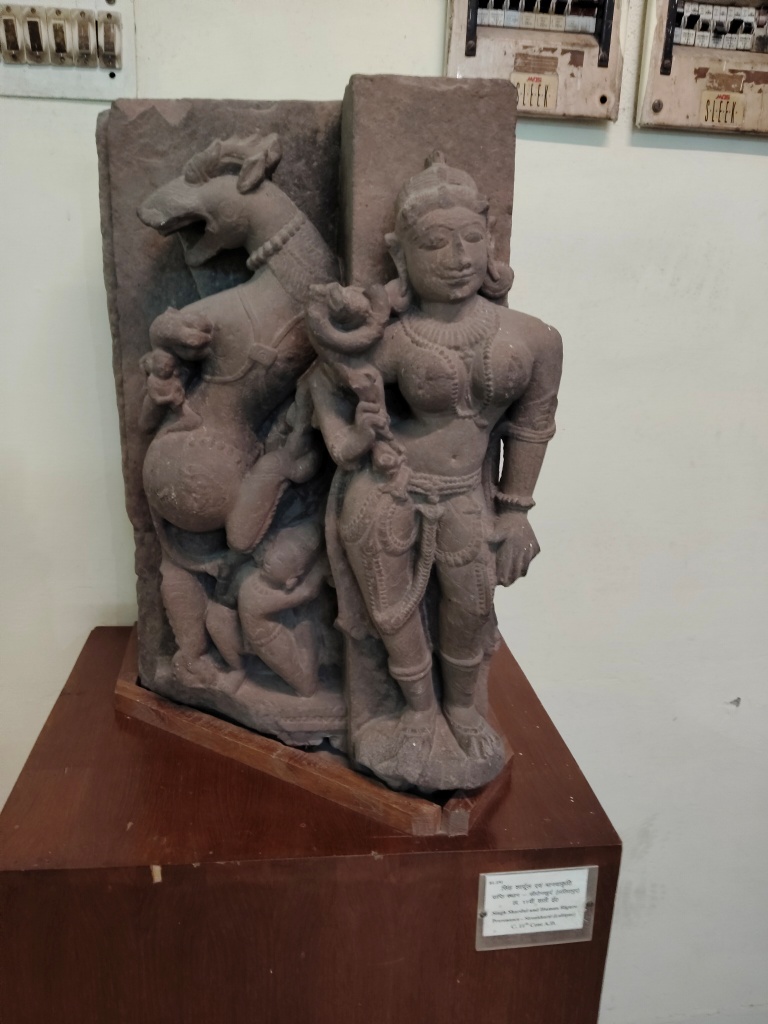
Tucked between the Kandariya Mahadev and Jagadambi Temples, the Mahadeva Shrine appeared as a humble, partially ruined structure. Only the entrance portico stood intact, showcasing a Shardula and a crouching female figure. The figure of Shiva carved on the stone above the door confirms it to be a Shiva Temple. Though the sanctum was lost to time, the remnants hinted at former glory.
Shardula in Khajuraho Temples: Meaning and Significance
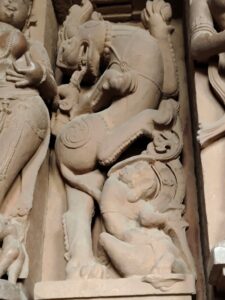
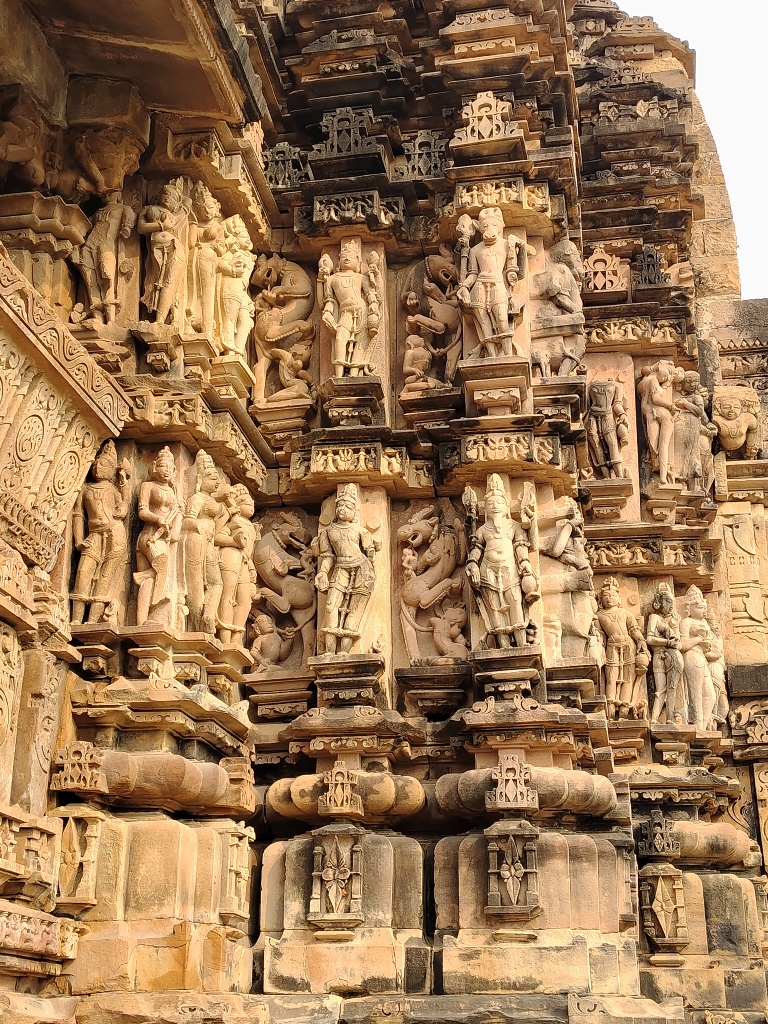
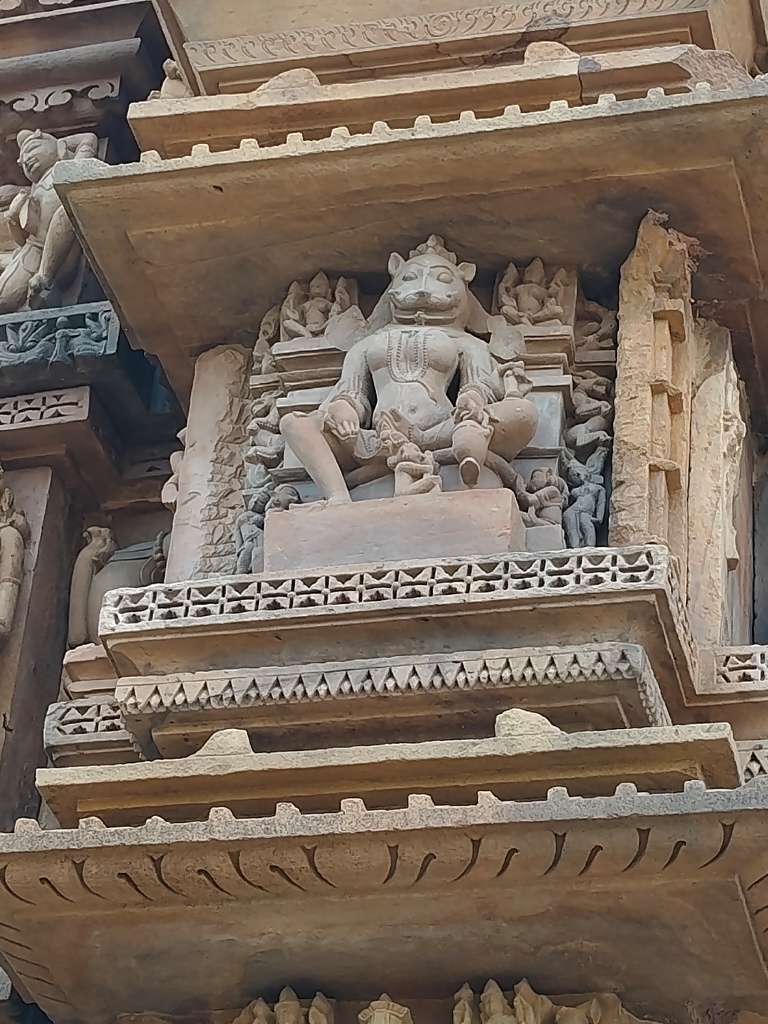
Schuptures of Shardula are found on the outer walls and pillars abundantly in almost all the temples of Khajuraho. These symbolize strength, fierceness, and untamed energy. Often shown as creatures—part lion, part tiger, or even part human—they represent raw power in its most primal form. Shardulas primarily serve as guardians of sacred space symbolically protecting the shrine from negative energy.
Many sculptures depict humans standing over or restraining Shardulas, conveying a deeper philosophical message. Here, the Shardula stands for desire, ego, and instincts, while human control over the beast represents self-discipline and spiritual mastery. This reflects Khajuraho’s broader perspective, which does not deny desire but emphasizes understanding and ultimately controlling it.
6. Devi Jagadambi Temple (Early 11th Century)
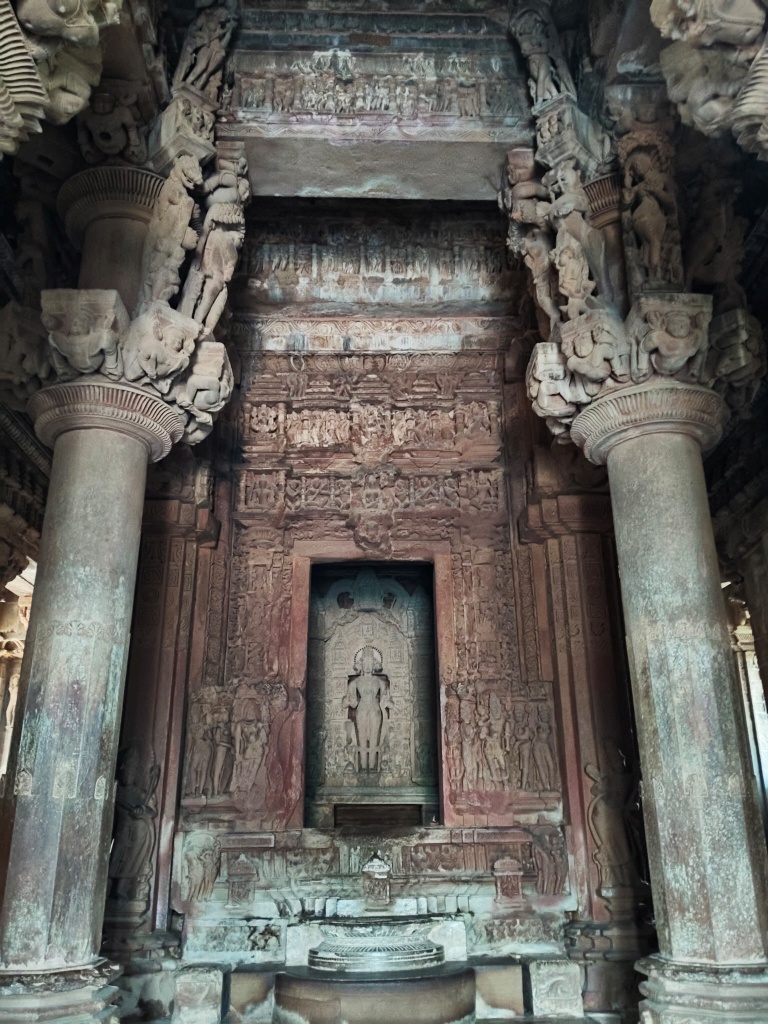
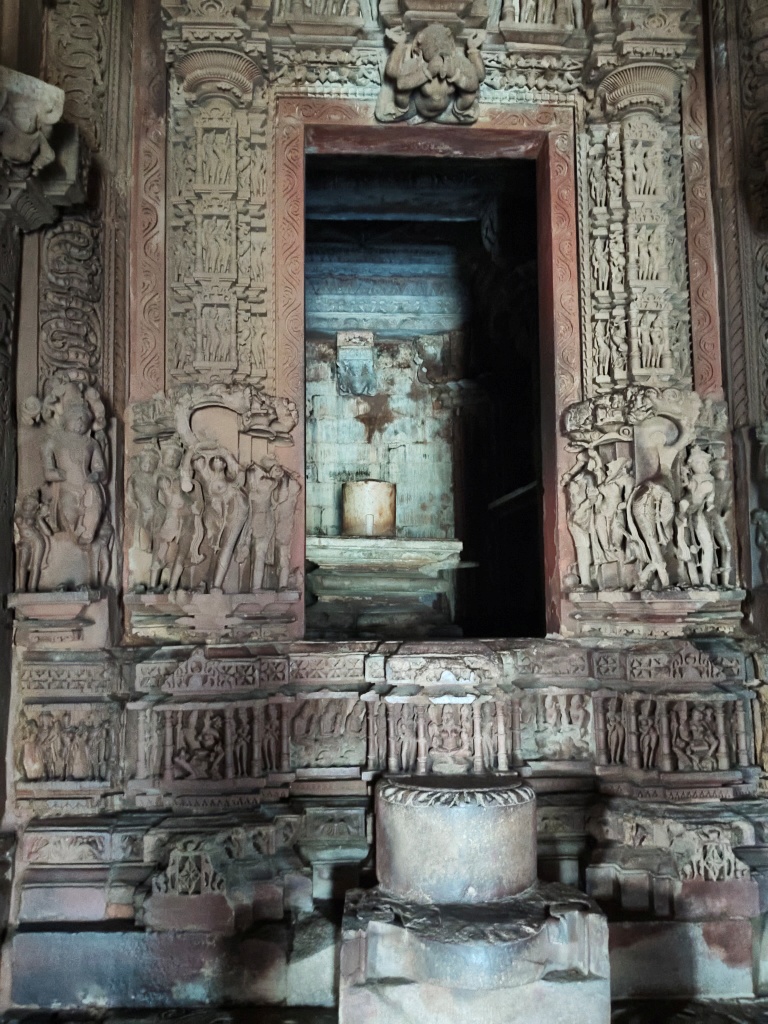
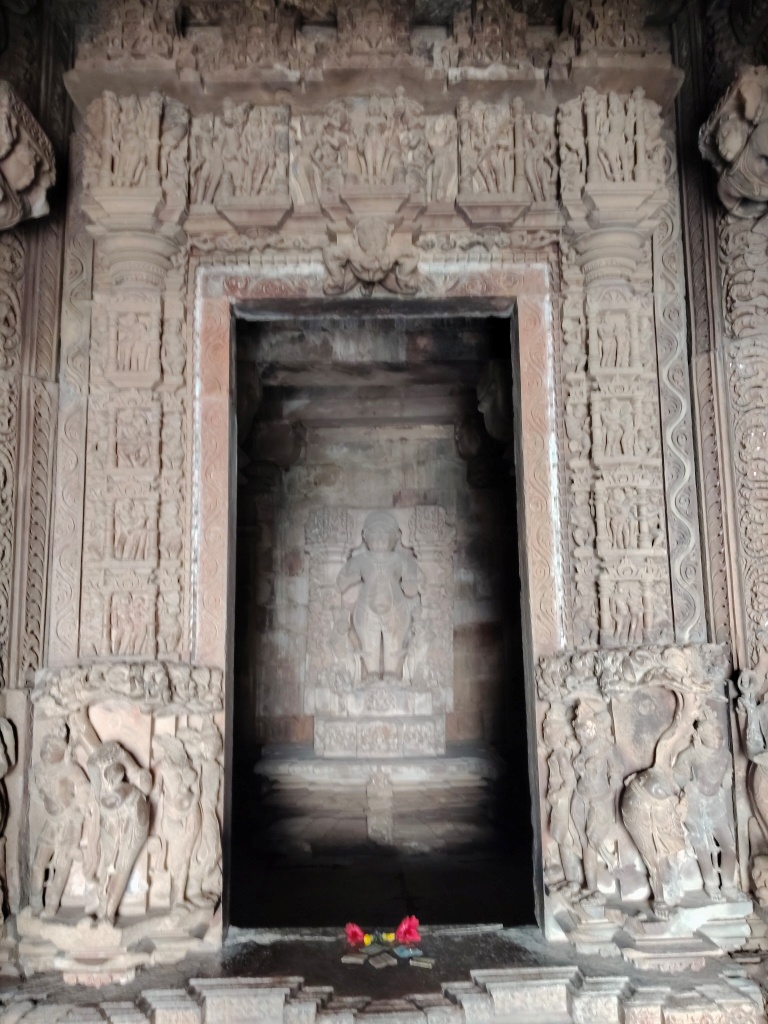
Sharing a platform is the Devi Jagadambi Temple likely built between 1000 and 1025 AD. Its sculpted outer walls displayed both grace and sensuality. Once possibly dedicated to Vishnu, as evidenced by the sanctum doorway’s prominent figure, the temple now housed an image of Parvati as the goddess of the world. The shift in deities reflected the layered history of the temple and the enduring appeal of its finely chiseled art.
7. Chitragupta Temple (Early 11th Century)
Next on my path was the Chitragupta Temple, remarkable as Khajuraho’s only shrine to Surya, the Sun God. Its design mirrored that of the Jagadambi Temple, with a restored entrance porch and an impressive sanctum sheltering Surya, depicted driving a chariot of seven horses. The stone carving above entrance depicts three smaller images of Surya, while the outer walls shone with some of the finest carvings—Vishnu in his ten incarnations, Sura-sundaris in elegant poses, and amorous couples.
8. Vishvanatha Temple and Nandi Shrine (AD 1002)
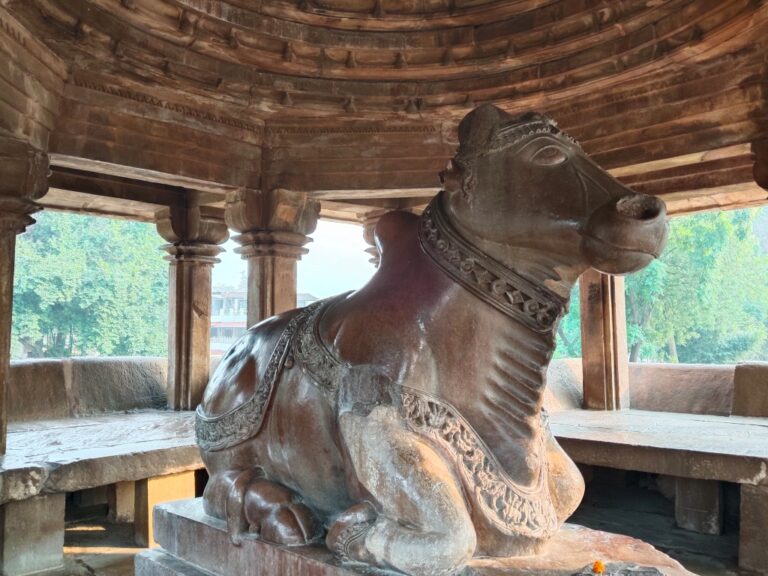
I then arrived at the Vishvanatha Temple, dedicated to Shiva as the Lord of the Universe. Its outer facade featured three broad bands of lively sculpture, with the high basement adorned by geometric patterns, processions, and scenes of affection. Just across from the Vishvanatha Temple, on the same terrace, stood the Nandi Shrine. Inside, a colossal image of Nandi, Shiva’s devoted bull, faced the main temple, as if eternally keeping vigil for his lord.
9. Pratapeshwar Temple
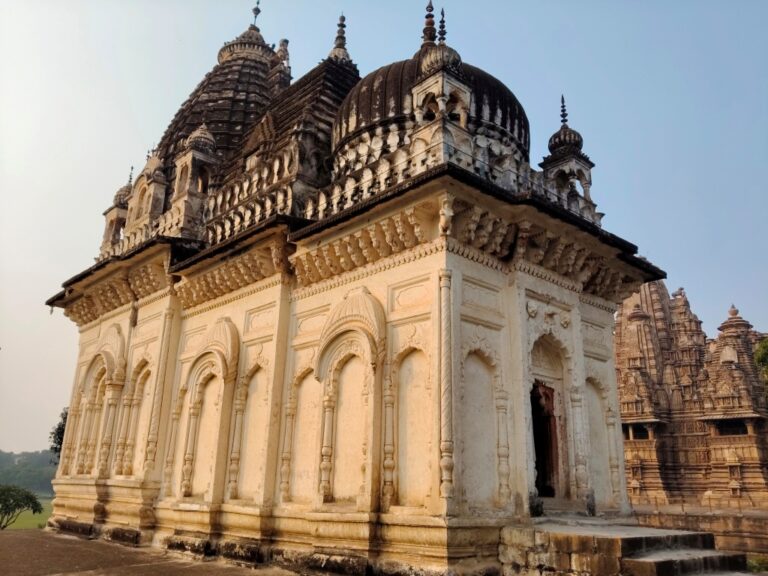
As I neared the end of the compound, the Pratapeshwar Temple stood out with its distinct architecture, being the newest—built some 800 years after its neighbors. Constructed as a memorial for Raja Pratap Singh. It’s more of a memorial or personal homage by Raja Pratap Singh than an ancient temple.
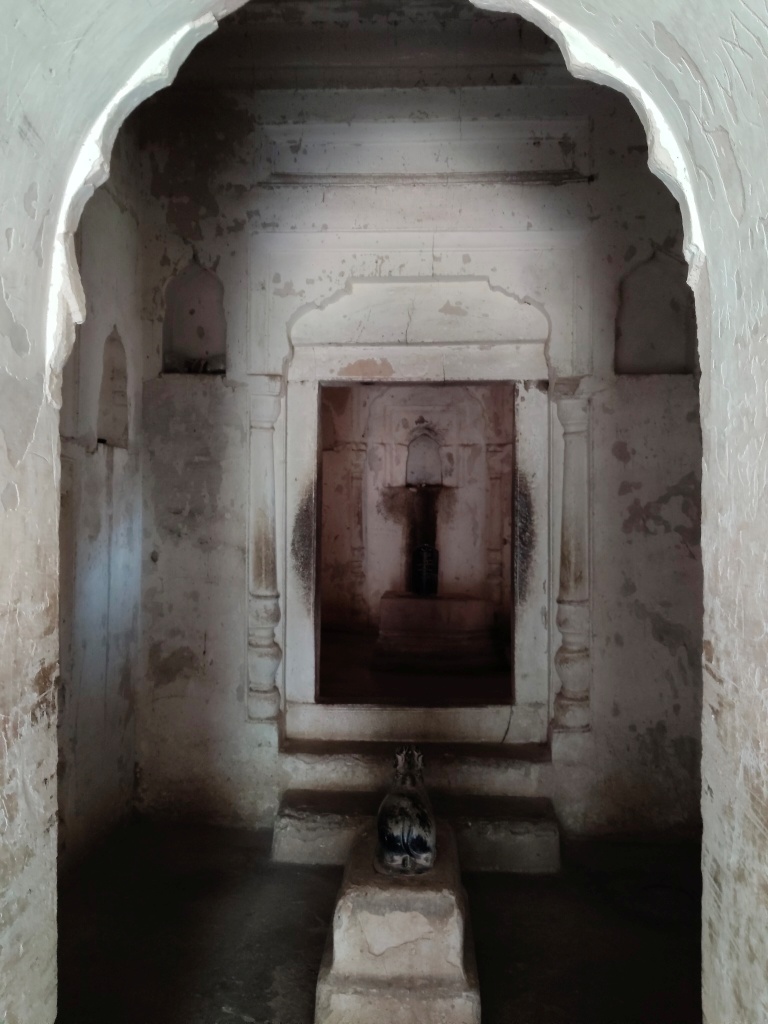
The temple stands out because it blends multiple architectural traditions — Its Front section features a Rajputana-style dome. Middle section has a pagoda-like ceiling, and rear section is a traditional Nagara-style Shikhara, typical of North Indian temple architecture. The temple is dedicated to Lord Shiva. Inside the sanctum is a black polished Shiva Linga placed on a yoni pedestal.
10. Matangesvara Temple (c. AD 900-925)
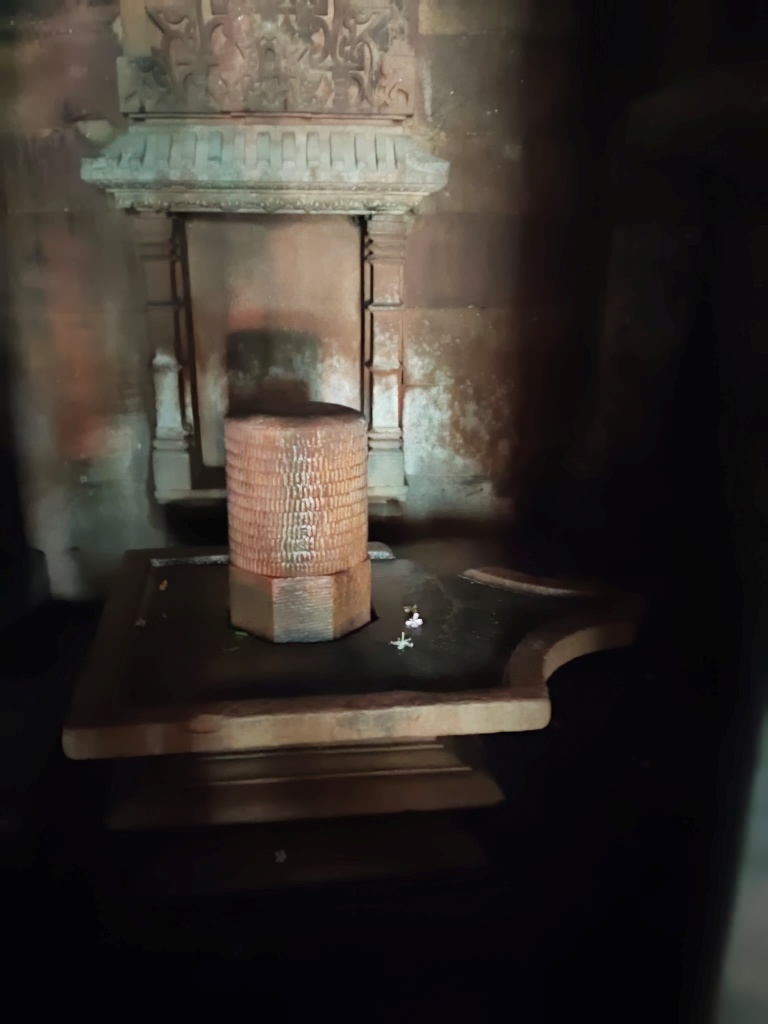
Exiting the main compound, I found a separate entrance leading to the Matangesvara Temple, the only active place of worship in Khajuraho. Dedicated to Shiva, the temple’s plain square structure housed a massive, highly polished linga that filled the entire sanctum floor—a sight that left a lasting impression on me, marking the first time I had encountered such splendour in a living temple.
End of the Day: Awaiting Lights and Legends
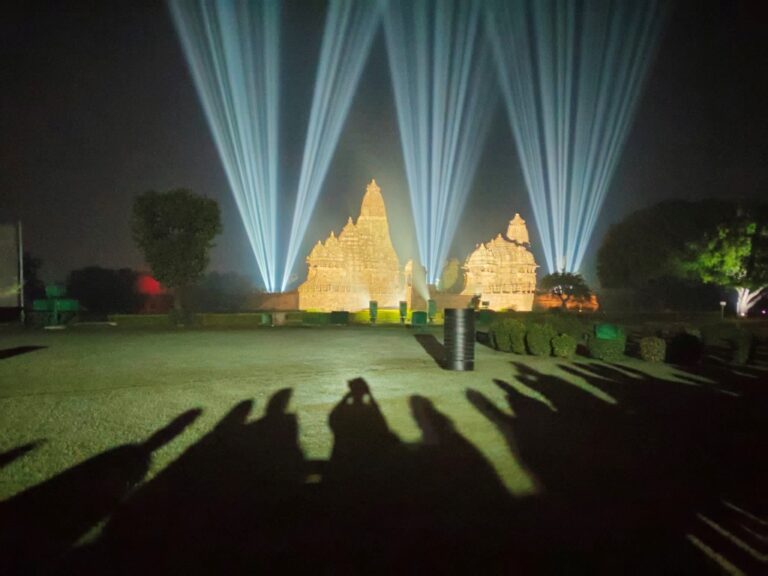
By 4:00 PM, I had traversed the sacred grounds of the Western group, each temple adding a new chapter to my day’s journey. Only one experience remained—the renowned Sound and Light Show in the late evening. After a restful break at my hostel, I returned at dusk, eager for this grand finale. As the temples glowed under the night sky, the bold recorded voice of Mr. Amitabh Bachchan narrated the stories and history of Khajuraho, weaving together the ancient and the modern. With tales brought to life in both English and Hindi, the show was a mesmerizing recount of this magical place, a fitting close to a day of exploration and wonder.
Entry Fee: INR 300 for Indian tourists and INR 800 for foreign tourists. Time: October to February: 6.30 – 7.25 pm in English and 7.40 – 8.35 pm in Hindi. March to September: 7.30 – 8.25 pm in English and 8.40 – 9.35 pm in Hindi
Day 3: Exploring Eastern & Southern Groups of Temples + Tribal Museum
Day 3 of my Khajuraho trip was reserved for exploring the Eastern and Southern groups of temples and visiting the museums in the evening. The hostel owner also recommended the newly opened Tribal Museum, which I decided to include in my itinerary along with the ASI Museum.
After a refreshing shower, I had a hearty aloo paratha breakfast prepared by the hostel staff. There’s something magical about hot parathas and tea on a chilly winter morning—the perfect start to a long day of sightseeing.
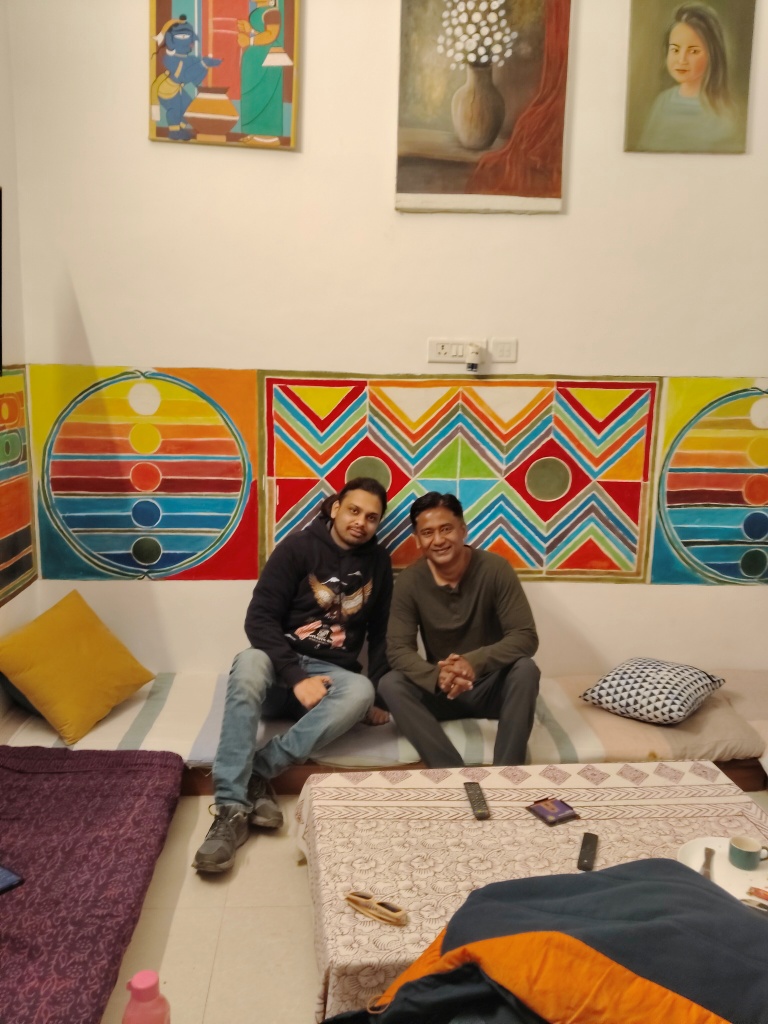
While waiting, I met Siddharth, a fellow solo traveler at the hostel. He was a professional photographer and antique coin trader. We exchanged travel stories and business insights. The beauty of hostels is meeting like-minded people and creating lasting memories. After swapping numbers, I set off on my cycle to the Eastern Group of Temples.
Eastern Group of Temples
Unlike the compact Western Group, the Eastern Group is spread over a wider area, so renting a cycle or scooter is highly recommended. Â This group comprises:
- Three Brahmanical temples: Brahma, Vamana, and Javari
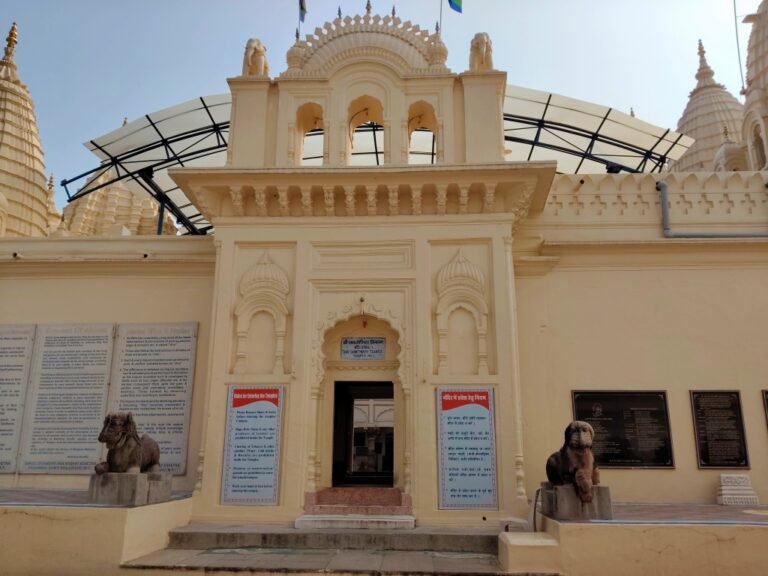
- Three Jain temples: Ghantai, Adinatha, and Parshwanath
1. Brahma Temple (c. AD 900)
The morning air was crisp as I set out for the Eastern group of temples, my curiosity piqued by stories yet untold. My first destination was the Brahma Temple, an unassuming structure that sat serenely on the bank of Khajuraho-sagar, its shikhara carved from sandstone, while the main body was crafted from granite.Â
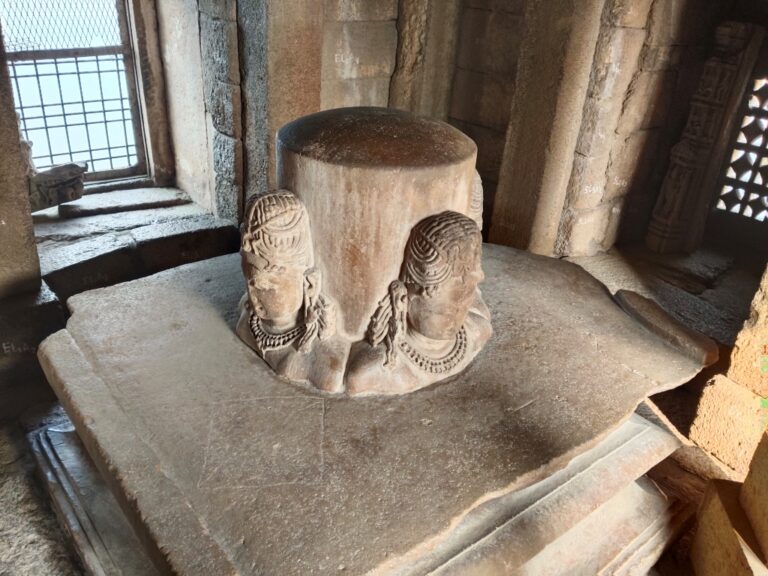
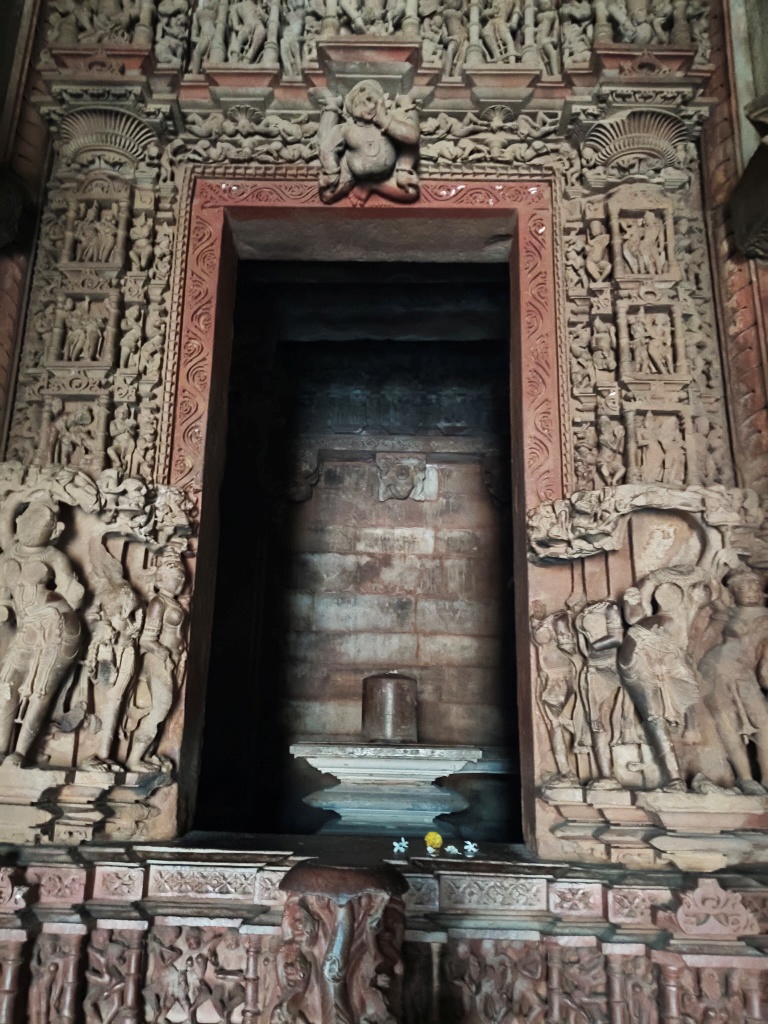
It belongs to the early phase of temple construction at Khajuraho, before the grand and highly ornate temples like Kandariya Mahadeva were built. Despite its name, the temple is not actually dedicated to Lord Brahma. The temple houses a four-faced (chaturmukha) lingam in the sanctum. Early British archaeologists mistook this for an image of Brahma (the four-headed creator god) and named it “Brahma Temple.”
2. Javari Temple (c. AD 1075-1100)
A short cycle ride brought me to the Javari Temple, nestled amidst lush greenery and fields. Dedicated to Lord Vishnu, this compact yet elegant temple captivated me with its soaring shikhara and beautifully carved exteriors. As I stepped inside, I found a headless idol of Lord Vishnu in the sanctum, a silent witness to centuries gone by. The Javari Temple felt like a hidden gem waiting to share its story with anyone willing to pause and listen.
3. Vamana Temple (c. AD 1050-75)
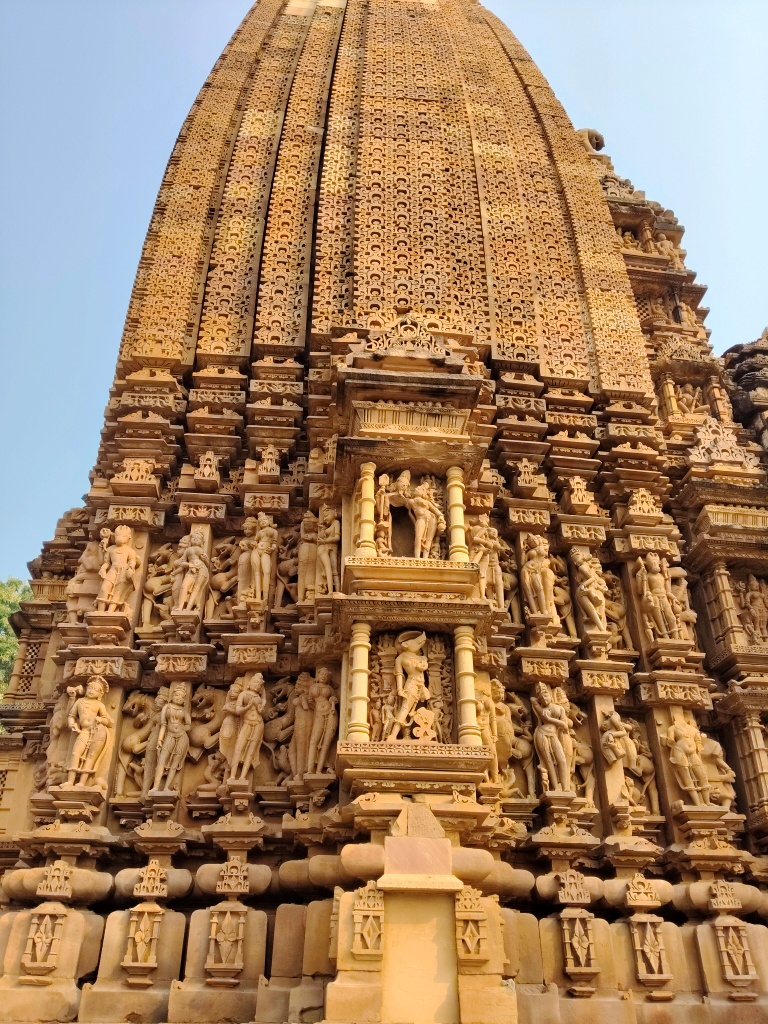
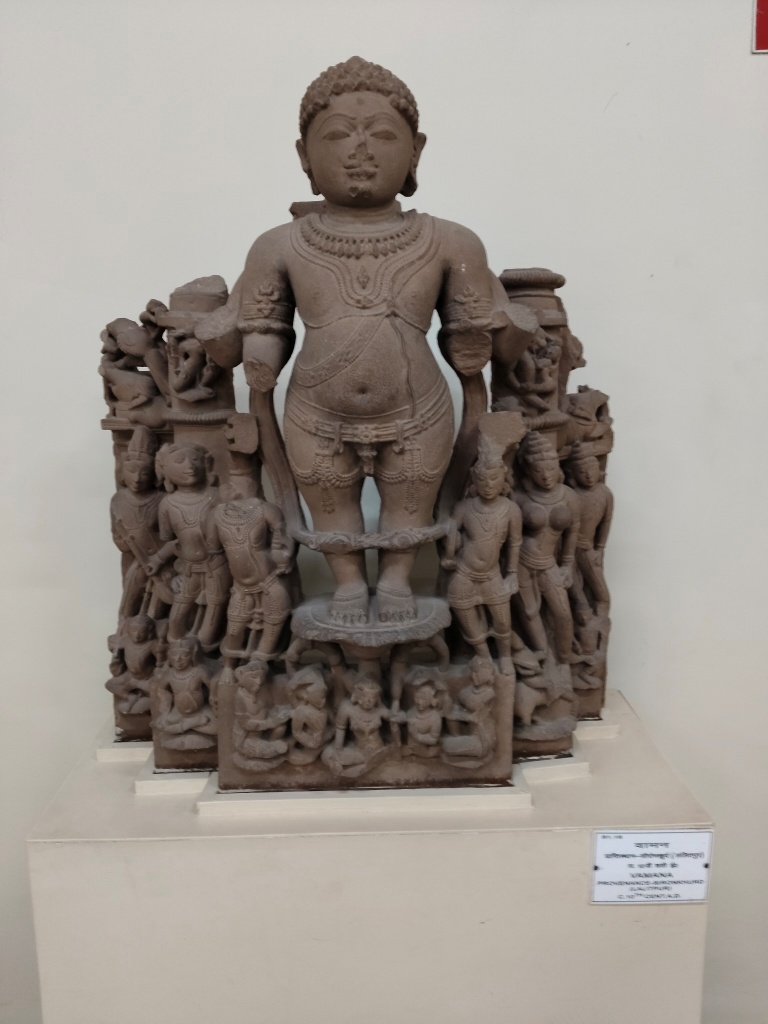
My journey continued to the Vamana Temple which is dedicated to Vamana, the dwarf incarnation of Lord Vishnu. It represents the mature phase of Chandela architecture, when temple design had reached technical and artistic perfection.
According to Hindu mythology – Vamana appeared as a small Brahmin boy. He asked the demon king Bali for “three steps of land.” He then grew into a gigantic cosmic form and covered heaven and earth in two steps. The third step was placed on Bali’s head.
The sanctum houses an image of four-armed Vamana, holding traditional Vishnu attributes. This temple stood as a testament to the fully evolved Chandella architectural style, its shikhara rising in uninterrupted bands and crowned with an amalaka and pot-finial. The outer walls, though damaged, still featured delicate sura – sundaris, while the absence of erotic sculptures set it apart from others in Khajuraho.
4. Ghantai Temple (late 10th century)
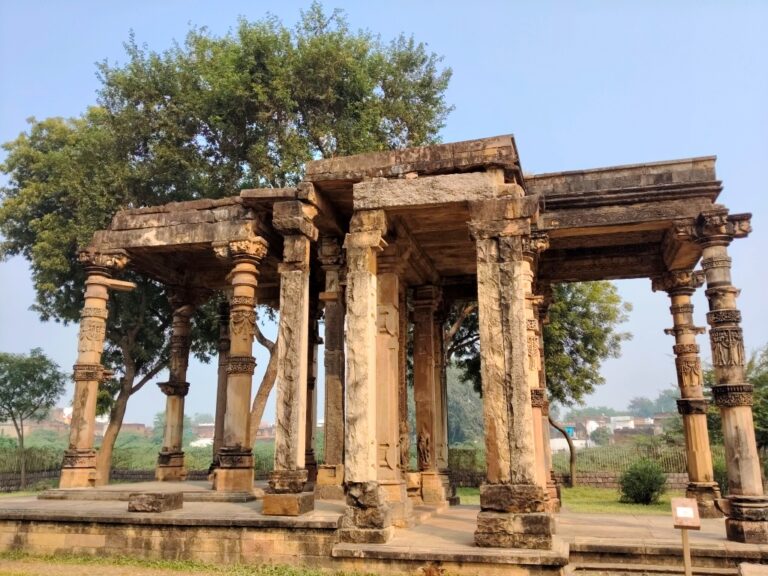
Navigating through winding village lanes only accessible by bicycle, I soon arrived at the Ghantai Temple. Though now in ruins, with only a few pillars and portions of the ceiling remaining, these remnants spoke volumes of a glorious past. Protected by a simple enclosure (and a gate you could easily open), the temple welcomed the curious. Quietly exploring, I imagined the temple in its prime, bustling with devotion and tradition.
5. Shantinath Temple
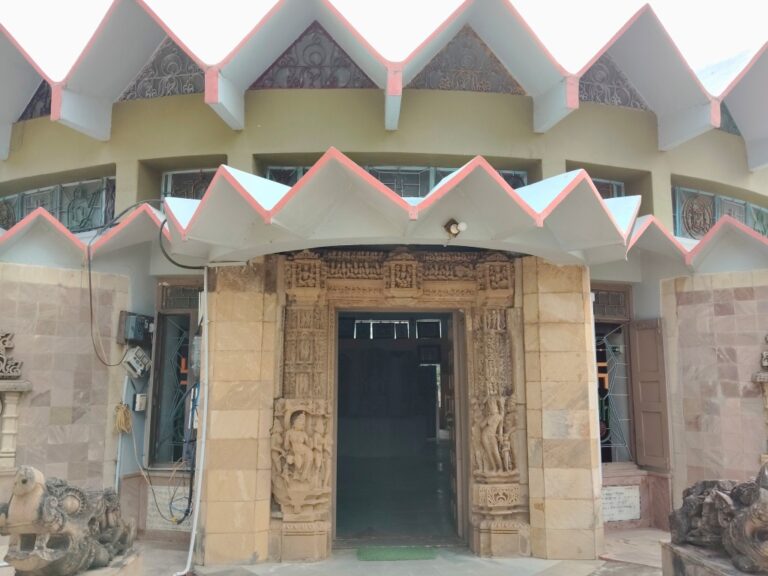
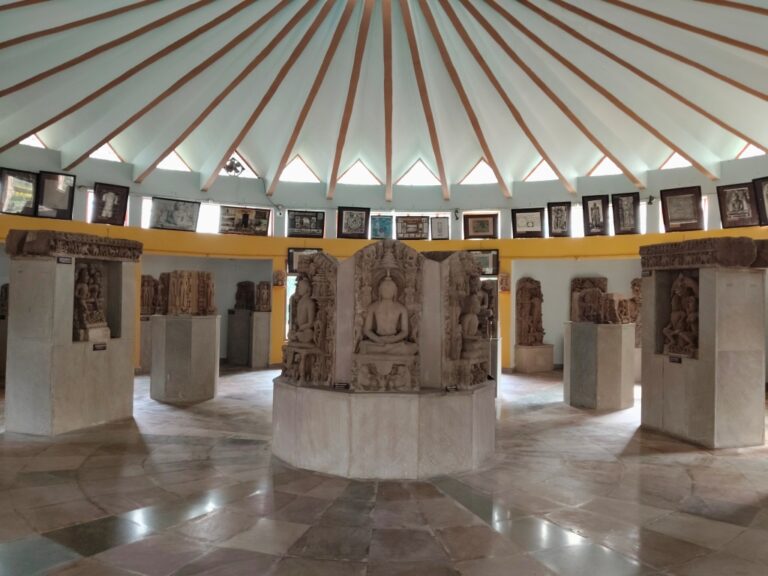
With the village children cheerfully pointing the way, I made my way to the cluster of three Jain temples. Just before the main entrance, you will find the Jain Museum which offers insight into Jain traditions and beliefs. With an entry ticket of ₹10, the museum displays numerous sculptures and artefacts from Jain temples, making it both educational and visually interesting.
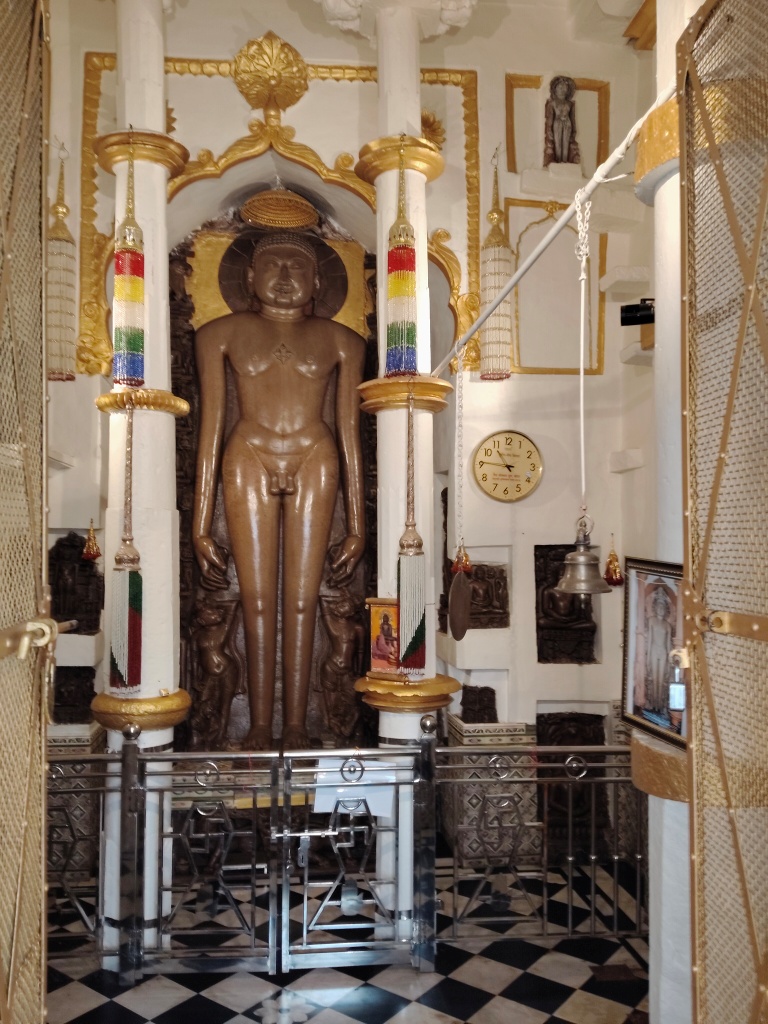
The first, Shantinath, was a fascinating blend of the ancient and the modern. The main sanctuary housed a majestic 14-foot-high image of Jain Tirthankar Rishabhdev, a powerful bull carved at its base. Though largely a modern structure, the temple complex included ancient shrines dating back nearly a thousand years. Inside, centuries-old sculptures mingled with newer icons, and the site pulsed with the energy of an active place of worship, the air thick with reverence.
6. Parshwanath Temple (mid-10th century)
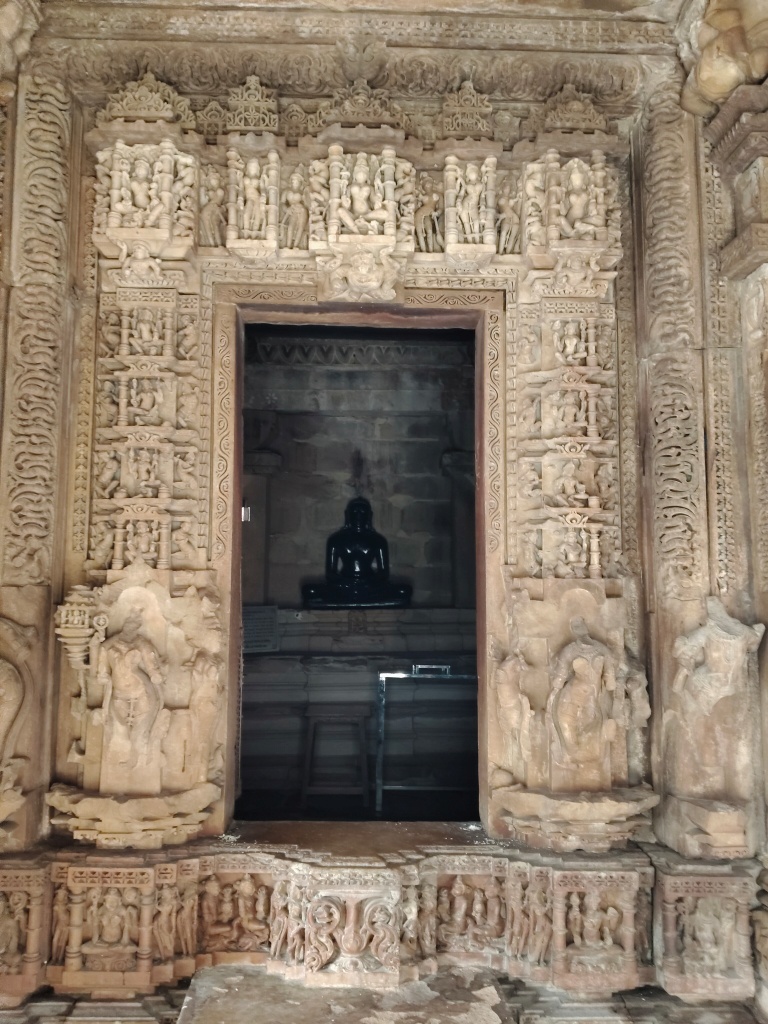
Next, I entered the Parshwanath Temple, one of Khajuraho’s most important Jain temples. Built in the mid-10th century and originally dedicated to Adinath, the temple now enshrined an image of Parshwanath. Approaching from either the east or west, I admired the ornate porch ceiling with its five pendants and the lavishly carved figures lining the outer walls.
7. Adinath Temple (late 11th century)
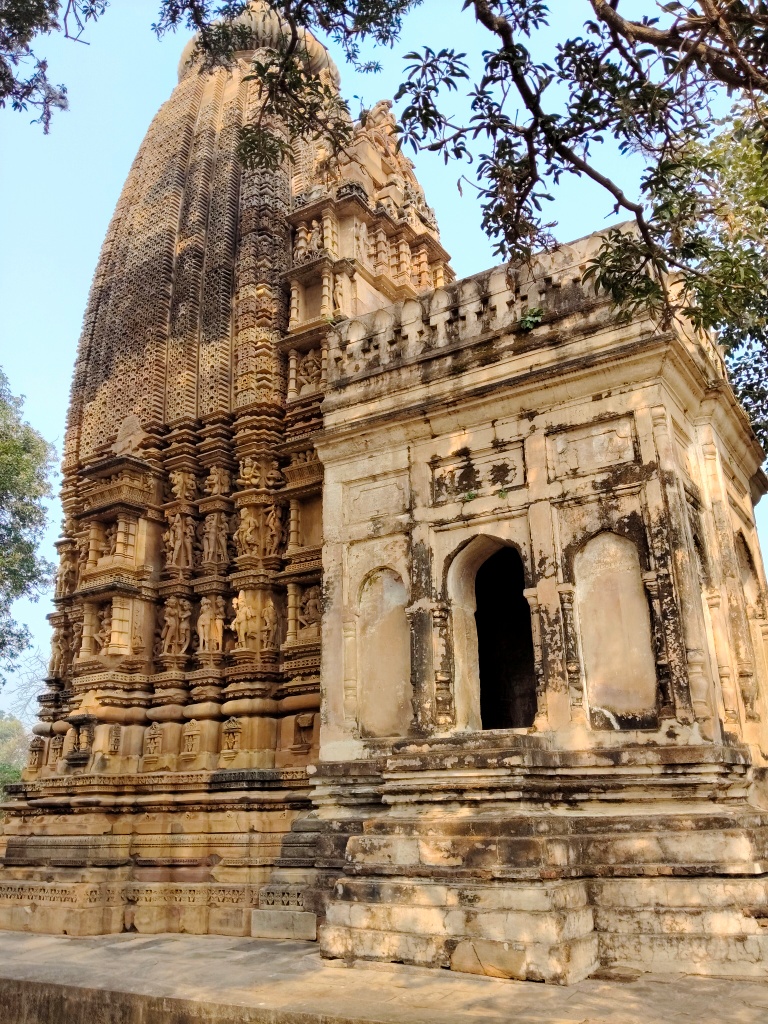
Finally, I reached the Adinath Temple, a modest yet elegant structure. Though the original statue of Adinath was missing, a replacement now graced the sanctum. With its three chambers, only the vestibule and sanctum survived the passage of time. The temple’s sculptural style echoed that of the Vamana Temple, though its shikhara was lighter.
Southern Group of Temples
After bidding farewell to the elegant Adinath Temple—my last stop among the Eastern group—I hopped back on my bicycle and pedalled toward the southern horizon of Khajuraho.Â
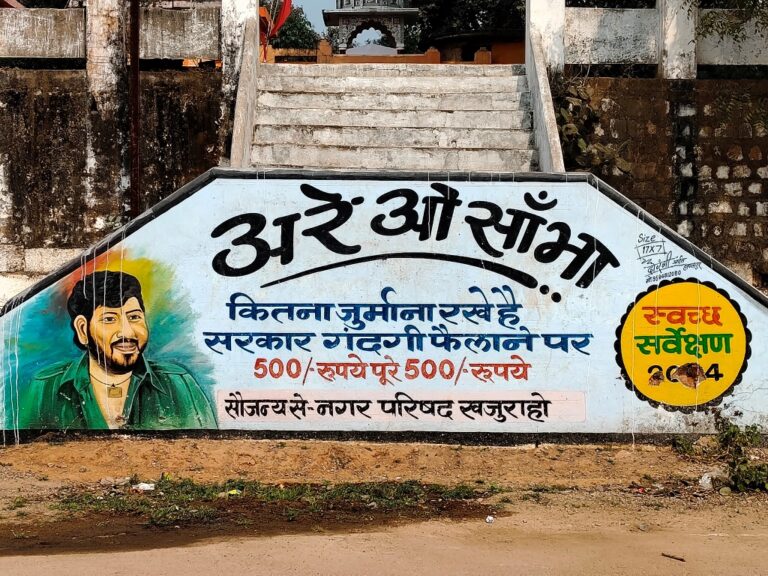
While cycling a vibrant municipal corporation graffiti urging people not to litter, caught my eye. A dull, neglected wall was transformed into a canvas carrying a powerful civic message in a humorous way. I was tempted to stop and capture it.Â
1. Duladeo Temple
At a distance of less than a kilometer, at the bank of Kodar river is the first temple of Southern group – Duladeo Temple. Duladeo Temple is known locally as Kunwar Math, meaning “holy bridegroom”. This temple stands as one of the very last monuments built in Khajuraho’s golden era. Stepping through the entrance, I was immediately struck by the extraordinary linga at its heart—a Sahashra linga, covered with 999 smaller lingas intricately carved around its surface. All around, there were carvings of celestial dancers richly decorated with beautiful ornaments.
2. Bijamandal: An excavation site
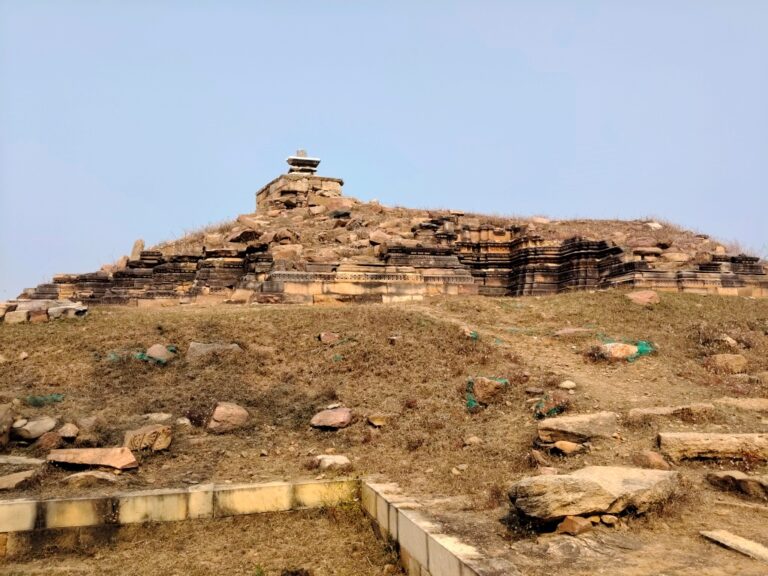
From Duladeo, my curiosity led me further, down a patchy and uneven path, guided by Google maps, to the excavation site of Bijamandal near Jatkari village. Only partially excavated, the site invited those with time and imagination to ponder the structures that once stood here. Evidence suggests it was one of the largest temples in the region — but it was never fully completed or later destroyed. A modern Shiva linga has been placed on the site to encourage local reverence and protect it.
There is nothing much to see at this site. If short of time, it can be skipped.
3. Chaturbhuja Temple
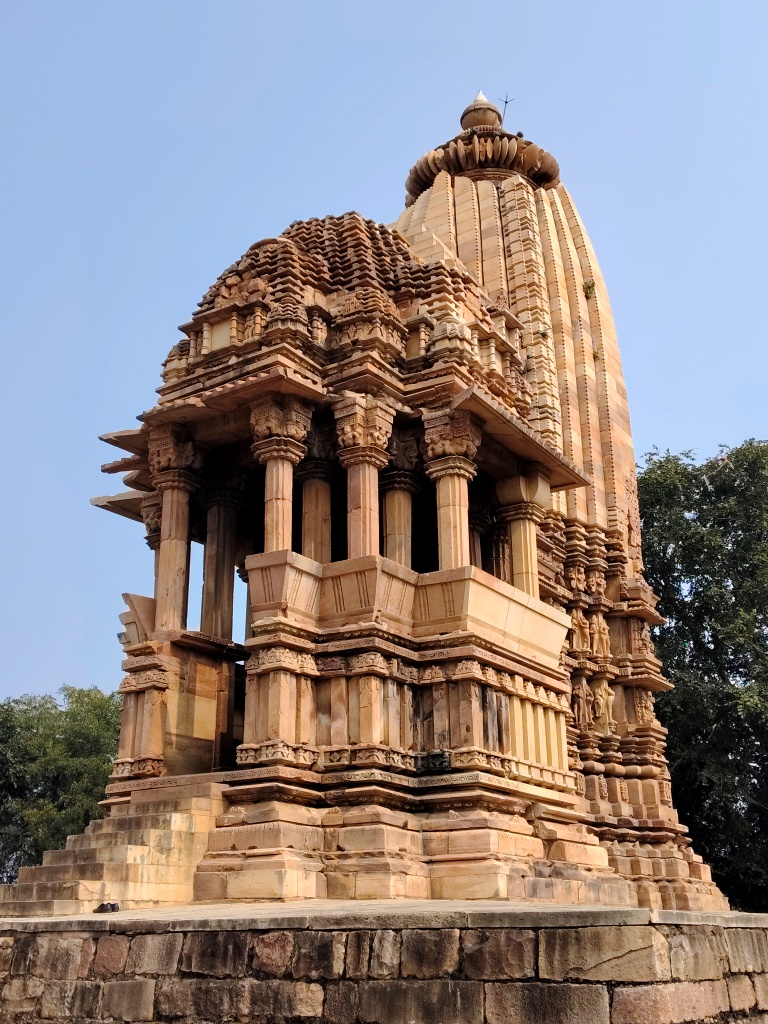
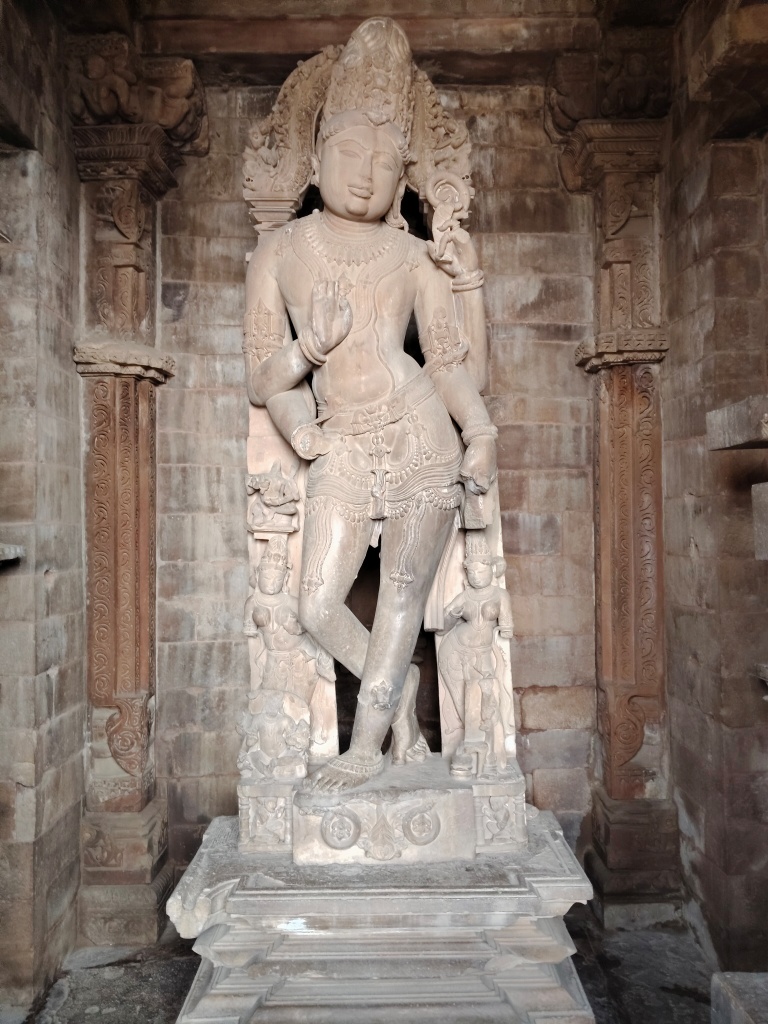
Pushing on to the outskirts, about 3 kilometers south of Khajuraho, I reached the Chaturbhuja Temple—Khajuraho’s farthest and perhaps most enigmatic shrine. Modest in size, Chaturbhuja’s greatest wonder awaited inside: a towering, ten-foot-three-inch statue of Chaturbhuja Vishnu. The walls outside featured a striking lion-headed female—thought to be the female aspect of the man-lion Narsingh—and a rare Andha-nariwars sculpture of Shiva. Unlike its siblings, Chaturbhuja was free from the erotic carvings, its sculptures more reserved and expressionless, perhaps reflecting a different spiritual focus.
Lunch and rest – Missed ASI Museum
As the clock struck 1 PM, my temple explorations were complete—my breakfast long forgotten after hours of cycling and wonder. I rode to my favourite eatery, Badri Seth Bhijanalaya, and savoured a reliable companion – a hearty veg thali.
It was around noon, and I still had two places left on my list: the ASI Museum and the Tribal Museum, both conveniently close to the Western Group of Temples. I set the ASI Museum as my next stop on Google Maps — only to be greeted with bad news. It showed the museum would be closed by the time I arrived. A quick double-check confirmed it: Fridays are weekly closure days. That’s when it hit me — many museums in India shut either on Fridays or Mondays, and I’d overlooked this while planning.  With just the Tribal Museum left, I decided not to rush. Instead, I saved it for the evening, pairing it with dinner plans. So I cycled back to my hostel, letting the afternoon slow down, and took a well-earned break before heading out again.
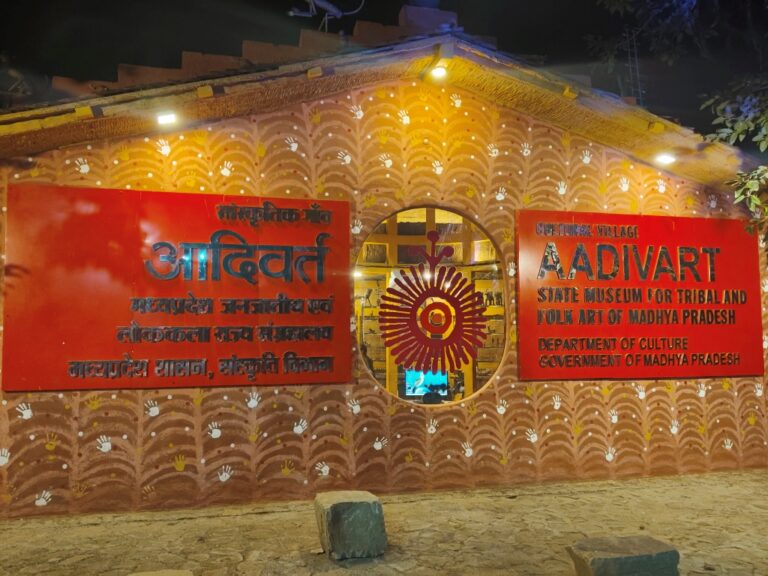
After a restful break at my hostel, I prepared for one more journey in the vening: a visit to the Aadivart Tribal and Folk Art Museum, ready to immerse myself in the stories of the tribal people.
Aadivart Tribal and Folk Art Museum
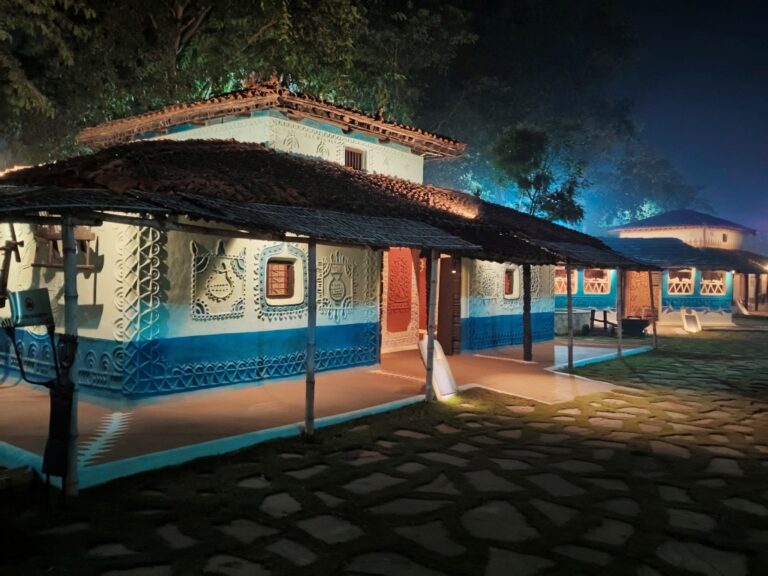
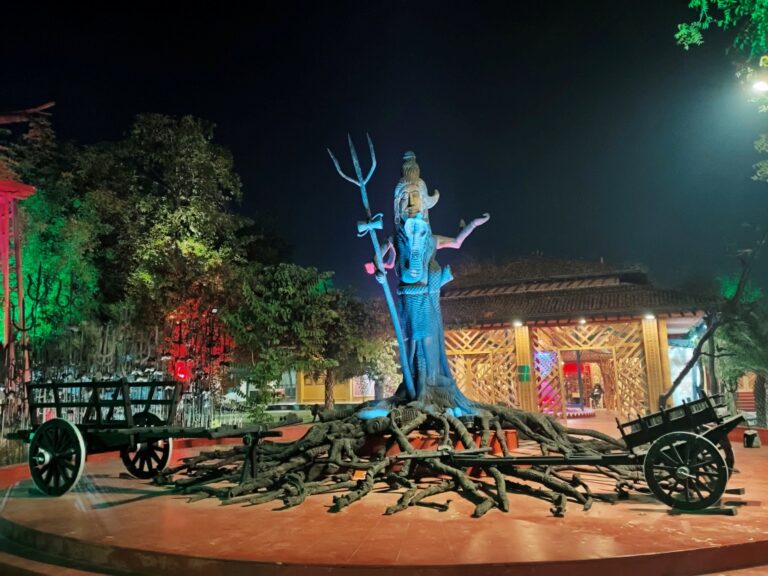
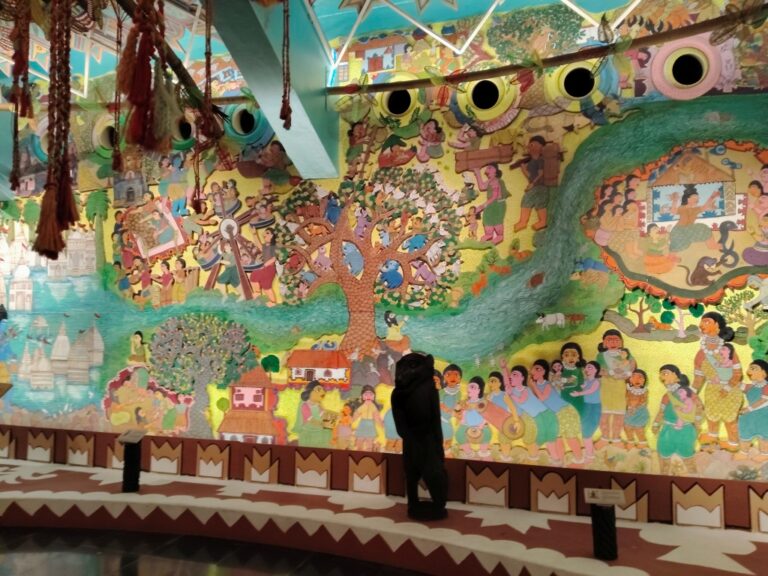
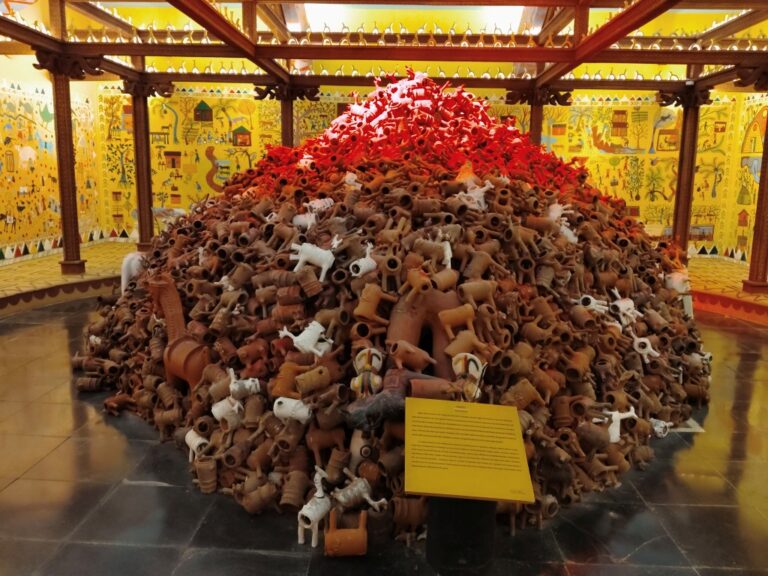
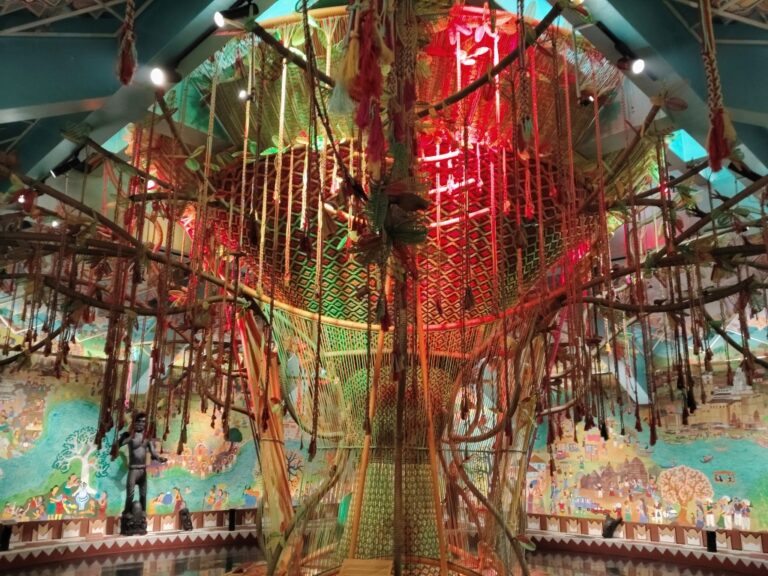
A refreshing break from Khajuraho’s temples, the Aadivart Museum (12 PM–7 PM, closed Mondays) highlights the living cultures of Madhya Pradesh’s tribal communities like the Gonds, Bhils, and Baigas. Inside, you’ll find a striking 3D mural of the Narmada River’s origin myth, terracotta figures showing Baabdev rituals (Baabdev is a local folk deity, and terracotta figures are offered as objects after a wish is fulfilled) , and exhibits on community-centered tribal dance traditions. The eco-friendly replica tribal village is the standout, offering a glimpse into sustainable rural life. It’s a quiet, meaningful stop that adds cultural depth beyond the famous stone carvings. You will not find this museum in online itineraries, but I will strongly recommend to include it in your plan.
Spending an hour immersed in the tribal culture, I wrapped up the museum visit and opted for early dinner at Flavors Café. I tried chilly chicken with tandoori roti, but it was overly vinegary and chewy, a reminder to stick to recommended dishes.
Finally, I returned to the hostel, satisfied after a day spent cycling across Khajuraho’s Eastern and Southern temples and exploring its tribal heritage.
Day 4: Journey Back to Pune via Jhansi
The last day of my Khajuraho trip began with preparations for the return journey. I had booked the Khajuraho–Udaipur Express (19665) to Jhansi, departing at 9:25 AM, and later the Hadapsar Special Fare Express (01924) from Jhansi to Pune at 7:40 PM. This gave me roughly five hours in Jhansi—enough time to finally visit the Jhansi Museum, which I had missed during my Mathura–Jhansi trip in March 2025.
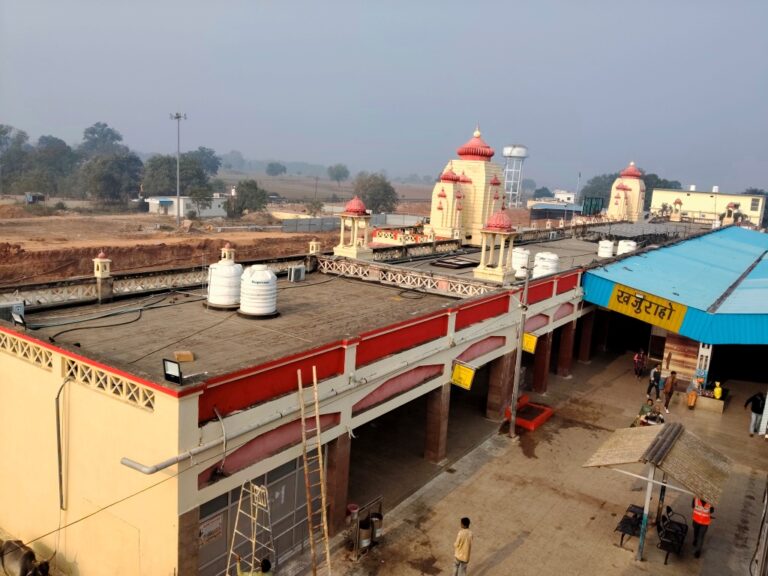
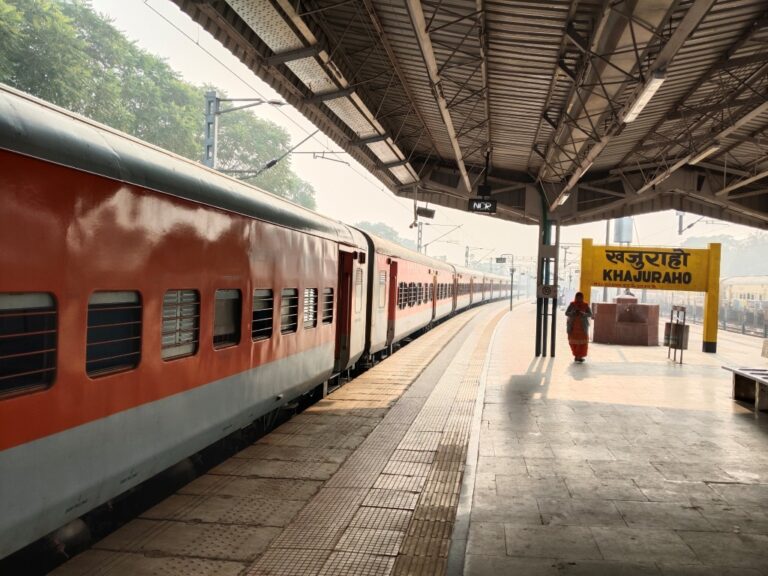
After a quick breakfast, a shared auto rickshaw dropped me at Khajuraho railway station. The Khajuraho–Udaipur Express departed on time at 9:25 AM. My confirmed sleeper berth was converted into a daytime general coach, but for a four-hour journey, it wasn’t an issue. The train was delayed by 20 minutes, and I reached Jhansi at 2:00 PM.
Lunch and Museum Visit in Jhansi
After leaving my luggage in the station cloakroom, I took an auto to Elite Crossing. Feeling hungry, I stopped at Avadh Food, a favorite from my last visit, for their famous veg biryani. I also tried a veg kabab roll, which was delicious.
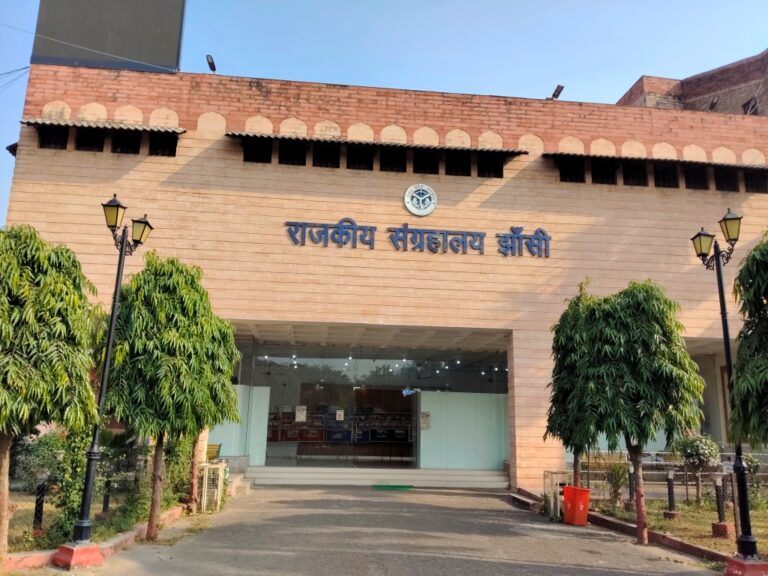
The Jhansi Museum was next, a missed destination during my previous Mathura–Jhansi trip. The entry fee of 40 rupees included a VR experience, setting the stage for a journey through Bundelkhand’s past. The museum unfolded across two floors, with well-curated exhibits showcasing the region’s legacy—statues, weapons, photographs, and dresses tracing back to the Chandela and Gupta dynasties. The highlight was the dedicated Rani Lakshmibai gallery, presenting evocative images from the 1857 revolt and stories of her indomitable spirit. Coins, manuscripts, and paintings filled the halls, each artifact a window into the epochs that shaped Jhansi..
Jhansi Fort
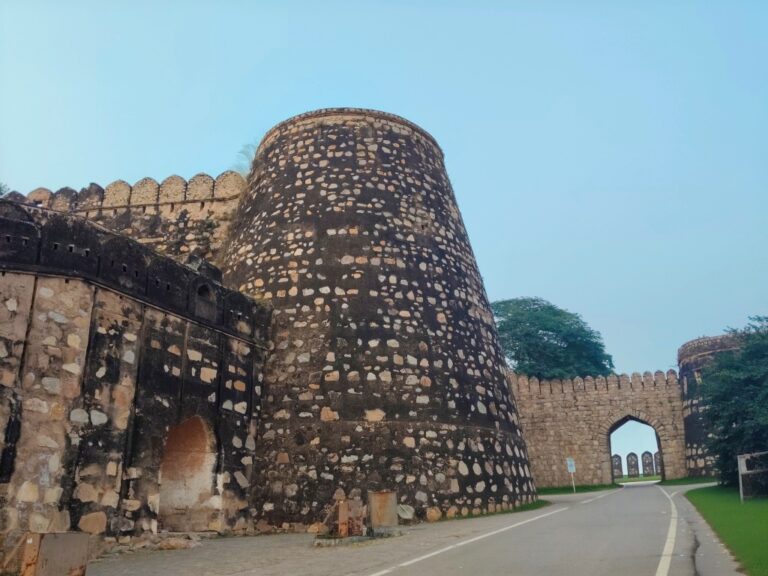
With some time left before my evening train, I visited the Jhansi Fort, a short walk from the museum. This was my second visit in a few months, yet the fort never fails to impress with its massive walls, historic architecture, and panoramic views of the city.
By 6:00 PM, I returned to the railway station to board the Hadapsar Special Fare Express at 7:40 PM, bound for Pune.
Journey to Pune
The train was a weekly special, taking about 21 hours to reach Pune, arriving the next day at 4:30 PM. I spent the night reflecting on a memorable 5-day trip, from navigating trains and buses to exploring temples, museums, and tribal culture, before finally returning home.
Day 5: The Homeward Rail: Lessons in Patience
The Hadapsar Special Fare Express departed Jhansi on time, but as the journey progressed, it began accumulating delays at each major halt. By the end, the train was four hours late, and I finally reached Pune at 8:30 PM. A key takeaway from this journey: special or seasonal trains rarely run on schedule, as priority is always given to regular services. Lesson learned for future trips!
My journey home was complete, but the essence of Khajuraho’s temples—remained with me, woven into the rhythm of rails and the tapestry of memory.