12 Day Road Trip from Pune to Tamil Nadu: From Deccan to the Dravidian Heartland
This 12 day road trip from Pune to Tamil Nadu is a slow, immersive journey through Karnataka and deep into Tamil Nadu. The route blends smooth highways with winding hill roads, heritage towns with coastal promenades, and spiritual landmarks with quiet hill stations. Over twelve days, the journey covers iconic destinations such as Pondicherry, Thanjavur, Kodaikanal, and Yercaud, while still leaving room to pause, explore, and absorb the unique character of each region.
Tamil Nadu stands out as one of India’s most culturally rich and historically layered states. The influence of the Chola, Pandya, Pallava, and Nayak dynasties is visible everywhere, especially in magnificent temples, intricate stone carvings, and well planned temple towns.
At the same time, the state offers remarkable diversity within short distances – sunrise views over the Bay of Bengal, lush hill stations like Kodaikanal and Yercaud, fertile river plains around the Cauvery delta, and vibrant cities that balance tradition with modern life.
Food plays a big role in the travel experience here. From traditional vegetarian meals served on banana leaves to bold Chettinad flavours and coastal seafood, every region adds its own taste to this itinerary.
Itinerary Summary
Tamil Nadu is a vast state, and covering all major destinations in one trip would be both hectic and time-consuming. During this journey, the focus stayed on cities and hill stations in the North and Central region of Tamil Nadu.
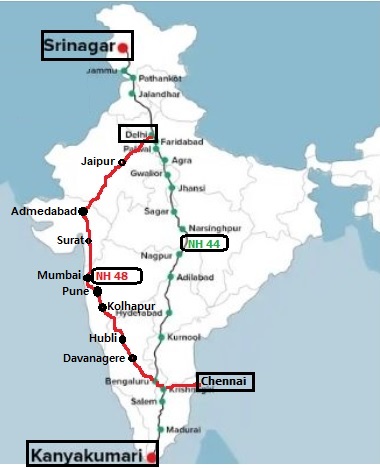
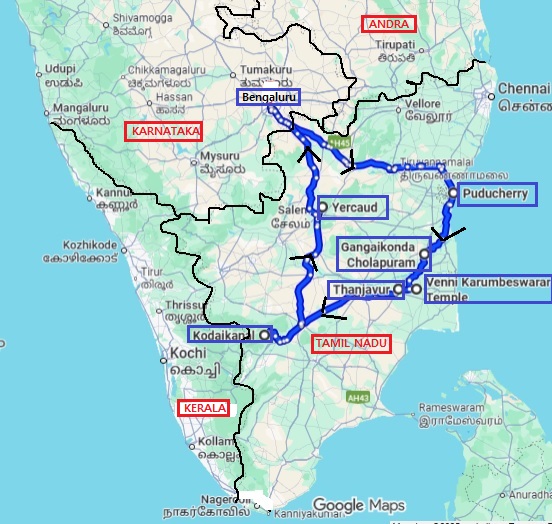
On this trip, we explored Pondicherry, Thanjavur, Kodaikanal, and Yercaud. We primarily drove along two major national highways NH48 and NH44.
NH48 stretches from Delhi to Chennai, passing through key cities like Jaipur, Ahmedabad, Mumbai, Pune, and Bangalore. NH44, on the other hand, is the longest highway in India, connecting Srinagar in the north to Kanyakumari in the south. Interestingly, both highways share a common stretch between Bangalore and Krishnagiri. For most of our journey between Pune and Tamil Nadu, we relied on NH48. NH44 came into play while driving towards Pondicherry and again on the return leg from Kodaikanal to Bangalore.
The southernmost destinations – Kanyakumari, Rameshwaram, and Madurai were intentionally left for a future trip. We also plan to explore Chennai, Mahabalipuram, and Tiruchirappalli as part of a separate visit.
Bangalore served as the main gateway to explore the region. Since my sister-in-law stays here, we planned our onward and return journeys to include Bangalore as a comfortable stop. The idea throughout the 12 day road trip from Pune to Tamil Nadu was to keep each driving leg within a target of 500 km or less.
| Day | Destination | Distance (km) | Time (hh:mm) |
|---|---|---|---|
| Day 1 | Pune >> Hubli | 430 | 07:00 |
| Day 2 | Hubli >> Bangalore | 410 | 07:00 |
| Day 3 | Bangalore >> Pondicherry | 310 | 06:00 |
| Day 4 | Pondicherry | ||
| Day 5 | Pondicherry >> Thanjavur | 170 | 04:00 |
| Day 6 | Thanjavur >> Kodaikanal | 200 | 06:00 |
| Day 7 | Kodaikanal | ||
| Day 8 | Kodaikanal >> Yercaud | 300 | 07:00 |
| Day 9 | Yercaud | ||
| Day 10 | Yercaud >> Bangalore | 200 | 05:00 |
| Day 11 | Bangalore >> Hubli | 410 | 07:00 |
| Day 12 | Hubli >> Pune | 430 | 07:00 |
| TOTAL | 2860 |
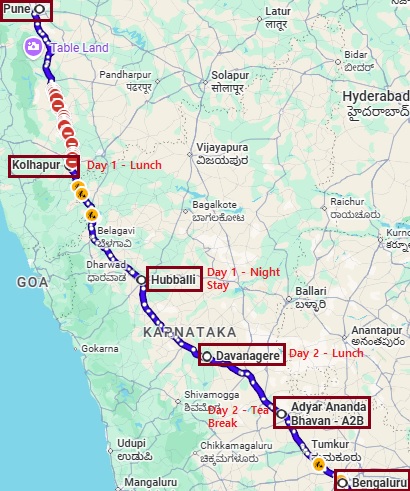
Although it was possible to reach Bangalore from Pune in a single stretch, an 800 km drive felt too tiring. Instead, we broke the journey at Hubli. From Bangalore, the route formed a loop, travelling east towards Pondicherry, then heading south to Thanjavur and Kodaikanal. Tiruchirappalli, which lies close to Thanjavur, was initially considered but later dropped as it would have extended the trip by an extra day. From Kodaikanal, the return journey headed north towards Bangalore, with a scenic break at Yercaud
Attractions Explored
- Pondicherry – Promenade beach, Auroville, Paradise Beach, Sri Aurobindo Ashram
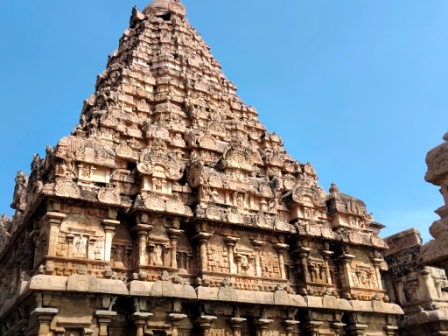
- Thanjavur – Gangaikonda Cholapuram, Venni Karumbeswarar Temple, Thanjavur Royal Palace, Brihadeeswarar Temple
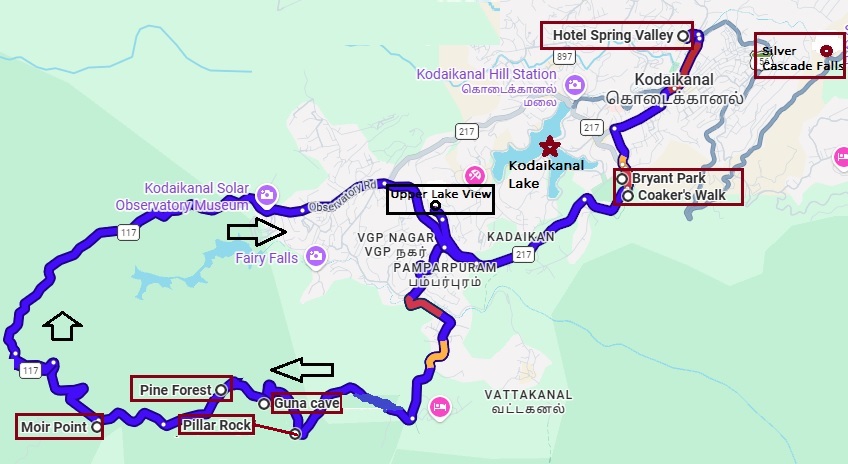
- Kodaikanal – Silver Cascade Falls, Pillar Rocks, Guna Caves, Pine Forest, Moir Point, Upper Lake View, Coaker’s Walk, Bryant Park, Kodaikanal Lake
- Yercaud – Yercaud Lake, Anna Park, Kiliyur Waterfalls, Sunset Seats – Lady’s , Gents Seat, and Children’s.
Hotel Summary
Accommodation for this 12 day road trip from Pune to Tamil Nadu was planned in advance, with all bookings done through MakeMyTrip. Since we were travelling with grown-up kids, the platform did not allow booking a single room. As a result, we booked two rooms at all hotels.
Each stay was chosen to suit road trip convenience rather than luxury, helping us maintain a steady pace without overextending daily drives.
| City | Hotel | Rate / Day |
|---|---|---|
| Hubli | SKD Comforts | 1,570 |
| Pondicherry | 1,626 | |
| Thanjavur | Hotel Victoriyah | 1,940 |
| Kodaikanal | Hotel Spring Valley | 1,612 |
| Yercaud | DK Resortss | 1,883 |
Day 1 : Pune to Hubli – Early Miles, Highway Hurdles & Kolhapuri Feasts (430 km / ~7 hrs)
Morning Drive out of Pune
We began Day 1 of our 12 day road trip from Pune to Tamil Nadu early at 6 am. The main goal was to beat the morning city traffic and get a clean exit from Pune. That strategy worked well and helped us settle into the drive quickly.
Soon after leaving the city, we stopped at a roadside food stall for breakfast. Hot idlies and wara made for a simple yet satisfying start to the day. After that short break, we joined NH 48 and continued south.
The expressway stretch till Kolhapur came with a challenge. Due to ongoing expansion work, there were diversions almost every 5 km, which impacted our speed considerably (visible on map as red dots). As a result, progress was slower than expected despite starting early.
We touched Kolhapur at around 1 pm, which lined up perfectly with lunchtime. Instead of pushing ahead, we decided to pause and enjoy the city’s famous food.
Lunch Stop in Kolhapur
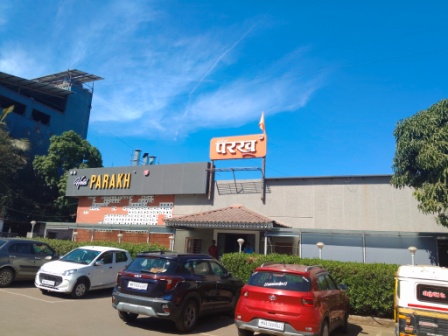
For lunch, we chose the popular Kolhapuri non veg thali. On this trip, we decided to try Hotel Parakh, even though it is located about 3 km inside the city, away from the highway.
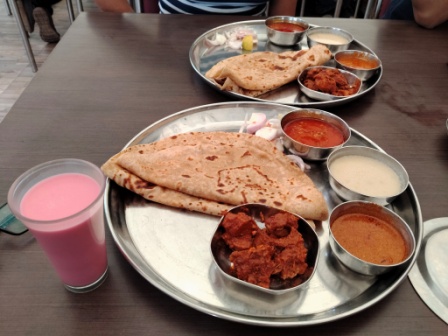
We ordered two mutton thalis. Since sharing was not allowed, we had to order two additional rassa thalis. As usual, the food lived up to expectations and made the detour worthwhile.
A typical thali included tambarassa, pandarassa, mutton gravy, and fried mutton. We doubled the indulgence with biryani and finished the meal with cold and refreshing solkadi. The total lunch cost came to about ₹1000.
Drive to Hubli
After a hearty lunch, we exited Kolhapur and resumed our onward journey to Hubli. Post Kolhapur, NH 48 was free of diversions and in very good condition. This allowed us to cruise comfortably at speeds of 90 -100 km/hr. As the daylight faded, we entered Hubli city limits. Since our hotel was located inside the city, navigating through heavy city traffic became unavoidable.
Hubli - Hotel Check-in
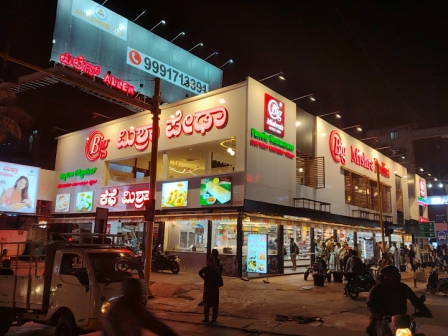
Our stay for the night was at SKD Comforts, which sits on the main road in Hubli. The biggest landmark nearby is Big Mishra’s Sweet Shop and Restaurant, located right opposite the hotel. Parking turned out to be tricky. The hotel has limited basement parking, with the entry from its backside. We struggled a bit before finally locating the entrance. Unfortunately, the hotel itself was below average. The room had a strong smoking smell, so we requested a different room to make our stay comfortable.
Dinner at Big Mishra’s
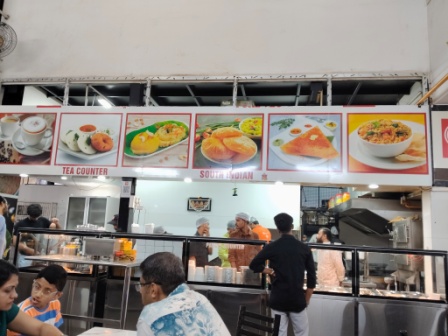
The real highlight of the evening was Big Mishra’s Restaurant (Vidyanagar). It turned out to be one of the finest restaurants and sweet shops we have come across. In addition to a wide variety of sweets, including their famous peda, the place also houses a South Indian restaurant on the ground floor and a fine dining restaurant on the first floor.
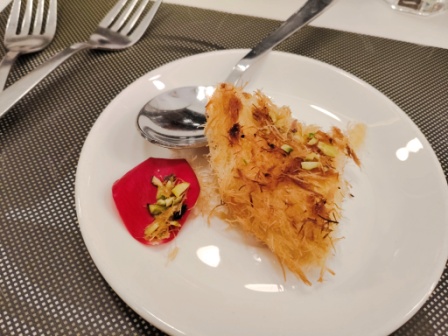
Prices were reasonable and the food tasted amazing. We ordered veg momos, stuffed parathas, and dal khichri, and every item was well prepared. After dinner, we tried their popular dessert, Kunafa. It is made using vermicelli dough to create a crispy exterior, stuffed with cream, and soaked in sugar syrup.
Calling It a Day
By 9 pm, we wrapped up the day and headed back to the hotel. With a long drive behind us and an early start planned for the next morning, we slipped into bed and called it a night.
Day 2: Hubli to Bangalore – A Relaxed Start, Smooth Highways & Slow City Traffic (410 km / ~7 hrs)
A Leisurely Morning in Hubli
Day 2 of our 12 day road trip from Pune to Tamil Nadu began without any urgency. We woke up leisurely and, after a quick bath and refreshments, stepped out for breakfast at Big Mishra’s Restaurant once again. This time, we headed straight to their South Indian section.
The breakfast spread was generous and satisfying. We thoroughly enjoyed the South Indian dishes, which paired perfectly with their excellent filter coffee. It felt like the right kind of relaxed start before another long drive.
Back on NH48
By 10 am, we were back on NH48, heading towards Bangalore. Once the highway enters Karnataka, the condition of the expressway improves significantly. The smooth roads made the drive comfortable and stress free. With lunch in mind, we had already identified Davangere as our next stop. The plan helped break the journey neatly and kept the drive from feeling too long.
Lunch Stop at Davangere
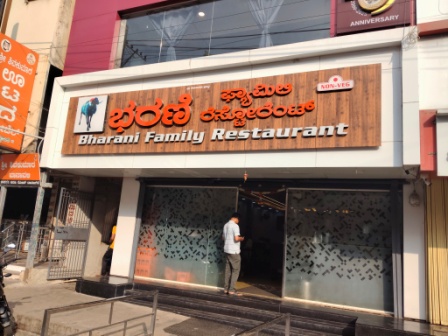
A quick Google search for a good restaurant led us to Bharani Family Restaurant in Davangere. The restaurant is located about 3 km off the highway, requiring a short drive towards the city.
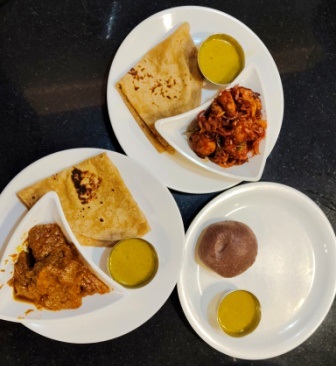
For lunch, we ordered mutton masala and chicken roast. One interesting local offering here was “mudde.” Made from ragi flour cooked with water, it is shaped into a ball roughly the size of a tennis ball. Mudde is eaten with pulses or meat, has a subtle taste, and pairs especially well with non vegetarian gravies.
The total lunch bill came to ₹860. The food was excellent overall, especially the mutton. If you enjoy non vegetarian food and are passing through Davangere, this place is definitely worth trying.
Tea break at A2B (Adyar Ananda Bhavan)
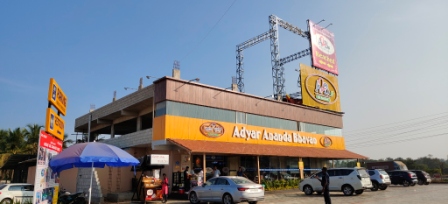
As we cruised along NH48 past Bangalore, the familiar green and yellow signboards of Adyar Ananda Bhavan (A2B) started appearing at regular intervals – a reassuring sight for any traveler looking for a reliable pit stop. Known for its consistent quality and pure-vegetarian offerings, A2B has built a strong reputation across South India for quick, hygienic, and satisfying food.
By around 3:30 pm, we pulled over at one of their outlets near Tumakuru for a quick tea break. The setup followed a fast-food style service, making it perfect for road trips where time matters. The menu ranges from chaats and South Indian tiffin items to an irresistible spread of sweets and savouries. Classics like Mysore Pak and Kaju Katli stand out, alongside a variety of crunchy snacks.
Entering Bangalore
As evening approached, we continued our drive towards Bangalore. By 6:30 pm, the familiar traffic snarls of Bangalore greeted us. To navigate the congestion, we took the Outer Ring Road (ORR) and headed towards Rayasandra. However, traffic moved slowly, and it took us almost 2.5 hours to reach our destination. Despite the delay, it felt good to finally arrive and stretch our legs.
Ending the Day
After exchanging meetings and greetings with family, we settled in for the night. A comforting home cooked dinner rounded off the day perfectly. Soon after, we called it a day and rested up for the next leg of our road trip.
Day 3: Bangalore to Pondicherry - Temples, Detours & a Coastal Finish (310 km / ~6 hrs)
Leaving Bangalore for the Coast
Day 3 marked our first real entry into Tamil Nadu during this 12 day road trip from Pune to Tamil Nadu. We left Bangalore at 9 am, heading towards our first coastal destination – Pondicherry. The drive is roughly 370 km and usually takes 6.5 to 7 hours, depending on traffic and stops.
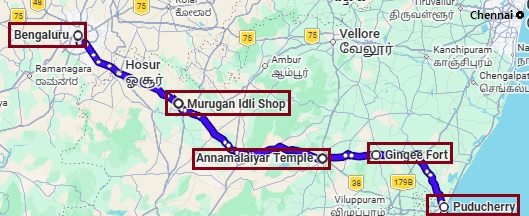
We followed the Bangalore >> Krishnagiri >> Vellore >> Tindivanam >> Pondicherry route. Until Krishnagiri, the expressway runs along a shared section of NH48 (Delhi-Chennai) and NH44 (Srinagar-Kanyakumari), India’s longest highway. This stretch is fast and well laid out, making for an easy start.
Breakfast Stop at Krishnagiri
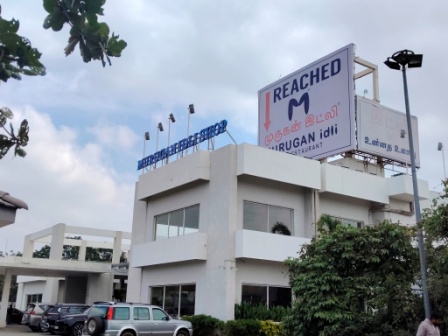
By 10:30 am, we reached Murugan Idli Shop in Krishnagiri. After reading several positive reviews, we decided to stop and see what the hype was about. The restaurant is located right on NH 44 and has a large parking space, which makes it very convenient for highway travellers.
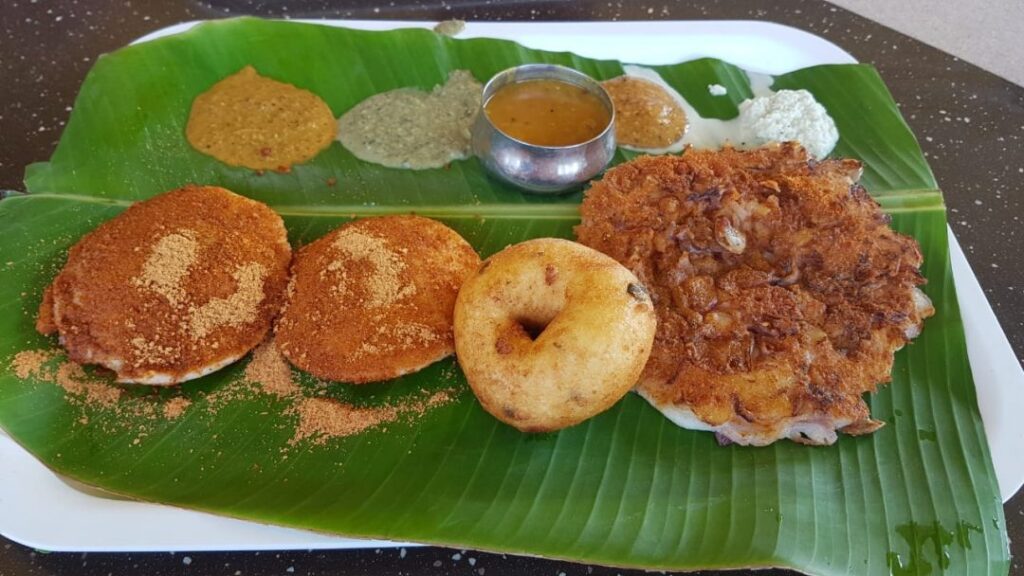
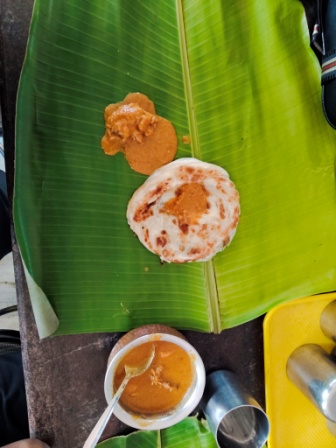
The place is pure vegetarian and serves food in a traditional banana leaf style. Their specialities include podi idli, uthappam, ghee dosa, sweet pongal, and filter coffee. One unique aspect here is the ordering system – food servers keep bringing freshly prepared items from the kitchen and stop at each table. You simply request whatever you want to eat.
However, the popularity comes with a downside. On weekends and holidays, the place gets overcrowded, and waiting times can stretch to 30-45 minutes.
We ordered ghee vada, dosa, podi idli, sweet pongal, and filter coffee, and every dish lived up to expectations. The breakfast cost us ₹564.
The Sambar Story
Across Tamil Nadu, one dish stayed constant – sambar, and it never disappointed. Unlike the slightly sweet versions from Maharashtra, Karnataka or Gujarat, this one is bold and tangy, thanks to generous use of tamarind. The dal is perfectly blended, giving it a rich, thick texture, while vegetables like drumstick, brinjal, onions, and tomatoes soak up the spices beautifully.
Interestingly, this iconic dish has Maratha roots. During the 17th century, the Marathas ruled Thanjavur, when a royal kitchen faced a small crisis – kokum, the usual souring agent for amti, was unavailable. In a moment of improvisation, the cook turned to tamarind, a local ingredient. The result – sambar, named after Sambhaji, was a happy accident that Tamil Nadu perfected over time.
Detour to Tiruvannamalai
After Krishnagiri, we diverted onto NH77 towards Pondicherry. Along the way, we passed through Tiruvannamalai, where multiple signboards pointed towards the Arunachaleswarar (Annamalaiyar) Temple. Although it was not part of the original plan, we decided to make a spontaneous stop.
We took a 2.5 km detour to visit the temple. The Arunachaleswarar Temple is one of the most sacred Shiva temples in South India and is located at the foothills of Arunachala Hill. According to legend, Lord Shiva manifested here as an endless pillar of fire, proving his supremacy over Brahma and Vishnu. This form later became Arunachala Hill itself, which is worshipped as Shiva in physical form.
The origins of the temple date back over 1,000 years, with references found in Sangam literature. Construction and expansion were carried out by multiple dynasties, including the Pallavas, Cholas, and Vijayanagara rulers. The Rajagopuram (East Tower) is among the tallest temple towers in Tamil Nadu.
We explored the temple complex but skipped the darshan of the main linga due to a long queue. Waiting would have delayed our arrival in Pondicherry, so we chose to move on.
Local Finds and History Along the Way
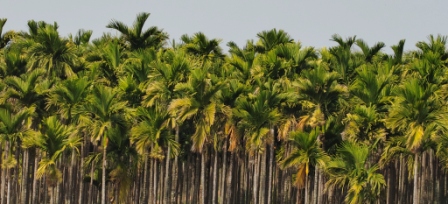
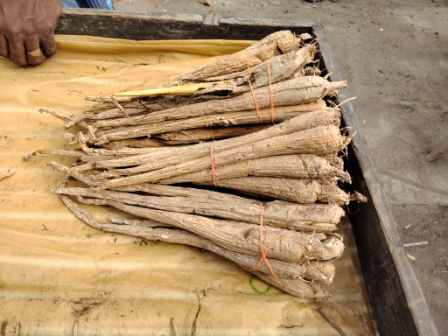
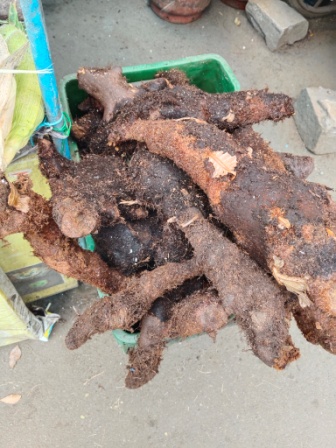
Near the temple, a unique local item caught our attention. Vendors were selling something unfamiliar, which we later discovered through Google to be Pana Kizhangu in Tamil. These are underground shoots of palm seeds, either boiled or roasted before eating, and are considered a local delicacy.
Unfortunately, the taste did not suit our palate. We found it chewy and bitter, making it an experience we were happy to try just once.
As we continued towards Pondicherry, road markings pointed towards Gingee Fort.
Located about 70 km from Pondicherry, Gingee Fort is one of the most formidable and historically significant fortresses in South India. The British famously called it the “Troy of the East” due to its near impregnable natural and man made defences.
The fort dates back to around the 9th – 13th centuries, with early construction attributed to local chieftains of the Kadava dynasty and later expansions by the Cholas. It reached peak strength under the Vijayanagara Empire in the 15th and 16th centuries. In 1677, it was captured by Maratha king Shivaji maharaj.
More recently, in 2025, Gingee Fort was inscribed as a UNESCO World Heritage Site as part of the Maratha Military Landscapes of India. Notably, it is the only fort in this UNESCO group located outside Maharashtra.
Visiting the fort requires a 1.5 to 2 hour trek. If you have the time and interest, it is worth including in your itinerary.
Pondicherry Arrival - From Stay Issues to Beachside Calm
By afternoon, we finally entered Pondicherry. However, the day threw an unexpected surprise our way. When we reached our booked accommodation, Hotel BnB, we found it shut for renovations and not accepting any bookings.
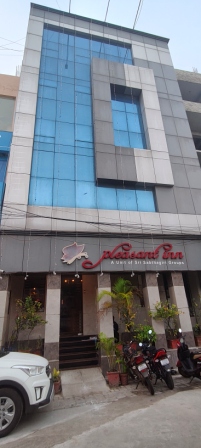
In hindsight, this made sense. A few days earlier, I had tried calling the hotel to confirm our booking, but my calls were never answered. We spent about an hour speaking with MakeMyTrip to arrange an alternate stay. Eventually, we were reassigned to Hotel Pleasant Inn, along with a complimentary breakfast as compensation for the inconvenience.
Although an hour was lost, we finally checked in. The positive side was that Pleasant Inn is closer to the beach. However, it did not have dedicated parking, so we had to find parking on the roadside in front of the property.
Evening at the Promenade
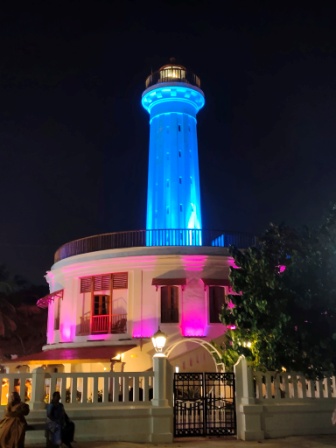
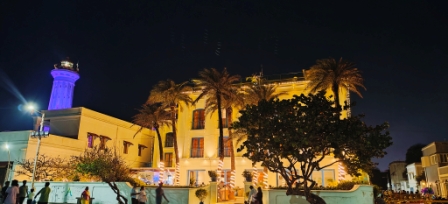
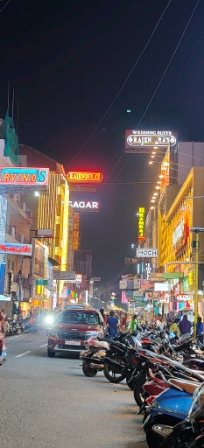
After some rest, we stepped out for a leisurely walk to the Promenade / Beach Road. The stretch includes Rock Beach and Promenade Beach and is completely vehicle free. A well metalled road runs along the coast, lined with several restaurants.
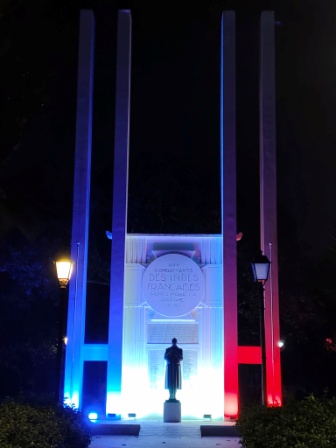
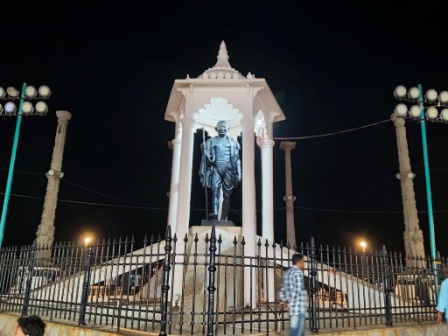
The promenade is dotted with landmarks such as the Mahatma Gandhi Statue and the French War Memorial. The calm sea breeze and open space made it a relaxing end to a long travel day.
Dinner by the Sea
For dinner, we stopped at Le Café, located near the Gandhi Statue. The café offers casual food, coffee, and light bites. We ordered chicken lasagna and grilled sandwiches, which paired well with coffee.
A few meters ahead, we visited Baker Street, known for its authentic French bakery items such as croissants, macarons, and cinnamon rolls. We tried their cinnamon rolls, which tasted amazing.
After spending a few pleasant hours at the promenade, we strolled back to our hotel. Soon after, we called it a day and rested up for the next leg of the road trip.
Day 4 : Exploring Pondicherry - Auroville, Beaches & Timeless Charm
Quick Summary of Pondicherry’s Past
Before diving into our Day 4 experiences, it helps to understand the history of Pondicherry, officially known as Puducherry. The town carries a distinct identity shaped by nearly three centuries of French colonial rule. Long before Europeans arrived, this region was an important trading hub. Ancient Roman records mention a port called “Poduke” or “Poduca,” widely believed to be Arikamedu, located close to present day Pondicherry.
Over the centuries, the area came under the rule of several South Indian dynasties, including the Pallavas, Cholas, Pandyas, and the Vijayanagara Empire. Even after India’s independence in 1947, Pondicherry remained under French administration until 1954, when it became a Union Territory of India. Despite this political shift, French influence continues to reflect in the town’s architecture, town planning, cuisine, and language.
In the 20th century, Pondicherry gained global recognition as a spiritual destination. The establishment of Sri Aurobindo Ashram and later Auroville, an international township, transformed the town into a centre for philosophy, meditation, and alternative living.
A Slow Start to the Day
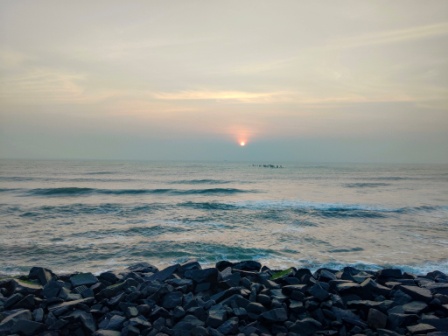
Day 4 of our trip was intentionally kept slow, and we allowed it to unfold at its own pace. The first thing we did was walk back to the shore to watch the sunrise. Living in Pune, which is closer to the western coast, we had seen sunsets over the Arabian sea several times, but seeing sunrise was an occasional event
Unfortunately, haze played spoilsport. The sun was not visible at its scheduled time of 6:15 am, and we had to wait for about 30 minutes before finally catching a glimpse of it.
Breakfast and Morning Plans
Back at the hotel, breakfast was served as a buffet. The spread included idli, dosas, poori, and omelette, making for a satisfying start to the day. After breakfast, we freshened up and set out for our first destination – Auroville. Later in the day, we planned to explore Paradise beach followed by evening visits to Sri Aurobindo Ashram and the local market
Visiting Auroville
Auroville is an experimental international township founded in 1968. It was conceived by Mirra Alfassa, a French woman known as “The Mother,” who was also the spiritual collaborator of Sri Aurobindo. Her vision was to create a place where people from all nations, cultures, and beliefs could live together in harmony, beyond politics, religion, and nationality.
The name Auroville comes from “Aurore” (dawn) and “Ville” (city), meaning “City of Dawn.” Located about 12 km from Pondicherry city centre, it took us around 30 minutes to drive there. Parking charges were ₹150 for cars.
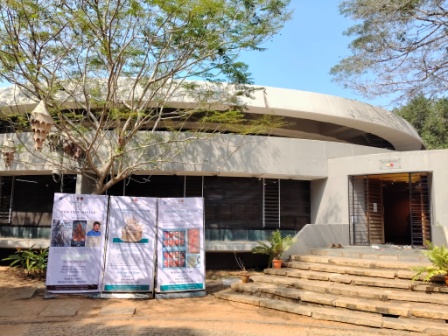
From the parking area, we walked to the Auroville Visitors Centre, where we learned about Auroville’s philosophy, history, and township layout. Entry is free, and they issue free passes. The Visitors Centre also has small shops and several restaurants offering a wide range of food, shakes, and drinks. A free shuttle service is available from here to the Matrimandir Viewing Point.
Walk to the Matrimandir Viewing Point
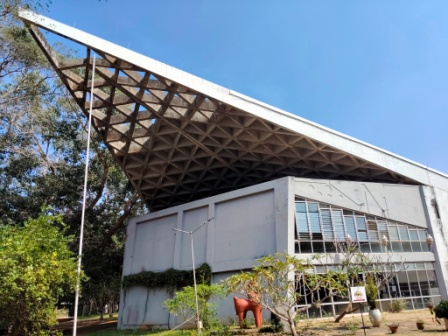
We decided to walk instead of taking the shuttle. Along the way, we passed cultural pavilions such as Bharat Nivas and Savitri Bhavan. There is a separate entry fee of ₹25 per person to visit these spaces. They focus on art, philosophy, and literature, particularly works related to Sri Aurobindo, and are worth a brief stop if you enjoy cultural exhibitions.
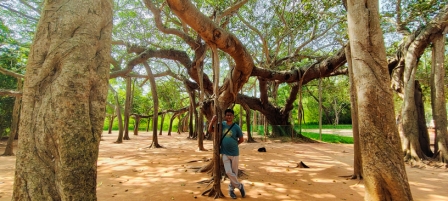
Next, we reached The Banyan Tree, which marks the geographical centre of Auroville. This over 100 year old banyan tree was chosen by The Mother as the physical centre of the township.
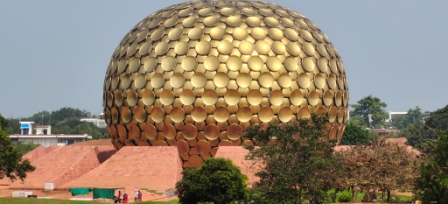
Finally, after a short walk, we reached the Matrimandir Viewing Point. From here, we could see the iconic golden spherical structure, which forms the spiritual heart of Auroville. Visitors are not allowed inside the Inner Chamber unless they have a prior appointment. The Viewing Point offers a serene and unobstructed view of the Matrimandir and its surrounding gardens.
There is an option to visit the Inner Chamber by booking an appointment from Inner Chamber Booking Portal. Booking slots are available between 7 am and 12 pm, except on Tuesdays. Unfortunately our visit happened to fall on a Tuesday, so we had to give it a miss. My suggestion is to try booking a day prior to your visit if you plan to visit the Inner Chamber.
Auroville also has a Solar Kitchen, which serves simple vegetarian meals cooked using solar energy in a collective, self service setting. Since it was early for lunch, we skipped it.
After finishing our exploration, we all were tired and not in mood to walk back we took the shuttle service back to the Visitors Centre. Our next destination was Paradise Beach.
Lunch Stop Before Paradise Beach
To reach the beach, one must take a boat from Chunnambar Boat House, located about 20 km from Auroville, which took us roughly 40 minutes to drive.
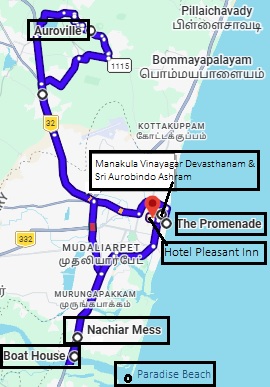
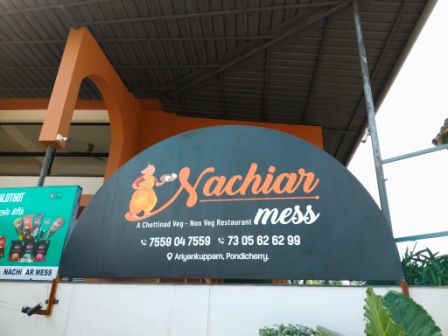
As it was already noon, we stopped for lunch along the way. A quick online search led us to Nachiar Mess in Ariyankuppam (check the map), a convenient stop en route to Paradise Beach. The restaurant was crowded during peak lunch hours, which indicated strong local popularity.
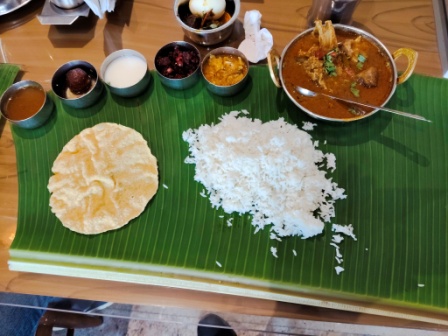
Nachiar Mess serves South Indian mess style meals on banana leaves, including sambar, rasam, poriyal, and curd. Non vegetarian dishes are their speciality. We ordered mutton curry and veg meals, topped up with chicken biryani. The food was flavourful, well spiced, and satisfying. Lunch cost us ₹650, which felt like great value for money.
Paradise Beach via Chunnambar Boat House
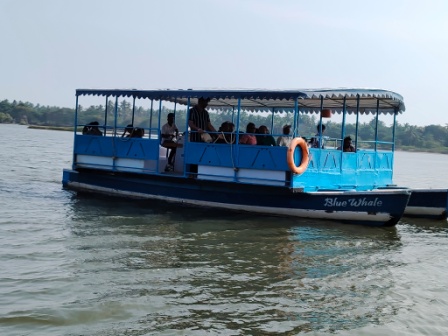
After a relaxed lunch, we set out toward Chunnambar Boat House, nestled along the serene backwaters of the Chunnambar River and serving as the only gateway to Paradise Beach. After parking the car, we picked up our entry tickets and made our way to the jetty to board a shared motorboat. The visit was quite affordable, with car parking at ₹25, entry at ₹10 per adult, and the round-trip boat ride costing ₹300 per person.
Reaching Paradise Beach felt like an experience in itself rather than just a commute. The gentle hum of the boat and the cool breeze made the 30 minute ride through the backwaters feel almost meditative.
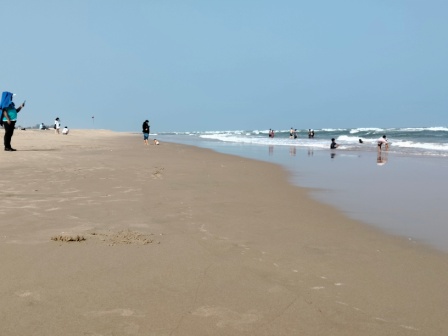
True to its name, Paradise Beach was pristine and peaceful. With access limited to boats, the crowd felt controlled and far less chaotic than other beaches. The soft sand was perfect for a barefoot stroll, shaded huts offered a place to unwind, and there were safe swimming zones with lifeguards along with a few snack stalls.
We spent about an hour walking along the shore, clicking photos, and enjoying a quick snack with a fizzy goli soda. As the afternoon wore on and the last boat timing (around 4 pm) approached, we headed back to the boat house.
Sri Aurobindo Ashram
Back in town, we rested briefly at the hotel before heading out to explore Pondicherry’s Sri Aurobindo Ashram.
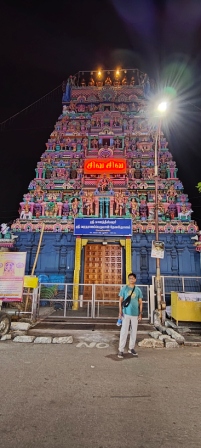
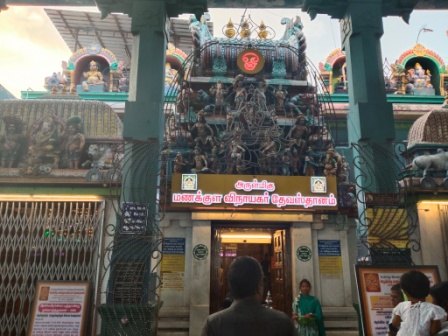
The Ashram was walking distance from our hotel. On the way we came across Arulmigu Manakula Vinayagar Devasthanam, one of the oldest and most revered Hindu temples dedicated to Lord Ganesha.
The temple is believed to be over 500 years old and predates French colonial rule. One of the temple’s most striking features is its golden chariot, crafted from teak wood and adorned with over 7.5 kg of gold, donated entirely by devotees. The temple complex also includes shrines to Shiva, Parvati, Murugan, and Krishna.
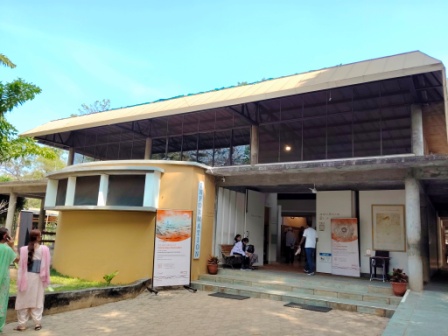
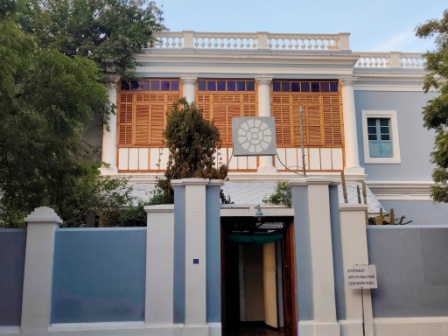
A short walk from the temple brought us to Sri Aurobindo Ashram. Founded in 1926, the ashram is dedicated to Sri Aurobindo and The Mother. Unlike traditional ashrams, it focuses on quiet meditation and self reflection, rather than rituals or sermons.
At its heart lies the Samadhi of Sri Aurobindo and The Mother, a white marble structure set in a shaded courtyard and decorated daily with fresh flowers. Visitors are expected to maintain silence, and mobile phones and photography are strictly prohibited. A visit of 20-30 minutes is usually sufficient. Visiting Hours to the ashram are 8:00 am – 11:30 am & 2:00 pm – 6:00 pm.
Market, Dinner and Calling it a Day
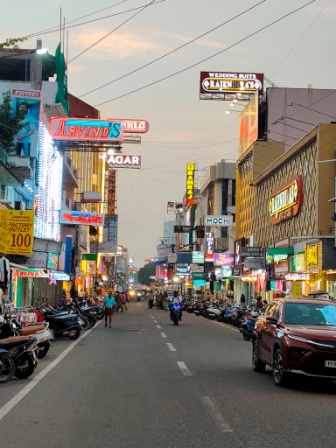
After visiting the ashram, we spent the rest of the evening strolling through the neon lit market streets. For dinner, we stopped at the Indian Coffee House, known for its old school ambience and simple offerings like hot and cold drinks, dosas, and poori sabji.
Post dinner, we wrapped up the day and headed back to the hotel, ending a relaxed yet fulfilling day in Pondicherry.
Day 5 : Pondicherry to Thanjavur - Chola Temples & Royal Heritage (200 km / ~6 hrs)
Leaving the Coast Behind
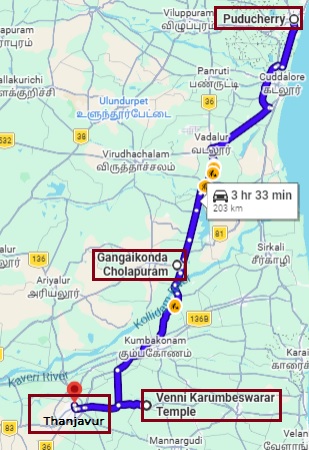
Day 5 of our 12 day road trip from Pune to Tamil Nadu marked a shift in landscape and mood. We left the coastal charm of Pondicherry behind and headed inland towards the historic temple town of Thanjavur. The plan for the day included two important stops along the way – Gangaikonda Cholapuram and Venni Karumbeswarar Temple.
After enjoying the complimentary breakfast at the hotel, we checked out by 8 am. Soon after, we joined NH32, which led us through quiet highways flanked by vast rice fields, setting a calm tone for the drive. At Kanniakoil, we took the Cuddalore bypass and then joined Highway 532, which later connects to NH36.
Gangaikonda Cholapuram – The Sister Temple
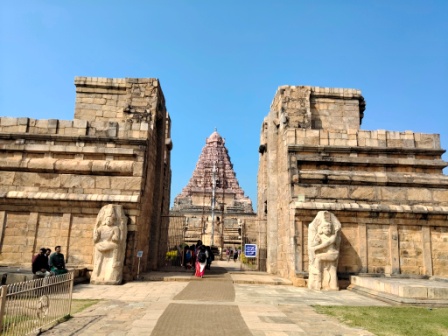
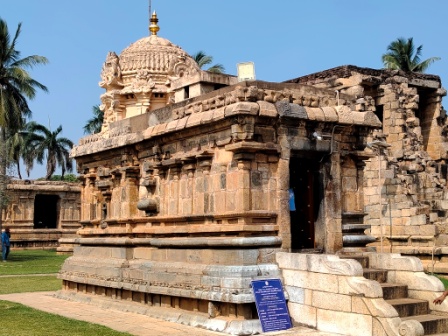
A few kilometres later, the road opened into the plains surrounding the magnificent Gangaikonda Cholapuram in Ariyalur. Often referred to as the “sister temple” of Thanjavur’s Brihadeeswara Temple, this site holds immense historical and architectural significance.
The temple was built by Rajendra Chola I, who led a major northern military campaign through the Deccan and Kalinga regions into Bengal. As a symbol of victory, he brought back Ganga water, which later became part of the temple’s founding legacy. To commemorate this achievement, he established a new capital called Gangaikonda Cholapuram, meaning “the Chola who conquered the Ganga,” and built the temple in 1035 CE.
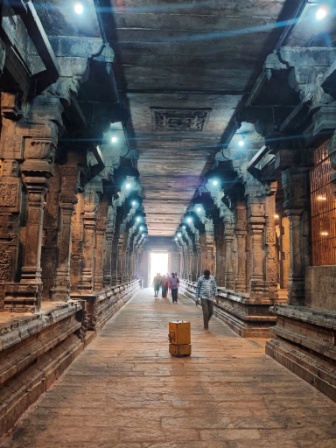
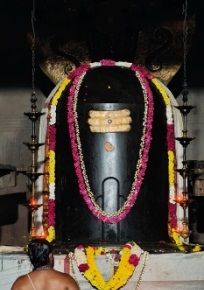
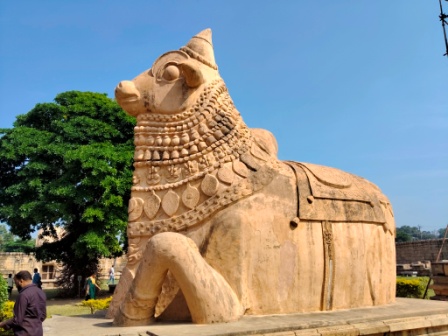
The temple is part of the Great Living Chola Temples, a UNESCO World Heritage Site. Its layout features a long and wide courtyard leading towards the sanctum, which houses a massive Shiva linga. A large Nandi (bull) sits facing the main shrine and is one of the most photographed elements of the complex.
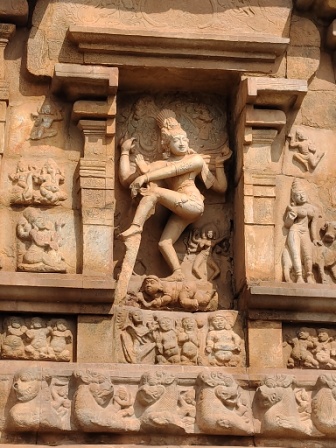
The outer walls are richly decorated with dense and fine carvings, including ornamental bands, deity panels, and mythological scenes. The complex also includes smaller structures such as the Chandikeshwar Temple, Ganesh Temple, South and Kailasa temples, and a Lion Well.
We spent about an hour exploring the temple and clicking photographs before moving on to our next stop.
Venni Karumbeswarar Temple
Our next destination was Venni Karumbeswarar Temple, located at Ammapettai, about 70 km further and a slight detour from our route to Thanjavur.
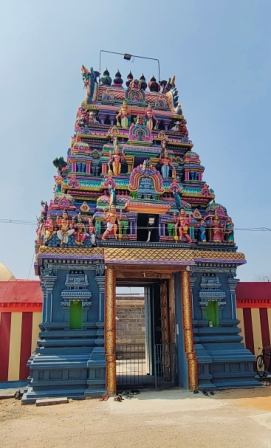
The temple is dedicated to Lord Shiva, worshipped here as Karumbeswarar. In Tamil, “Karumbu” means sugarcane. The Shiva linga in the sanctum is believed to resemble a bundle of tied sugarcane stalks, symbolising sweetness, abundance, and prosperity.
Unlike major tourist temples, Venni Karumbeswarar is more of a quiet spiritual landmark. It has gained attention through several YouTube videos claiming that offering sugar or sugarcane based prasad here brings relief from diabetes and metabolic ailments. However, when we reached the temple, we learned that offering sugar has been discontinued, as it attracts insects and creates administrative challenges.
Instead, the temple priest offered us vibhuti and suggested applying it on the forehead for the next 21 days. The temple fits beautifully as a reflective stop between Pondicherry and Thanjavur, especially for those interested in lesser known heritage temples.
Temple Timings: Morning: 8:00 am – 12:00 pm. Evening: 5:00 pm – 8:00 pm
Arrival in Thanjavur
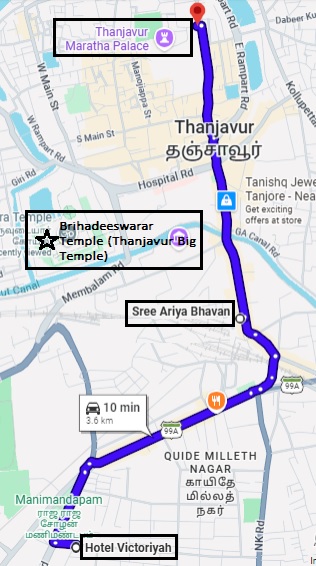
After darshan, we returned to NH83 and continued our drive towards Thanjavur. Our hotel, Hotel Victoriyah, was about 25 km away and took roughly 40 minutes to reach. By the time we checked in, it was around 2 pm.
With only one full day in Thanjavur, we decided to split our sightseeing smartly. The plan was to explore the Thanjavur Royal Palace on the same day and visit the Brihadeeswara Temple early the next morning after checking out.
Lunch at Sree Ariya Bhavan
Since it was already afternoon, lunch came first. Based on online reviews, we chose Sree Ariya Bhavan. The restaurant is located close to the old bus stand and within walking distance of the Thanjavur Royal Palace.
A 15 minute drive brought us to the bus stand, where we used the paid car parking adjacent to it. Sree Ariya Bhavan is one of the most popular pure vegetarian restaurants in Thanjavur and is known for its traditional South Indian thali meals.
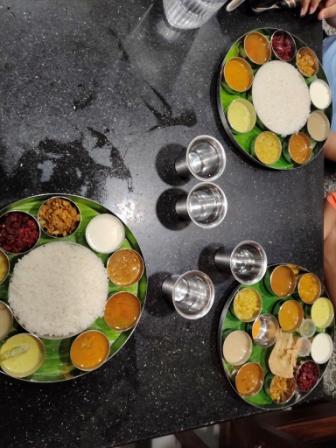
The thali comes with unlimited servings, a wide variety of dishes, and a strong focus on flavour and freshness. The only catch is a strict no sharing policy. Their highlights include sambar, rasam, sweet pongal, and traditional desserts. Every item lived up to its online reputation – authentic, rich, and flavourful.
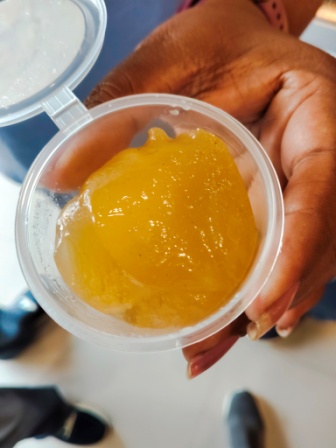
The restaurant also has a sweet counter, where we tried a unique dessert -Elaneer (tender coconut) halwa, which stood out for its taste.
Thanjavur Maratha Palace and Art Gallery
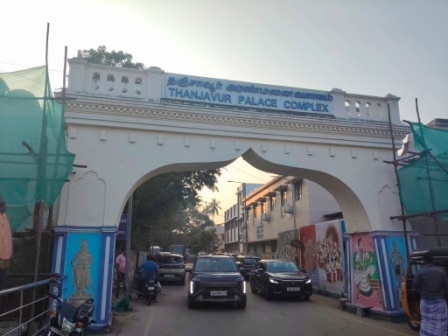
After lunch, we walked to the Thanjavur Palace, one of the most important non temple heritage sites in the region. Originally constructed in the 16th century by the Thanjavur Nayak rulers, the palace later came under the control of the Thanjavur Marathas (Bhonsle dynasty) after the Nayaks were defeated.
The Marathas expanded and modified the complex extensively. The palace served as their royal residence and administrative centre until British annexation reduced royal power. Today, while some parts are still associated with the royal family, large sections function as museums and galleries maintained by Tamil Nadu archaeology and tourism departments.
The palace is a vast fortified complex with multiple courtyards, halls, and towers, reflecting Nayak, Maratha, and colonial influences.
Key Sections inside the Fort Complex:
- Royal Palace Museum – Displays royal artefacts such as weapons, headgear, costumes, utensils, and everyday objects used by the Maratha rulers.
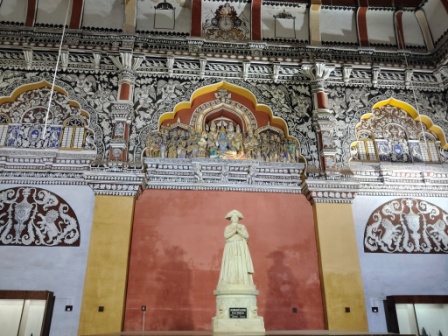
- Durbar Hall – Once the royal court, this hall features an ornately painted ceiling depicting Maratha rulers and Hindu deities like Shiva, Vishnu, and Indra.
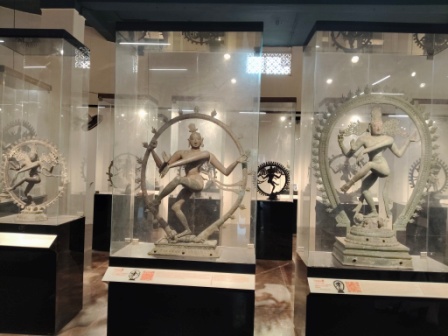
- Art Gallery – Houses an impressive collection of Chola bronze sculptures (9th–16th century), stone idols, and traditional Tanjore paintings.
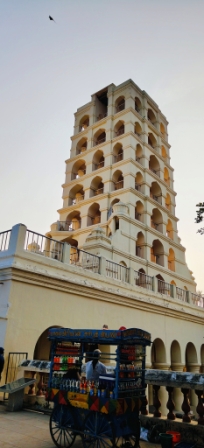
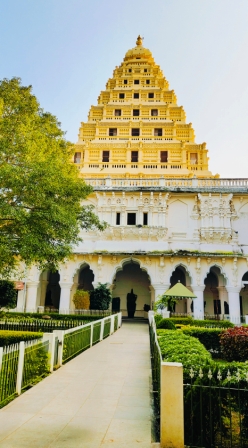
- Bell Tower – A tall multi storeyed watchtower that once served as a lookout and armoury, and remains one of the most recognisable landmarks of the complex.
- Saraswathi Mahal Library – One of the oldest libraries in Asia, containing ancient manuscripts in Tamil, Sanskrit, Telugu, Marathi, and other languages. Though it has a separate entry, it forms a vital part of the palace’s intellectual legacy.
Visiting hours: 9:00 am – 6:00 pm. Time required: 1.5 to 2 hours. Entry fee: ₹50 per person (covers palace complex and art gallery). Saraswathi Mahal Library and some galleries have separate nominal charges.
After exploring the palace complex, we walked back to the parking area and returned to the hotel.
A Quiet Evening in Thanjavur
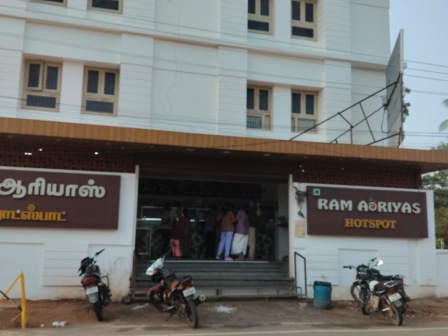
It had been a long and fulfilling day, so we rested for a while. By dinner time, everyone felt too tired to head out. Conveniently, right next to our hotel was Ram Aariyas Hotspot, a popular self service vegetarian tiffin restaurant.
The place is ideal when you want quick, no frills South Indian food after a day of sightseeing. Their menu includes popular South Indian dishes like- idli, pongal, vada, dosa varieties, along with noodles, veg fried rice, Manchurian, and beverages like filter coffee and tea.
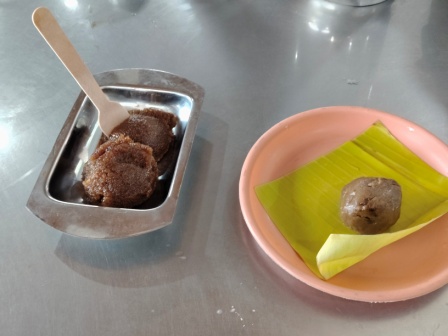
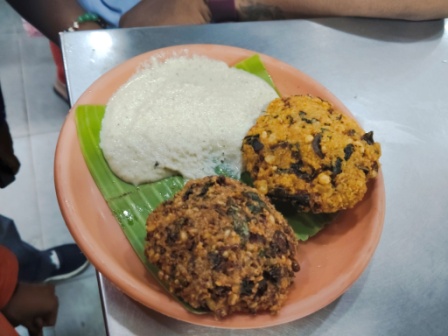
We ordered dal vadas and also tried a traditional local dish – Ulundhu Kali. Made by cooking roasted black gram flour with jaggery syrup and oil, it turns into a thick, glossy, and soft delicacy with a rich, earthy flavor.
Keeping dinner light, we wrapped up early – saving our energy for an early start and the much-awaited highlight of Thanjavur the next morning.
Day 6 : Visit Brihadeeswarar Temple and drive to Kodaikanal - From Chola Grandeur to Misty Hills (200 km / ~ 5 hrs)
Morning in Thanjavur
The day began with one of the biggest highlights of Thanjavur. The plan for the morning was to explore the Brihadeeswarar Temple and then drive to one of Tamil Nadu’s most popular hill stations – Kodaikanal.
After refreshing ourselves, we stepped out for breakfast at the familiar Ram Aariyas Hotspot, located right next to our hotel. The place was already active, serving hot dosas, idlis, and other morning tiffin items. A hearty breakfast here set us up well for the day ahead.
Visiting Brihadeeswarar Temple
Post breakfast, we drove straight to the Brihadeeswarar Temple, also known as the Thanjavur Big Temple. The temple has ample free parking available opposite the complex, which makes access easy. Since it was a holiday (25 December), the premises was heavily crowded.
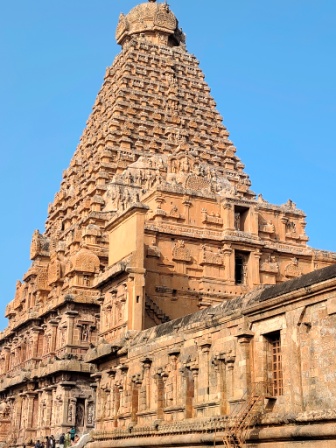
The Brihadeeswarar Temple is one of the greatest architectural achievements in Indian temple history. Dedicated to Lord Shiva, it was built by Chola emperor Rajaraja Chola I and completed in 1010 CE. The temple stands as a powerful symbol of the Chola Empire’s political strength, artistic brilliance, and engineering mastery.
The temple is part of the “Great Living Chola Temples” and is officially recognized as a UNESCO World Heritage Site. Remarkably, the massive structure was constructed between 1003 and 1010 CE, an exceptionally short time considering its scale.
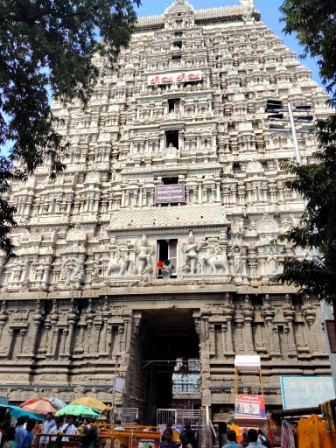
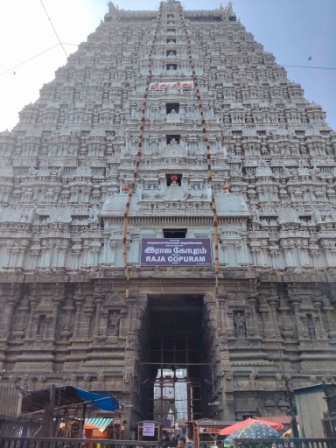
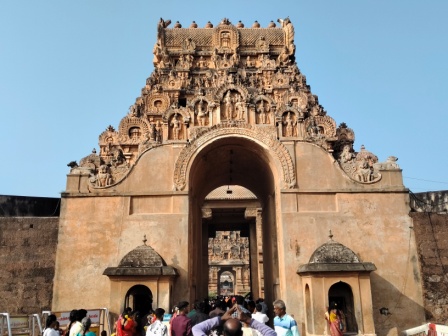
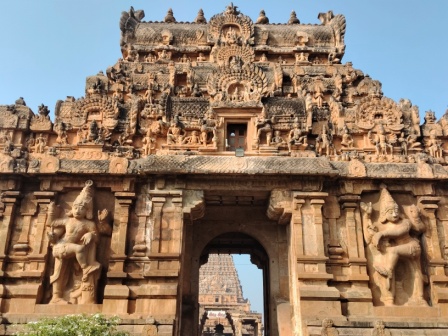
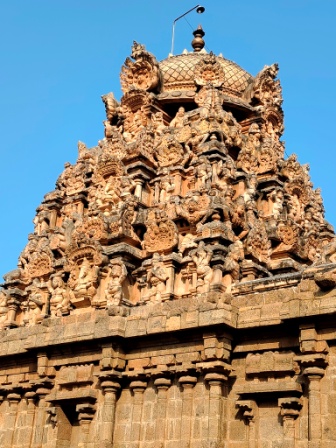
The Temple has two main, massive gopurams (entry gateways) located on the eastern side, which are commonly used for entry. First Gate (Keralantakan Tiruvasal) is the outer gopuram. Located about 100 meters further is Second Gate (Rajarajan Tiruvasal) which is the inner gopuram.
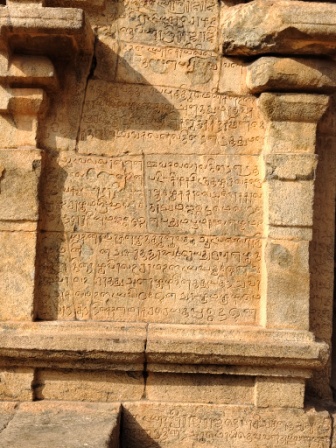
Inscriptions carved on the temple walls provide rare and detailed records of land grants, temple staff, musicians, dancers, rituals, and administration, offering historians a direct glimpse into 11th century Chola society. The entire temple is built of granite, even though no granite sources exist near Thanjavur.
The vimana, or tower above the sanctum, rises to approximately 65-66 metres (216 ft), making it one of the tallest stone temple towers in South India. Crowning it is a massive octagonal stone (kumbam) weighing nearly 80 tons, believed to have been placed using a long, gently sloping earthen ramp – an engineering feat admired even today.
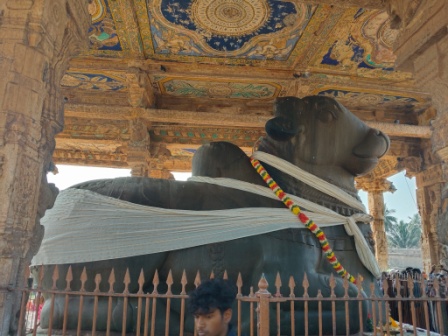
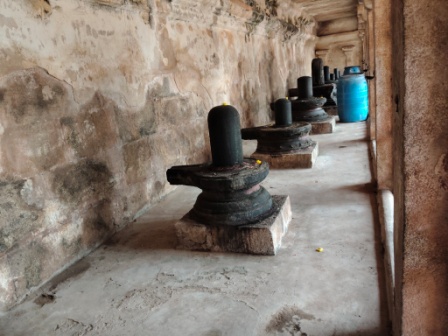
Inside the sanctum stands a massive Shiva linga, among the largest in India. Facing it is a colossal Nandi statue, carved from a single stone block. Despite its age, the temple remains an active place of worship, with daily rituals performed according to ancient Shaiva traditions. Over centuries, it also evolved into a centre for music, dance, and sacred arts, supported through royal patronage.
Temple Timings: Morning: 6:00 am – 12:30 pm. Evening: 4:00 pm – 8:30 pm
Leaving the Plains for the Hills
After days of highways, temple towns, and coastal promenades, we finally set off for Kodaikanal. Nestled in the upper Palani Hills of the Western Ghats, Kodaikanal is known for its cool climate, misty valleys, and serene landscapes. Often called the “Princess of Hill Stations,” it offers the perfect balance of relaxation and exploration.
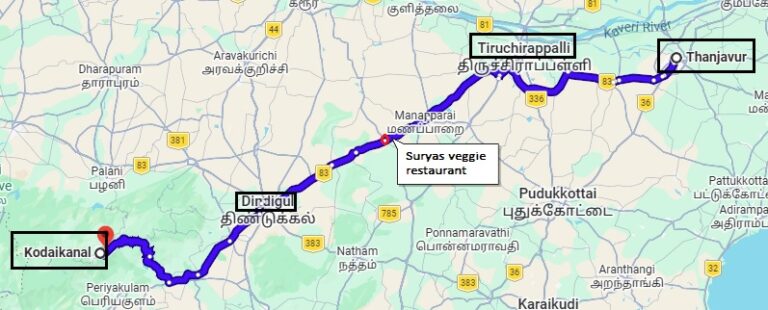
Kodaikanal is about 250 km from Thanjavur, and the drive takes roughly 5 hours. We took NH83, which bypasses Tiruchirappalli, thus avoiding city traffic and making journey smoother.
Lunch Break Near Dindigul
Just before bypassing Dindigul, we stopped for lunch at Surya’s Veggie Restaurant in Vaiyampatti. A non vegetarian section was also available nearby. We chose soft parottas paired with spicy Chicken Chettinad, which turned out to be a perfect and satisfying meal for the long drive ahead.
Ghat Roads and E-Pass Check
At Dindigul, we switched to NH183. After a few kilometres, we reached the Kodaikanal Ghat Road junction, where we took a right turn and began the climb. As we began climbing the ghat roads past Dindigul, the change was immediate. The air grew cooler, the vegetation denser, and the pace of travel naturally slowed.
Along the way, several road signboards advised travellers to obtain an e pass to enter Kodaikanal.A quick Google search revealed that due to increasing tourist inflow to Ooty and Kodaikanal, the Tamil Nadu government has introduced an e Pass system to regulate entry and ensure smooth travel. The limit is 4,000 vehicles per day on weekdays and 6,000 on weekends.
Steps to apply for an e Pass:
- Visit https://epass.tnega.org to apply on the same day or in advance
- Log in using your mobile number (Indian visitors) or email address (foreign visitors); an OTP is generated
- Select the destination – Nilgiris or Kodaikanal
- Fill in details such as name, address, vehicle number, purpose of visit, number of passengers, vehicle and fuel type, date of entry/exit, place of stay, and accommodation proof
- Submit the form to receive an automatically generated e-pass, issued on a first come, first served basis
At the checkpoint, there was also a strict check for plastic bottles. Bottles below 5 litres are not allowed, a commendable initiative to curb plastic pollution.
Silver Cascade Falls
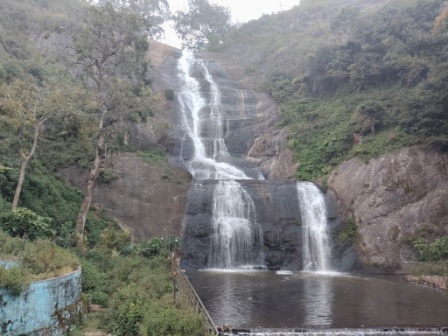
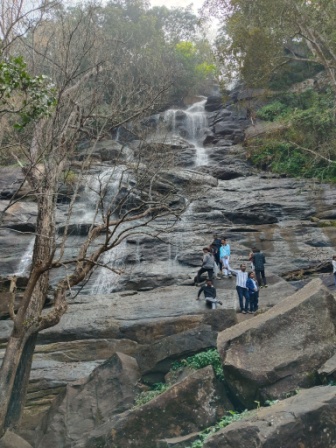
By 5 pm, we reached our first attraction in Kodaikanal – Silver Cascade Falls. This waterfall is one of the first natural landmarks that greets visitors as they ascend the ghat road. It is impossible to miss and makes for an ideal short break during the climb.
The falls are formed by the overflow of Kodaikanal Lake, cascading down a steep rocky cliff in shimmering white streams, which gives them their distinctive silver appearance. Surrounded by lush greenery and misty air, the spot offers a refreshing pause after a long drive
There is a designated viewing area close to the road, making it easy to stop and take photographs. Several small roadside stalls nearby sell fresh fruits, local snacks, and tea, adding to the lively atmosphere. After crossing Silver Cascade Falls, it was clear – we had entered Kodaikanal.
Check in and Calling It a Day
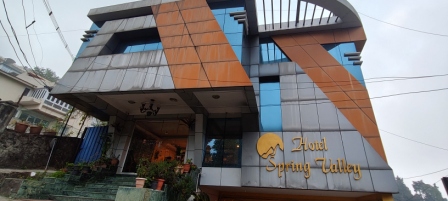
We checked in to Hotel Spring Valley, where our stay included complimentary breakfast and dinner. Given how long the day had been, stepping out again felt unnecessary. We chose to have dinner at the hotel itself and then called it a day, settling in for a restful night in the hills.
Day 7 : Exploring Kodaikanal - Foggy Views, Forest Trails & Lake Walks
Planning the Day in the Hills
Day 7 of our 12 day road trip from Pune to Tamil Nadu was dedicated entirely to exploring Kodaikanal. Since all major attractions are located along a circular road, the town follows a one way traffic system to manage congestion.
December end is peak tourist season in Kodaikanal (in-fact, across most hill stations in India). Keeping this in mind, and based on our past experiences driving in such crowded conditions, we decided to skip self-driving altogether. Instead, we hired a local cab for ₹2,200, which conveniently covered all the major attractions in town.
This turned out to be a smart call. Later, we found the roads packed with bumper-to-bumper traffic for most of the day, and navigating them on our own would have been exhausting. Having a local driver, familiar with the routes and shortcuts, made the entire experience far more relaxed and enjoyable, and allowing us to focus on the scenery rather than the stress of driving.
Starting with Pillar Rocks
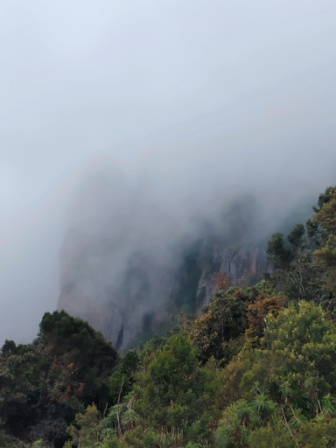
After breakfast at our hotel, we set out with the cab. The first stop was Pillar Rocks, a fenced viewpoint that looks out toward three tall rock pillars rising dramatically from the valley.
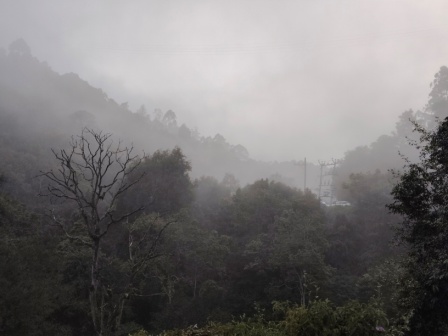
Unfortunately, thick fog had settled in. The rocks kept playing hide and seek, appearing briefly before disappearing again. Still, we managed to click a few pictures before moving on.
Guna Caves and Pine Forest
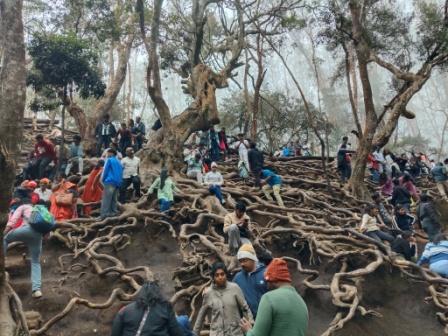
Our next stop was Guna Caves. This forested area is known for its tall pine trees and massive intertwined roots, which create a mysterious and slightly eerie atmosphere. The spot gained popularity after being featured in the Tamil movie Guna.
The actual caves are closed to visitors due to safety reasons. However, the surrounding forest with exposed intertwined roots, makes it popular and heavily crowded.
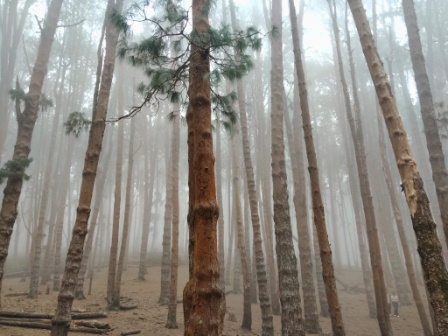
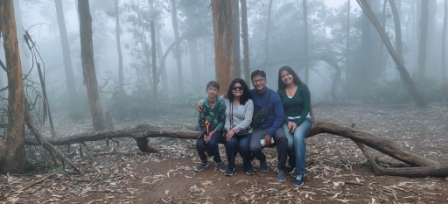
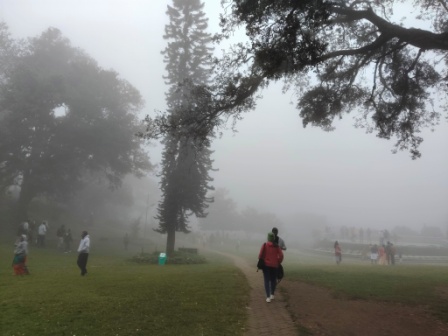
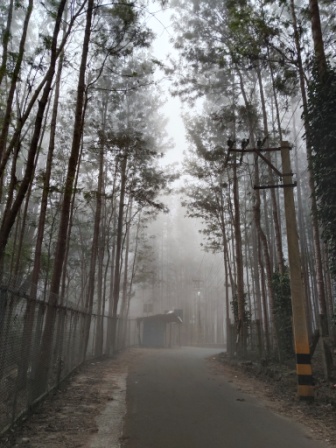
From there, we drove to the Pine Forest, a scenic stretch filled with tall pine trees. Wrapped in a thick blanket of fog, with light filtering through the trees, the place felt calm and unhurried. It was an easy stop, perfect for photography and quiet moments.
Moir Point and Upper Lake View
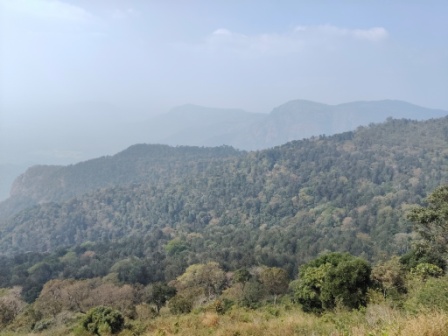
Next on the circuit was Moir Point, a viewpoint that usually offers sweeping views of the Western Ghats and surrounding valleys. On this day, however, the fog blocked most of the views. Even so, the misty surroundings gave the place a surreal and moody feel.
From Moir Point, we continued along the narrow hill road and stopped at Upper Lake View Point. This spot offers an elevated perspective of Kodaikanal Lake, where the lake curves gently through the town below. It is ideal for a short pause during the circular drive.
Visibility continued to play along, so this remained a brief tea and snacks stop rather than a long halt.
Coaker’s Walk and Bryant Park
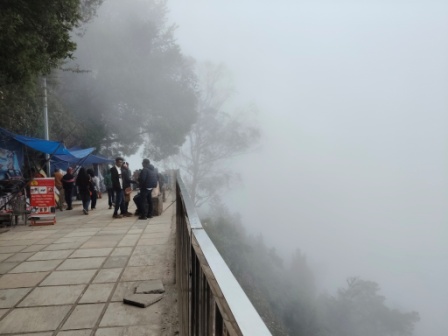
The next stop was Coaker’s Walk, a paved cliff edge walkway known for panoramic valley views and rolling mist. It is a classic evening walk spot in Kodaikanal.
The walkway is lined with street vendors selling everything from Maggi, roasted corn, masala peanuts, sweet corn, bread omelette, to tea and coffee. The lively atmosphere adds charm to the walk, even when views are hidden behind fog.
Exiting Coaker’s Walk brings you directly in front of Bryant Park. This well maintained botanical garden features colourful flowerbeds, ornamental plants, and seasonal blooms. It is perfect for a relaxed stroll and photographs. After spending some time inside and clicking a few pictures, we exited the park.
Trying Paruthi Paal
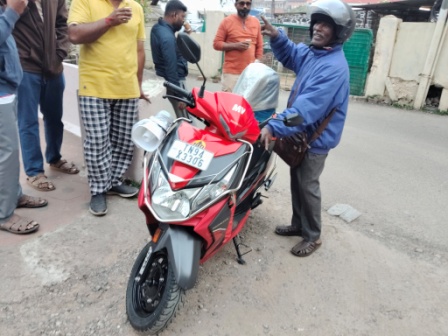
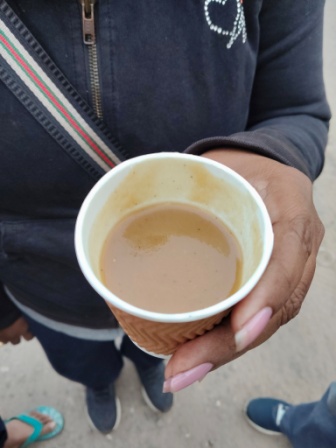
While exiting the park, we came across a vendor selling an unfamiliar drink on his scooty. He was surrounded with locals and everyone seemed to be enjoying a hot drink which looked like coffee. Upon inquiring, we found that it is called Paruthi Paal. It it is a traditional Tamil beverage made from cotton seeds.
We later googled to find that the drink is prepared by soaking cotton seeds, grinding them, and boiling the extract with water. Palm jaggery, dry ginger, and mild spices like cardamom are then added. The result is a warm, creamy drink with a mildly nutty flavor. It is not overly sweet, but is rich and satisfying.
Kodaikanal Lake and Market Walk
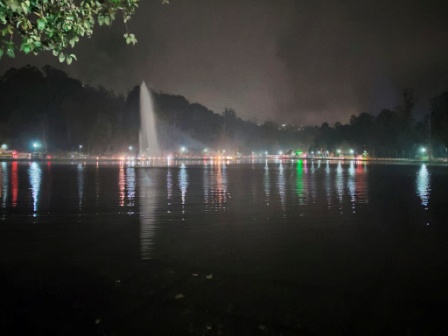
As evening set in, we still had one highlight left – the iconic Kodaikanal Lake. Instead of heading back to our hotel, which was another 3 km away (and honestly, none of us had the energy for that walk), we asked our cab driver to drop us right by the lake.
It turned out to be the perfect decision. The lake offers a refreshing escape, with a well-paved 5 km pathway that loops entirely around it. Lined with tall trees and buzzing with activity, it’s ideal for a leisurely stroll, cycling, or simply soaking in the cool evening breeze. Walking here gives great views of the lake, eucalyptus trees, and colonial era buildings. One popular way to complete the loop is by cycling. Bicycles are available for rent all along the lakeside, generally charging ₹100 per hour.
Boating is another major attraction. Options include pedal boats, row boats, and shikara style boats. Boats, ducks, and colonial hotels in the background create a classic hill station scene.
Around the lake, vendors sell familiar hill station snacks such as roasted corn, peanuts, bhajjis, hot tea, coffee, and momos. Nearby souvenir shops stock homemade chocolates, woollens, caps, scarves, eucalyptus oil, and small handicrafts.
Wrapping Up the Day
We spent some quiet time strolling through the local market, soaking in the atmosphere of the hill town. Since it had been a long and packed day, we chose not to stretch ourselves further. We hired a cab to drop us back to our hotel where we had dinner. This ended a full yet unhurried exploration of Kodaikanal as part of our trip to Tamil Nadu.
Day 8 : Kodaikanal to Yercaud - A Calm Drive into Quiet Hills (300 km / ~7 hrs)
Leaving Kodaikanal Behind
Day 8 marked the beginning of the next phase of our 12 day road trip from Pune to Tamil Nadu. Days 8 and 9 were set aside to explore another hill station of Tamil Nadu – Yercaud, often described as offbeat and understated.
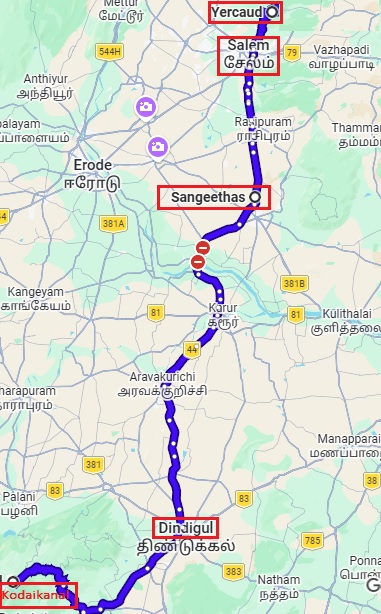
After leaving the misty heights of Kodaikanal, we began driving north through Dindigul. The scenery slowly transitioned as we moved away from dense hills into open landscapes. From Dindigul, we joined NH44 (Kanyakumari-Srinagar) highway.
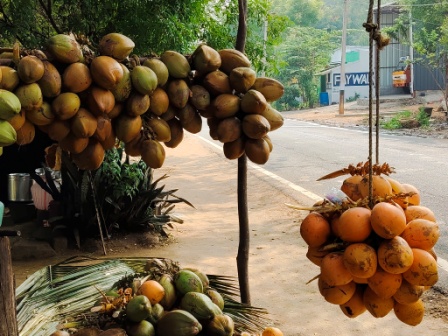
Just as we descended from the hills, we pulled over at a roadside stall for one of Tamil Nadu’s simplest yet most memorable treats – fresh golden tender coconuts (Elaneer). These yellow-orange coconuts were filled to the brim with cool, naturally sweet water, far sweeter than the usual green ones we get back home. Priced at ₹60 each, they felt absolutely worth it after the winding drive down. Light, hydrating, and incredibly refreshing, it was the perfect pause before continuing the journey.
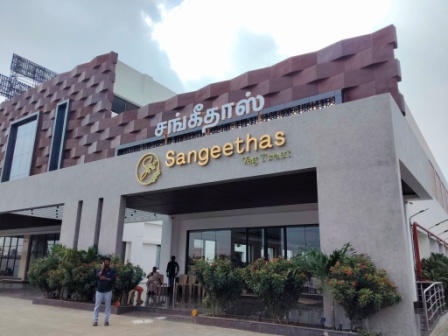
Back on the road, we continued towards Namakkal. We stopped for lunch at Sangeetha’s Restaurant. Keeping it simple, we ordered veg dishes, dal fry and kadai paneer. The meal cost us ₹580 and was satisfying enough for the long journey ahead.
Climbing Towards Yercaud
At Salem, we made a brief but important stop. We withdrew some cash, as finding ATMs in hill stations can sometimes be a challenge. At the same time, we topped up the fuel tank, since petrol pumps are not always easy to find once you head into the hills.
From Salem onward, we switched away from NH44 to ascend the hilly terrain of Shevaroy Hills. The drive felt noticeably calmer. Watching the landscape shift gradually, from flatter terrain to rising slopes, added to the relaxed rhythm of the journey.
Yercaud, tucked away in the Shevaroy Hills, does not try to impress with dramatic sights or crowded viewpoints. Instead, it offers calm roads, unhurried views, and the feeling of being slightly off the tourist radar.
By the time we began the climb towards Yercaud, traffic had thinned considerably. The air cooled once again, and the drive itself started to feel restful rather than tiring.
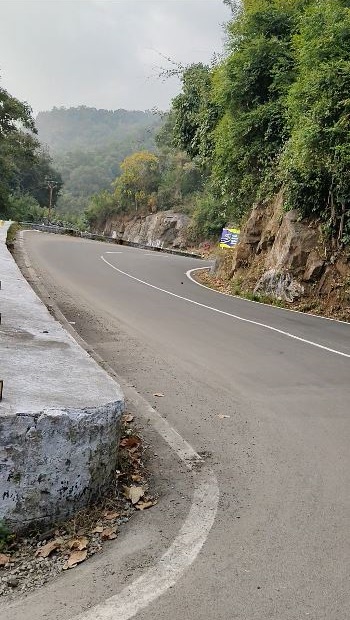
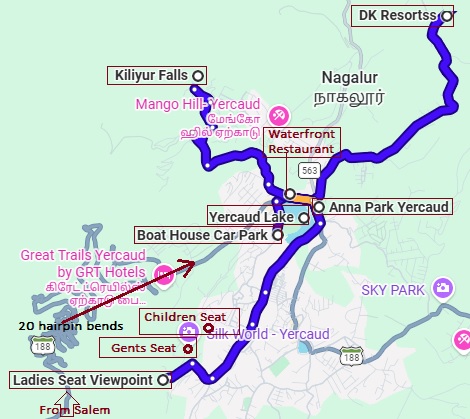
The ascent from Salem to Yercaud is along the well known Salem–Yercaud Ghat Road, also referred to as the 32 km Loop Road. This stretch features around 20 hairpin bends, a figure consistently cited by multiple travel and road safety sources. After navigating bend after bend, we entered the hill station.
Compared to Kodaikanal, Yercaud felt noticeably smaller, quieter, and less commercial.
Checking in at Yercaud
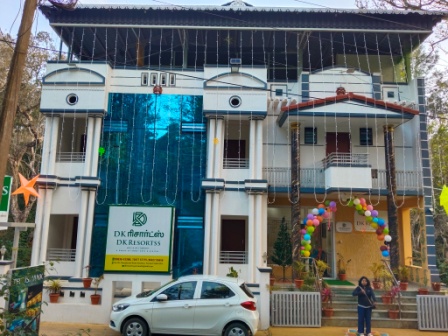
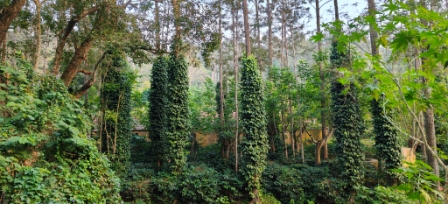
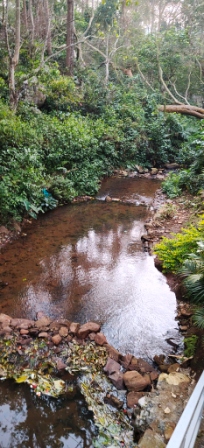
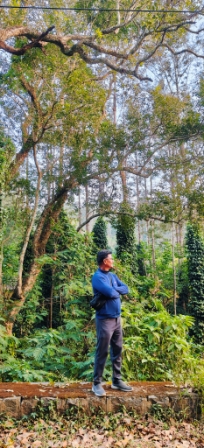
Our stay for the night was at DK Resorts, a property located about 5 km from the central area. Set amid pepper and coffee plantations, the resort sits next to a small river stream, giving it an offbeat and peaceful setting.
It was already evening by the time we checked in. We spent some time strolling along empty, quiet roads that ran through the surrounding plantations, soaking in the calm atmosphere.
Dinner and a Quiet Night
For dinner, we chose to keep things simple. With no restaurants in the immediate vicinity, the options were either to drive back to the city centre or order food from the nearest available place. We opted for the latter and ordered simple vegetarian meals, delivered to our room for an additional ₹50 delivery charge.
After dinner, we settled in for the night. The quiet surroundings, plantation views, and gentle sound of water flowing through the steam in the backyard made it easy to unwind. We called it a day, ready to explore Yercaud in detail the next morning.
Day 9 : A Slow Day in Yercaud - Lakeside Calm & Easy Explorations
A Slow Morning Among Coffee Estates
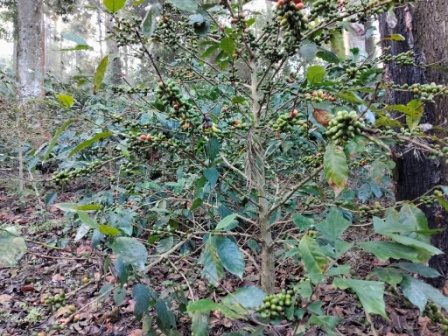
Day 9 began without alarms or schedules, which felt just right for Yercaud. The morning started with a quiet walk through the nearby coffee and spice plantations. Yercaud is known for its coffee, pepper, and cardamom estates, and walking through these plantations offered a deeper appreciation of the region’s slower, quieter economy.
The plan for the rest of the day was to start with breakfast and then explore the attractions in the following sequence – Yercaud Lake, Anna Park, Kiliyur Waterfalls, Sunset Seats followed by lunch and then return back to our hotel.
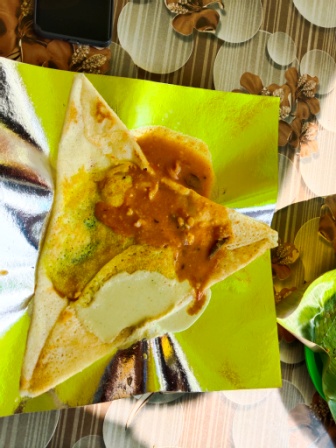
Breakfast Near Yercaud Lake
Yercaud Lake and Anna Park
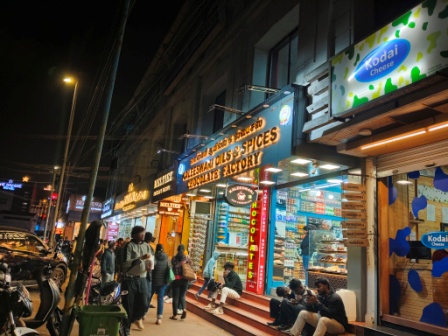
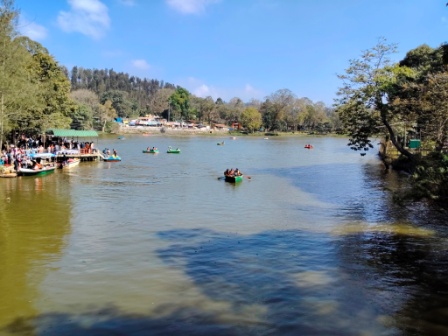
At the centre of Yercaud lies Emerald Lake, more commonly called Yercaud Lake. Calm and compact, the lake is surrounded by greenery and small gardens, making it easy to spend a couple of relaxed hours here. Boating is the main activity, with simple pedal boats gliding over still waters.
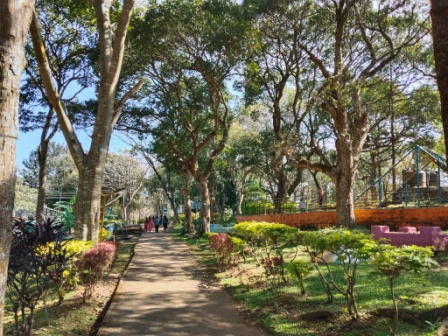
Right next to the lake is Anna Park, which features neatly maintained lawns and flowerbeds. Entry to the park costs ₹20 per person, and it makes for a pleasant, unhurried stroll.This part of Yercaud felt less like a tourist hotspot and more like a local public space. Families walked around casually, children played freely, and everyday life seemed to flow alongside tourism.
Kiliyur Waterfalls
Later in the day, we headed to Kiliyur Waterfalls, one of Yercaud’s more natural attractions. The trek down to the falls is short but steep, taking about 15-20 minutes downhill through forested paths. Most of the route has been made easier with metallic ladders.
The waterfall, especially active after the monsoon, cascades into a rocky pool below. While the descent is manageable, the climb back up requires effort, particularly during the afternoon heat. That said, the experience offers a refreshing break from viewpoints and paved paths, making it well worth the visit.
Sunset Seats Over the Valley
After visiting the waterfalls, we drove toward the remaining attractions – Yercaud’s sunset viewpoints. The town’s most well known viewpoints – Lady’s Seat, Gents Seat, and Children’s Seat. All of them are clustered together, making them easy to visit in one stretch.
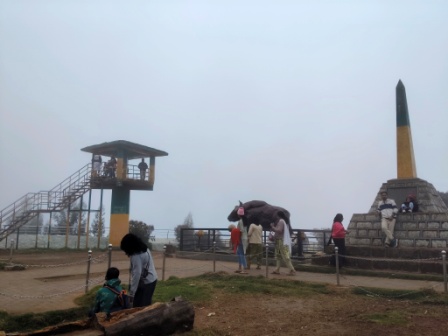
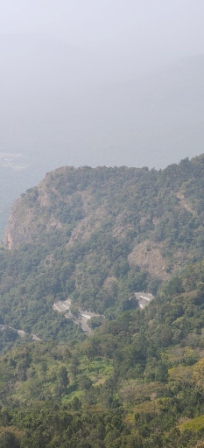
These viewpoints overlook the plains of Salem far below, and from here, the 20 hairpin bends of the Salem – Yercaud road are also visible. These locations are best visited during sunset, when the evening light softens the hills and the air begins to carry that familiar hill station chill.
We spent about an hour moving between the viewpoints before heading back toward the lake area.
Lunch by the Lake
We returned to the Yercaud Lake parking area, using the same parking ticket we had taken earlier in the morning. Since it was already noon, lunch became the next priority.
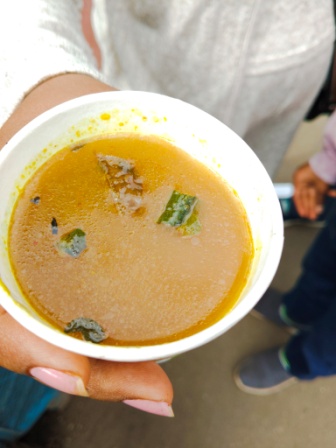
While searching for a good restaurant, we came across a roadside stall selling Kizhangu soup. This hot, peppery soup is made from the root tubers of the kizhangu plant and cooked with onion, garlic, black pepper, cumin, and coconut milk. The taste was unique, though nothing extraordinary.
Eventually, we opted for Waterfront Multicuisine Restaurant, located right next to the lake. We ordered chicken biryani, which did not look very promising at first but tasted surprisingly good. In Tamil Nadu, biryani is typically not made with basmati rice. Instead, fine (often broken) rice is used, and the meat is cooked together with the rice. This allows the grains to absorb the meat’s flavour, resulting in a rich and satisfying dish. Two plates of biryani cost us ₹360.
Unique Observations
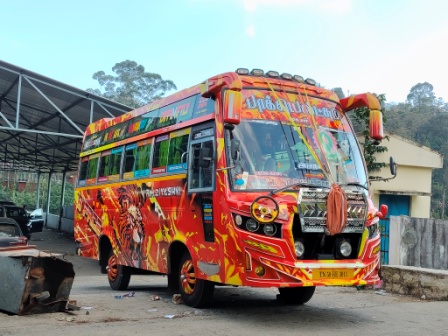
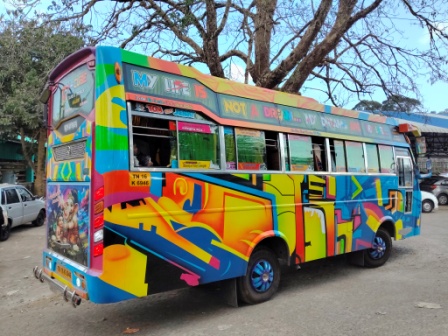
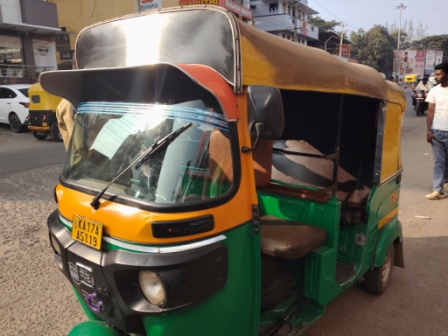
Two unique observations from our travels across Tamil Nadu stood out and felt worth mentioning. The first was the colourful mini buses seen almost everywhere – on highways and near tourist spots alike. These buses are brightly painted and decorated with vibrant graffiti.
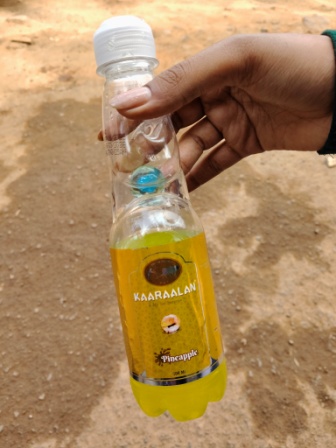
The second was a local soft drink – Kaaraalan goli soda. This carbonated drink is served in the classic codd neck bottle sealed with a marble, instantly reminiscent of the old goli soda from Delhi. It comes in flavors such as orange, lemon, kala khatta, and pineapple. If you’re travelling through Tamil Nadu, this is something you shouldn’t miss trying.
A Gentle End to the Day
After a late lunch, we drove back to our hotel and took it easy. Unlike Kodaikanal, Yercaud doesn’t overwhelm you with attractions. There’s no pressure to see everything and no feeling of missing out if you skip a spot. That, perhaps, is its greatest strength.
The evening was spent strolling along quiet roads through spice plantations and enjoying a calm cup of tea at a roadside tea shop. Dinner was once again ordered and delivered to the hotel.
Over the next three days, we would begin our road journey back to Pune, with planned halts at Bangalore and Hubli, marking the final stretch of our Pune to Tamil Nadu road trip itinerary.
Day 10 : Yercaud to Bangalore - From Quiet Hills to the Journey Back (220 km / ~5 hrs)
Leaving the Hills Behind
Day 10 was all about packing up and beginning our journey back to Bangalore. After days of exploring temples, beaches, and hill stations, Yercaud felt like the perfect gentle pause before returning to long highways and busy city traffic.
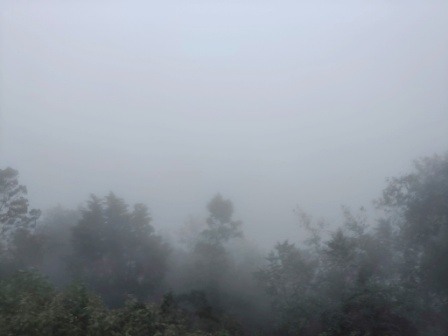
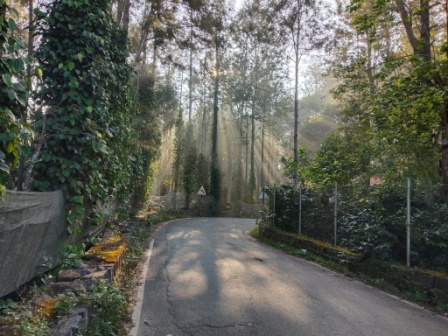
As we started descending from Yercaud early in the morning, the hills were wrapped in a dense blanket of fog. Visibility dropped dramatically, and the winding ghat roads demanded extra caution. We switched on the fog lights and continued slowly, carefully navigating each curve while the mist drifted silently across the road, giving the drive an almost surreal feel.
For a moment, it felt like a throwback to winter mornings in North India. Fortunately, the fog began to lift after a few hairpin bends. Soon enough, the mist gave way to a bright and sunny morning, instantly changing the mood of the drive.
Breakfast at Omalur
We soon bypassed Salem and joined NH44, easing back into highway driving. The transition from quiet hill roads to wide expressways felt gradual rather than abrupt, which helped keep the journey relaxed.
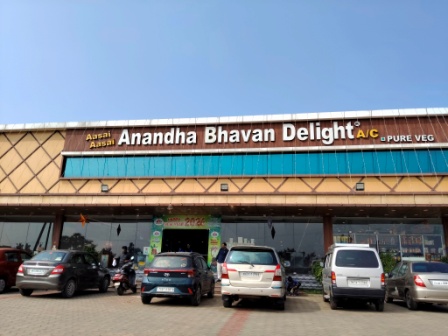
We stopped for breakfast at Aasai Aasai Anandha Bhavan in Omalur. The restaurant serves vegetarian South Indian meals, making it a reliable stop along NH44.
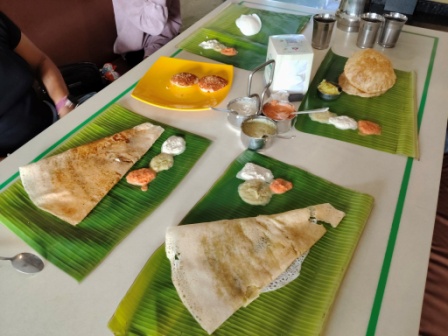
We ordered a typical South Indian breakfast, including poori, dosas and podi idli. Everything was prepared fresh and tasted good. Breakfast cost us ₹534, and it was just the right fuel for the remaining drive.
Entering Bangalore
By 12 pm, we crossed into Karnataka, and by 2 pm, we reached Bangalore, arriving at Rayasandra. After days of eating out, having a home cooked lunch felt especially fulfilling and comforting.
The familiarity of home food added a quiet sense of closure to the travel phase of the trip.
Dinner and Winding Down
For dinner, all of us stepped out together to the nearby Buzz Restaurant. It was a relaxed end to the day, easing ourselves back into city life after days spent on the road.
Day 10 marked the beginning of the return journey phase of our Pune to Tamil Nadu road trip itinerary. With Yercaud behind us, the adventure slowed down, making space for reflection as we prepared for the final drive back home.
Day 11 : Bangalore to Hubli - Familiar Roads & Comfort Stops (410 km / ~7 hrs)
Day 11 marked the start of the final leg of our 12 day road trip from Pune to Tamil Nadu. We left Bangalore for Pune, once again splitting the drive into two manageable days to keep the journey easy and comfortable. The night halt was planned at Hubli, about 410 km away, with an expected drive time of around 7 hours.
After breakfast, we packed up and left Bangalore. By 10:30 am, we exited the NICE toll road and merged onto NH48, settling into familiar highway driving.
Lunch at a Familiar Favourite
By 2:30 pm, lunch time approached as we neared Davangere. Based on our excellent experience earlier in the trip, the choice was already made. We headed straight back to Bharani Family Restaurant, without second thoughts.
We ordered tried and tested mutton and chicken dishes with an addition of biryani, and the total bill came to ₹980. Just like before, the food lived up to expectations, making it a reliable and satisfying lunch stop on this route.
By 2:30 pm, lunch time approached as we neared Davangere. Based on our excellent experience earlier in the trip, the choice was already made. We headed straight back to Bharani Family Restaurant, without second thoughts.
We ordered tried and tested mutton and chicken dishes with an addition of biryani, and the total bill came to ₹980. Just like before, the food lived up to expectations, making it a reliable and satisfying lunch stop on this route.
Reaching Hubli
After lunch, we continued our drive and reached Hubli by evening. We checked in once again at SKD Comforts, wrapping up another long day on the road.
After resting for some time, we stepped out for dinner at a familiar and much liked place – Big Mishra’s. Ending the day with good food at a known favourite felt comforting, especially as the journey was nearing its close.
Day 11 felt less about exploration and more about transition – moving steadily from travel mode back toward home, as our road trip itinerary slowly wound down.
Day 12 : Hubli to Pune - The Final Drive Home (430 km / ~7 hrs)
Day 12 marked the final leg of our 12 day road trip from Pune to Tamil Nadu. With the end in sight, the focus shifted from exploration to a smooth and timely return home.
The initial plan was to have breakfast at Big Mishra’s, but we learned that the restaurant starts serving only after 8 am. Since our goal was to reach Pune before sunset, we decided not to wait and left Hubli early instead.
Back on Familiar Roads
The return journey followed the familiar and much travelled expressway route, making the drive predictable and comfortable. Early morning hunger soon set in, prompting our first stop of the day.
We halted at an Udupi restaurant in Nippani for breakfast. Having dosa’s almost everyday, everyone wanted a change, so we ordered Poha, Upma and Uttapa which cost us ₹295, and then continued without lingering too long.
Lunch Stop Near Satara
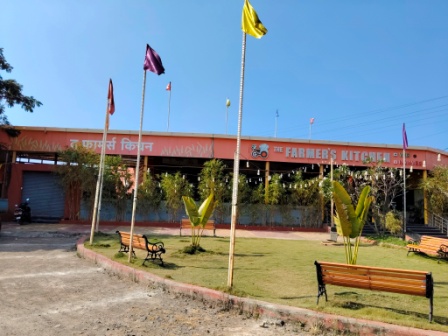
For lunch, we stopped at Farmer’s Kitchen Restaurant in Shirwal. Located just before Satara, it serves as a convenient and reliable lunch halt when driving on NH48.
The restaurant has a casual fine dining setup, making it a clean and safe pit stop for long drives. It offers good parking space, a family friendly ambience, and clean seating areas, which always matter on road trips.
Farmer’s Kitchen is known for its Maharashtrian vegetarian and non vegetarian lunch thalis. The restaurant also claims to use organically grown ingredients from their own farms, as mentioned on Tripadvisor.
We ordered chicken rassa with Bhakri and Indrayani rice and doubled it up with Solkadhi. Though the service was slow, the food was freshly prepared and tasted amazing. Having an authentic Maharashtrian food after a gap of 10 days made the experience amazing. Lunch costed us about ₹1100.
Reaching Home
By 2:30 pm, we crossed the Khed–Shivapur Toll Plaza, the last major toll before entering Pune. Traffic stayed manageable, and the final stretch felt reassuringly familiar.
By 5 pm, we were back home, successfully meeting our goal of arriving before sunset. With that, our Pune to Tamil Nadu road trip came to a close.
Toll Paid
We paid ₹4472 toll on this entire trip. We later realized that, it would have been cheaper for us if we had opted FASTag’s Annual Pass which allows to prepay ₹3,075 for up to 200 toll crossings across National Highways. The pass is valid for one year from activation and is exclusively designed for non-commercial private vehicles.
| Day | Route | Toll |
|---|---|---|
| Day 1 | Pune >> Hubli | ₹555 |
| Day 2 | Hubli >> Bangalore | ₹951 |
| Day 3 | Bangalore >> Pondicherry | ₹370 |
| Day 4 | Pondicherry | ₹100 |
| Day 5 | Pondicherry >> Thanjavur | ₹215 |
| Day 6 | Thanjavur >> Kodaikanal | ₹275 |
| Day 8 | Kodaikanal >> Yercaud | ₹175 |
| Day 10 | Yercaud >> Bangalore | ₹350 |
| Day 11 | Bangalore>>Hubli | ₹926 |
| Day 12 | Hubli >> Pune | ₹555 |
| TOTAL | ₹4,472 |