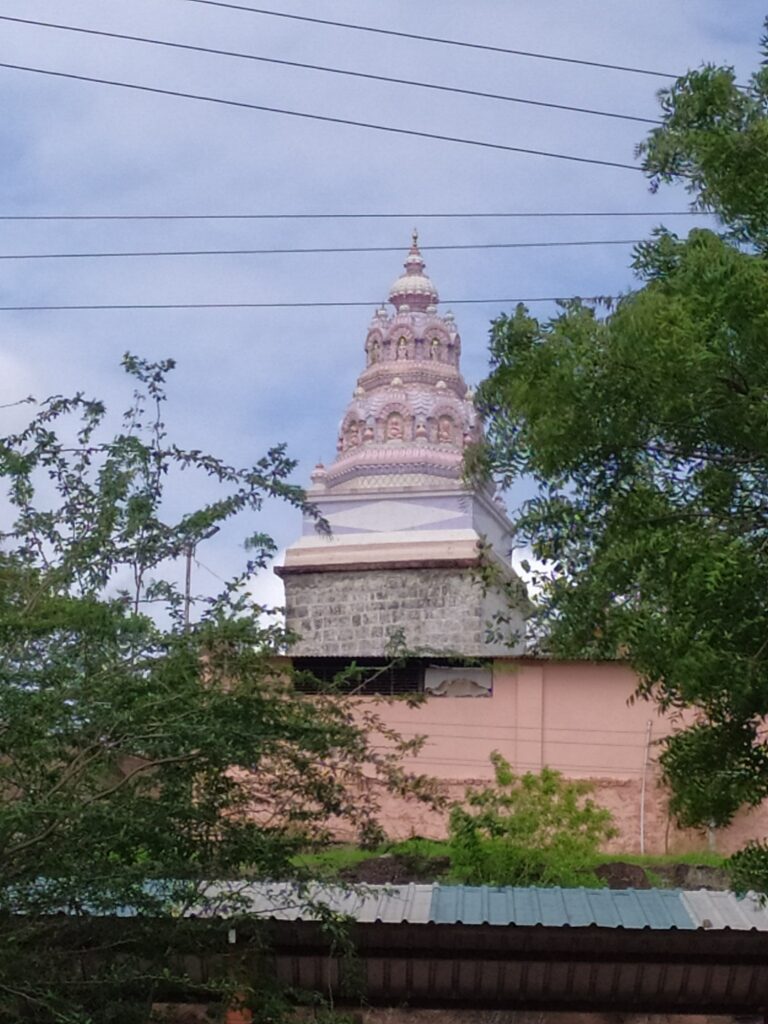
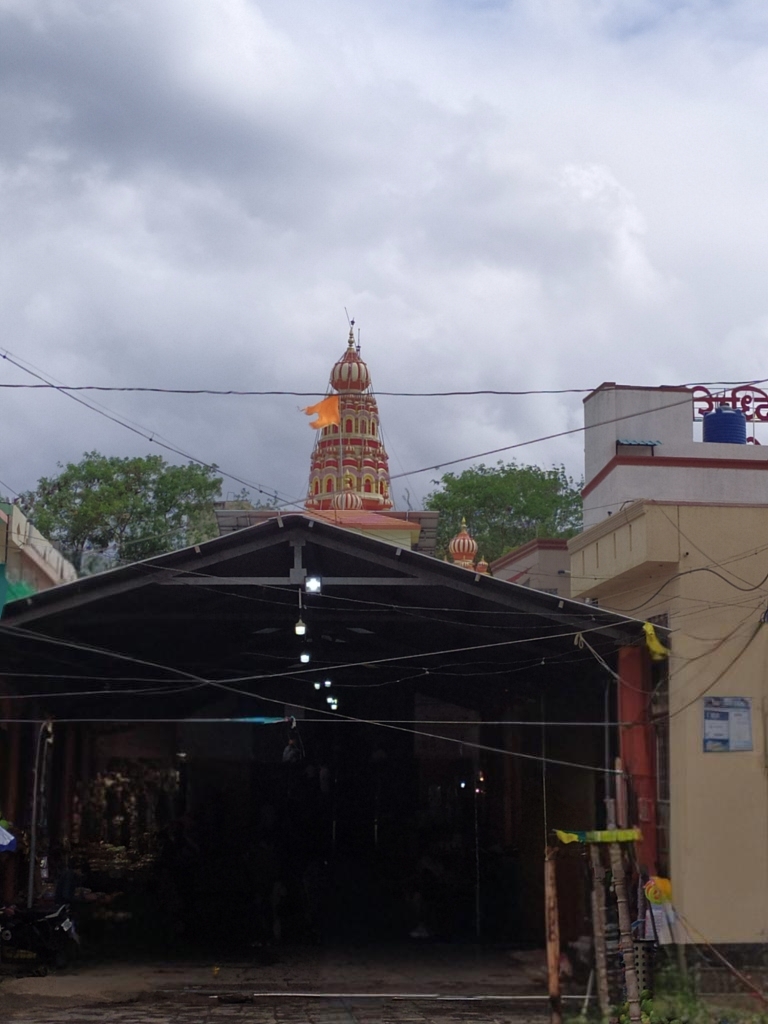
Ashtavinayak Trip from Pune: A Customized Three-Day Temple Journey
Can you explore the Kumaon Himalayas on a budget of just ₹4,000? Follow my three-day budget Uttarakhand solo trip from Rudrapur to Kausani, Baijnath, Bageshwar and Jageshwar using trains, buses and shared taxis, complete with costs, itinerary and practical travel tips.
After living in Pune for several years, I had often heard about eight revered Ganesha temples around Pune in Maharashtra. I was always curious to explore these temples myself, but somehow, the plan never materialized. Finally, in 2023, after months of Covid lockdown, I made up my mind to set out to explore the eight sacred temples.
Ashtavinayak is a combination of two words: Ashta, meaning eight, and Vinayak, meaning Lord Ganesha. The Ashtavinayak Yatra is therefore an auspicious pilgrimage to eight special Ganesha temples spread across Maharashtra. These eight temples are no ordinary places of worship. Each temple has its own spiritual significance, history, unique idol, and fascinating story associated with Lord Ganesha. The pilgrimage holds a special place in Maharashtrian culture
The traditional Ashtavinayak Yatra follows a prescribed sequence. The journey begins and ends at Morgaon, completing an auspicious cycle. The traditional sequence is:
Mayureshwar Temple – Morgaon
Siddhivinayak Temple – Siddhatek
Ballaleshwar Temple – Pali
Varadvinayak Temple – Mahad
Chintamani Temple – Theur
Girijatmaj Temple – Lenyadri
Vighnahar Temple – Ozar
Mahaganapati Temple – Ranjangaon
I also took the opportunity to include a few nearby temples that had been on my travel list for quite some time. This allowed me to make the most of each trip and visit several other important religious and cultural landmarks along the way. The additional temples included:
Khandoba Temple, Jejuri
Bhuleshwar Temple
Tukaram Maharaj Mandir, Dehu
Sant Dnyaneshwar Maharaj Samadhi Mandir, Alandi
Shri Gajanan Maharaj Sansthan, Alandi
Itinerary
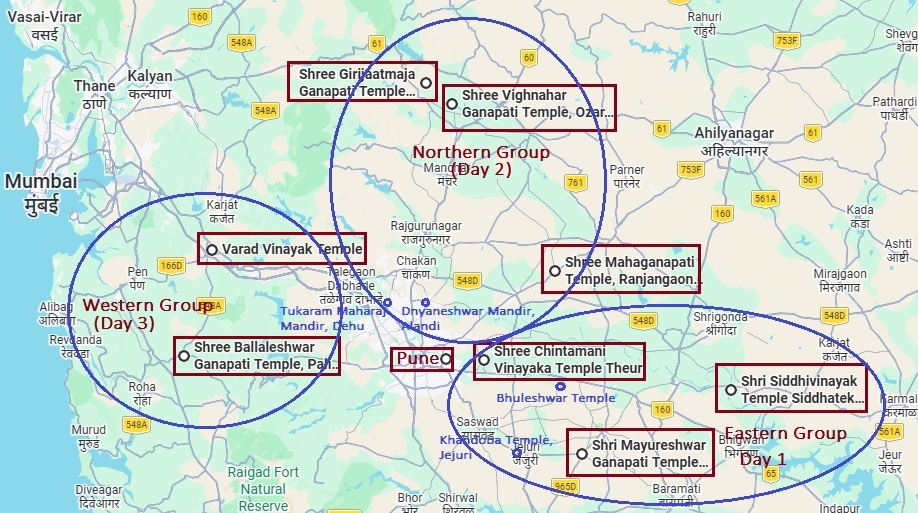
Since I lived in the eastern part of Pune, I found the prescribed sequence somewhat haphazard for my travel plans. Instead of following it exactly, I divided the eight temples into three geographical zones – East, North and West. I then combined these zones with the additional temples I wanted to visit.
The travel plan was split into 3 separate days (I’ll call them “Phase” in this blog) which was a deliberate decision to ensure that I cover all the places without rushing between them. I also selected weekdays rather than weekends to ensure that I spent less time standing in queues as the rush at temples is considerably higher during weekends and public holidays.
Phase 1 : July 2023 - Eastern Group of Ashtavinayak Temples with Khandoba & Bhuleshwar Temple
Plan : Day-1
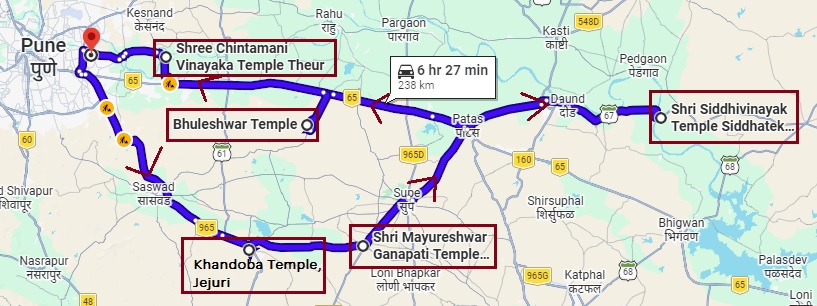
The first phase of the trip was done in July and it covered the temples towards the eastern and south-eastern side of Pune in the below sequence:
Khandoba Temple, Jejuri
Mayureshwar Temple, Morgaon (Ashtavinayak)
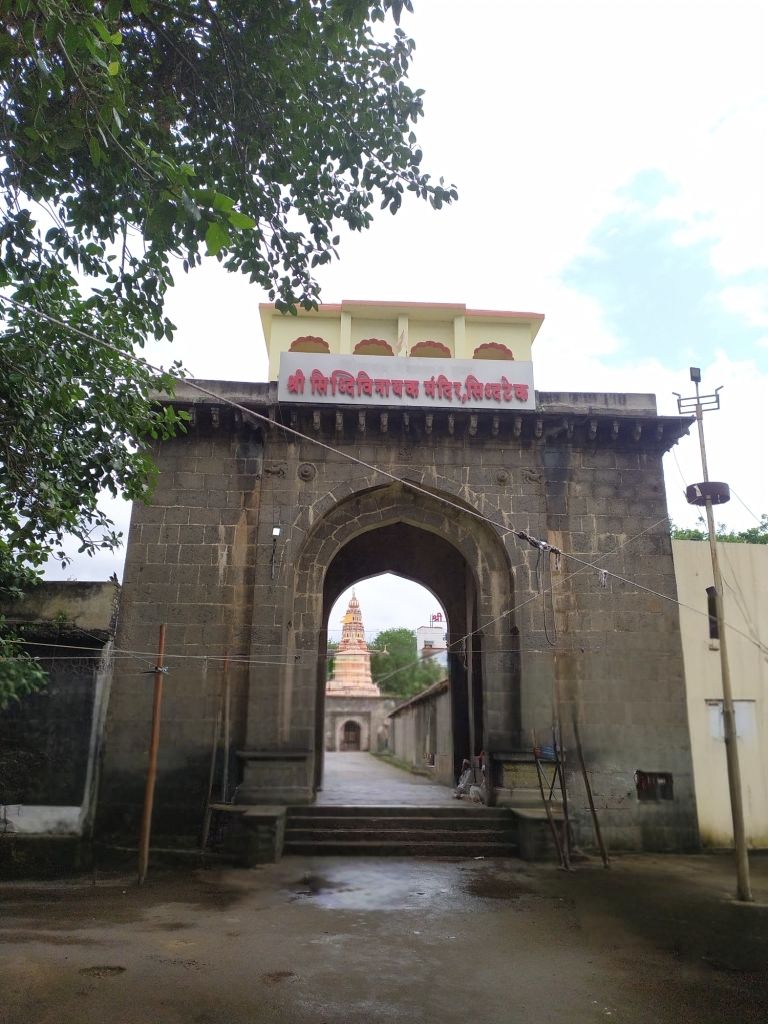
Siddhivinayak Temple, Siddhatek (Ashtavinayak)
Bhuleshwar Temple
Chintamani Temple, Theur (Ashtavinayak)
Preparations for a Monsoon Road Trip
Since I was making this trip in August, which is a peak monsoon season in Maharashtra, I packed carefully for the road journey. My preparations included a few things that proved useful during the day:
Raincoat with separate jacket and trousers – Makes it easy driving a bike
Water proof mobile holder to mount my phone for directions.
Pair of rubber slippers.
Power bank
Lunch & Water bottle.
Pune to Jejuri: An Early Start
My first destination was Khandoba Temple in Jejuri, about 50 km from Keshavnagar and roughly 1 hour 45 minutes away. I started early at 8 am from Pune and took the Solapur Road from Hadapsar. However, the early office rush caused a traffic jam at SP Infocity IT Park. This delayed my journey by almost 40 minutes.
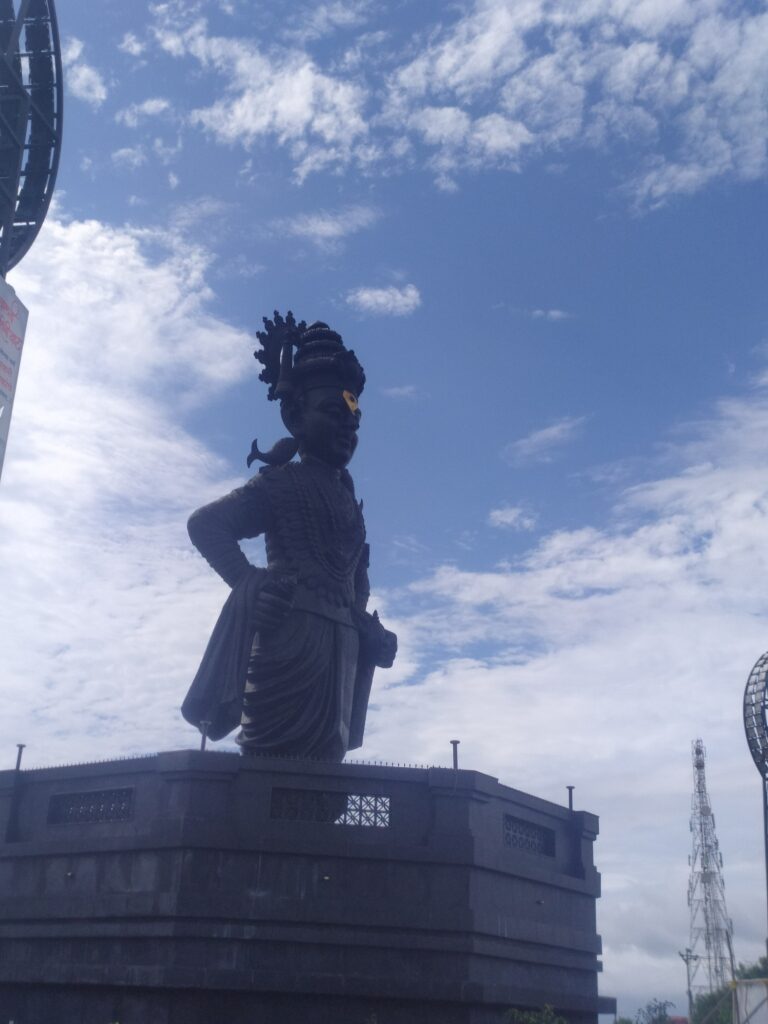
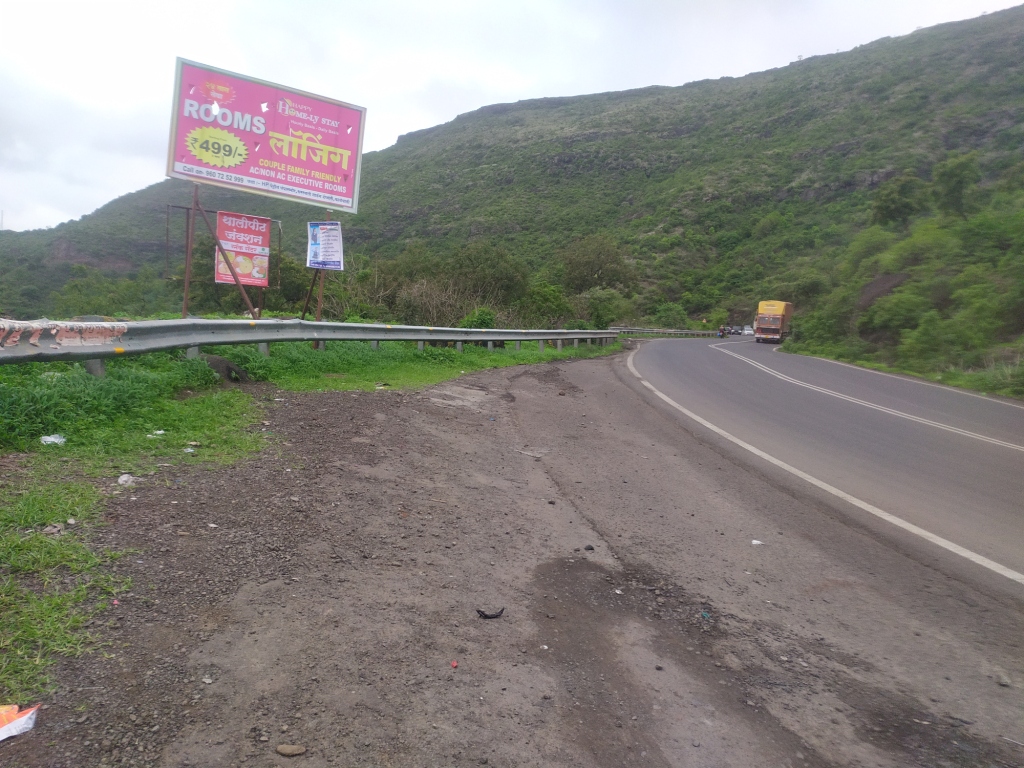
Soon, I was ascending the beautiful Dive Ghat. I took a short break near the famous Vitthal Murti and had tea and poha. I also took some close-up photographs of the Vitthal Murti, which I had always bypassed during my earlier visits.
Vitthal Murti
After the short break, I continued my journey and soon bypassed Saswad. Before long, I entered Jejuri and began riding up the small hillock that hosts the Khandoba Temple.
I parked my bike at around 11 am in an open space before the stairs leading up to the temple.
Khandoba Temple, Jejuri
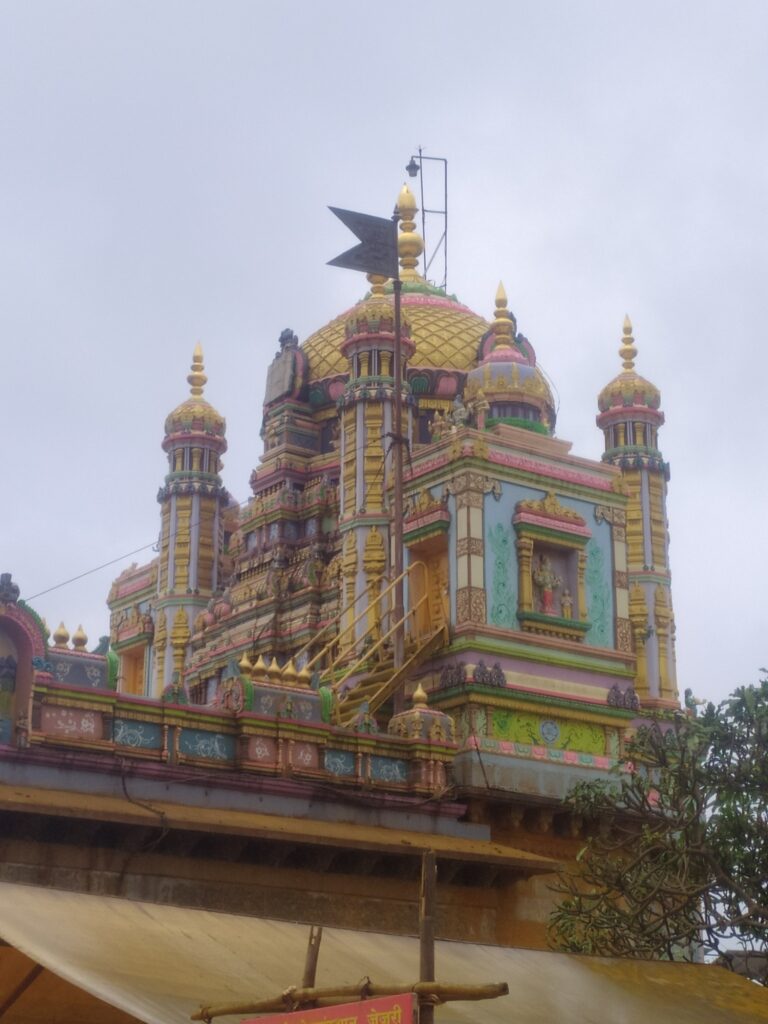
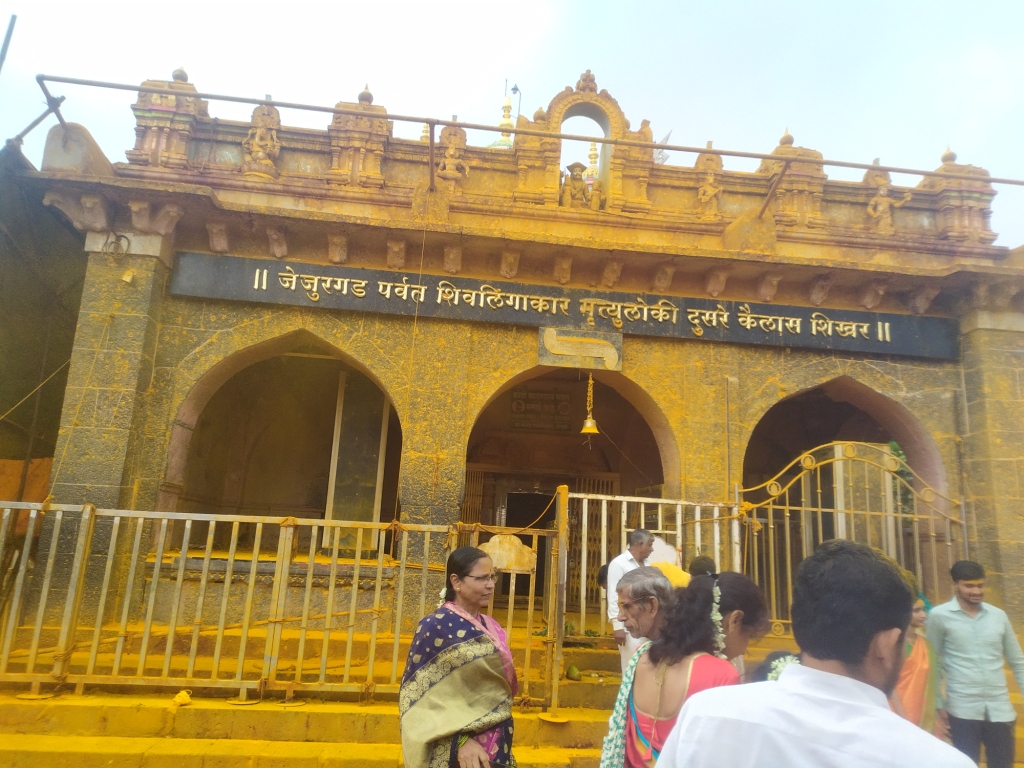
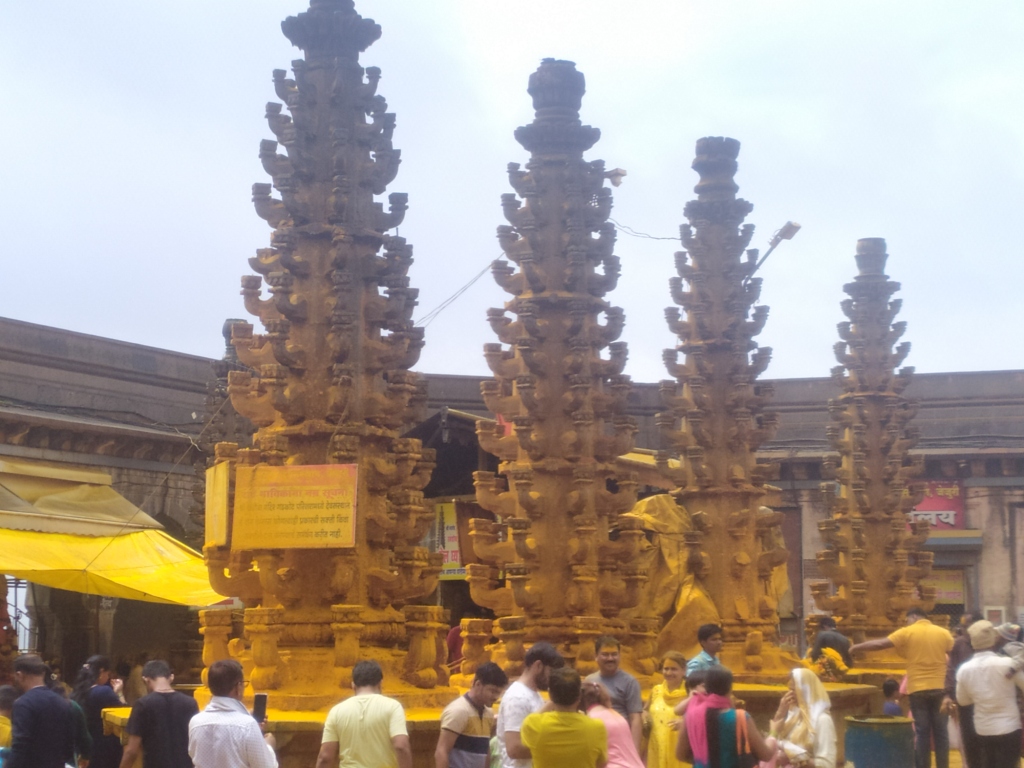
Khandoba Temple is an important pilgrimage site on a hill in the town of Jejuri. The temple is dedicated to Lord Khandoba, who is regarded as an incarnation of Lord Shiva. The temple is popularly called “Sonyachi Jejuri” or “Golden Jejuri” because of the famous ritual of offering and throwing turmeric powder, locally called Bhandara. The entire temple complex, its steps, and devotees can become covered in yellow turmeric, creating a striking golden atmosphere.
Devotees need to climb roughly 200 steps to reach the main shrine. There was not much rush at the temple. However, being a Monday, an auspicious day for Lord Shiva, devotees were present to offer their prayers.I spent about 45 minutes at the temple, taking in its atmosphere and ambience before moving on to the next destination of my Ashtavinayak journey.
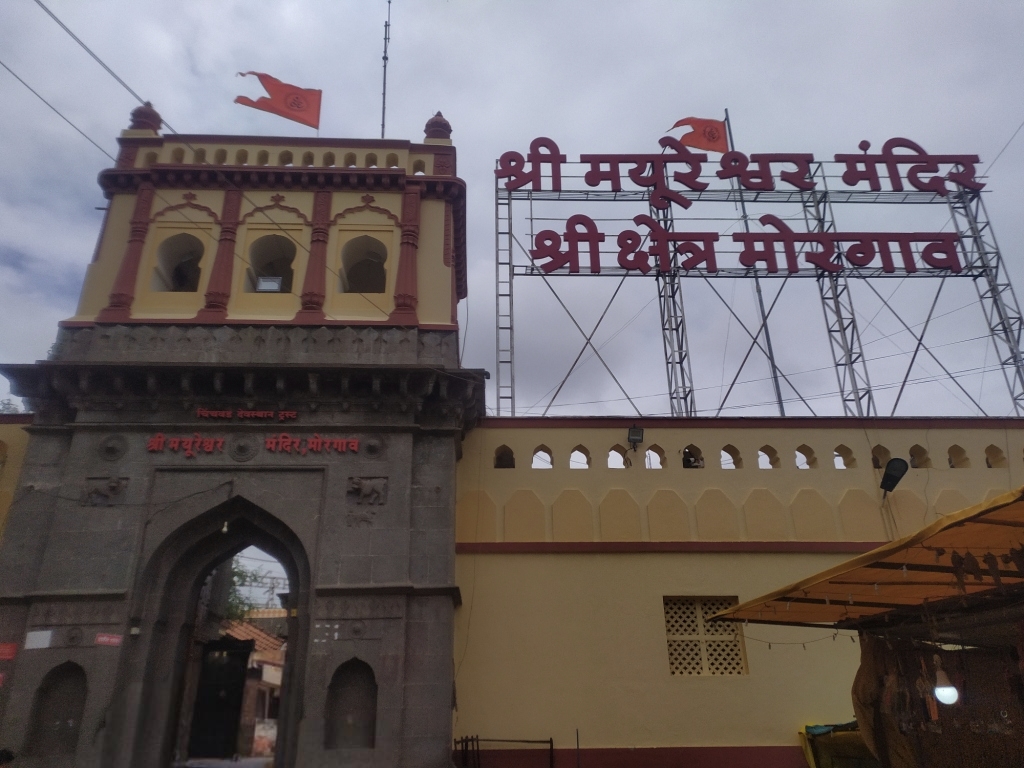
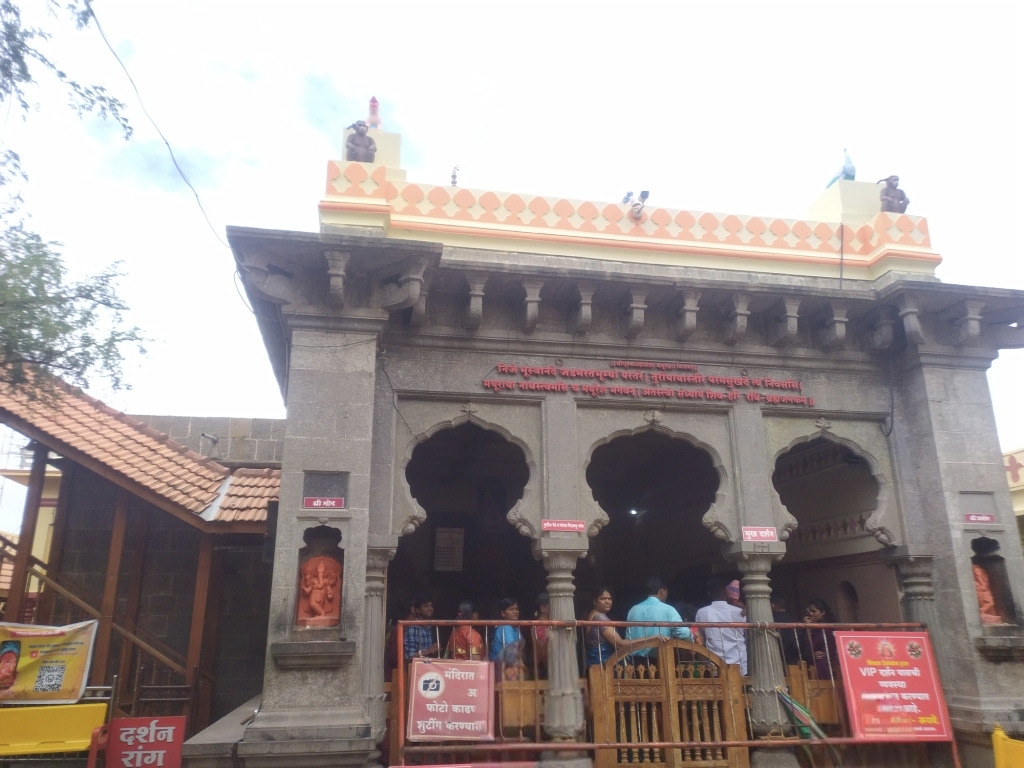
Mayureshwar Ganpati Temple, Morgaon
My next destination was Mayureshwar Ganpati Temple in Morgaon, about 20 km from Khandoba Temple. The journey took around 30 minutes by road, and I reached the temple at 12:30 pm.
Mayureshwar Ganpati Temple in Morgaon, also known as Moreshwar Temple, is the first and most important temple in the traditional Ashtavinayak circuit. The traditional yatra begins and ends here, making Morgaon both the starting and concluding point of the pilgrimage. The temple is dedicated to Lord Ganesha in the form of Mayureshwar, the one who rode a peacock to defeat the demon Sindhu. The name “Mayureshwar” comes from Mayura, meaning peacock, and even the village name Morgaon is believed to be linked to peacocks.
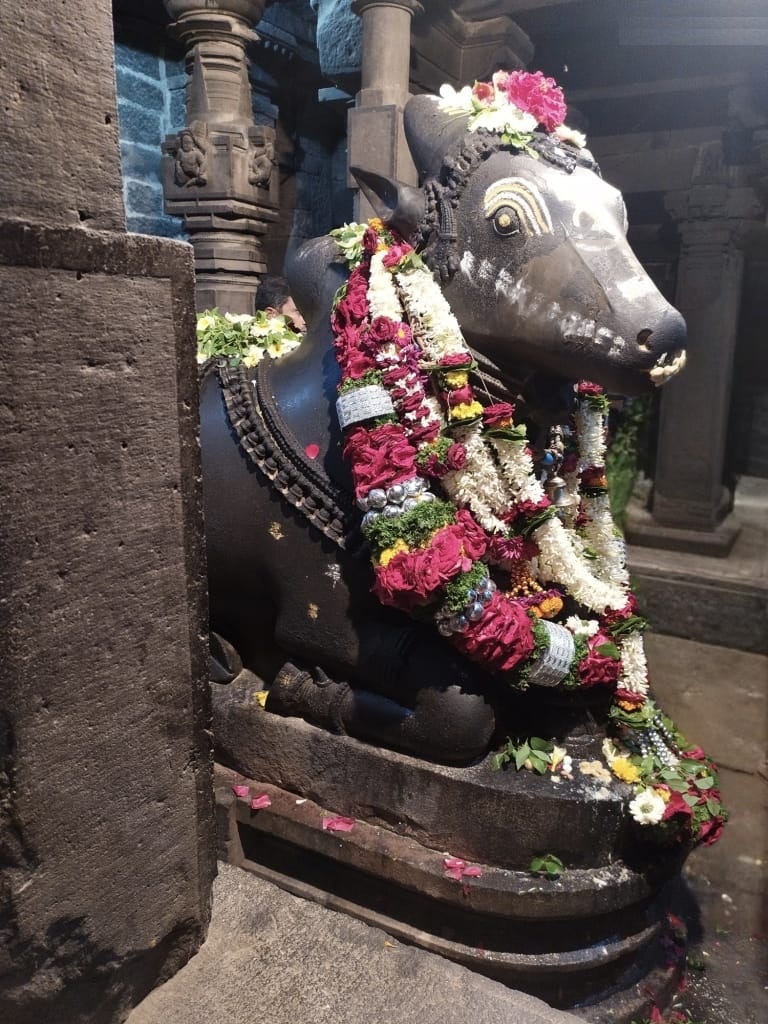
The temple has a unique fort-like structure with stone walls, four gates, and corner towers. One unusual feature is the presence of a Nandi statue in front of the shrine, which is rarely seen in Ganesha temples. The Ganesha idol is considered Swayambhu and is worshipped as a powerful form of Ganesha who removes obstacles and blesses devotees with wisdom, prosperity, and fulfilment.
Siddhivinayak Temple, Siddhatek
The next destination on my itinerary was Siddhivinayak at Siddhatek, about 60 km from Morgaon and roughly 1.5 hours away. The route passed through the prominent towns of Supe, Patas, and Daund.
August is generally a wet month in Maharashtra, with the monsoon at its peak. It started raining soon after I passed Supe. Fortunately, I had come fully prepared. I covered myself with a raincoat and changed my shoes to rubber slippers.
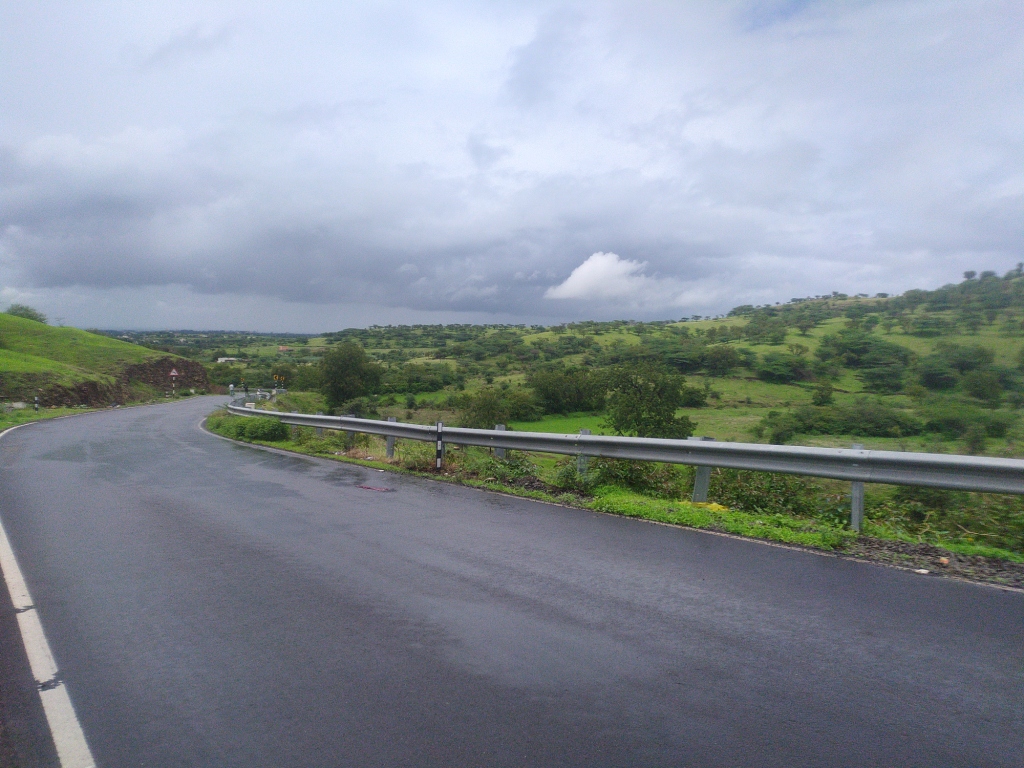
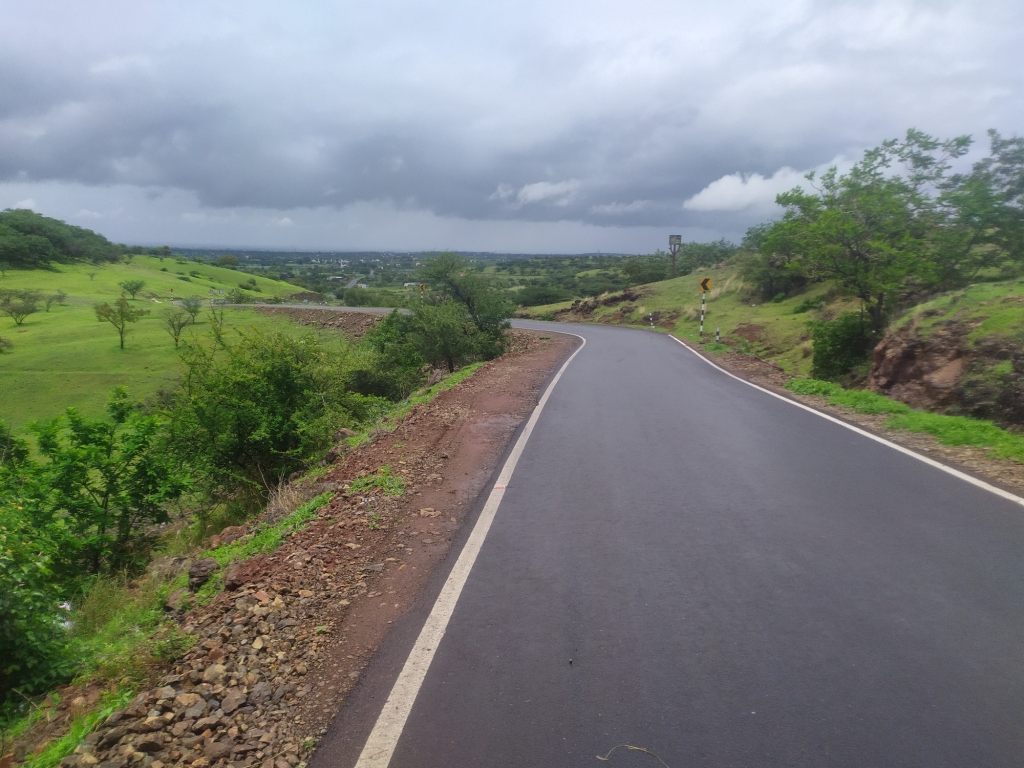
The road had turned scenic, and I enjoyed the drive. There is hardly a better experience than driving on an empty road with light showers hitting the visor of your helmet. I drove cautiously and kept my average speed around 50 km/hr.
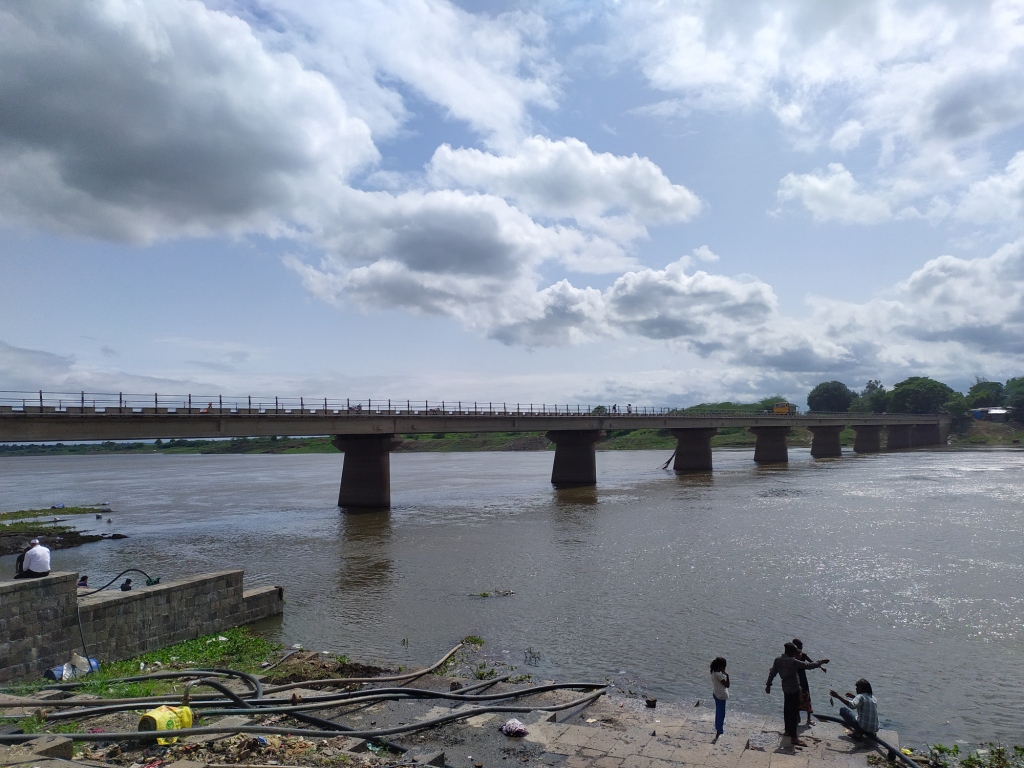
At Patas, I joined NH65, the Pune-Solapur Road, briefly before taking a turn towards Daund. From Daund, I drove parallel to the Bhima River before crossing it to reach the Siddhivinayak Temple.
It was 3 pm when I reached the temple. Siddhivinayak at Siddhatek is the second temple in the traditional Ashtavinayak sequence and is located on the banks of the Bhima River in Ahmednagar district. Compared to the more crowded temples closer to Pune, Siddhatek had a quieter and more rustic feel.
After crossing the Bhima river and moving through the village surroundings, the temple appeared peaceful and slightly detached from the rush of the main road.
The temple is dedicated to Lord Ganesha in the form of Siddhivinayak, the giver of siddhi, which means success, accomplishment, or divine power. One of the most unique aspects of this temple is that the idol’s trunk is turned towards the right. Among the eight Ashtavinayak temples, Siddhatek is known for this rare right-trunked form of Ganesha, which is considered especially powerful and spiritually significant.
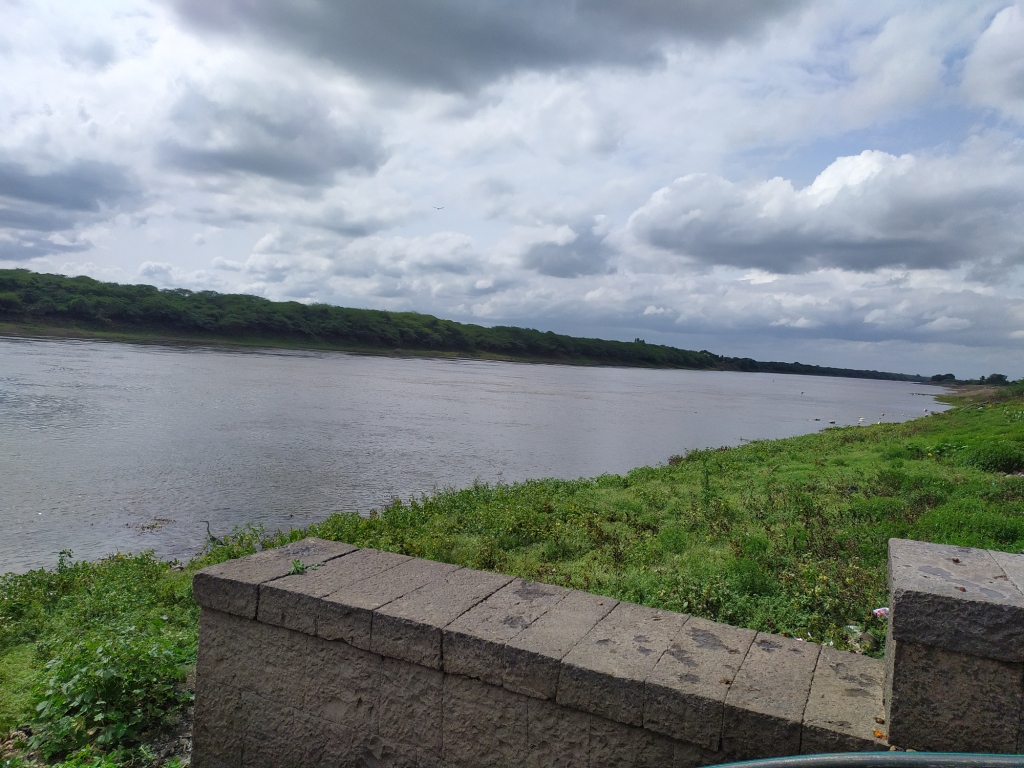
Post my darshan, I sat by the banks of the Bhima River. Swollen by the monsoon rains, the river flowed beautifully and the view looked mesmerizing. I found a quiet spot on the concrete steps of the river ghat, had lunch I’d brought along, and simply enjoyed the view. It was undoubtedly a memorable lunch by the river.
Bhuleshwar Temple: A Heritage Detour
After lunch, my next destination was Bhuleshwar Temple. It is not part of the Ashtavinayak circuit, but I had included it in the first leg of my trip. I left at 3:30 pm for Bhuleshwar Temple, which was 64 km away and showed an estimated travel time of 1 hour 45 minutes. I drove back via Daund and, from Patas, took the Solapur Highway.
Bhuleshwar Temple is located near Yavat on the Pune-Solapur Highway. The temple is situated on a hill, and the road leading to it gave me a very different feeling compared with the busy highways and town roads I had covered earlier in the day. I reached the temple at 5 pm.
Bhuleshwar Temple is an ancient temple dedicated to Lord Shiva and is one of the most interesting heritage temples near Pune. It is believed to date back to the Yadava period.
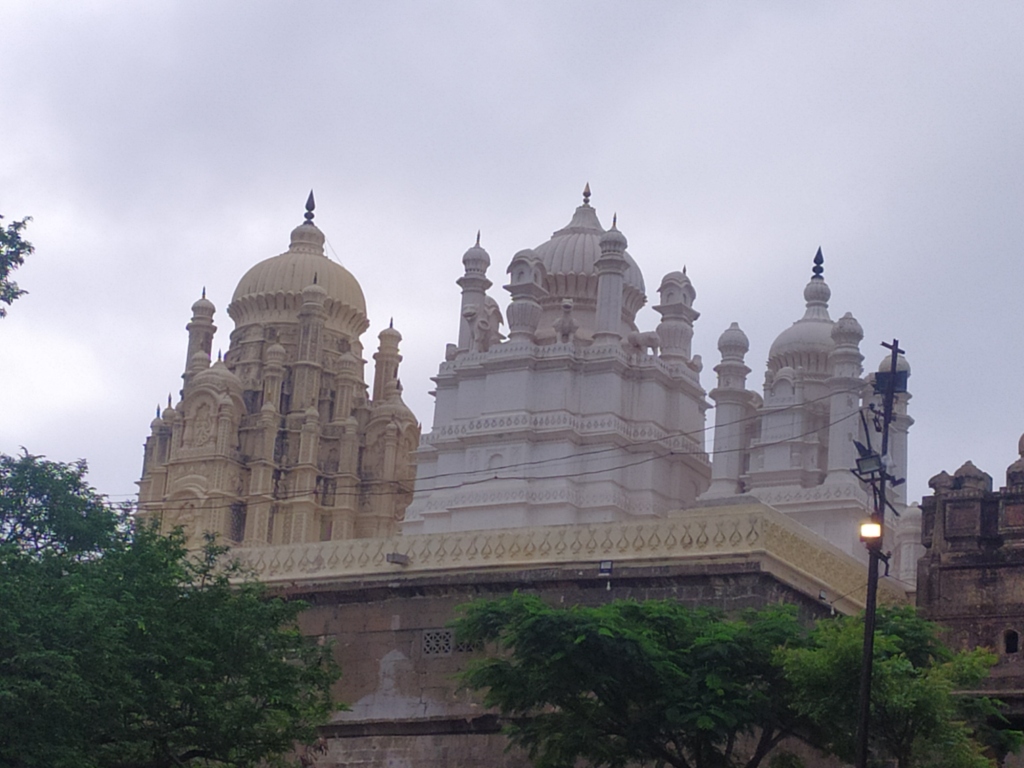
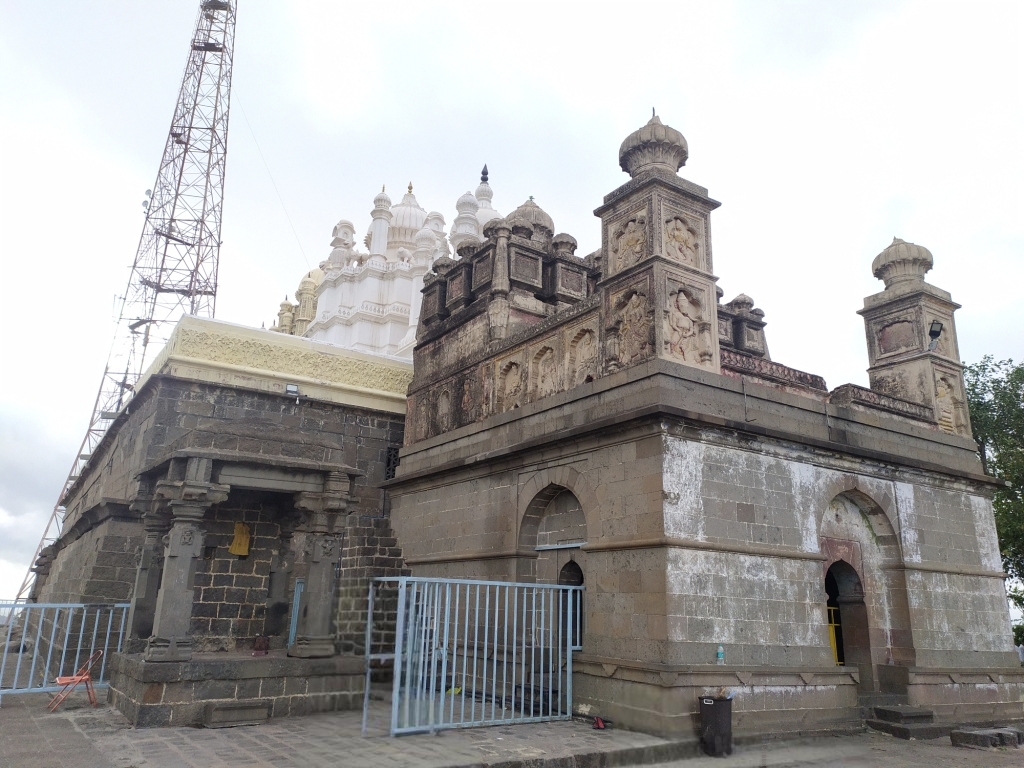
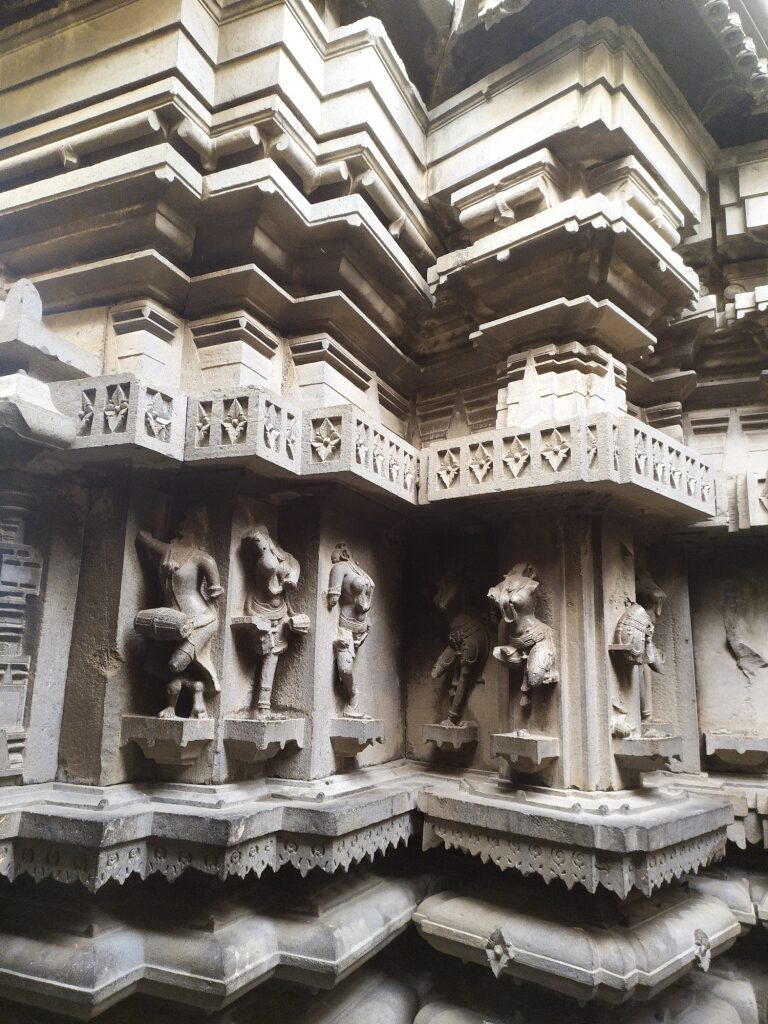
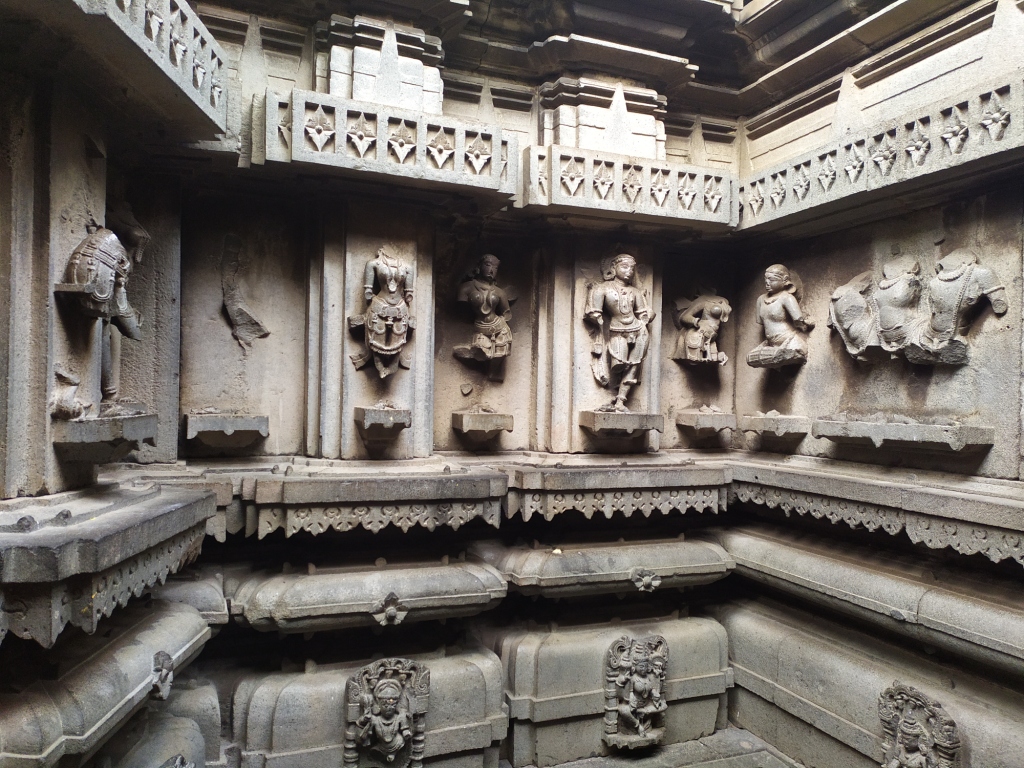
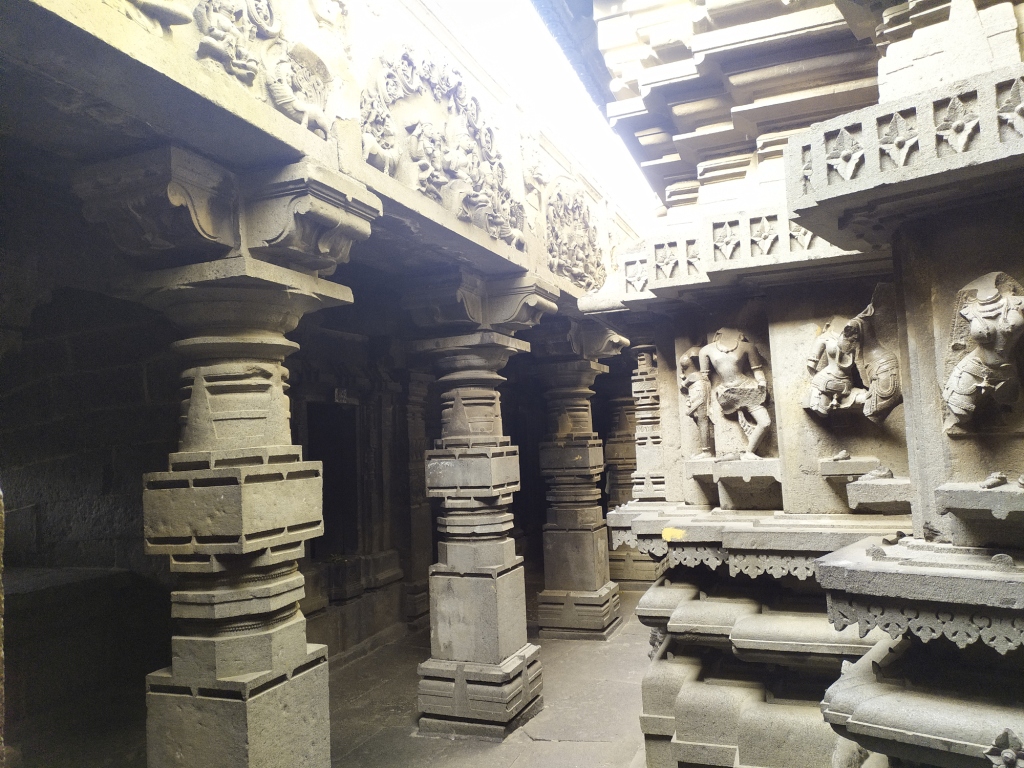
The first thing that makes Bhuleshwar Temple stand out is its architecture. From a distance, the structure looks almost like a small fort or even a mosque-like monument because of its domes and outer appearance. However, once inside, the temple reveals beautifully carved stone pillars, sculpted panels, and intricate work depicting deities and mythological themes. The contrast between the plain exterior and richly carved interior makes the temple feel like a hidden treasure.
Chintamani Temple, Theur: The Final Stop of the Day
I left Bhuleshwar Temple at 6 pm. Dusk had already set in, and I still had the last destination of the first leg of my Ashtavinayak circuit – Chintamani Temple at Theur. I wanted to avoid driving at night at all costs. Since my phone had been running GPS for almost the entire day, its battery had drained. Fortunately, I had brought the power bank. I connected my phone and continued towards the final destination of the day.
From Bhuleshwar, I proceeded towards Chintamani Temple. The drive brought me back towards the Pune-Solapur route. After a long day of riding through Jejuri, Morgaon, Siddhatek, and Bhuleshwar, Theur felt like the natural closing point of the first leg of my journey. Chintamani is 35 km from Bhuleshwar and takes around an hour. I reached the temple at 7 pm. The temple is located in a congested locality with very limited space for parking.
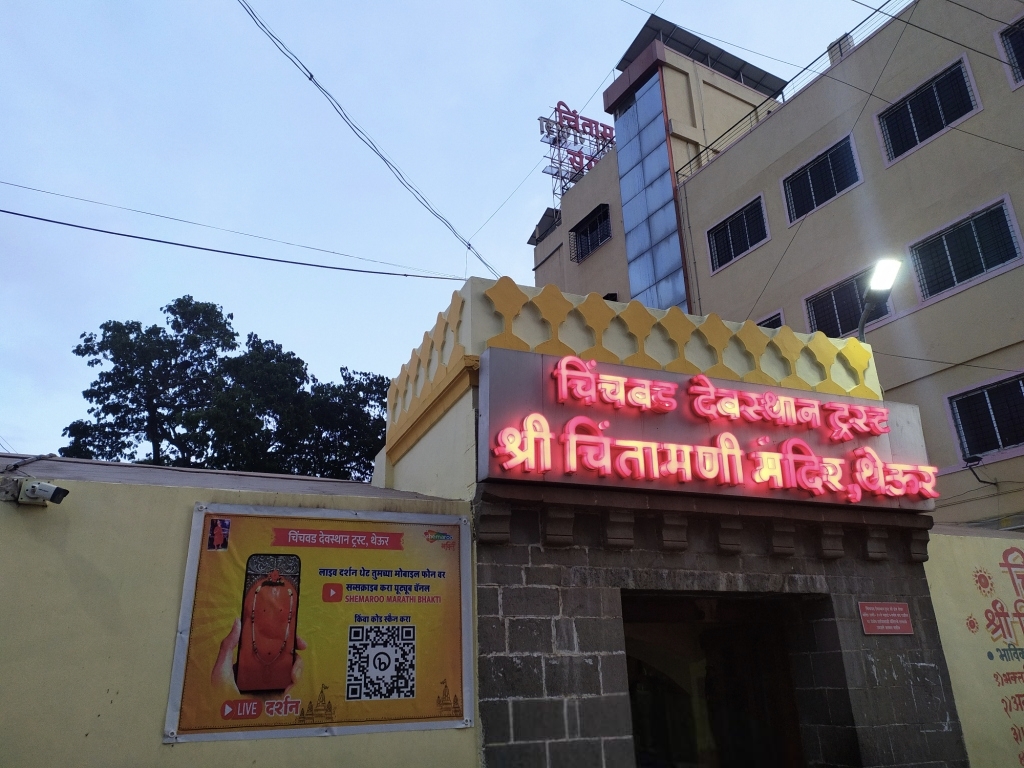
Chintamani Temple at Theur is one of the important temples in the Ashtavinayak circuit and is traditionally counted as the fifth temple in the prescribed sequence. In my itinerary, however, it turned out to be the third Ashtavinayak temple of the day. The temple is located close to Pune, near the confluence of the Mula, Mutha, and Bhima rivers. It is dedicated to Lord Ganesha in the form of Chintamani, the remover of worries and restlessness of the mind.
Ending the First Phase of the Ashtavinayak Journey
Chintamani Temple gave me a feeling of completion. I offered prayers, spent some quiet time inside the temple, and reflected on the day’s journey. With this darshan, the first leg of my customized Ashtavinayak Yatra from Pune came to a peaceful end before I began my ride back home.
My housing society was only 12 km from Chintamani, but since the route passed through some congested and heavy traffic, it took me almost an hour to reach back home. It was 9 pm by the time I reached home.
First Phase Trip Reflection
The first phase of the trip turned out to be a long but deeply satisfying start to my customized Ashtavinayak journey. It was not just a checklist of temples covered. The day brought together history, faith, scenic roads, rain-soaked riding, and personal reflection. With the eastern circuit completed, I looked forward to the next leg of the journey with renewed excitement.
Phase 2 : August 2023 - Northern Ashtavinayak Temples and the Palkhi Trail
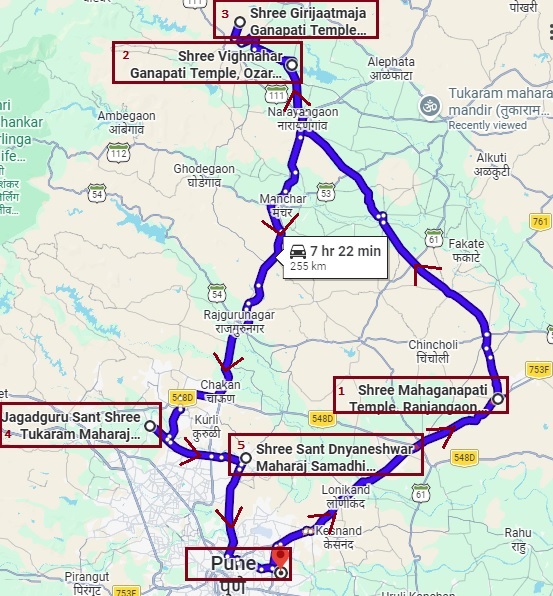
The second phase of my Ashtavinayak trip was the most ambitious one. I planned to cover three Ashtavinayak temples along with three other important temples in the north of Pune, along with the important pilgrimage sites at Dehu and Alandi. The the trip was done in August and it covered the temples in the below sequence:
Mahaganapati Temple, Ranjangaon (Ashtavinayak)
Vighnahar Temple, Ozar (Ashtavinayak)
Girijatmaj Temple, Lenyadri (Ashtavinayak)
Sant Tukaram Maharaj Mandir & Gatha Mandir Dehu
Sant Dnyaneshwar Maharaj Samadhi & Gyaneshwari Mandir, Alandi
Shri Gajanan Maharaj Sansthan, Alandi
Since the target was ambitious, I decided not to spend more than 30-40 minutes at every temple. I had also deliberately chosen a Tuesday and taken leave from work to avoid the long queues at the Temples during weekends and holidays.
I started early from Pune at 7 am. My preparations were the same as on Day 1, except that this time I did not carry lunch with me.
Mahaganapati Temple - Ranjangaon
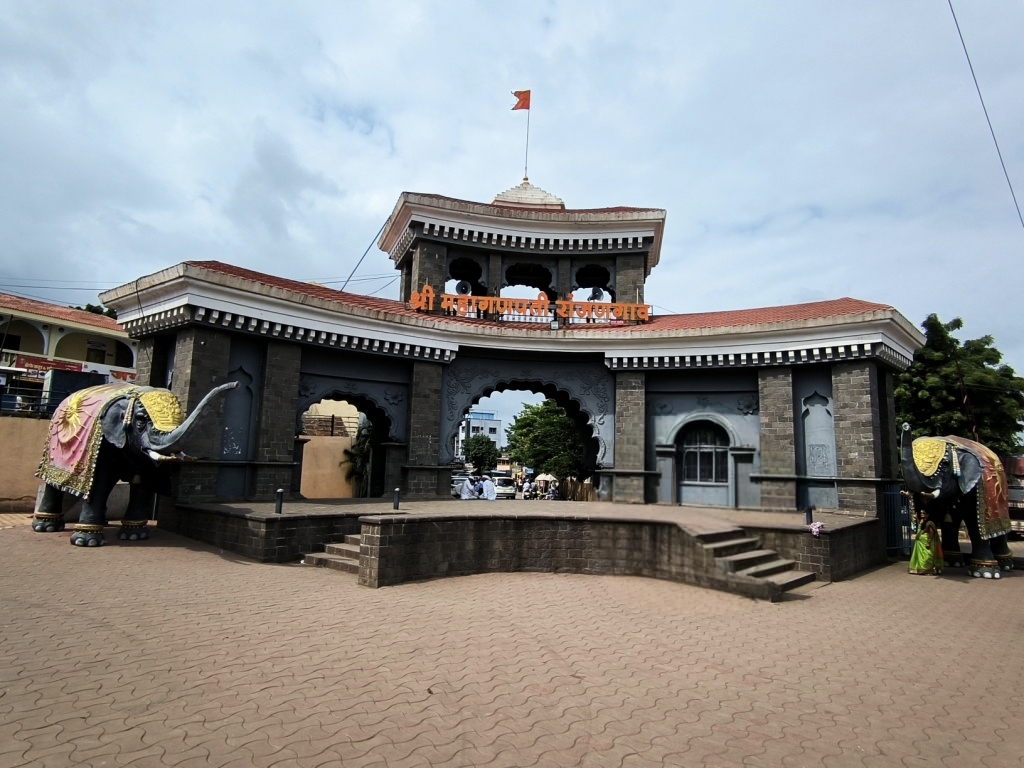
My first destination was Mahaganapati Temple at Ranjangaon. The temple is about 45 km from Pune, with an estimated travel time of 1 hour 45 minutes. I took the Nagar Road through Wagholi, Koregaon Bhima, and Shikrapur. Most of the route was relatively free of traffic, except for the perennial congestion at Shikrapur. The temple is located right on the highway at Ranjangaon, making it one of the more accessible Ashtavinayak temples from Pune. At exactly 8:45 am, I was standing in front of the temple.
Mahaganapati Temple at Ranjangaon is traditionally visited as the eighth temple in the prescribed Ashtavinayak sequence. In my customized itinerary, however, it was the fourth Ashtavinayak temple I visited. The temple is dedicated to Lord Ganesha in the form of Mahaganapati, meaning the “great” or “supreme” form of Ganesha. This form is considered especially powerful and is associated with strength, wisdom, protection, and the removal of major obstacles.
I spent about half an hour at the temple before getting ready for the next destination on my list – Vighnahar Temple at Ozar.
Vighnahar Temple - Ozar
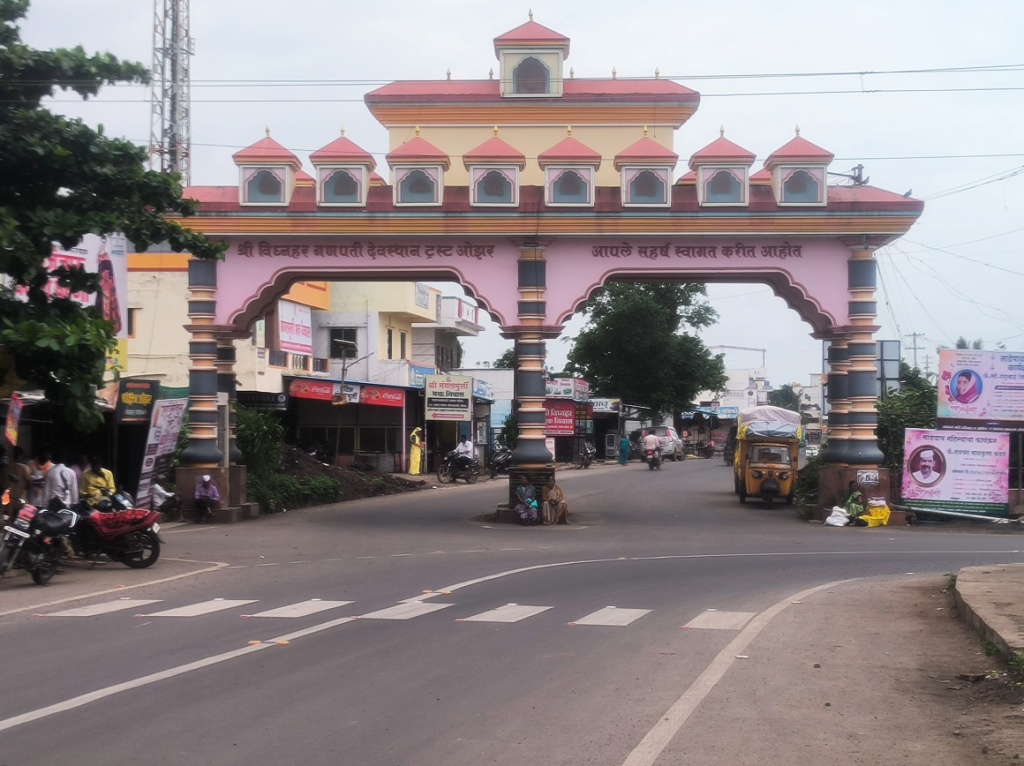
Vighnahar Temple was about 65 km from Ranjangaon and took around two hours to reach. Just opposite the Mahaganapati Temple is the diversion from Nagar Road that takes you towards Narayangaon. The road passed through small villages and towns and turned out to be one of the most scenic stretches of the day’s drive. When I reached Vighnahar, it was 11:15 am.
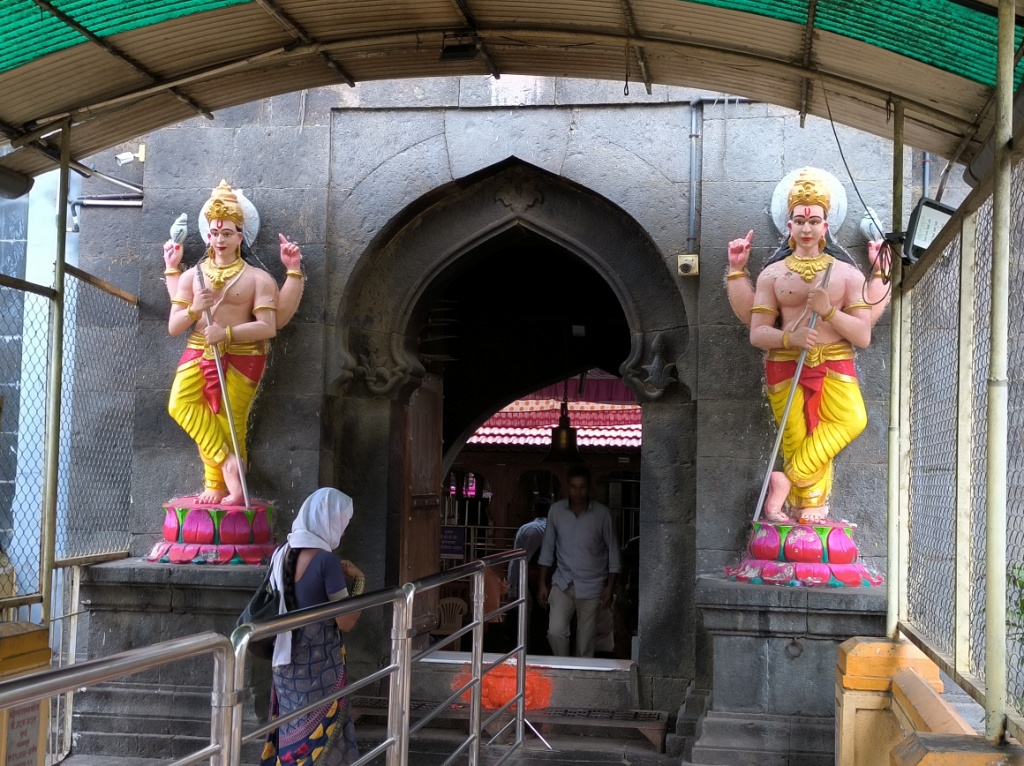
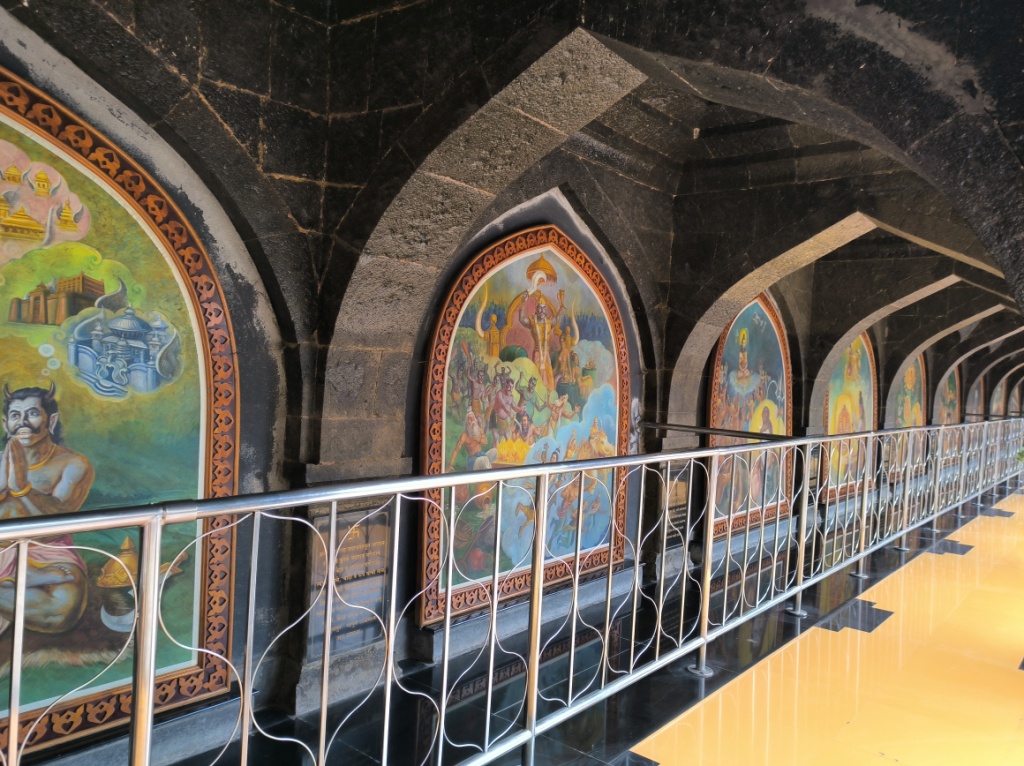
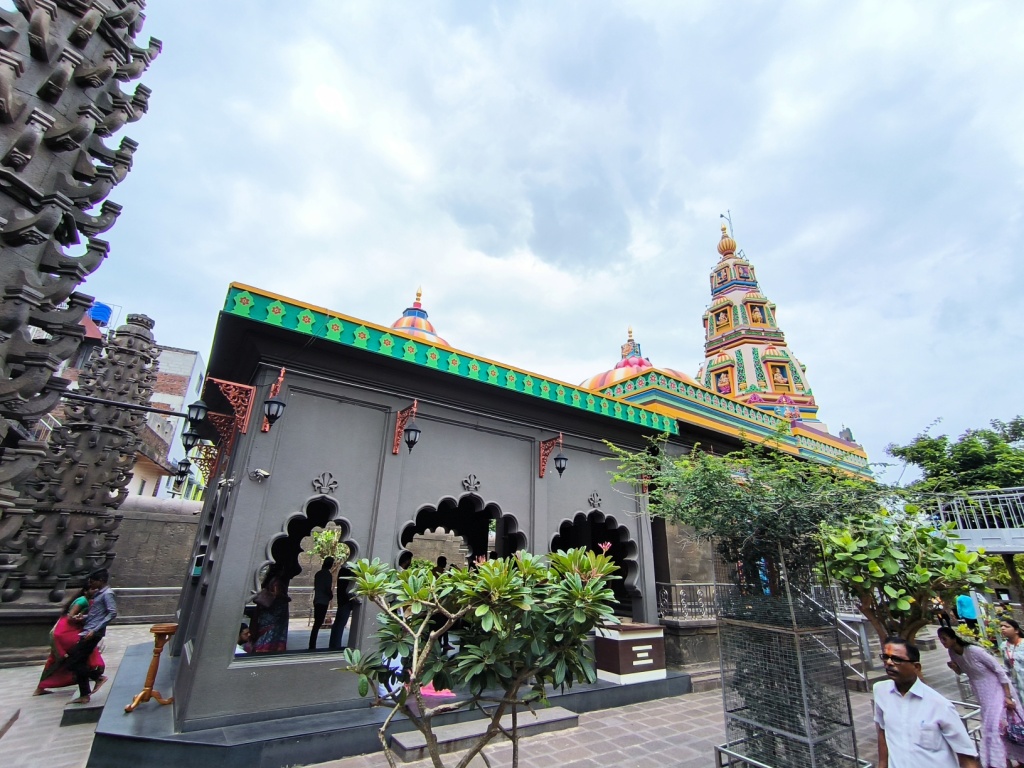
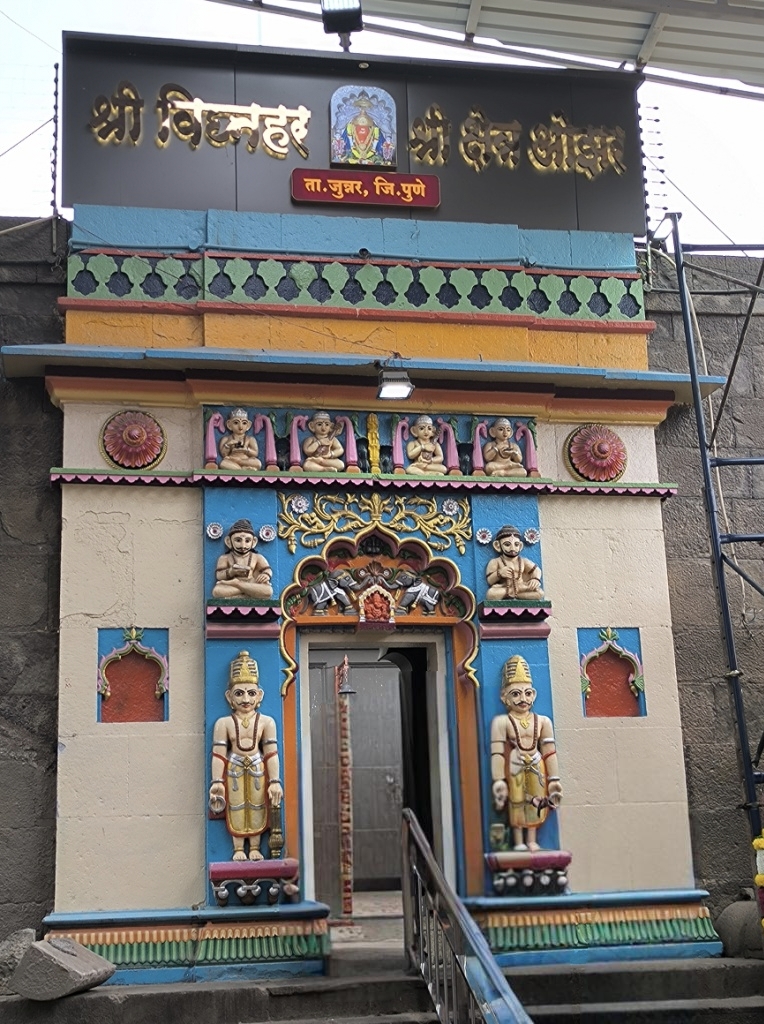
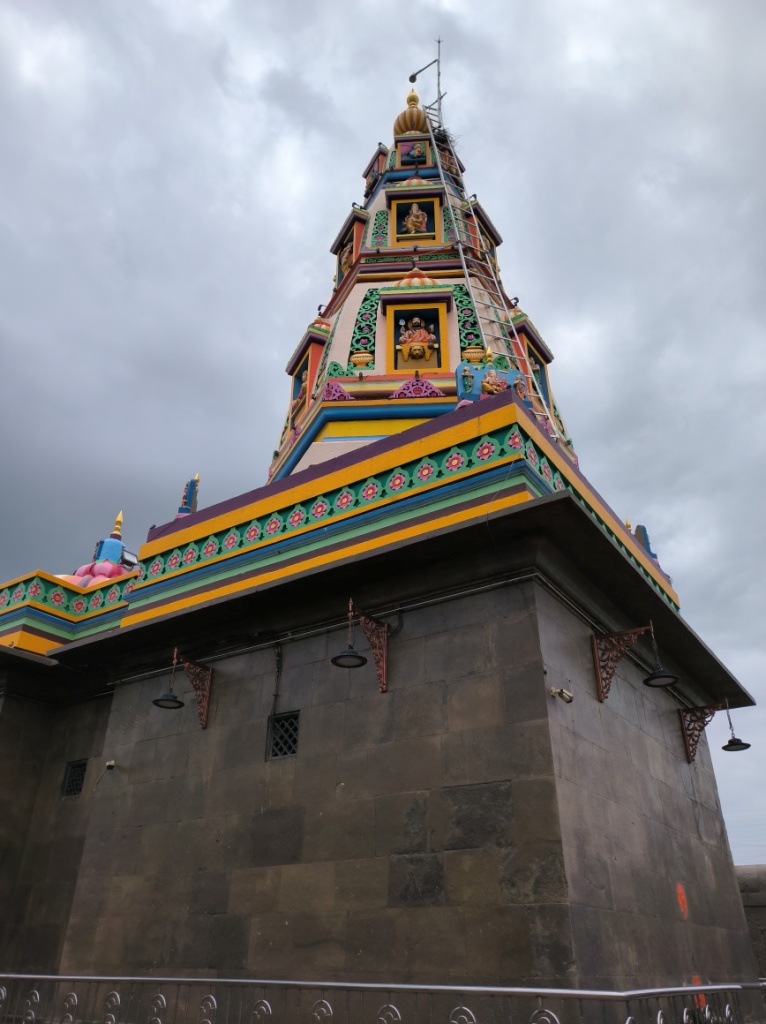
Vighnahar Temple is visited as the seventh temple in the prescribed Ashtavinayak sequence and was the fifth in my customized itinerary. It is also known as Vighneshwar Ganapati Temple. The temple is located at Ozar near Narayangaon in Junnar taluka, on the banks of the Kukadi River. Compared with some other Ashtavinayak temples, Ozar has a more spacious and well-developed temple complex. Its setting near the river also gives it a beautiful ambience. The name Vighnahar means the remover of obstacles. This form of Lord Ganesha is worshipped by devotees who seek relief from difficulties, delays, and hurdles in life.
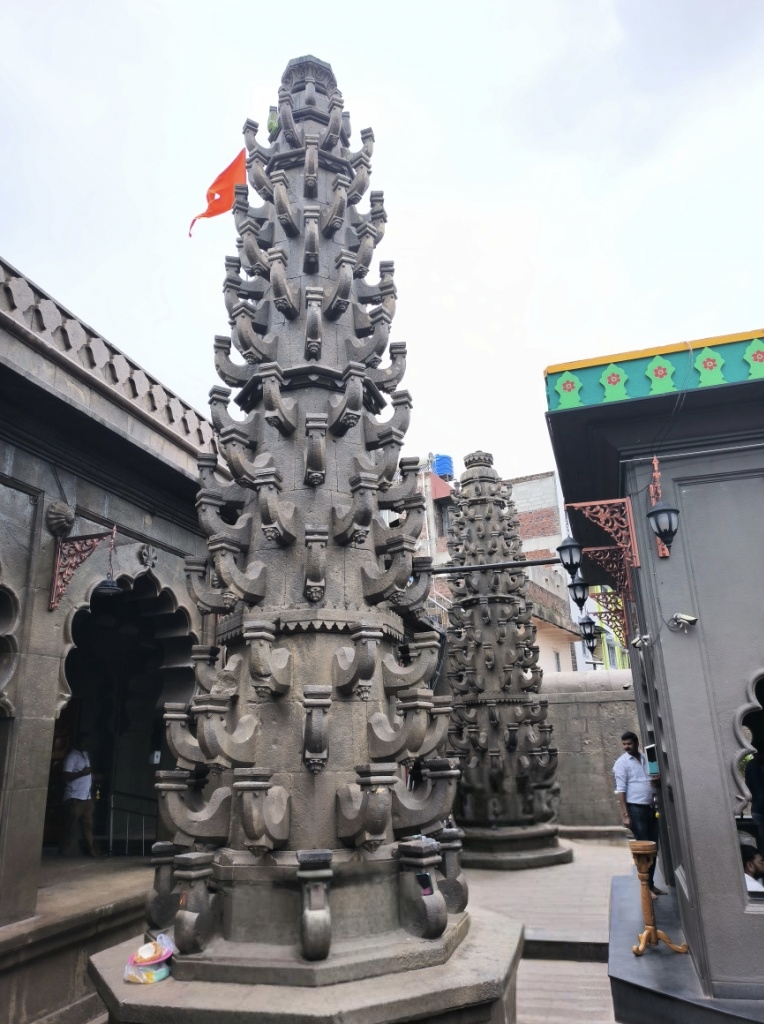
One of the most striking features is its golden dome and spire, which immediately catch the eye on entering the complex. The temple has a fortified appearance with a spacious courtyard, stone walls, a carved entrance, and lamp towers that add to its traditional Maharashtrian character.
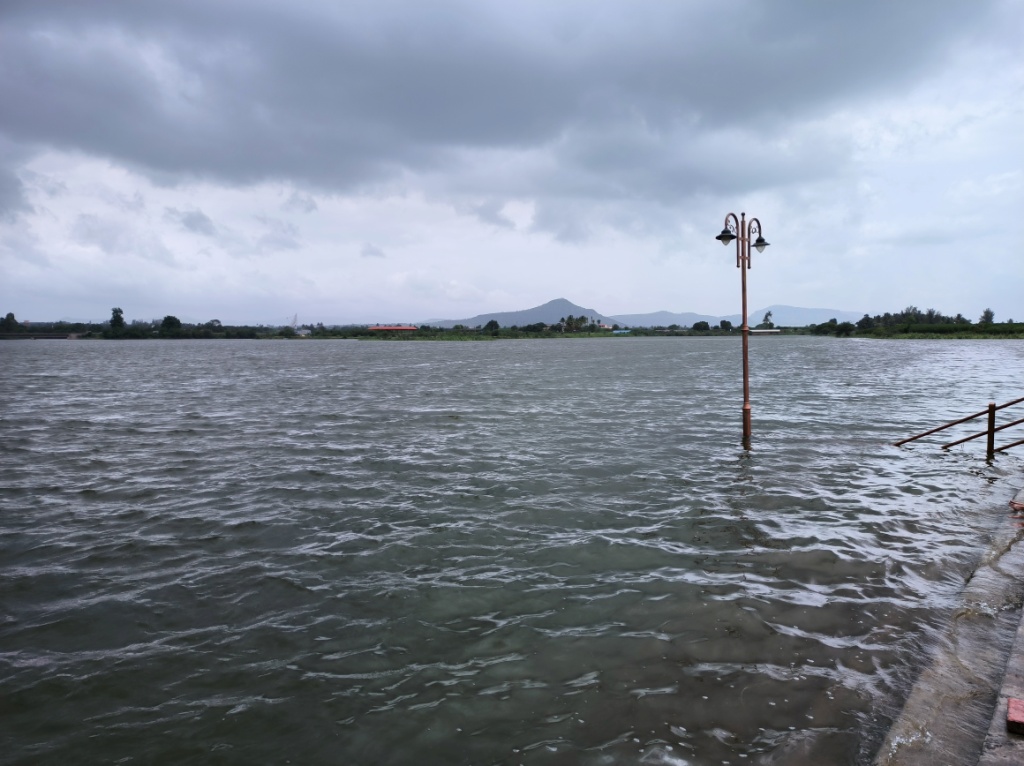
The temple offered a pleasant balance of history, devotion, and rural charm. I also spent some time resting at the banks of the Kukadi River.
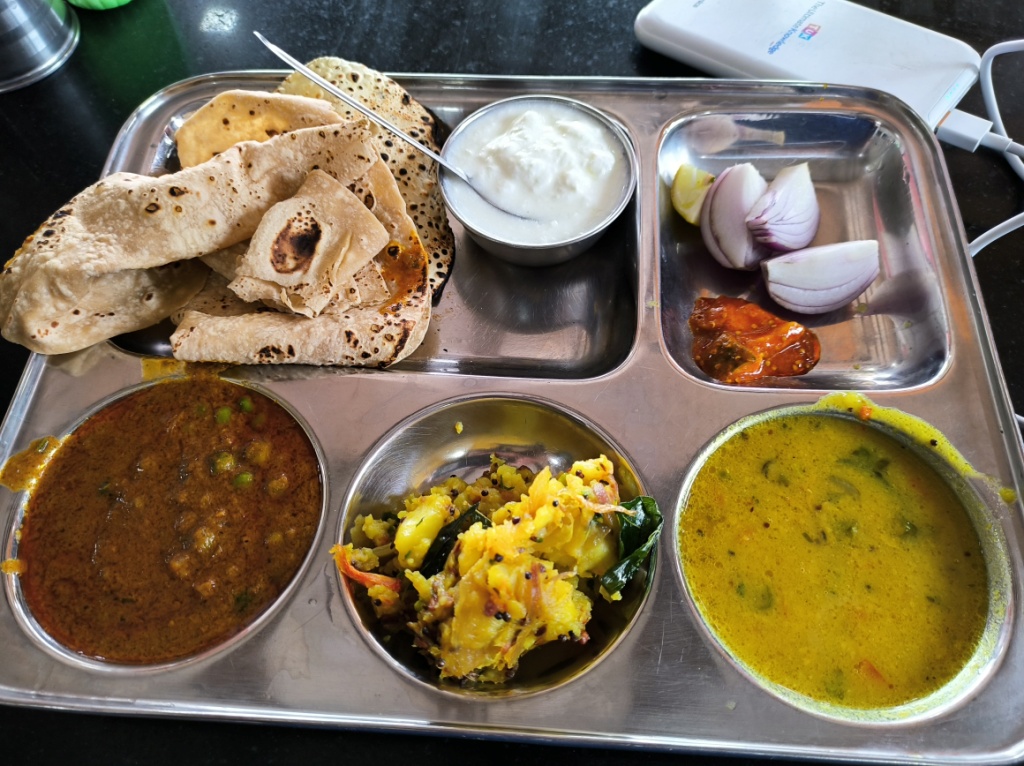
By then it was noon, so I decided to have lunch. Several restaurants are located near the temple, and I settled for a simple vegetarian thali. By 12:15 pm, I was done with lunch and ready for the next destination – Girijatmaj Temple at Lenyadri.
Girijatmaj Temple, Lenyadri
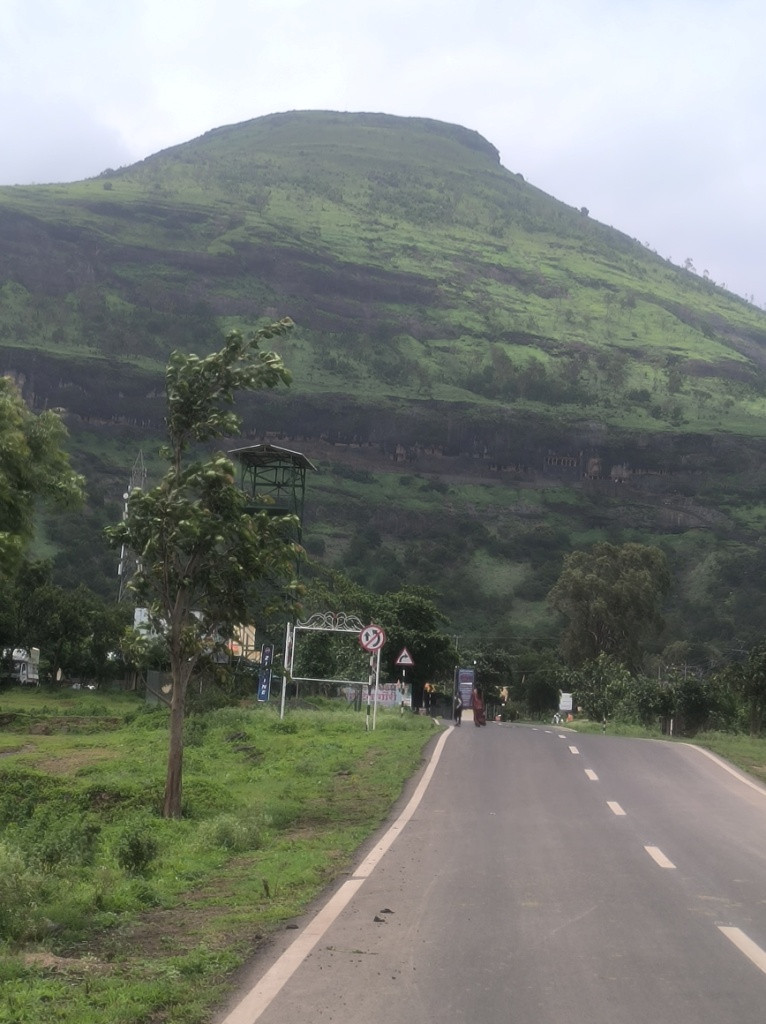
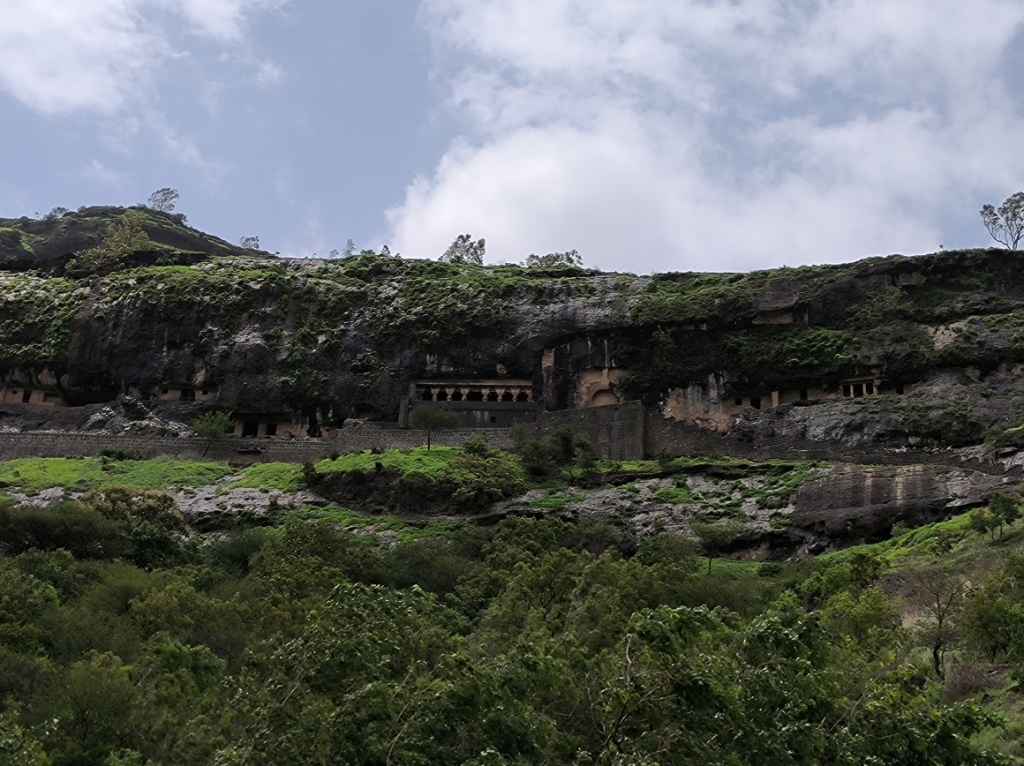
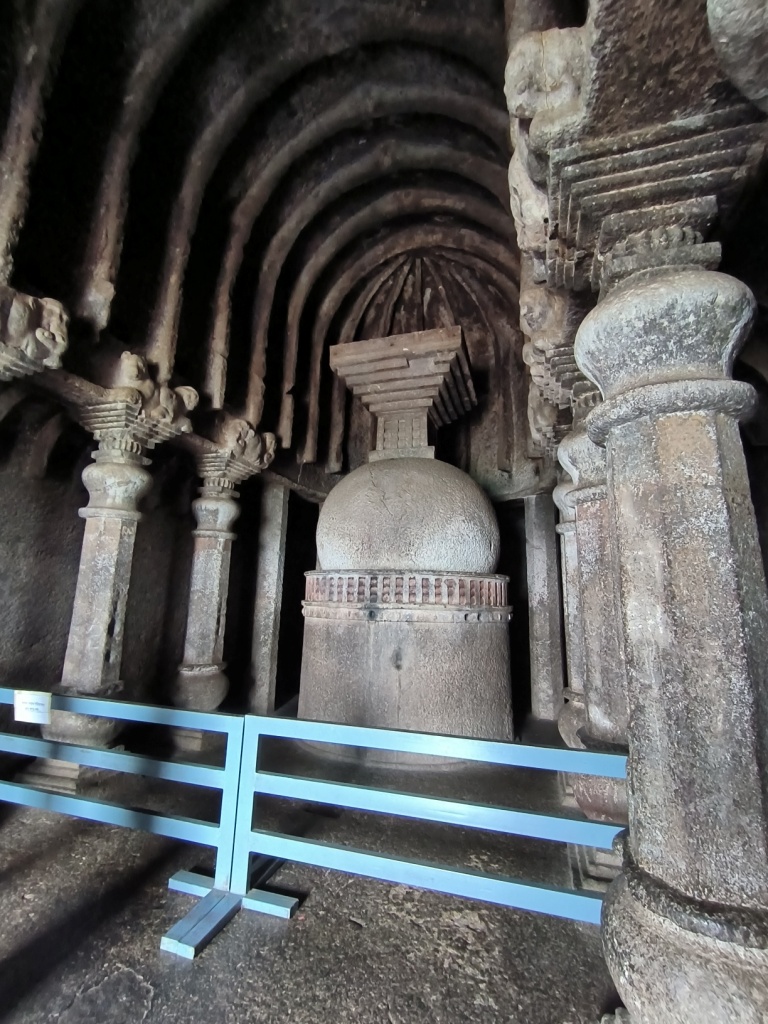
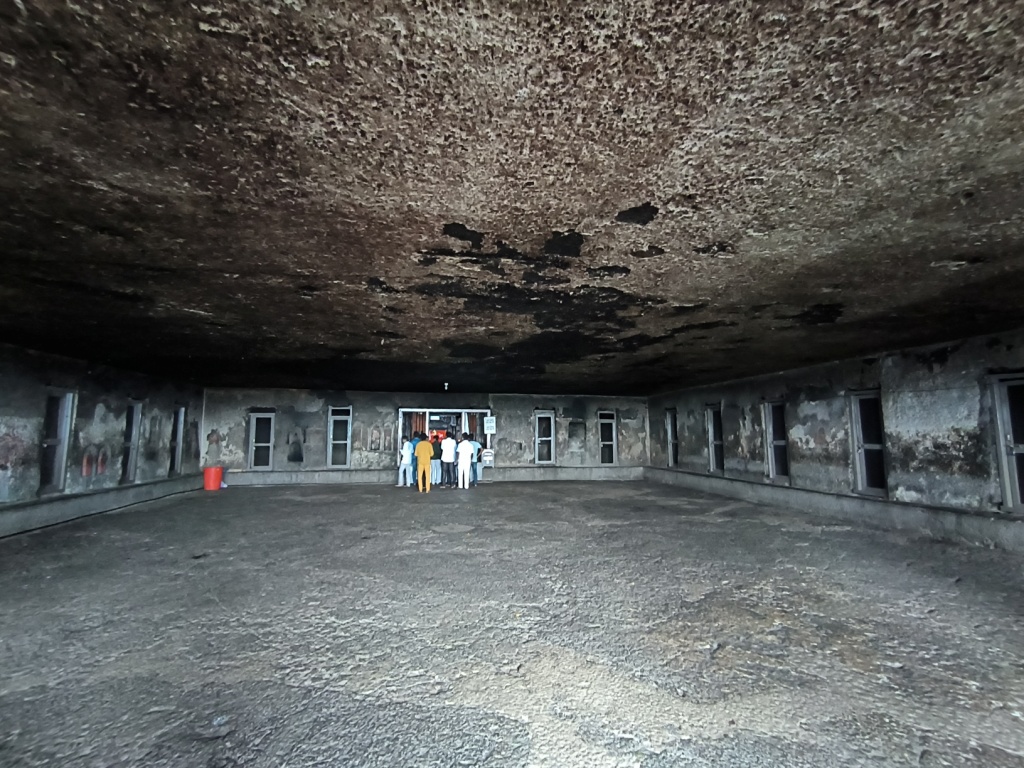
Girijatmaj Temple is located near Junnar in Pune district and is one of the most distinctive temples in the entire Ashtavinayak circuit because it is situated inside a rock-cut cave on a hill. Lenyadri forms part of an ancient group of Buddhist rock-cut caves, also known as Ganesh Lena. The Girijatmaj shrine is housed inside one of these caves, giving the place a unique blend of history, archaeology, and devotion.
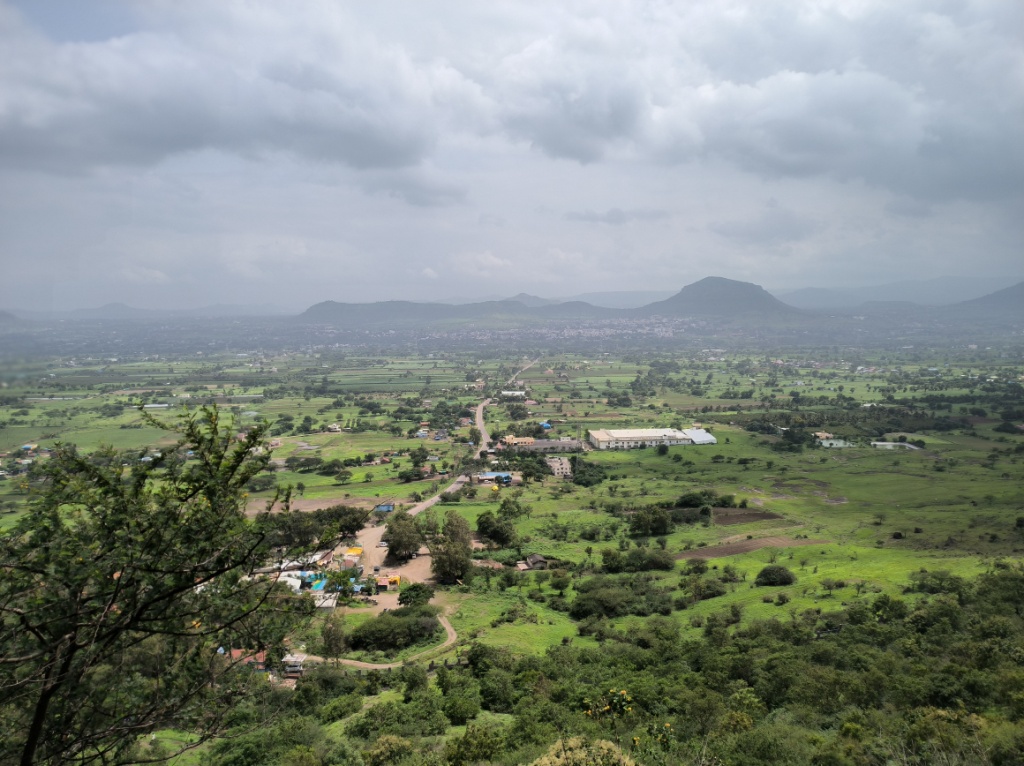
After leaving Ozar around 12:15 pm, I proceeded towards Lenyadri. The distance is only about 15 km, and the drive takes around 20 minutes. The route passes through the Junnar region, with open fields, village roads, and the Sahyadri hills gradually appearing closer. Since it was the monsoon season, the landscape had a fresh green look, making the short ride very pleasant.
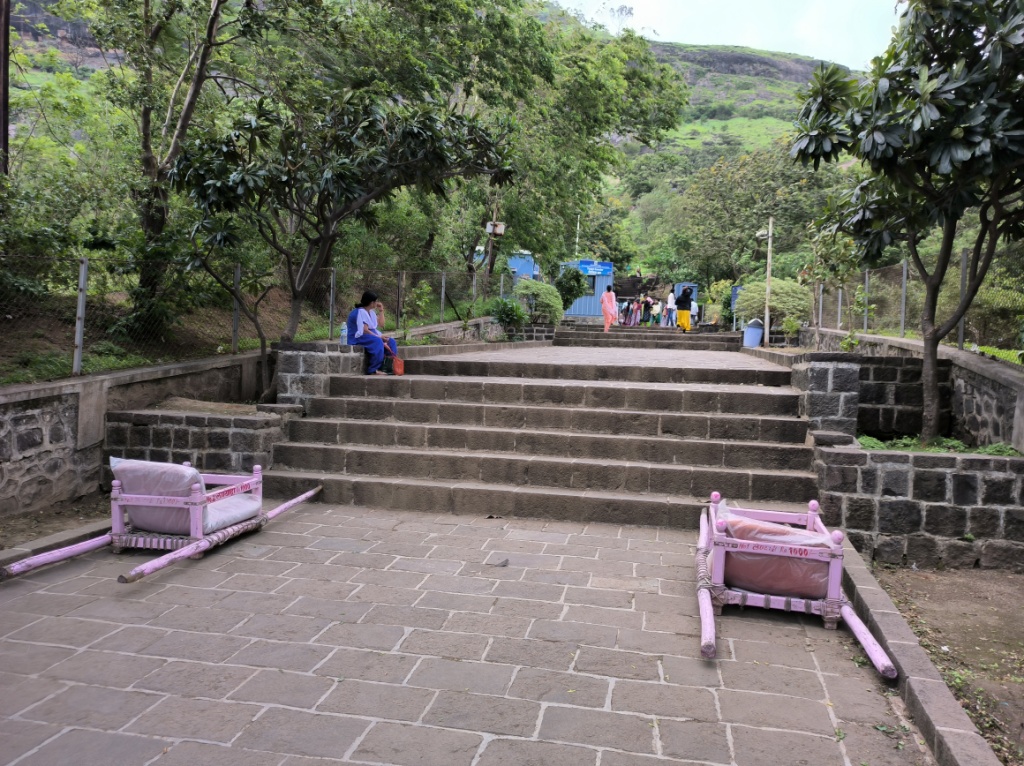
The most challenging and interesting part of visiting Girijatmaj is the climb to the cave temple. One has to climb roughly 300 stone steps to reach the shrine. The steps, rocky hill, open views, and occasional pauses to catch my breath added a different flavour to the day’s journey. The climb took about 20 minutes to reach the temple.
The temple architecture is very different from the other Ashtavinayak temples. There is no separate constructed temple building in the usual sense. The shrine is carved into the mountain itself, and the sanctum is part of the cave. The idol of Lord Ganesha is also carved into the rock wall, giving the darshan a very ancient and natural feel. The cave hall is simple, spacious, and quiet, while the natural light entering the cave adds to the peaceful atmosphere.
After completing darshan at Lenyadri, I was ready to move away from the Ashtavinayak circuit for the day and proceed towards Dehu, which had been on my personal to-do list for a long time.
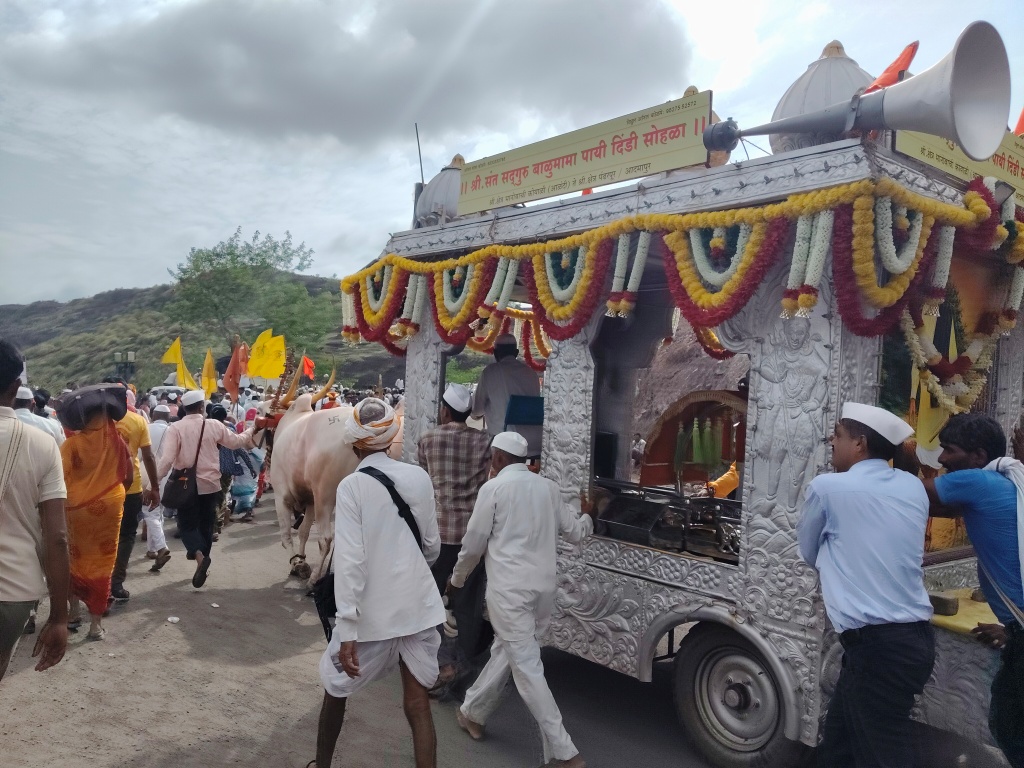
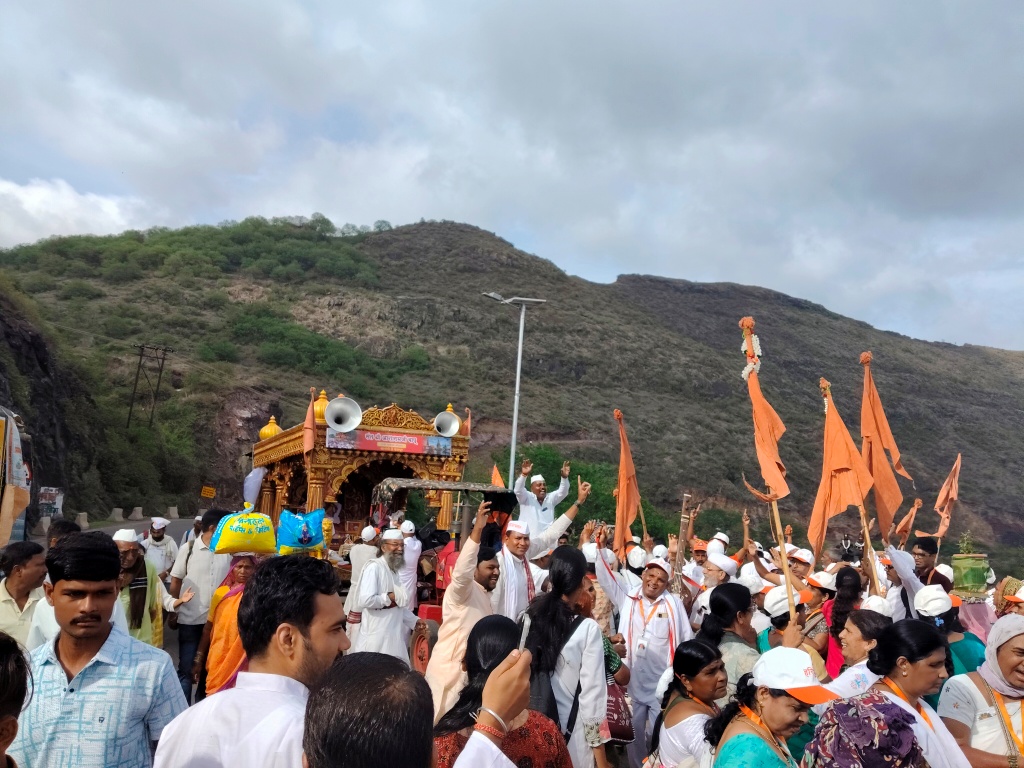
Palkhi Tradition
Before I get into the details of my visit to Dehu, it is worth understanding the Palkhi procession tradition in Maharashtra, especially for people who may not be familiar with it.
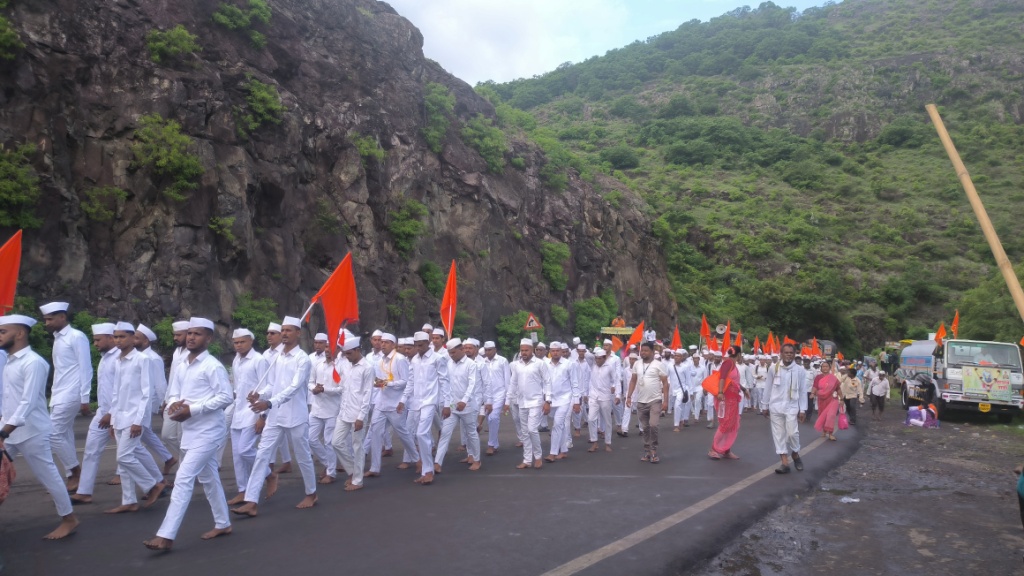
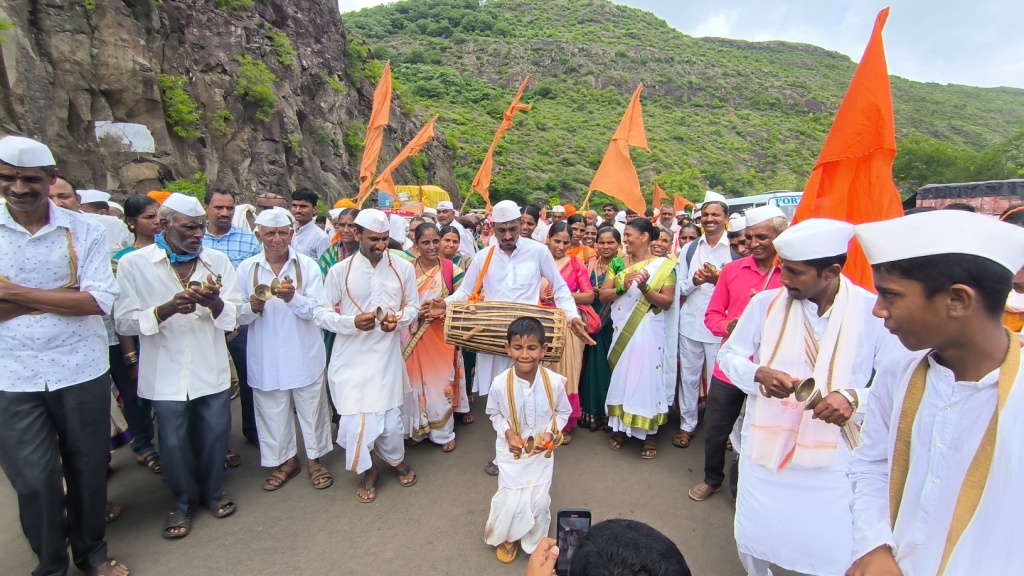
The Palkhi procession, is one of Maharashtra’s deeply rooted spiritual traditions. Every year, lakhs of devotees walk towards Pandharpur to seek the blessings of Lord Vitthal and Rukmini on the occasion of Ashadhi Ekadashi, which generally falls in July or August. Vitthal is regarded as form of Sri Krishna, who is himself an avatar of Vishnu and Rakhumai is incarnation of Lakshmi – consort of Vishnu
The timing of the Wari is also closely linked with the rural and agricultural rhythm of Maharashtra. By this time, the monsoon has usually set in and farmers have completed the sowing of their crops. With the first major farming task done, many villagers and farming families are able to undertake the long walk to Pandharpur.
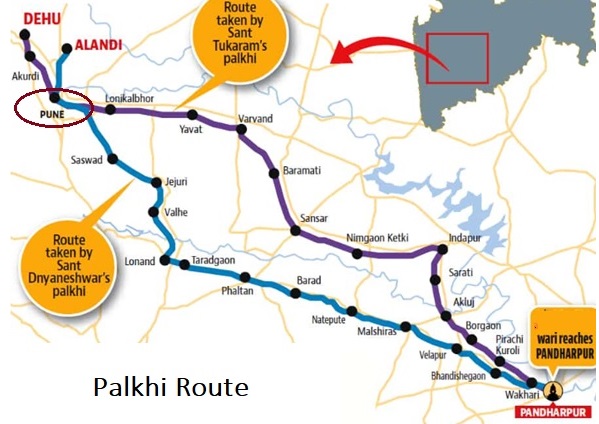
The heart of the procession is the Palkhi, a beautifully decorated palanquin that carries the padukas, or symbolic sandals, of the below two saint-poets –
Sant Dnyaneshwar Maharaj Palkhi from Alandi – Sant Dnyaneshwar was a 13th-century yogi who provided the philosophical foundation for Maharashtra’s Bhakti movement. His short life of 21 years concluded when he voluntarily entered Sanjeevan Samadhi, or eternal meditation, in an underground chamber at Alandi. This Palkhi begins from Alandi, where he took samadhi. He is remembered as one of Maharashtra’s greatest saint-philosophers and the author of the Dnyaneshwari, the Marathi commentary on the Bhagavad Gita
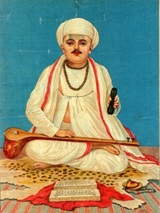
Sant Tukaram Maharaj Palkhi from Dehu – Sant Tukaram Maharaj was a 17th-century poet-saint from Dehu. He represents the emotional and devotional peak of the Varkari sect. This Palkhi starts from Dehu, the place associated with his life.
Both the saints played a major role in taking devotion beyond formal rituals and bringing it into the everyday lives of ordinary people. The procession moves through towns and villages, with local communities offering food, water, shelter, and medical support to the Warkaris.
At Pune, both the Palkhis meet and then diverge to take different routes to reach the final destination – Pandarpur. For Pune residents, the arrival of the Palkhis is a familiar annual experience. Roads are decorated, crowds gather for darshan, and the entire city briefly becomes part of the larger devotional movement.
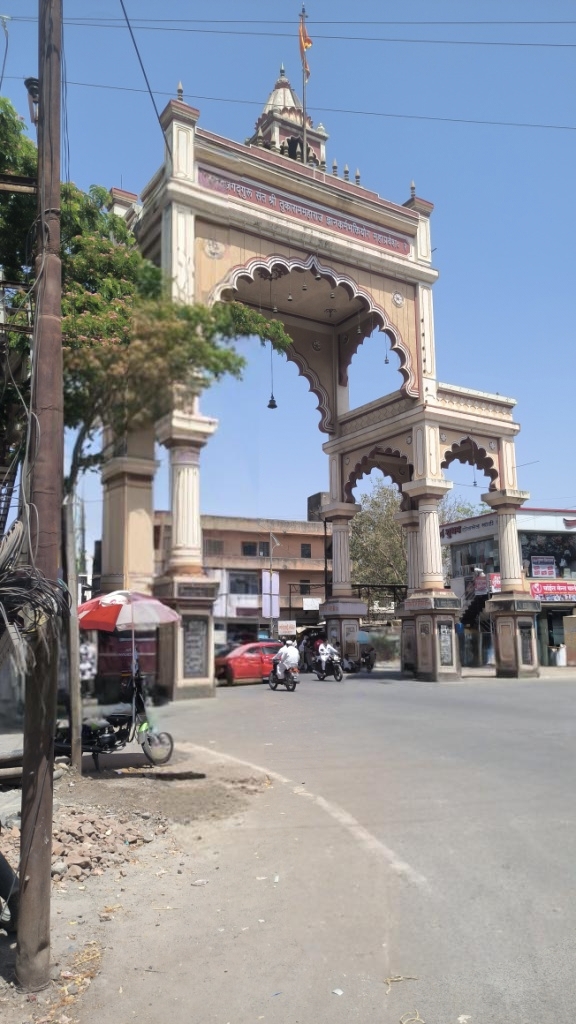
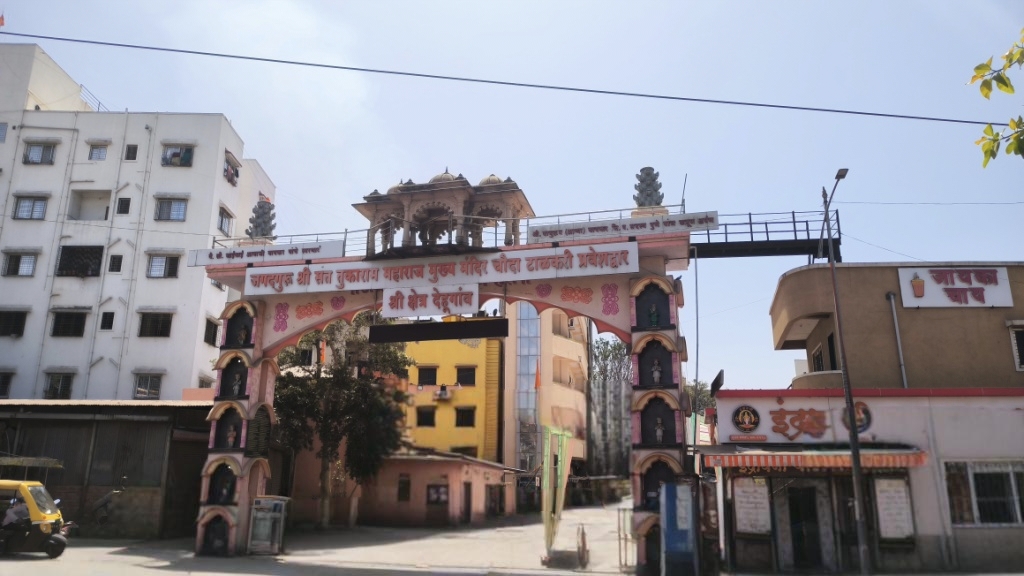
Dehu – Sant Tukaram Maharaj Mandir
Returning back to my travelogue – After completing darshan at Lenyadri, I started towards Dehu. This was no longer an Ashtavinayak stop, but it was one of the places I had deliberately included in the itinerary. From Lenyadri, Dehu is 85 km away and takes around 2.5 hours. I reached the temple at 4 pm. Parking was a challenge, so I had to sneak my bike next to a tea shop on the main road.
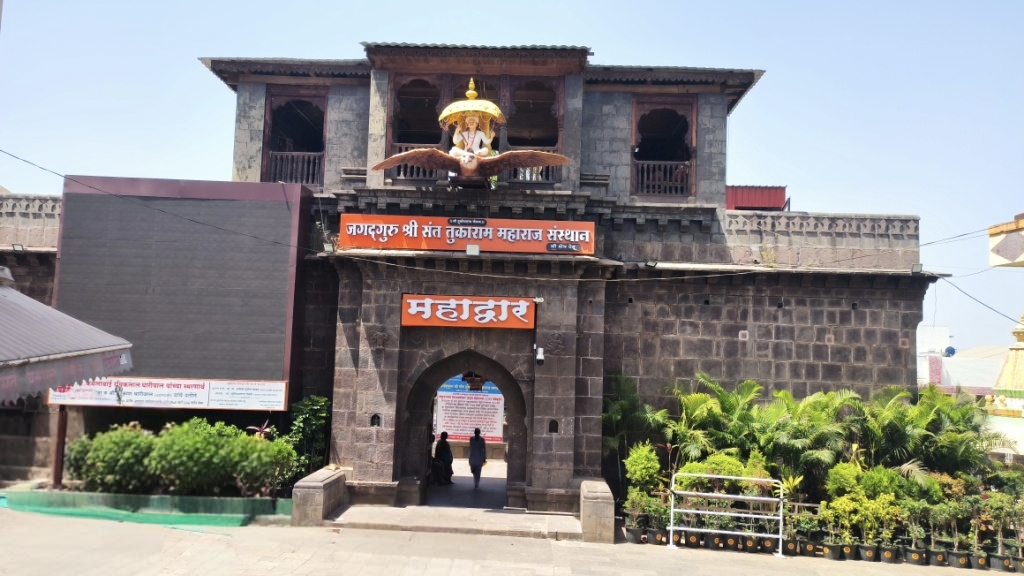
Sant Tukaram Maharaj Mandir at Dehu is the main devotional centre connected with the saint’s life and spiritual legacy. Constructed in 1723 by the saint’s youngest son, it is the primary space where the saint is worshipped. It houses the presiding deities, Lord Pandurang (Vitthal) and Rukmini. The shrine protects the sacred stone slab (Shila) where Sant Tukaram observed a stringent 13-day fast. The fast took place when orthodox community members cast his handwritten manuscripts of Abhangas (devotional poems) into the Indrayani River.