Skip to content

Mathura – Gwalior – Jhansi

    From Delhi to Jhansi: A Cultural Rail Journey Through Vrindavan, Mathura, Gwalior, and Orchha

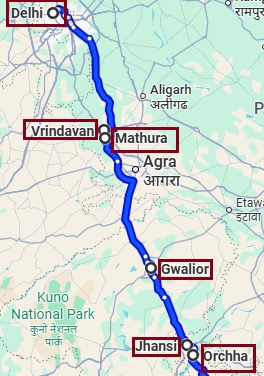
    The travelogue below narrates a round trip from Delhi to Jhansi by train. On the way, I visited Mathura and Gwalior – which are known for their rich cultural and historical significance. Both of them lie along the Delhi-Jhansi railway route. I also explored Vrindavan and Orchha which are other prominent and adjoining cities of Mathura and Jhansi respectively.

    My frequent travels between Pune and Delhi often involve trains that follow the Western route via Mumbai, Vadodara, and Kota. Some trains take a Central India route through Bhopal and Gwalior, with stops at Jhansi, Agra, and Mathura—cities known for their rich cultural and historical significance.

    In the past, I planned several road trips to these cities from Pune, but they never materialized because of the long distances and time required. Limited train options from Pune and inconvenient arrival times discouraged me from choosing train travel. Later, I realized it was simpler to explore these cities from Delhi.

    During a visit to Delhi in February 2025, I finally had the opportunity to visit these places. February is an ideal time for travel due to the pleasant weather and fewer crowds, as most students and parents are busy with school exams.

    🏛️ Cities Explored En Route

    After reviewing various travel blogs and websites, I identified the following locations to visit during this trip. Since I had already seen Agra in 2004, I decided to skip it this time.

    Trip-PoIs
    • Vrindavan: Temples including Banke Bihari, Shahji, Rangnath, Radha Raman, Radha Damodar, ISCON, Prem Mandir. Kesi Ghat and Nidhivan.
    • Mathura: Shri Krishna Janmabhoomi, Shri Dwarkadhish Temple, Kansa Kila, Vishram Ghat, Mathura Museum.
    • Gwalior: Gwalior Fort, Tomb of Tansen & Mohammad Ghaus, Jai Vilas Palace & Museum
    • Jhansi: Jhansi Fort, Rani Mahal, Museum
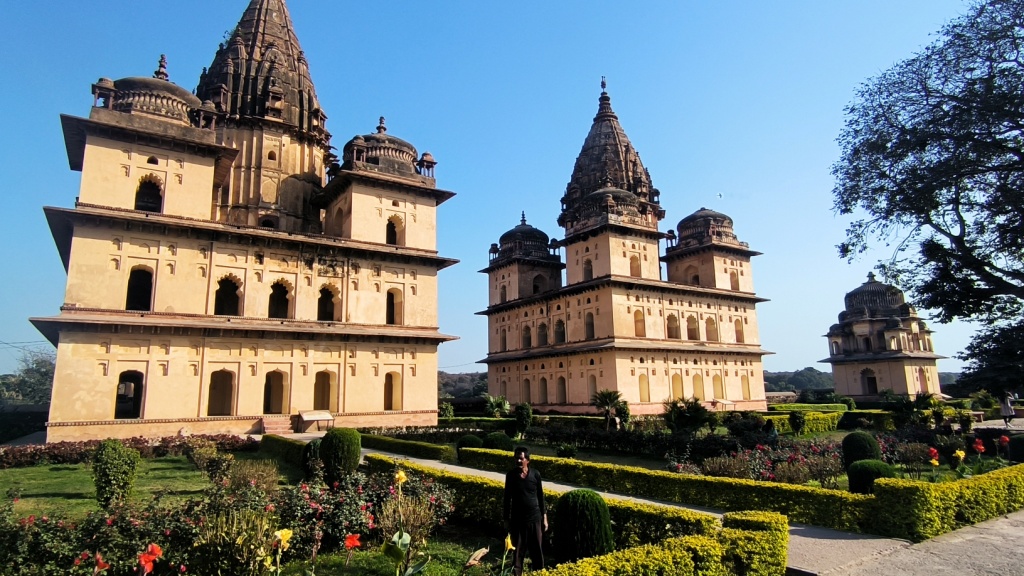
    • Orchha: Orchha Fort Complex, Chaturbhuj Temple, Raja Ram Temple, Laxmi Narayan Temple, and Chattris by the Betwa River.

    Trip Planning

    Several trains run on the Delhi-Jhansi route. Some start from Delhi, while most are long-distance services. After reviewing the schedules, I selected premium options—the Shatabdi (Train no. 12002) and the newly launched Vande Bharat (Train no. 22470).

    Itinerary
    Itinerary

    Both leave Delhi at 6 am (Shatabdi from New Delhi and Vande Bharat from Nizamuddin) and travel via Mathura, Agra, Gwalior, Jhansi, to Lalitpur (M.P.). From Lalitpur, Vande Bharat heads east to Khajuraho, while Shatabdi heads south to Bhopal (Rani Kamlapati). Although slightly more expensive, these trains are usually punctual due to their high speed and fewer stops. They depart early, reaching their destinations within a few hours, leaving the rest of the day for sightseeing. Additionally, breakfast is included onboard, saving time on early-morning food searches.

    I did not book any hotels on this trip. The plan was to stay at budget hotel close to railway station.

    🕉 Day 1: Delhi to Mathura – A Spiritual Journey Begins in Vrindavan

    Mathura-Vrindavan
    Mathura-Vrindavan

    The trip began early at 5 AM to catch the 6 AM Shatabdi Express from New Delhi Railway Station. February mornings in Delhi are cold but typically not foggy. The train departed punctually and soon crossed the NCR region. By them time I finished breakfast, it had bypassed Vrindavan Road and Bhuteshwar, the last two stations before Mathura. I arrived at Mathura on Platform No. 1 by 7:30 AM.

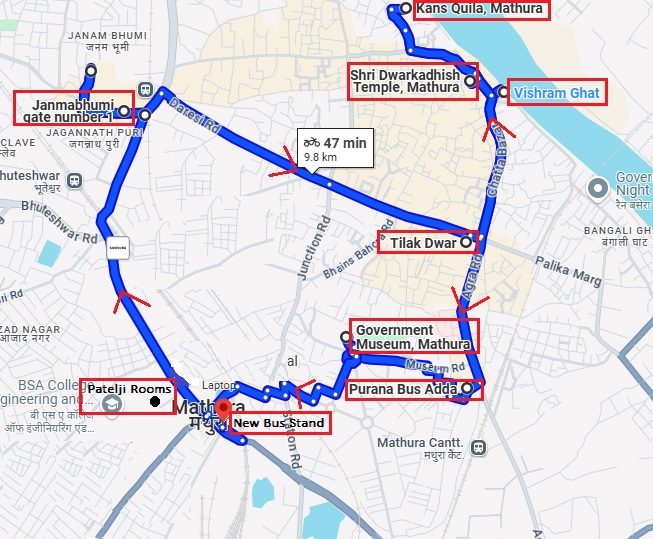
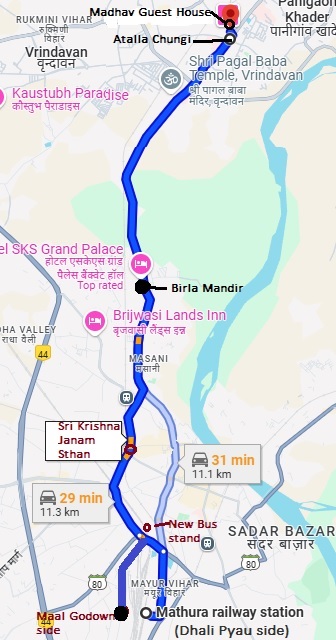
    Like most major railway stations, Mathura has two gates. The eastern side is Dholi Pyau, and the western side is Maal Godown. Dholi Pyau is closer to Platform 1, and as you step out, you’ll find several e-rickshaws lined up to take you to Vrindavan. In 2025, the fare was ₹50. You can also get transport from the Maal Godown side. Both roads converge at the New Bus Stand (see map).

    Vrindavan is about 11 km from Mathura and takes around 30–45 minutes to reach. Along the way, you’ll pass major landmarks like Krishna Janmabhoomi, Birla Mandir, and Pagal Baba Mandir. Janmabhoomi was part of my Day 2 Mathura plan, and I had skipped Birla Mandir and Pagal Baba Mandir, but if you have time, you can include them in your plan.

    Atalla Crossing
    Atalla Crossing

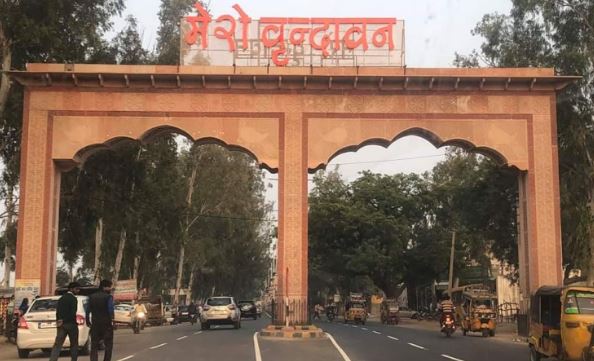
    A large gate inscribed with “Mero Vrindavan” (My Vrindavan) welcomes you to the town. Locally, this place is called Atalla Chungi, and most e-rickshaws drop you off here.

    The first task was to find a nearby hotel. Madhav Guest House was within walking distance from Chungi. Its display board offered a stay at ₹600 per day. The room was small and had an attached bathroom with hot water. I wasn’t looking for anything fancy—just a place to crash at night and refresh early in the morning. The hotel suited my expectations, so I checked in and freshened up. It was 9 AM when I left the hotel to explore Vrindavan.

    Vrindavan is one of the most sacred pilgrimage towns for followers of Lord Krishna. It is believed to be the place where Krishna spent his childhood and performed many of his divine leelas.

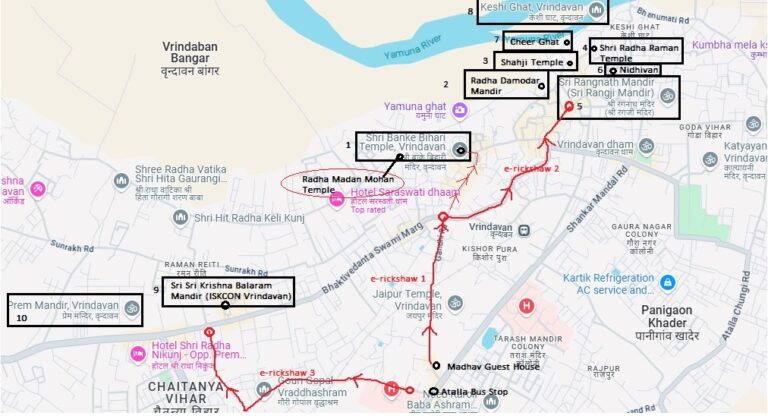
    Most of the temples in Vrindavan close between 12 PM and 6 PM, so I planned to visit them in two slots. In the first slot, before noon, I planned to visit – Banke Bihari >> Radha Damodar >> Shahji >> Radha Raman and Rangnath in the same sequence.  Nidhivan does not close in noon (open from 5 AM – 8 PM), so I could visit it along with Keshi Ghat after completing my temple visits. Second slot of temple hopping was scheduled for evening to visit ISKCON and Prem Mandir.

    Vrindavan PoI
    Vrindavan PoI

    A unique cultural feature of Vrindavan and Mathura is that “Radhe-Radhe” is used as a greeting by almost everyone. Even rickshaw pullers use it instead of honking while navigating busy streets. I really loved this aspect of both cities.

    💡 A piece of advice: Vrindavan grapples with a monkey menace. Monkeys snatch away eye-glasses and usually return them only when offered food. If you wear glasses, it’s better to take them off.

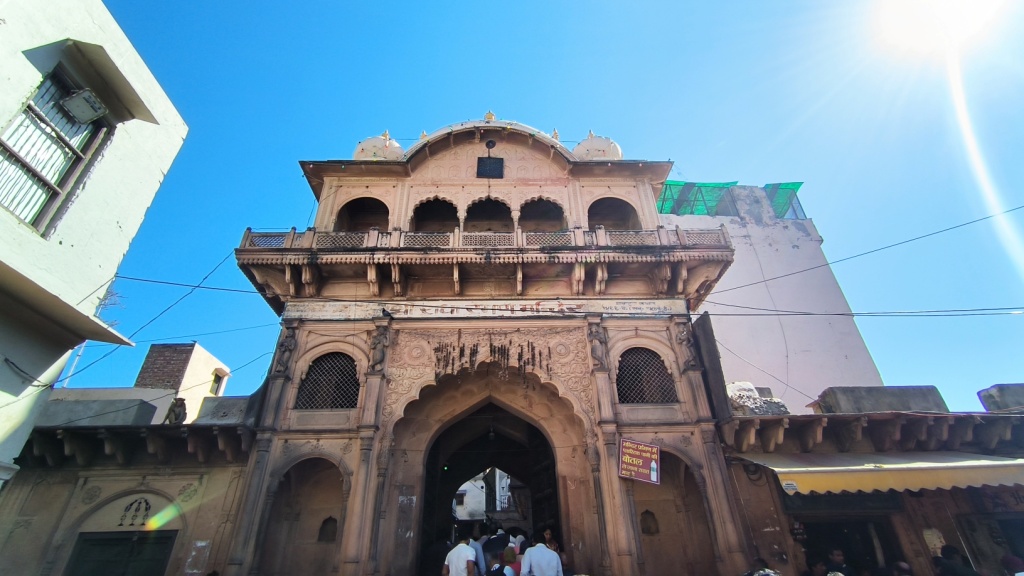
    A shared e-rickshaw dropped me close to Banke Bihari Temple. The last kilometer must be travelled on foot. The entire stretch is occupied by vendors selling the famous peda, made from condensed milk. The street is lined with shops selling lassi, kachori, and aalo poori.
    🗺️ Temple-Hopping Begins

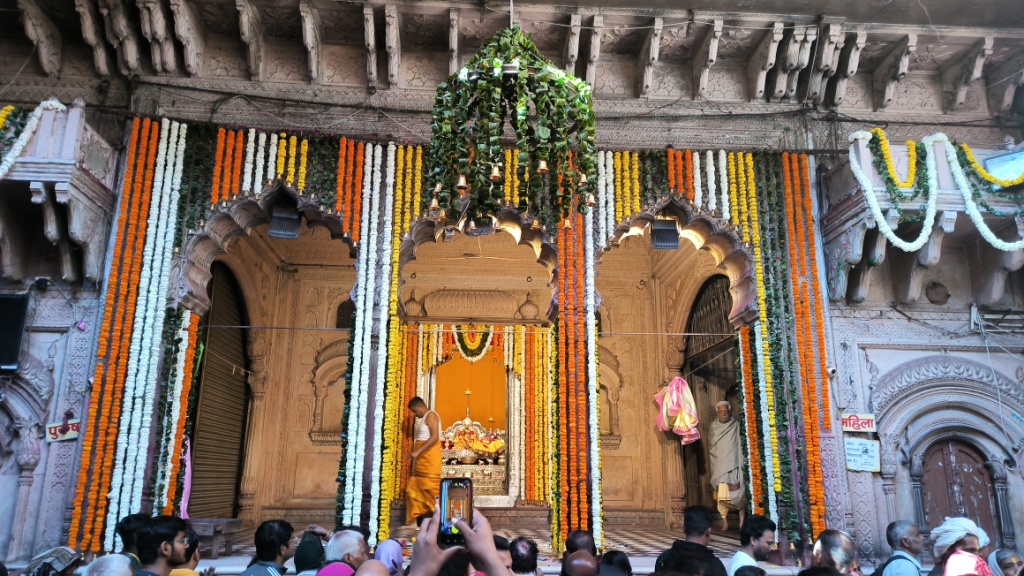
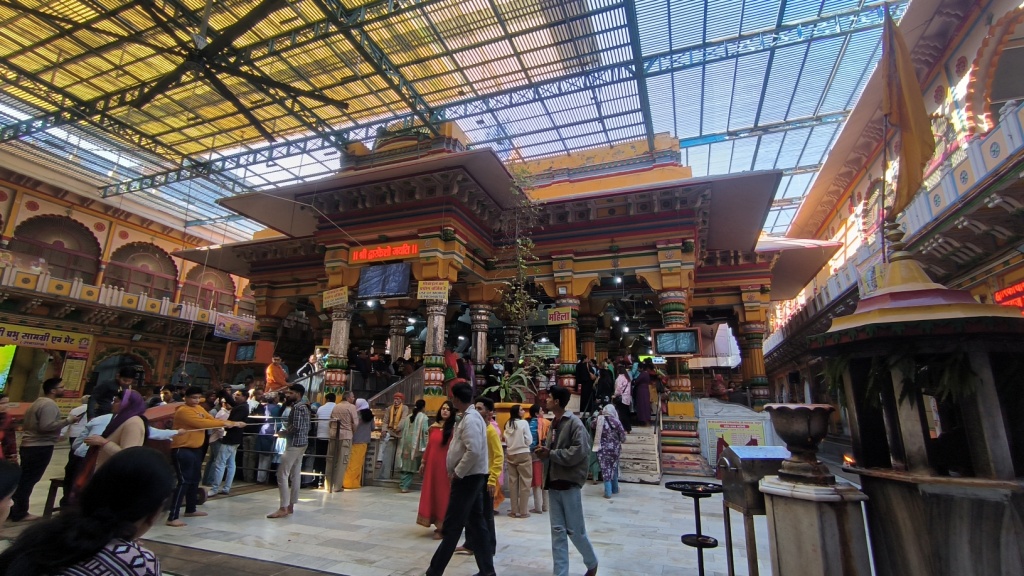
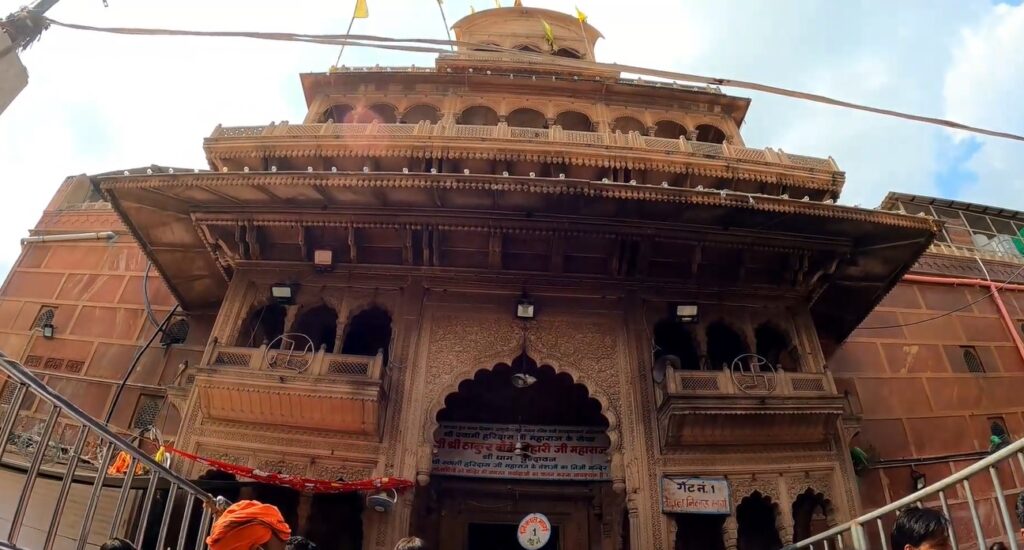
    Shri Banke Bihari Temple – Like most other temples in Vrindavan, this one is dedicated to Lord Krishna in his child form known as Banke Bihari. “Banke” means bent in three places (Tribhanga posture), and “Bihari” means enjoyer. The temple was established by Swami Haridas, a guru of the legendary singer Tansen, in the mid-19th century.

    Shri Banke Bihari Temple
    Shri Banke Bihari Temple
    Shri Banke Bihari Temple
    Shri Banke Bihari Temple

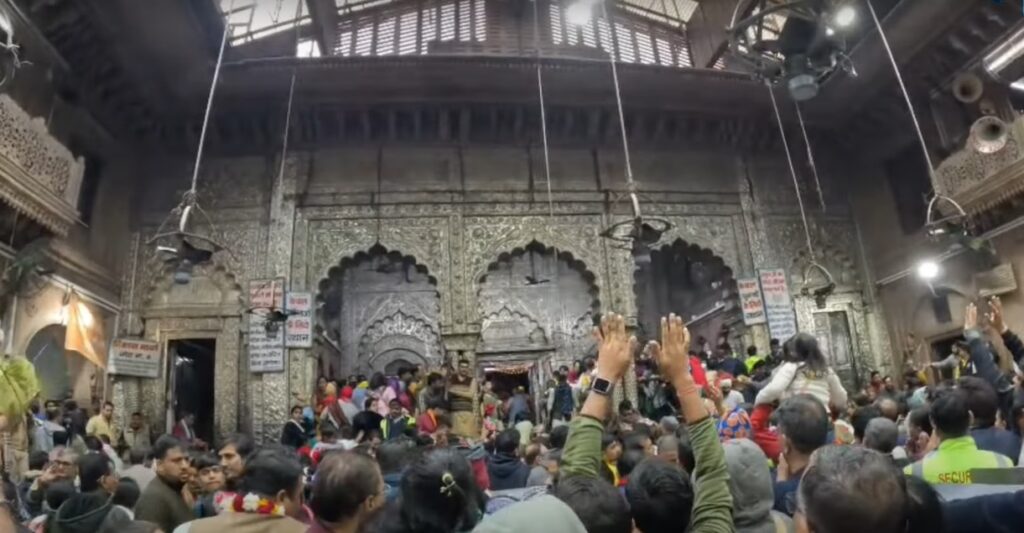
    An interesting feature of this temple is that the deity is not continuously exposed to devotees—curtains are drawn every few minutes. It’s believed the idol radiates such divine energy that prolonged viewing could hypnotize worshippers. This is arguably the most popular temple in Vrindavan, attracting the maximum number of devotees. Expect to wait around 30–45 minutes for darshan, longer on weekends and festivals.

    By the time I completed darshan, it was 10 AM—leaving me with two hours to visit the rest of the temples. Nearby is the Radha Madan Mohan Temple, locally known as ‘Tile Wala Mandir’. Though I had to skip it due to time constraints, I recommend including it if you can.

    A quick 10-minute rickshaw ride brought me to Loi Bazaar, from where all the remaining temples and attractions are within walking distance. Navigating through the maze of narrow lanes is part of the charm, and I found Google Maps accurate and helpful. Just make sure to select the walking option and keep your phone steady!

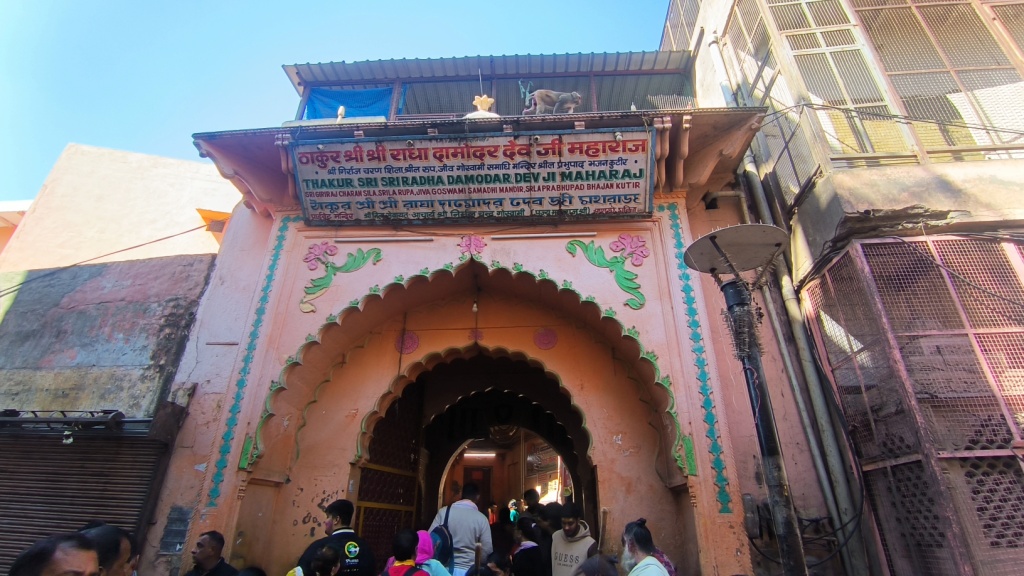
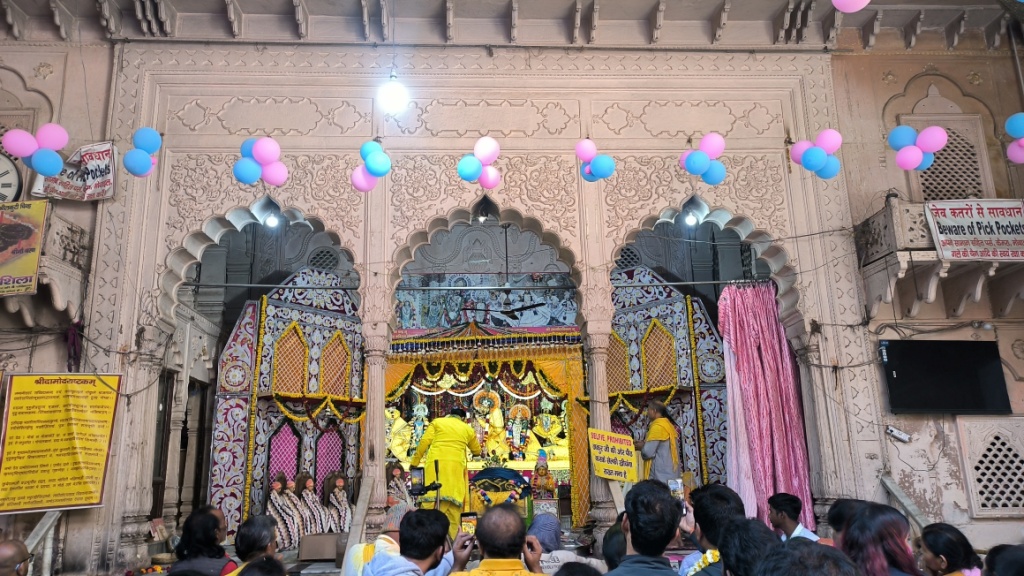
    Shri Radha Damodar Temple – Established by Jiva Goswami in the 16th century, this temple is closely associated with the Goswamis, who laid the foundation of Vaishnav philosophy. The Damodar form of Krishna (meaning “one who has a rope around his belly,” a reference to his mother Yashoda binding him) is worshipped here alongside Radha. This temple holds a special place in the hearts of followers of ISKCON and Vaishnavism.

    Shri Radha Damodar Temple
    Shri Radha Damodar Temple
    Shri Radha Damodar Temple
    Shri Radha Damodar Temple

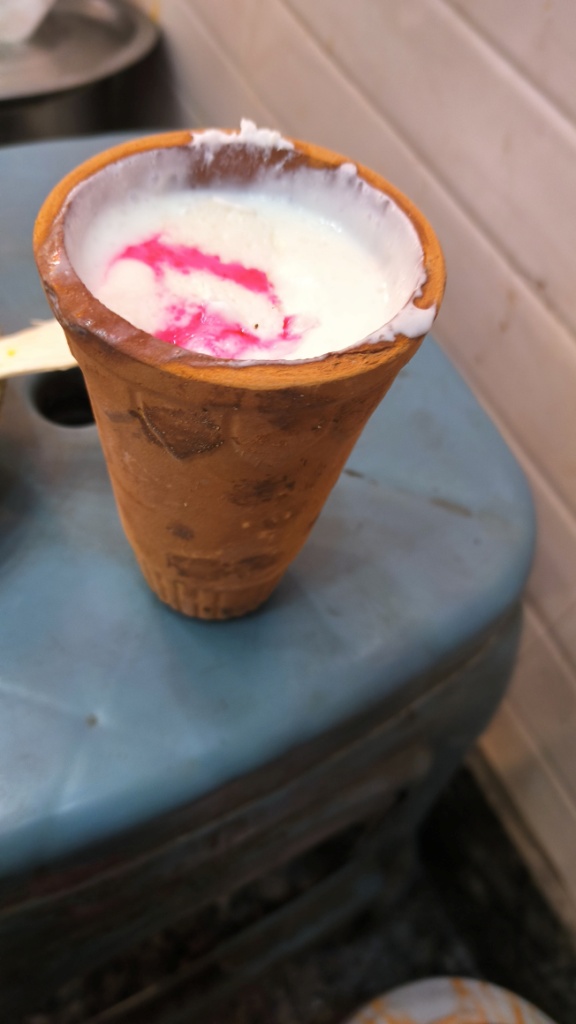
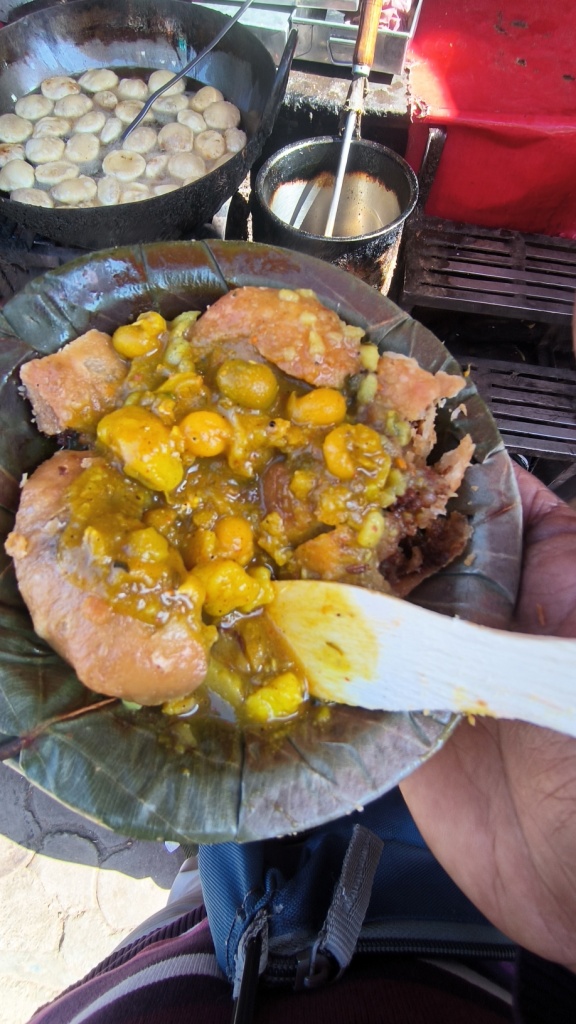
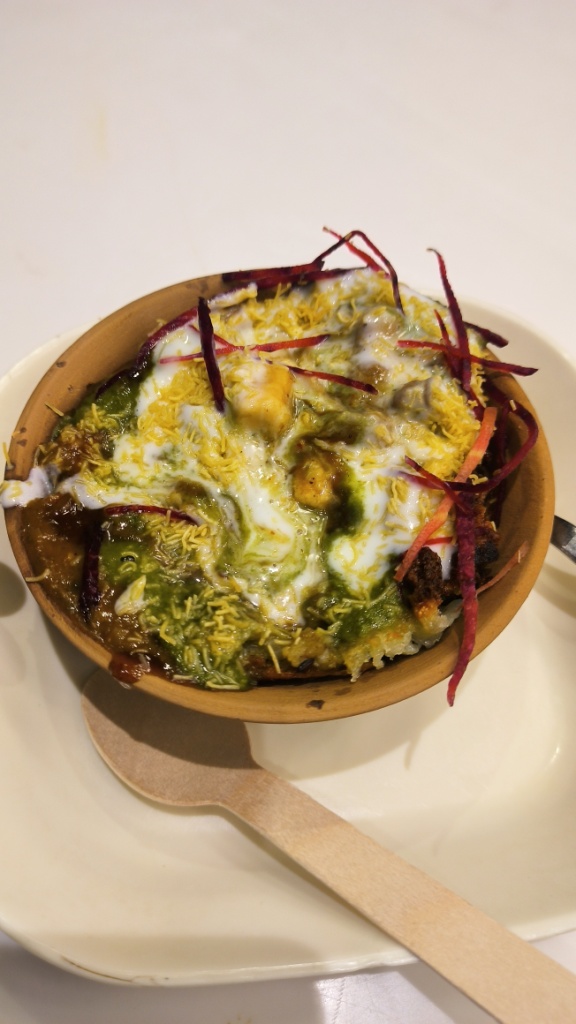
    Khasta & Lassi Break – On my way to Shahji Temple, I stopped by a street stall selling khasta and lassi. Khasta is served with a flavorful potato and chickpea gravy, seasoned with heeng (asafoetida) and pepper. The lassi was thick, satisfying, and paired perfectly with the khasta—a hearty roadside indulgence.

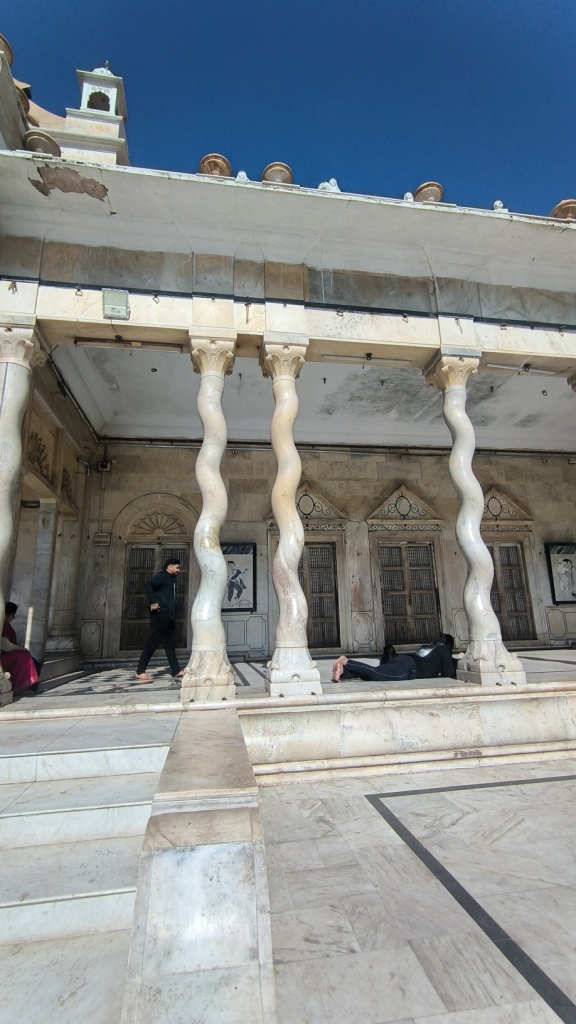
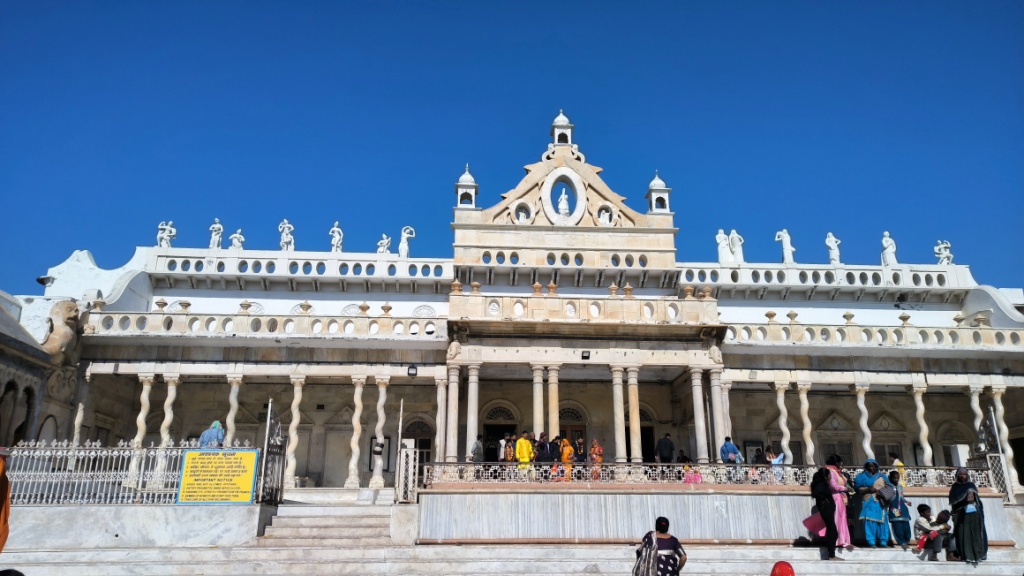
    Shahji Temple – Built in the 17th century, this temple was founded by a wealthy Seth (Shah) who donated generously to its construction, hence the name. The primary deities here are Radha and Krishna. A unique architectural feature is the spiral pillars made from white marble—they truly stand out!

    Lassi
    Lassi
    Kachauri
    Kachauri
    Shahji Temple - Spiral Pillars
    Shahji Temple - Spiral Pillars
    Shahji Temple
    Shahji Temple

    Radha Raman Temple – Dedicated to Radha Raman, or “He who delights Radha,” this temple features Krishna worshipped in his self-manifested form. Established in the 16th century by Goswami Gopala Bhatta, one of the Six Goswamis of Vrindavan, it’s revered deeply in Vaishnav tradition. The deity here is believed to be Swayambhu (self-manifested), making it especially sacred.

    Shri Radha Raman Temple
    Shri Radha Raman Temple
    Shri Radha Raman Temple
    Shri Radha Raman Temple

    Rangnath Temple –  By the time I completed darshan at Radha Raman Temple, it was 12 PM. I suspected Rangnath Temple might have closed, but I still decided to drop by and take a few photos from outside. As expected, the main entrance was closed, but I overheard from another visitor that the west-side entrance was still open for 15 more minutes. I rushed over—and luckily got in just in time.

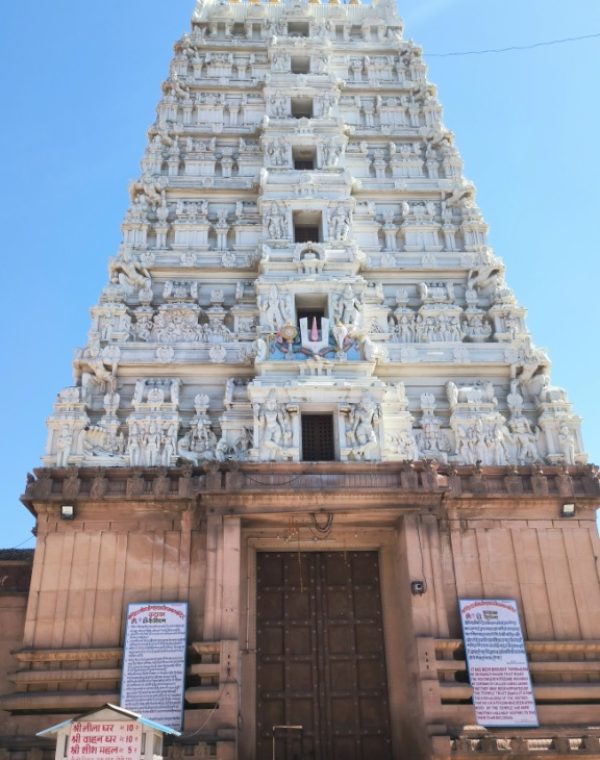
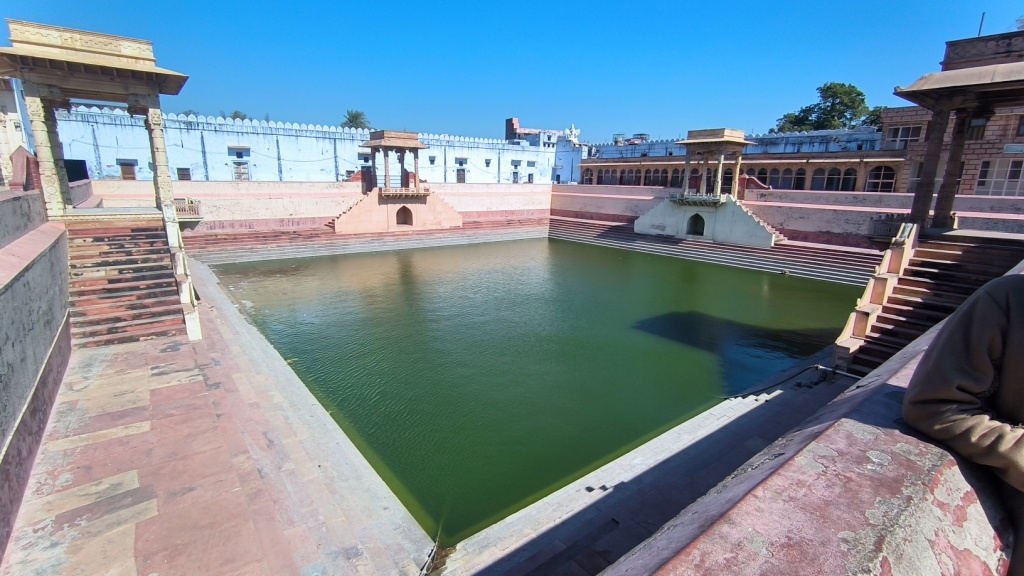
    While most Vrindavan temples worship Krishna as an incarnation of Vishnu, this temple venerates Lord Vishnu in his Rangnath form. It’s one of the largest temples in Vrindavan, enclosed by high walls and built in South Indian architectural style, featuring a  six-story gopuram adorned with intricate carvings, huge temple tank and a lush garden inside the premises

    Rangnath Temple -Gopuram
    Rangnath Temple - Gopuram
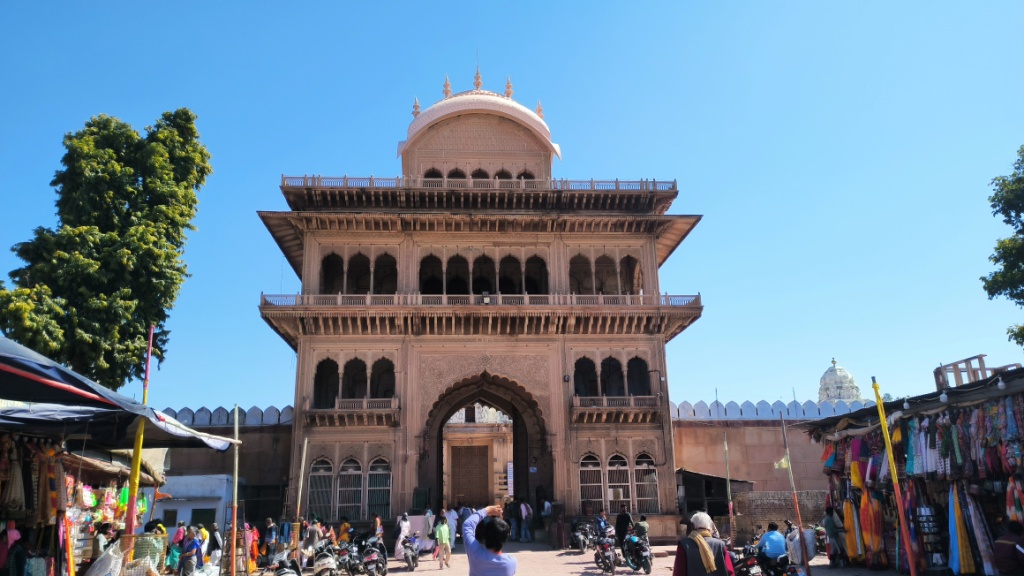
    Rangnath Temple - Entrance
    Rangnath Temple - Entrance
    Rangnath Temple Tank
    Rangnath Temple Tank

    It was 12:45 PM, and I had completed all the temples on my target list for the morning. With the afternoon ahead, I set out to visit Nidhivan and Keshi Ghat.

    Nidhivan – Walking toward Nidhivan, I found a huge influx of devotees gathered at the entrance. It seemed everyone had planned their visit for noon, just as the temples were closing for darshan.  Nidhivan is a walled orchard of Tulsi trees. According to folklore, Lord Krishna visits this place every night to perform Raas Leela. The Tulsi trees are believed to transform into gopis who participate in the divine dance with Krishna and Radha. Because of this belief, Nidhivan’s gates are closed at night. It’s said that anyone who attempts to stay here overnight either disappears or loses their sanity by morning.

    Nidhivan - Parikrama pathway
    Nidhivan - Parikrama pathway
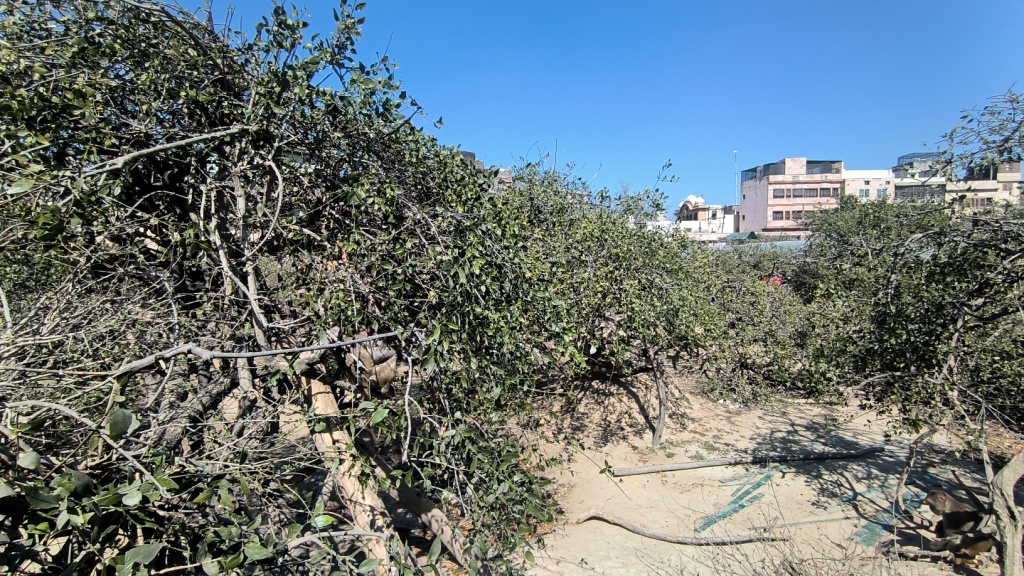
    Nidhivan-Tulsi Trees
    Nidhivan-Tulsi Trees

    An enclosed pathway lined with metal mesh on both sides allows visitors to take a parikrama of Nidhivan. Along the route, you’ll see Rang Mahal Temple – believed to be the resting place of Radha and Krishna after their nightly dance. Another sacred spot is Rasleela Sthali, where the Raas Leela is believed to be performed

    Nidhivan took nearly an hour to explore due to the slow-moving crowd. After Nidhivan, I headed to the bank of the Yamuna to visit Cheer Ghat and Keshi Ghat. After Nidhivan, I headed to the bank of the Yamuna to visit Cheer Ghat and Keshi Ghat.

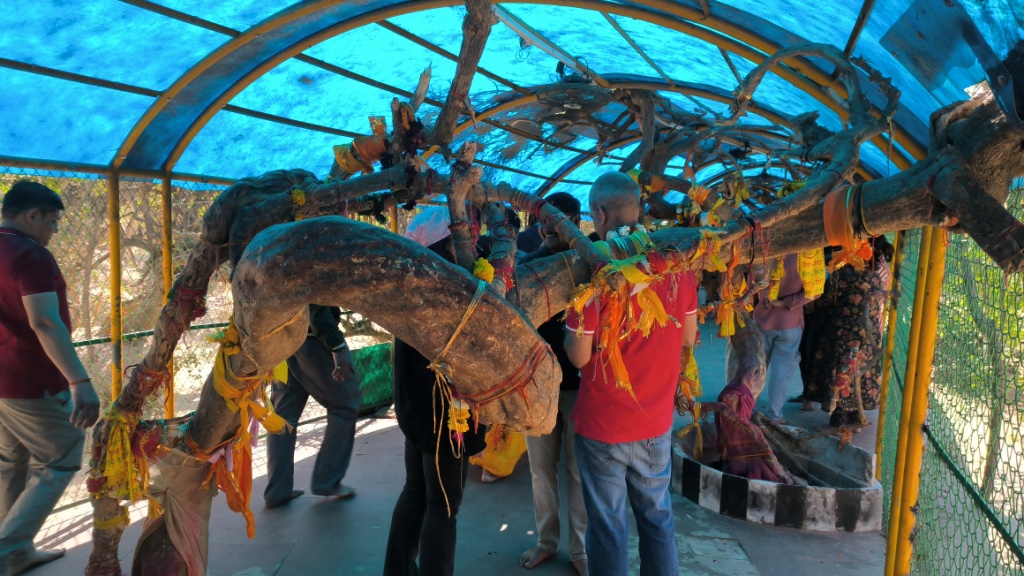
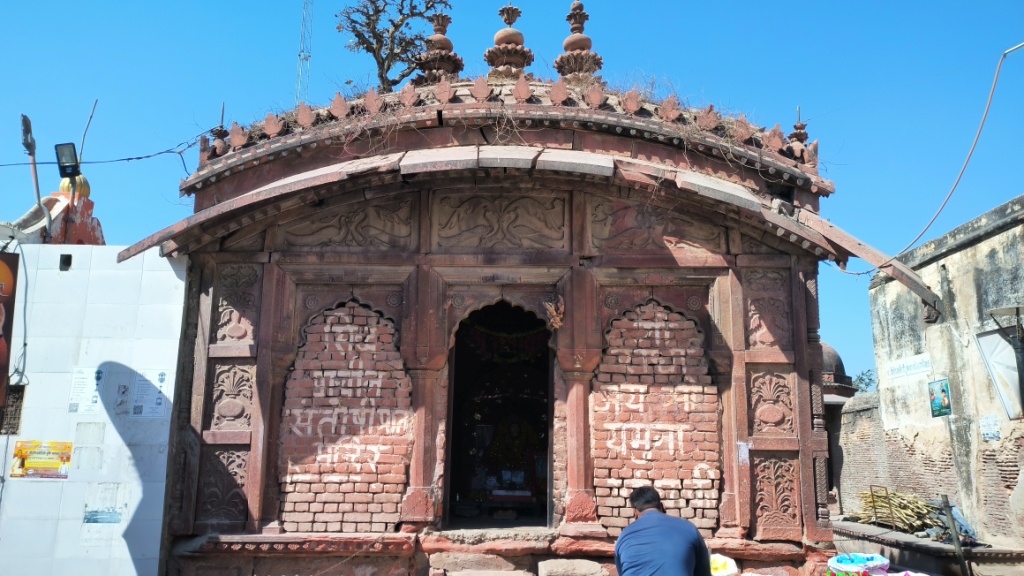
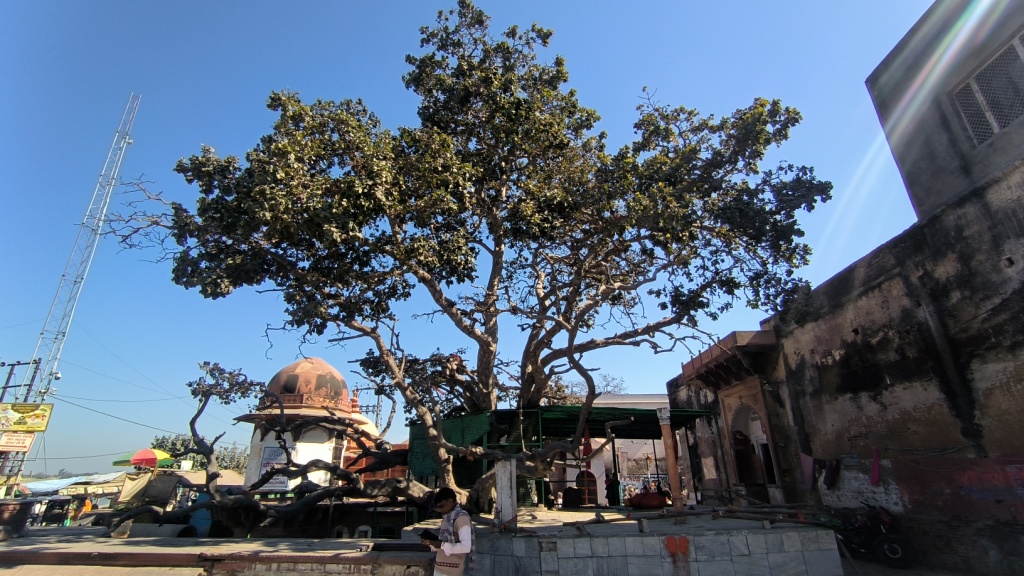
    Cheer Ghat is the legendary spot where Krishna playfully stole the clothes of the gopis as they bathed in the river and hid them in a nearby Kadamba tree. That ancient tree still stands today, and devotees believe it’s the original one from Krishna’s time. Beneath it, there’s a black statue of Krishna and an old temple dedicated to Goddess Yamuna.

    Cheer Ghat - Goddess Yamuna Temple
    Cheer Ghat - Goddess Yamuna Temple
    Cheer Ghat -Kadamba tree
    Cheer Ghat -Kadamba tree

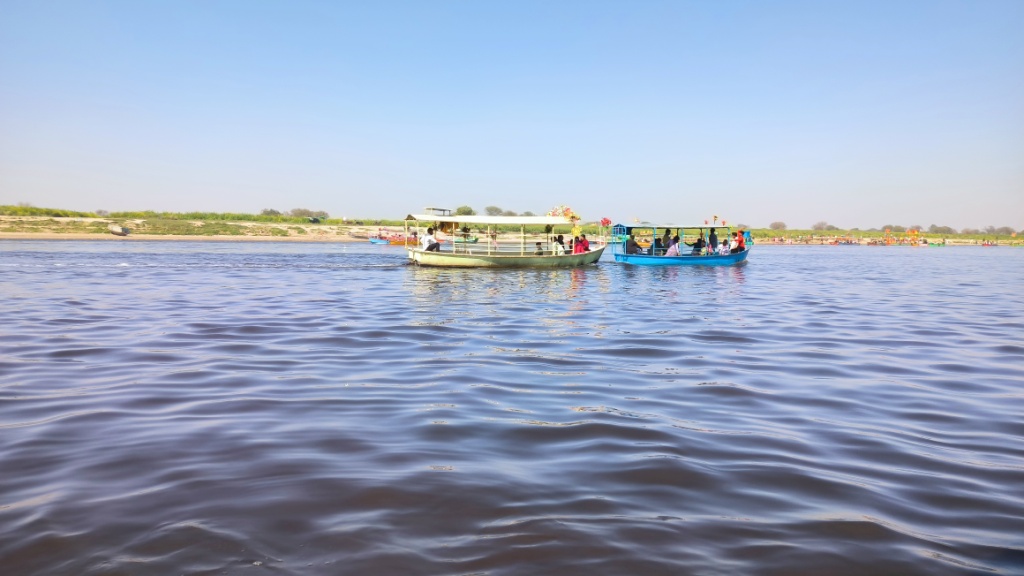
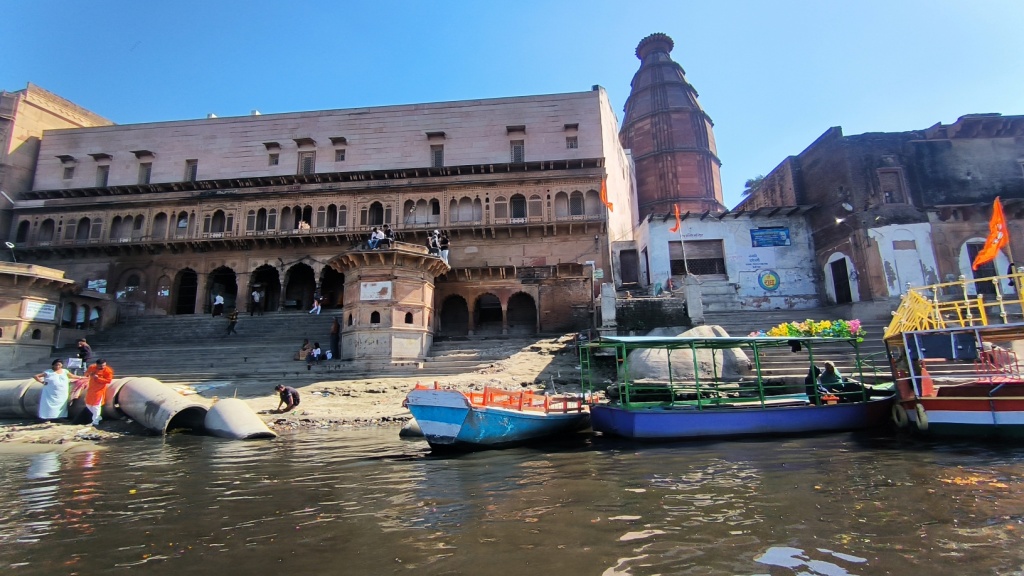
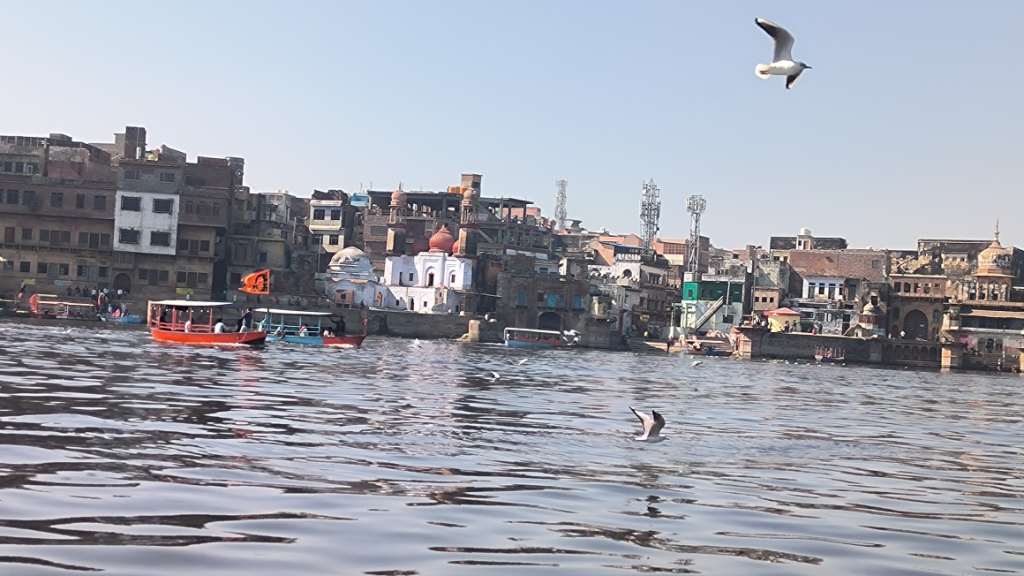
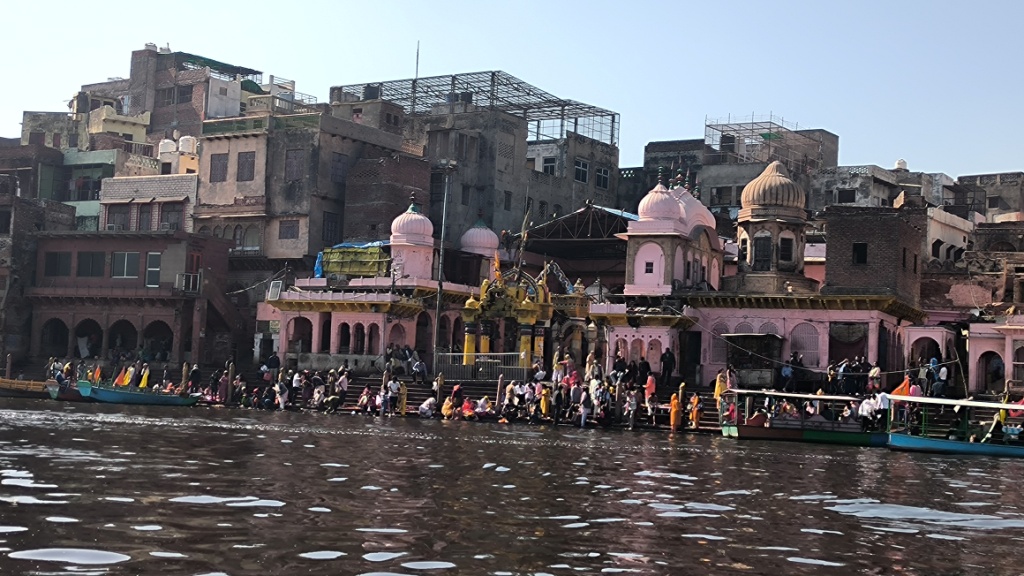
    Several boat operators offer rides on the Yamuna. A round trip from Cheer Ghat to Keshi Ghat costs ₹100. While on the boat, I recalled my river cruise in Kashi the previous year. Without drawing direct comparisons, I found Kashi’s numerous ghats more majestic and spiritually charged. I clicked a few pictures of Keshi Ghat from the boat.

    Keshi Ghat, named after the demon Keshi—a horse sent by Kansa to kill Krishna—is mythologically important. After defeating Keshi, Krishna bathed at this very spot, making it sacred for ritual bathing. By 3:30 PM, my boat returned to Cheer Ghat.

    Boat ride at river Yamuna
    Boat ride at river Yamuna
    Keshi Ghat
    Keshi Ghat

    🍽️ Lunch & Rest

    My evening plan included visiting ISKCON and Prem Mandir, both of which open at 4 PM. I returned to my hotel for lunch and a short nap. A shared e-rickshaw from Keshi Ghat dropped me at Atalla Chungi. I had lunch at Santushti Restaurant, located next to my hotel, followed by a quick rest.

    ISKCON Temple – At 5 PM, I set out to explore ISKCON and Prem Mandir, located close to one another. Prem Mandir truly comes alive after sunset with its light and sound show – I highly recommend visiting it after sunset.

    Gauri Gopal Ashram
    Gauri Gopal Ashram

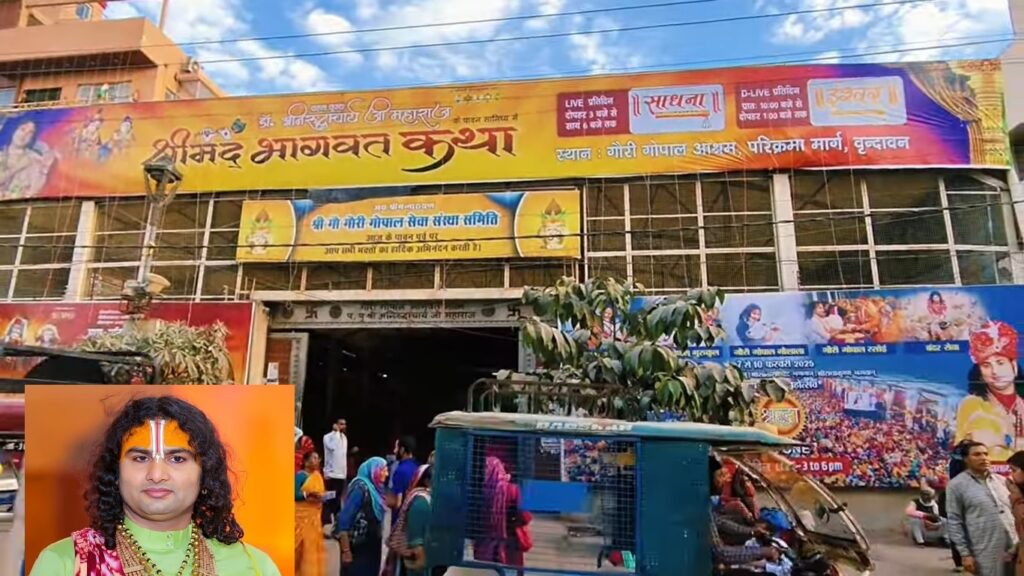
    I took an e-rickshaw from Parikrama Marg (Atalla Chungi) to ISKCON. On the way, I passed Gauri Gopal Ashram, established by Aniruddhacharya Maharaj, who is well known for his charitable work including elder care, food distribution, and animal welfare. His popularity has grown thanks to a robust online presence.


    ISKCON (Sri Krishna Balrama Mandir) was the first temple built by the ISKCON movement, founded by Swami Prabhupada in 1975. The temple is located in the same village where Krishna and Balaram are believed to have played together.

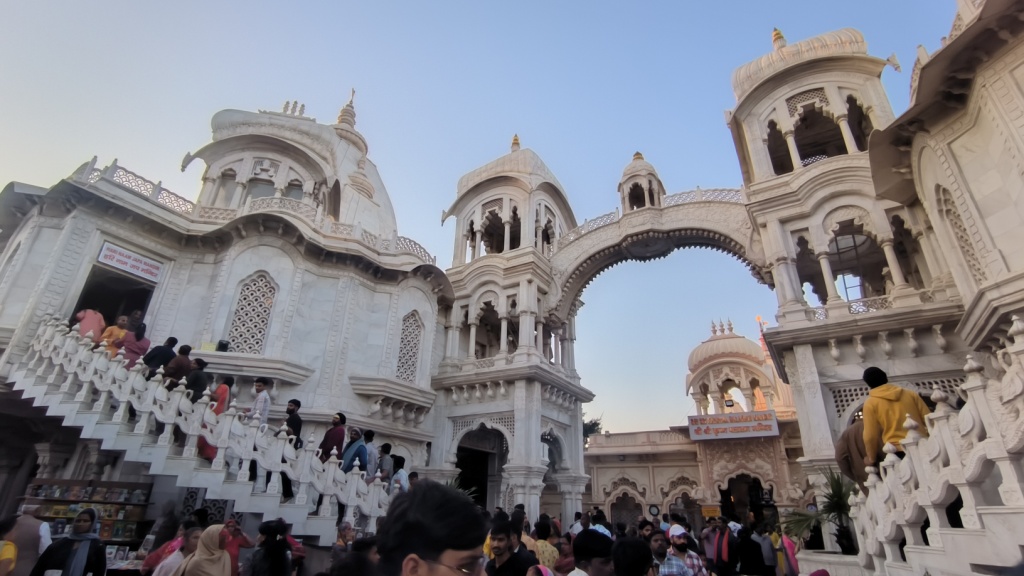
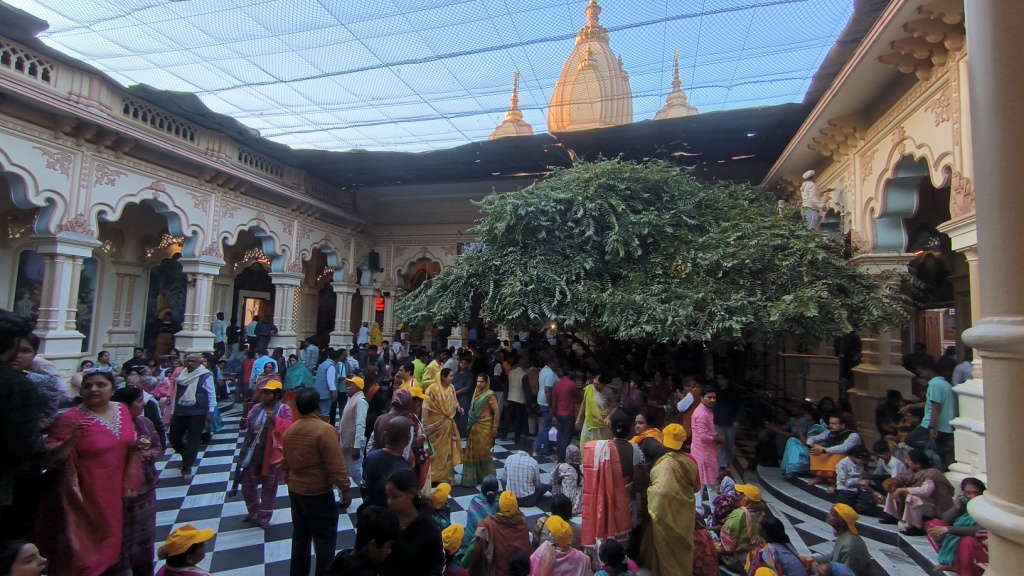
    At the entrance, there’s a white marble archway with winding staircases on either side. Inside, the temple features a white checkered courtyard, with a vibrant tamal tree in one corner. The deities of Krishna and Balaram are mesmerizing. The temple resounds with chants of “Hare Krishna Hare Rama”, and it’s common to see devotees—many from Western countries—dancing with raised hands to the beats of mridanga and harmonium. There’s also a museum, gallery, and restaurant within the complex.

    ISCON Temple - Entrance
    ISCON Temple - Entrance
    ISCON Temple - Courtyard
    ISCON Temple - Courtyard

    By the time I finished exploring ISKCON, the sun had set. I walked toward Prem Mandir, sipping a hot cup of evening tea. Though February in North India is only pleasantly cold, I could feel the chill sinking into my bones. Having lived in Pune, with its moderate weather, for over a decade, I’d grown unaccustomed to North Indian winters.

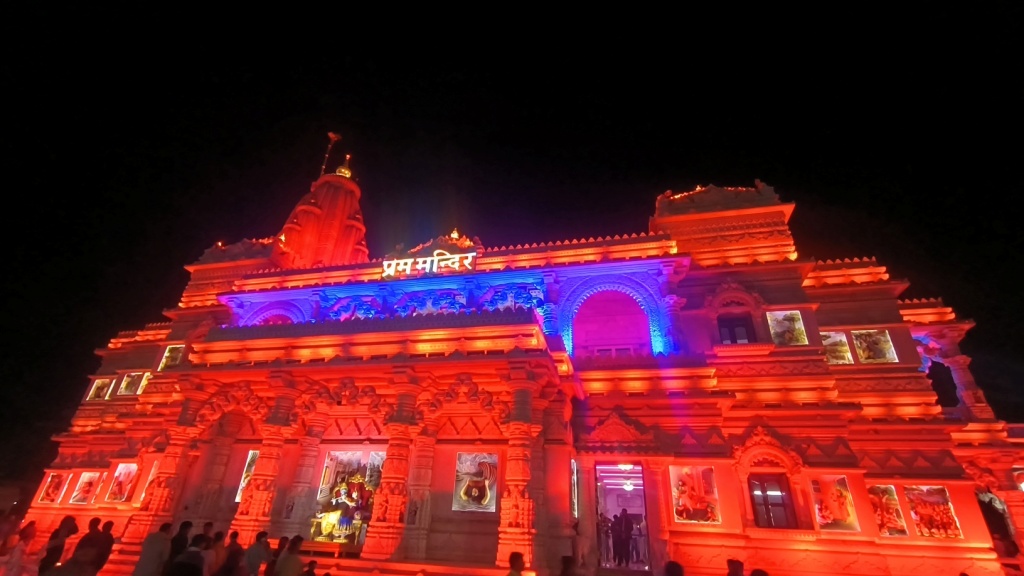
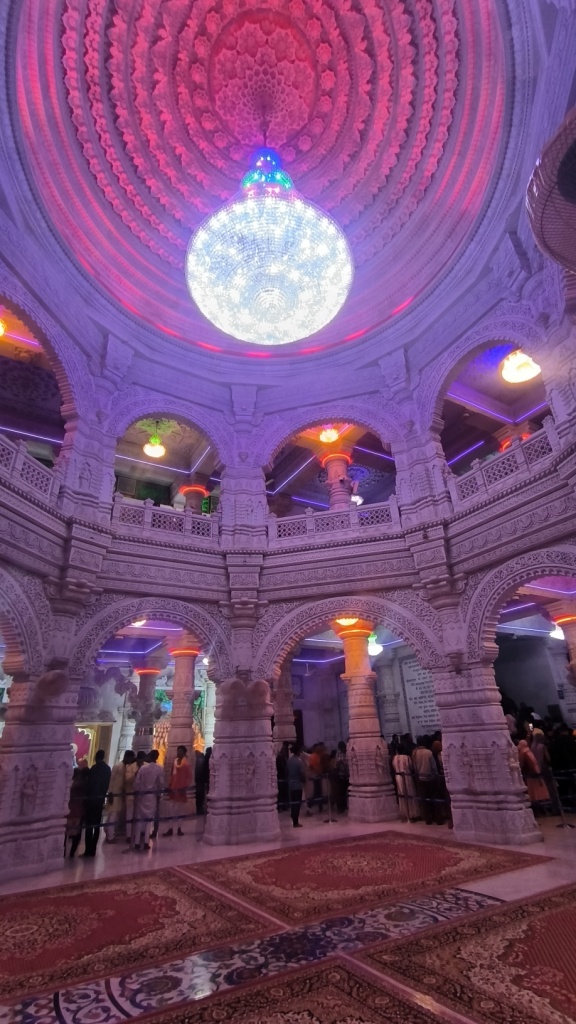
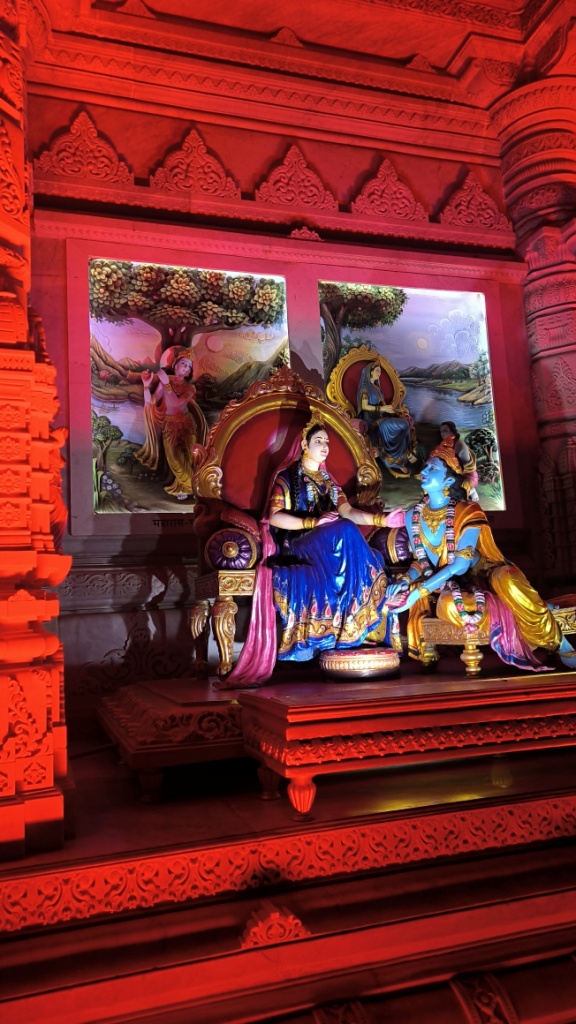
    Prem Mandir – It is one of Vrindavan’s more recently constructed temples, inaugurated in 2012. It’s a marble marvel, adorned with intricate carvings and sculptures depicting scenes from the life of Lord Krishna and Radha. There are 2 floors inside the main Sanctum – Ground floor  is adorned with Radha-Krishna idols in exquisite white marble, and on the upper floor are Sita-Ram idols, equally majestic and serene

    Prem Mandir
    Prem Mandir
    Prem Mandir - Main Sanctum
    Prem Mandir - Main Sanctum
    Prem Mandir - Sculptures
    Prem Mandir - Sculptures
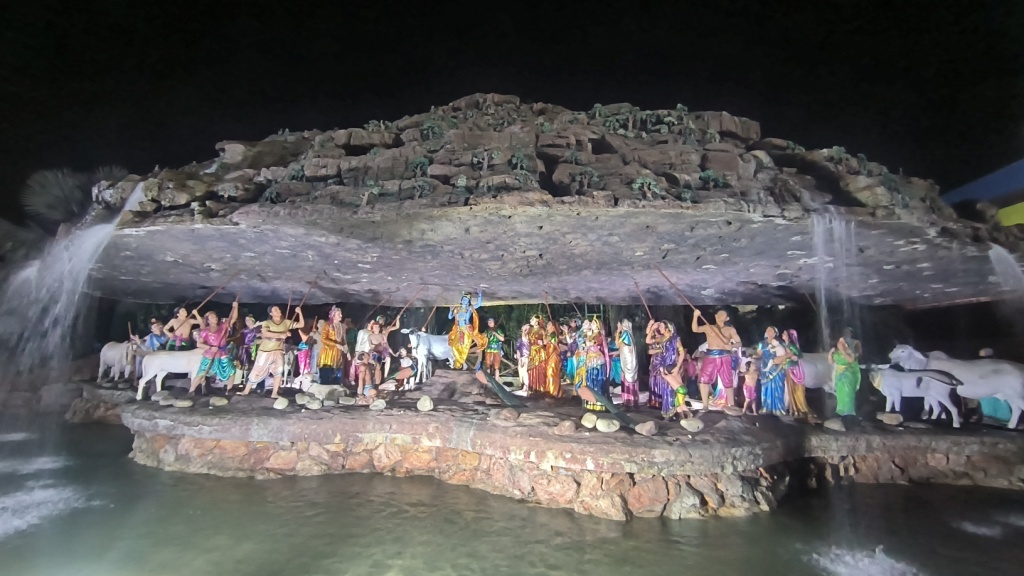
    Prem Mandir- Govardhan Leela
    Prem Mandir- Govardhan Leela
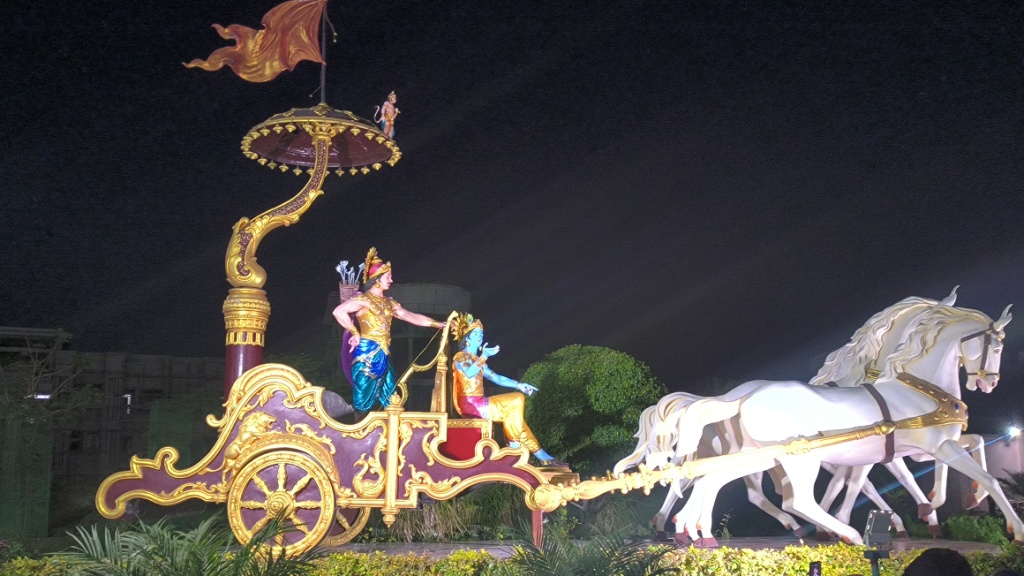
    Prem Mandir - Krishna and Arjun
    Prem Mandir - Krishna and Arjun

    The temple’s highlight is its evening light and sound show, which narrates Krishna’s journey—from his childhood leelas to his divine exploits and eternal love for Radha. The interplay of lights, colors, and music creates a truly magical

    Prem Mandir marked the conclusion of my Day 1 itinerary. After dinner at a roadside food-cart, I returned to my hotel and called it a night

    Day 2: Exploring Mathura

    I woke up early at 6 AM to leave for Mathura. After a quick bath, I took a bus from Atalla Chungi. A 20-minute ride dropped me at the New Bus Stand in Mathura. It’s located at a busy intersection that offers several budget stay options, good restaurants, and easy access to the railway station.

    A quick search brought me to Patelji Rooms, a homestay offering accommodation for ₹600 per night. The room was average, and the bathroom was shared. Although the price didn’t feel justified, I opted for it to save time. All I really needed was a clean bed for the night and warm water for bathing in the morning, though I wished I had explored a few more options.

    After dropping off my backpack, I ventured out to explore Mathura city.

    Mathura - PoIs
    Mathura - PoIs
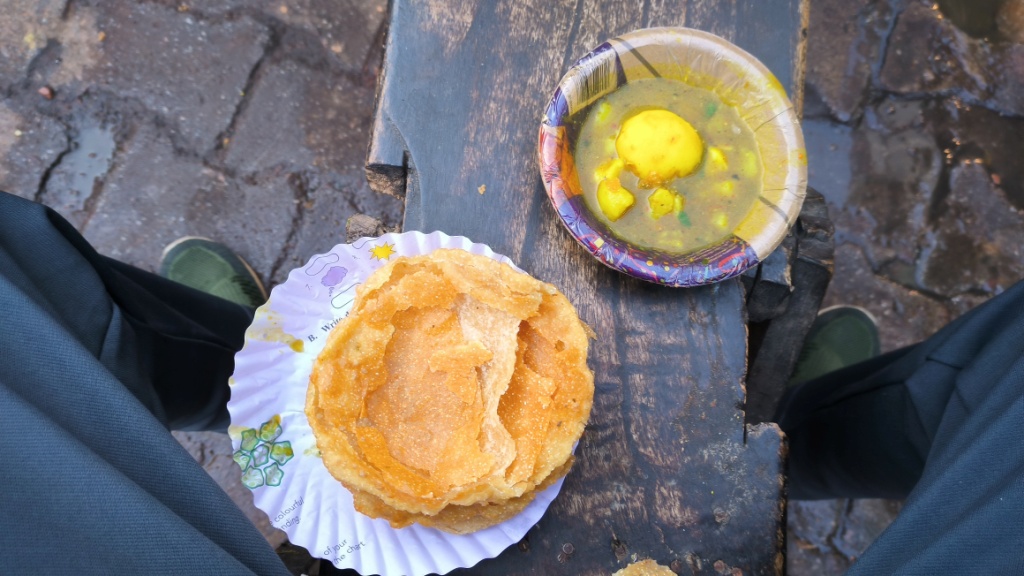
    Poori Sabji breakfast at Janmabhumi
    Poori Sabji breakfast at Janmabhumi
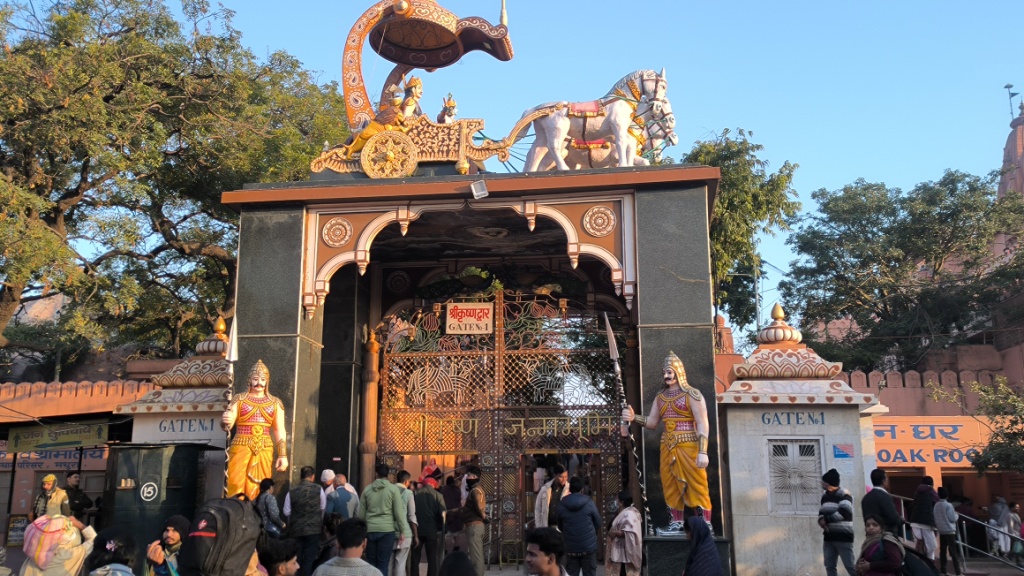
    Krishna Janmabhumi
    Krishna Janmabhumi

    🏙️ A Glimpse into Mathura’s Past:  

    Mathura is one of the oldest cities in India. After the decline of the Indus Valley Civilization, it emerged as one of the prominent Mahajanapadas. It was an important center during -The Mauryan Empire (4th–2nd BCE) and Kushan era (1st–2nd CE).  Its strategic location on major trade routes connecting Northwest India to Central Asia facilitated its growth. Mathura later became a major center for Hinduism, Buddhism, and Jainism. The Mathura School of Art played a vital role in advancing sculpture carving techniques.

    My exploration plan included – Krishna Janmabhoomi Temple >> Dwarkadhish Temple >> Kansa Kila >> Vishram Ghat >> Mathura Museum

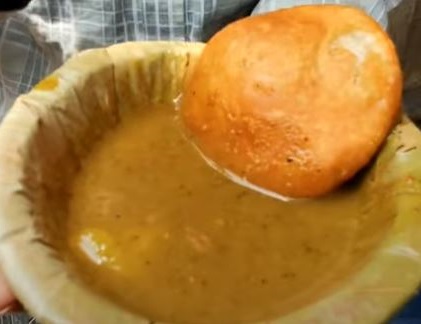
    It was 7:30 AM, and I decided to begin the day with a hot cup of tea and a local breakfast. The road to the temple is lined with vendors selling Bedmi pooris with aloo sabji. I stopped at one of the shops and devoured the hot pooris. You can’t go wrong with them in Vrindavan or Mathura. The spices in the aloo sabji gave it a strong, tangy flavour—there couldn’t have been a better breakfast for a chilly winter morning.

    After the hearty meal, I dropped off my phone and bag at the cloakroom and entered the temple complex through Gate No. 1.
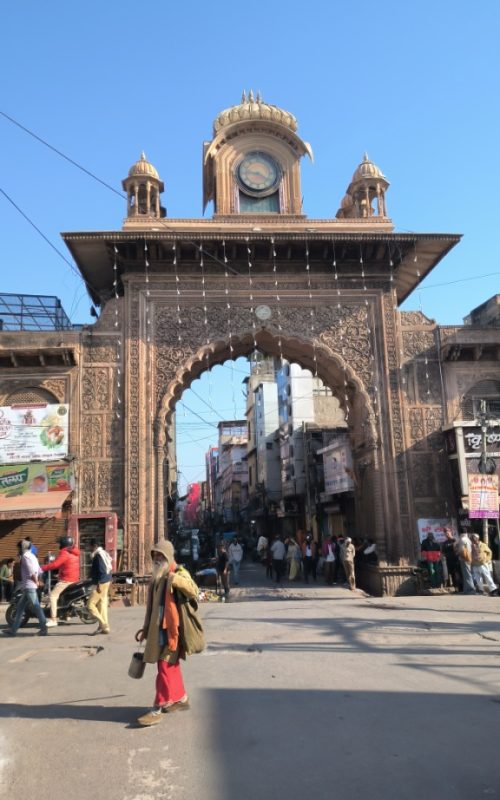
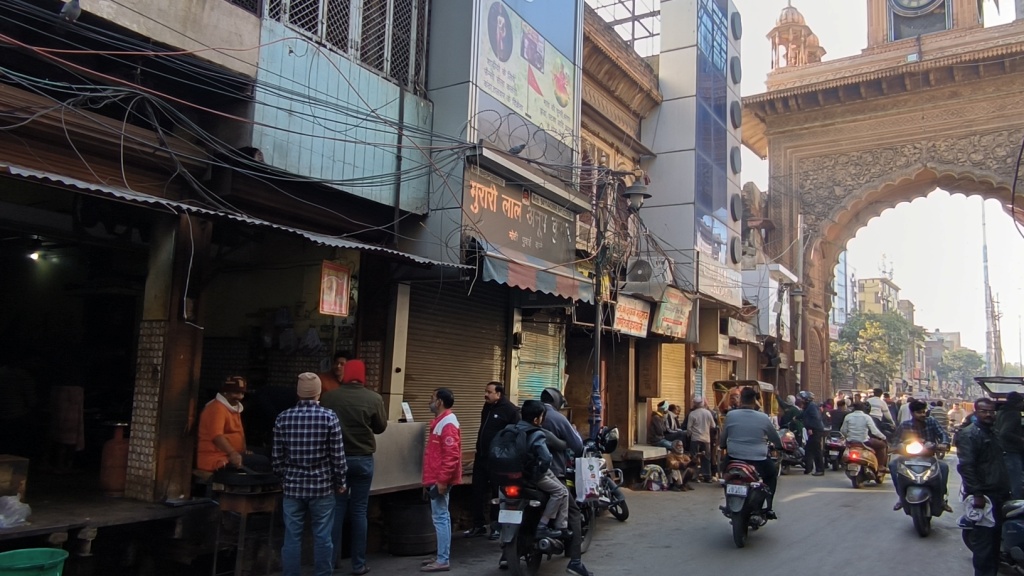
    This temple, said to be over 5,000 years old, marks the birthplace of Lord Krishna. It flourished during the Gupta Empire, but suffered multiple destructions under various rulers. The Shahi Eidgah mosque, claimed to be built over the original temple during the Mughal period, has made the site a subject of legal and socio-religious dispute, resulting in heightened security. I felt a twinge of sadness seeing a sacred site look like an army fortress.

    The complex comprises three main temples:

    • Keshavdev Temple – dedicated to Lord Krishna
    • Garbh Griha – the prison cell believed to be Krishna’s actual birthplace
    • Bhagvata Bhavan – houses the idols of Radha and Krishna

    Temple timings: 05:30 AM to 12:00 PM and 04:00 PM to 09:00 PM

    By 9 AM, I completed my darshan and headed out to the main road to catch an auto for the next three spots – Dwarkadhish Temple, Kansa Kila, and Vishram Ghat.

    Tilak Dwar
    Tilak Dwar

    🚶‍♂️ Foot Trail from Tilak Dwar

    All three sites (Dwarkadhish Temple, Kansa Kila, Vishram Ghat ) are located in a congested area, so the best approach is to get dropped at Tilak Dwar (Holi Gate) and explore them on foot.

    The moment you cross Tilak Dwar, you enter Chatta Bazaar—the heartbeat of local Mathura. It’s a bustling commercial hub with numerous food shops. Two local favourites stand out here – Oma Pehalwan Kachori Wala & Brijwasi Sweets

    They’re conveniently located opposite each other, just a stone’s throw from Tilak Gate.

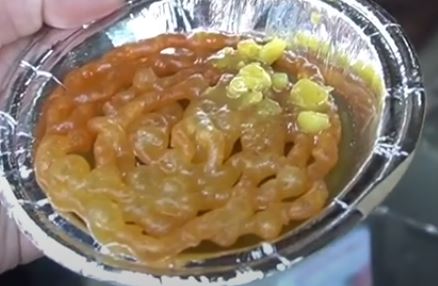
    Though I had already eaten breakfast, I couldn’t resist trying the famous kachori and jalebi. I went with one piece of each, and they lived up to their reputation. The khasta I had in Vrindavan was served with chola (chickpeas), while in Mathura it came with aloo sabji. The jalebi was paired with a thin spicy gravy, which I found a bit unusual. However, the idea is to combine contrasting flavors in each bite.

    Oma Kachouri wala
    Oma Kachouri wala
    Kachouri @ Oma
    Kachouri @ Oma
    Jalebi @ Oma
    Jalebi @ Oma

    If you’re trying this combo for the first time, I recommend eating the jalebi first, then washing down the sweetness with the spicy gravy.

    Shri Dwarkadhish Temple – After my quick bite, a 10-minute walk took me to Dwarkadhish Temple—one of Mathura’s holiest shrines, dedicated to Lord Dwarkadhish, a form of Krishna. The deity is depicted in black marble, alongside Radha Rani in white marble. After paying my respects, I used Google maps to guide me to the next destination: Kans Kila.

    Dwarkadhish Temple
    Kans Kila - bastions
    Kans Kila - bastions

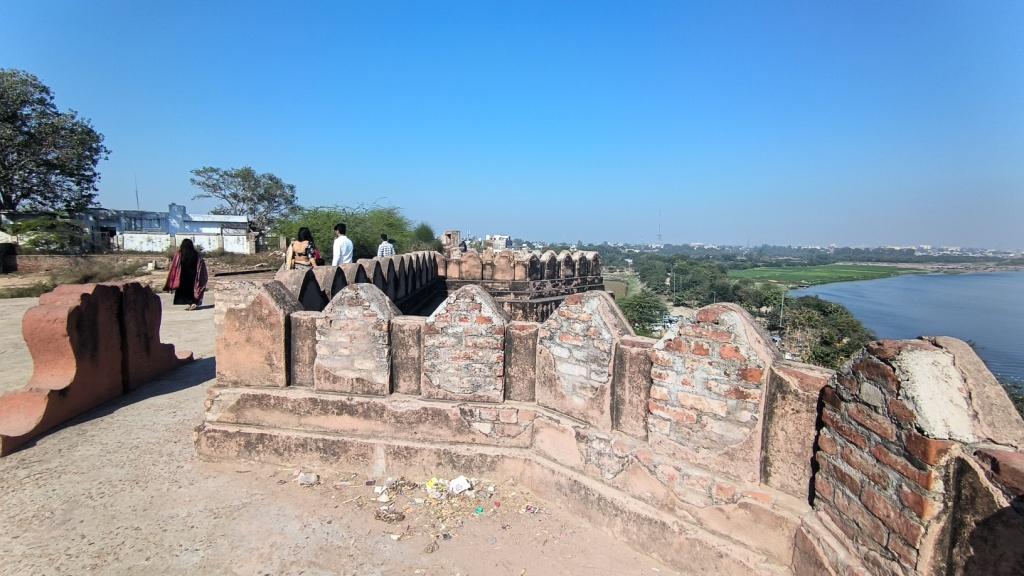
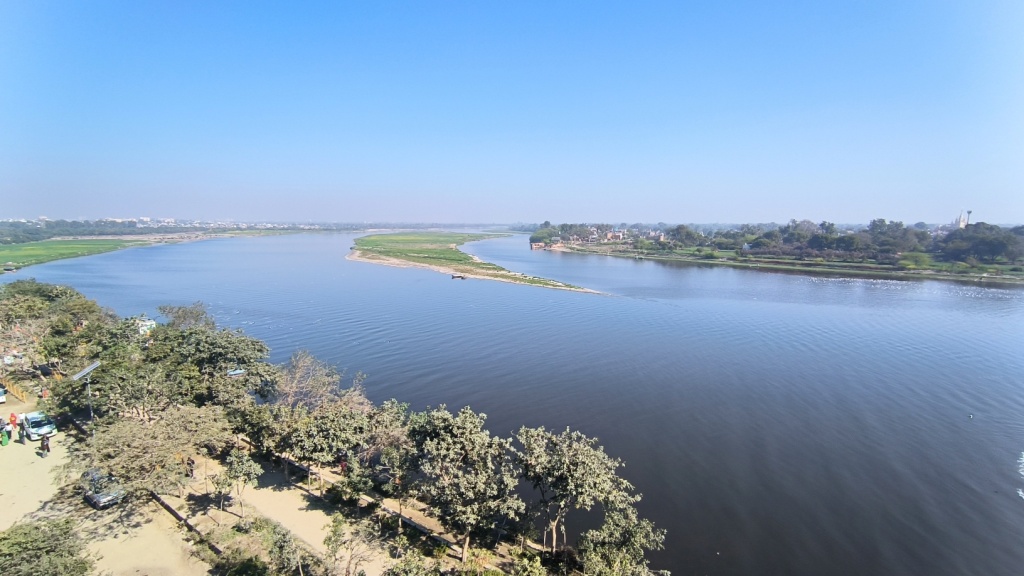
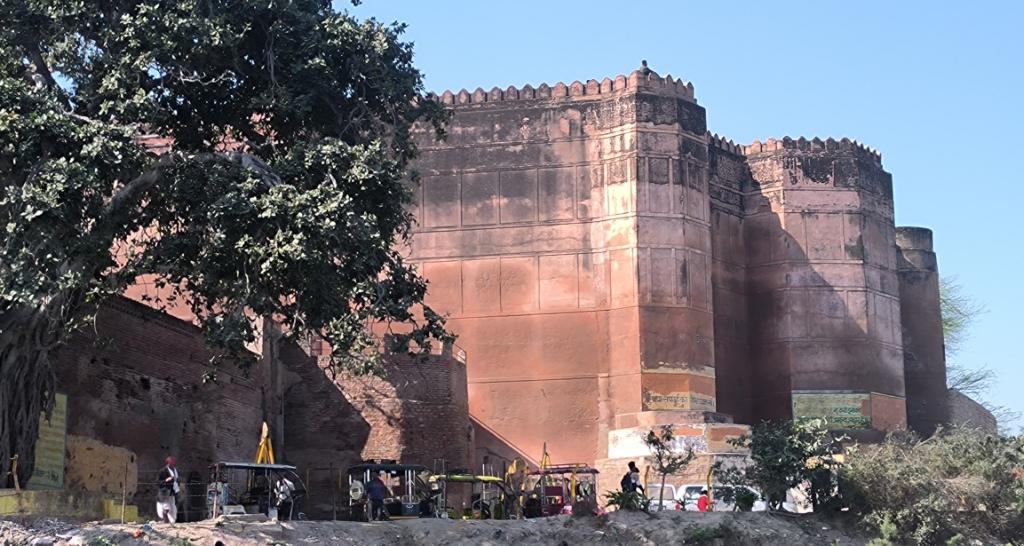
    Kans Kila & River Views – Kans Kila is an old fort situated on the banks of the Yamuna River. Built in the 16th century by Raja Man Singh of Jaipur, it was occasionally used as a residence. The fort is believed to be linked to Kans, the cruel uncle of Lord Krishna. On arrival, I couldn’t find anything resembling a full fort—just some bastions remain. The unique appeal of this site is the amazing view of the river Yamuna from the top. It later found that the magnitude of the fort best appreciated from the boat ride at Yamuna.

    Kans Kila-Yamuna View
    Kans Kila-Yamuna View
    Kans Kila-View from Yamuna
    Kans Kila-View from Yamuna

    🛶 Vishram Ghat by Boat – After capturing a few scenes of the Yamuna, I tried heading toward Vishram Ghat but couldn’t find a direct route. Locals advised retracing my steps back to Dwarkadhish Temple, from where I could access the ghat. Ten minutes later, the river welcomed me.

    I joined a shared boat ride, floating calmly over the Yamuna. Vishram Ghat is renowned for its evening aarti, during which devotees release oil lamps onto the river.

    Yamuna Boat Ride
    Yamuna Boat Ride
    Vishram Ghat
    Vishram Ghat

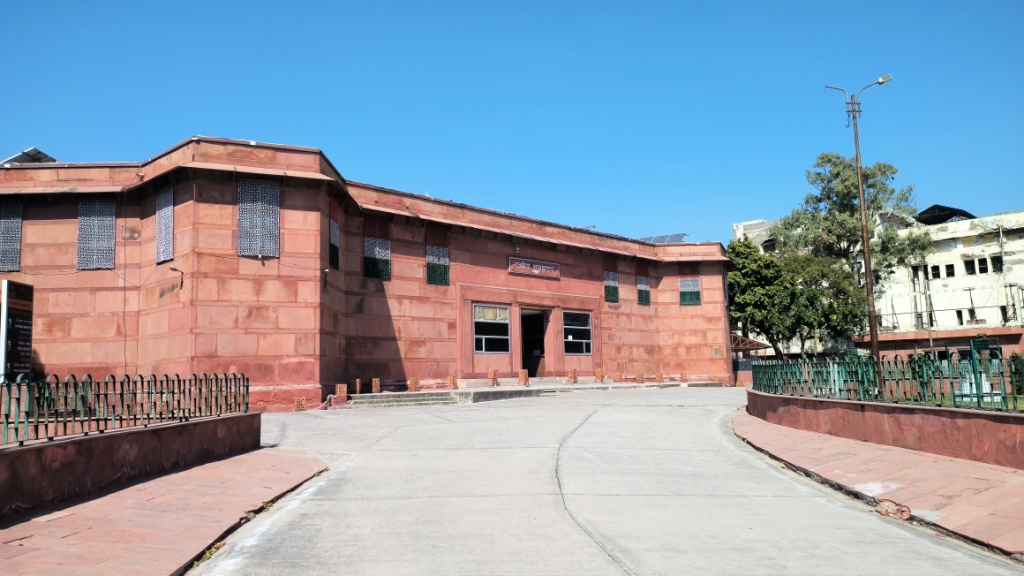
    🏛️ Mathura Government Museum – After noon, I walked back to Tilak Dwar and set off toward the Mathura Government Museum. There’s no direct shared auto route, so I first reached the Old Bus Stand, then switched to another auto heading toward the New Bus Stand. The museum lies along this route.

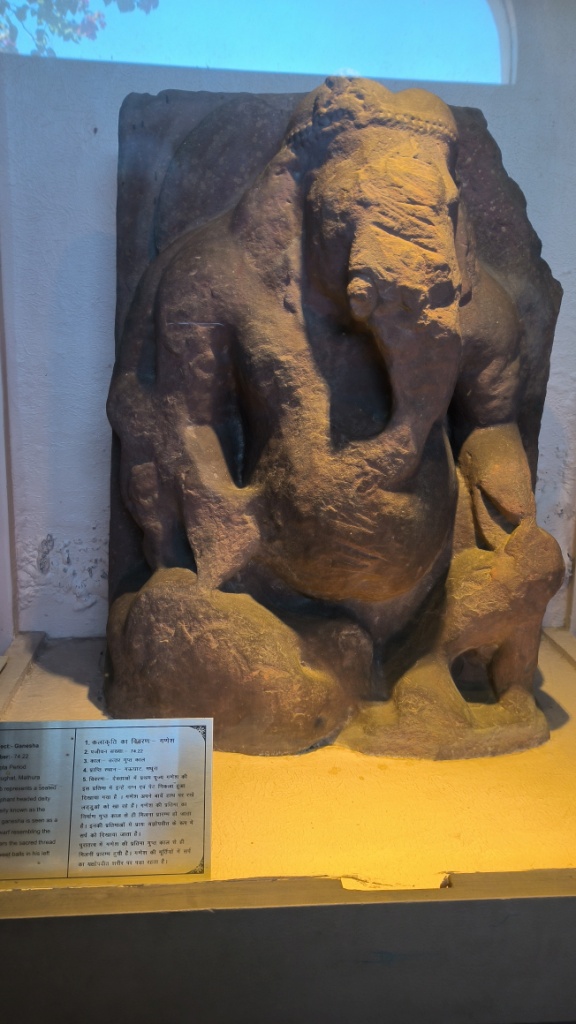
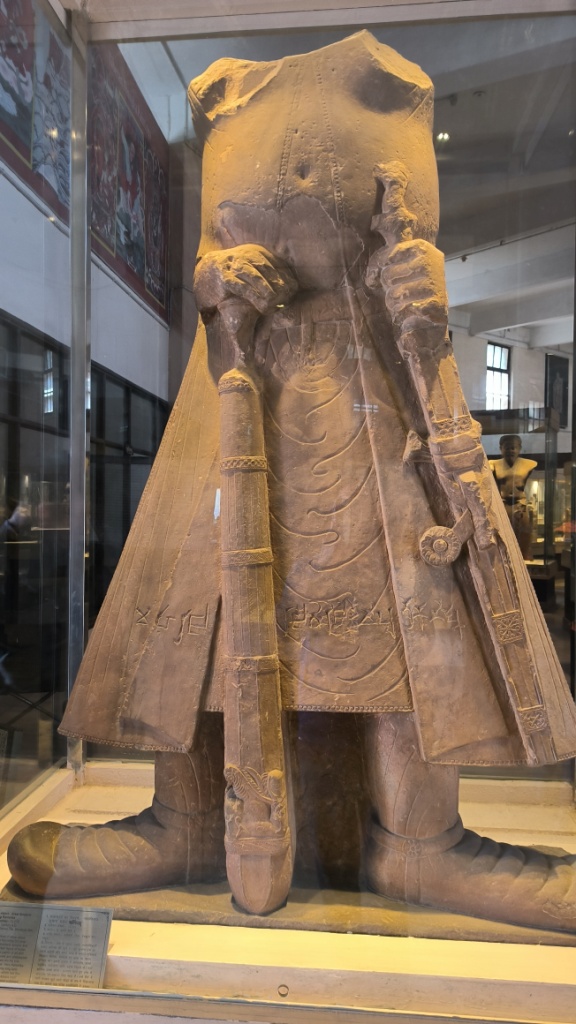
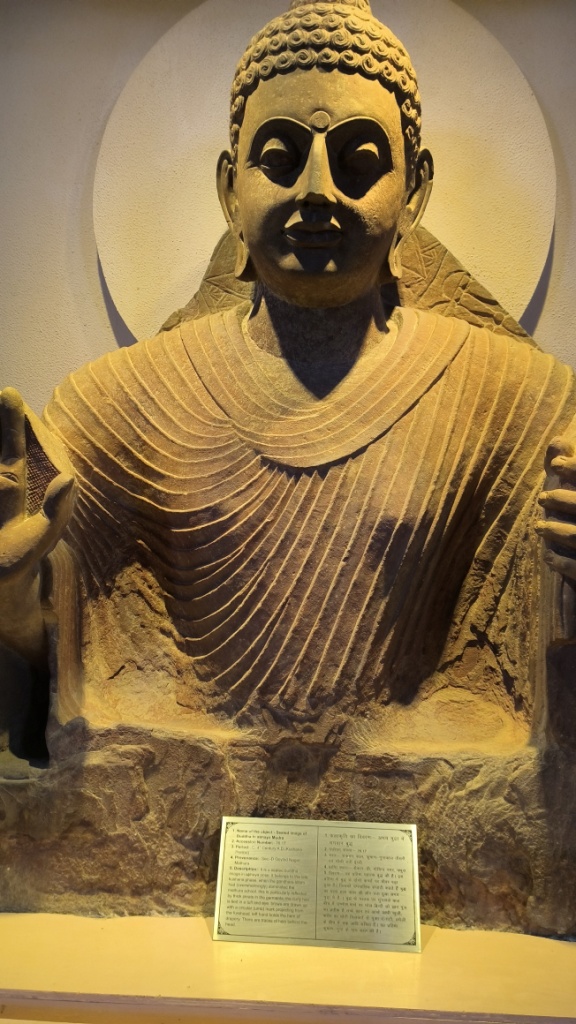
    This museum offers more than sculptures—it showcases centuries of imagination, craftsmanship, and devotion. With artifacts from the Maurya, Sunga, Kushan, and Gupta empires, it captures Mathura’s transformation through stonework. The Kushan period stands out in particular: expressive eyes, flowing garments, and divine elegance, all carved with precision.

    Government Museum
    Government Museum

    📌 Visitor Info:

    • ⏰ Open: 10:30 AM – 4:30 PM (Closed Mondays)
    • 🎫 Entry Fee: ₹5
    • 📸 Camera Fee: ₹20 (including phones)
    • 🕰 Recommended Time: 2–3 hours for history lovers
    Ganesha - 2 CE
    Ganesha - 2 CE
    Headless statue of Kanishka
    Headless statue of Kanishka
    Budhha - Mauryan Empire
    Budhha - Mauryan Empire

    🍽️ Lunch & Leisure

    After the museum, it was time for lunch. A quick Google search pointed me to Agarwal Family Dhaba, a short walk away. I ordered a veg. thali—it was freshly prepared and tasted great.

    Having covered all destinations by 3 PM, I returned to my hotel for some rest. A shared auto dropped me at the New Bus Stand, and I took a one-hour nap.
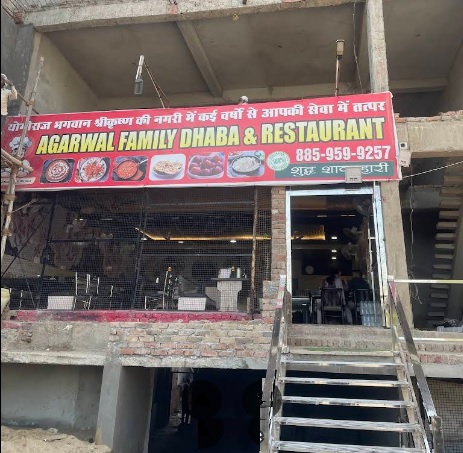
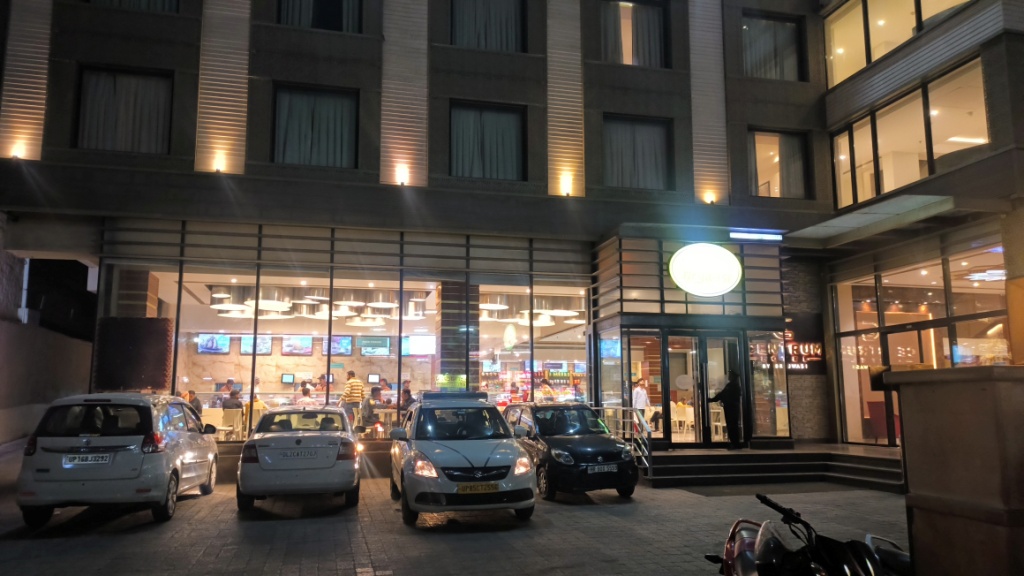
    Aggarwal Family Dhaba
    Aggarwal Family Dhaba
    Brijwasi Sweets
    Brijwasi Sweets
    Tikki @ Brijwasi
    Tikki @ Brijwasi
    Rasmalai @ Brijwasi
    Rasmalai @ Brijwasi

    ☕ Evening Tea & Brijwasi Treats

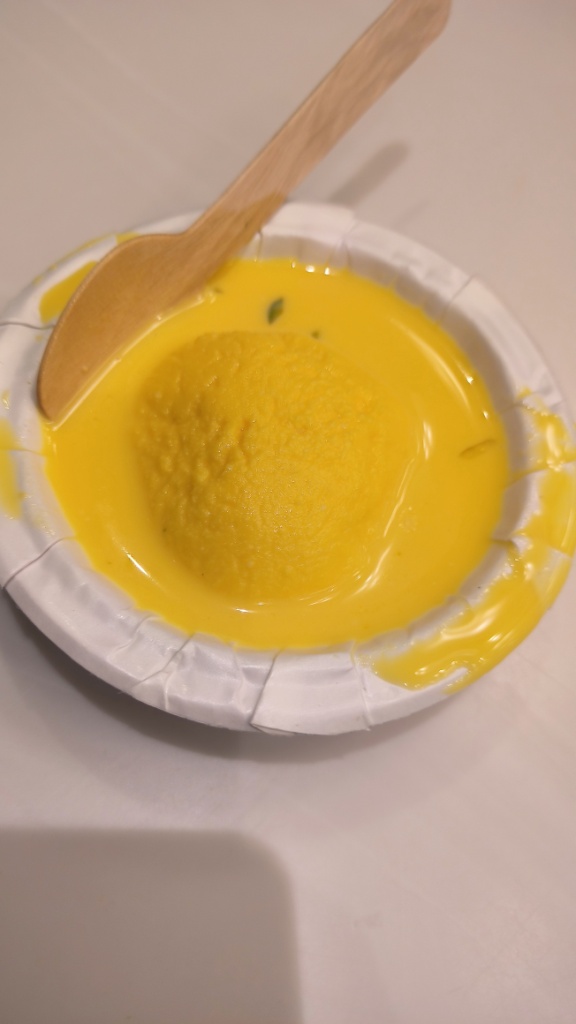
    In the evening, I went for a stroll to enjoy some tea. I still had Brijwasi Sweets on my must-try list. I visited one of their outlets next to the bus stand and ordered a simple thali, complemented with – Aloo tikki as a side dish and Ras malai for dessert

    Needless to say, Brijwasi is the undisputed king of sweets in Mathura. I also bought their famous peda to carry it back to Pune.

    I slept early to catch my early morning train to Gwalior the next day.
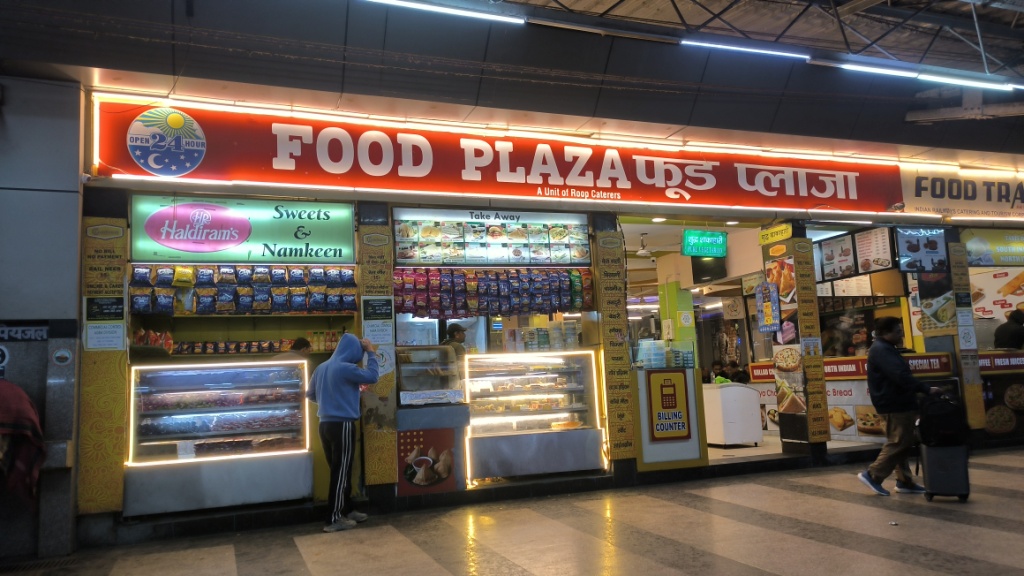
    🚆 Day 3: Mathura to Gwalior – Exploring Gwalior

    I woke up early at 5:30 AM, took a quick bath, and checked out to head to the railway station. Since I had some extra time, I grabbed tea and a light breakfast at the Food Plaza inside the station. After two days of heavy, oily breakfasts in Mathura, I settled on a plate of poha for a refreshing change.

    The Shatabdi from New Delhi arrived on time at 7:20 AM, and I boarded the train. En route, I crossed Agra, Dholpur, and Morena, and reached Gwalior by 9:30 AM.

    Mathura-Food Plaza
    Mathura-Food Plaza
    Mathura Railway Station
    Mathura Railway Station

    🌡️ Gwalior Arrivals & Hotel Hunt

    As I stepped off the train, the first thing I noticed was the change in weather—unlike the chilly winter mornings in Mathura, Gwalior felt warm.

    I had planned to stay at the IRCTC lodge, walking distance from Platform 1, but all dormitories were booked due to a surge of students visiting for some competitive exam during the weekend.

    I exited the station checked for accommodation at Indian Coffee House, located adjacent to the railway station, but there were no vacancies there either.

    Gwaliar-PoI
    Gwaliar-PoI

    Concerned about losing time, I asked a few autorickshaw drivers for nearby budget hotels. One dropped me at Trishla Inn, around 500 meters from the station and next to the Keshar Towers shopping complex. It was decent, offered rooms at ₹700 per day, and seemed like a good option. I checked in, dropped my backpack, and set out to explore the city.

    Planned stops for the day were – Tomb of Tansen >> Gwalior Fort >> Jai Vilas Palace

    🕌 Tombs of Mohammed Ghaus & Tansen

    A quick inquiry pointed me to take a shared auto to ‘Gole ka Mandir’. From there, I switched autos to reach the famed Gwalior Fort. A kilometre before the Fort, I stopped to pay visit the tombs of Mohammed Ghaus and Tansen.

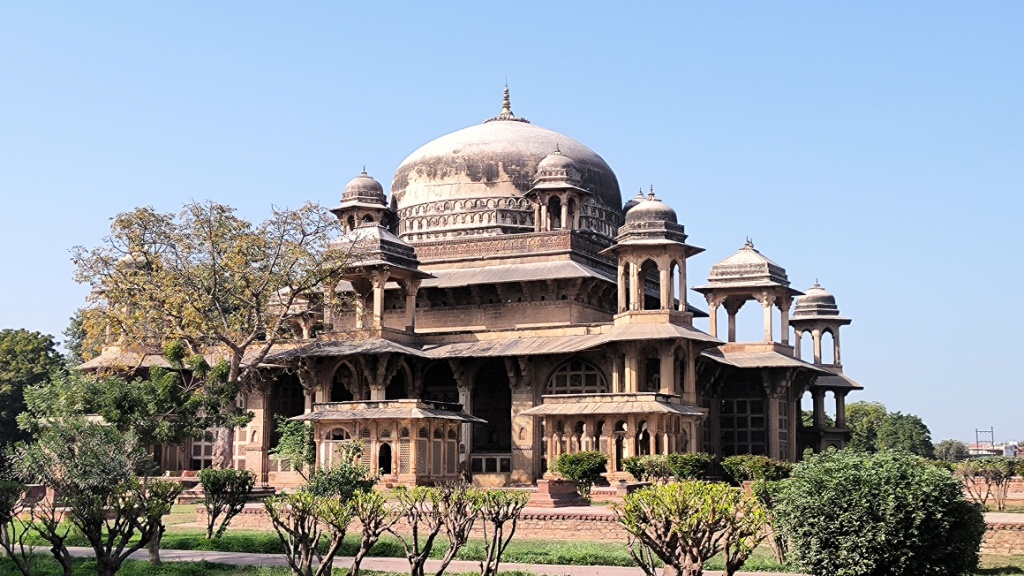
    Tomb of Mohammed Ghaus: Built in the 16th century AD during Akbar’s reign, Mohammed Ghaus was an Afghan prince turned Sufi saint, influential in Mughal India. He was known to have guided emperors like Babur and Humayun. The tomb is surrounded by a peaceful garden and showcases Islamic architecture, including arches, lattice screens (jalis), and domes.

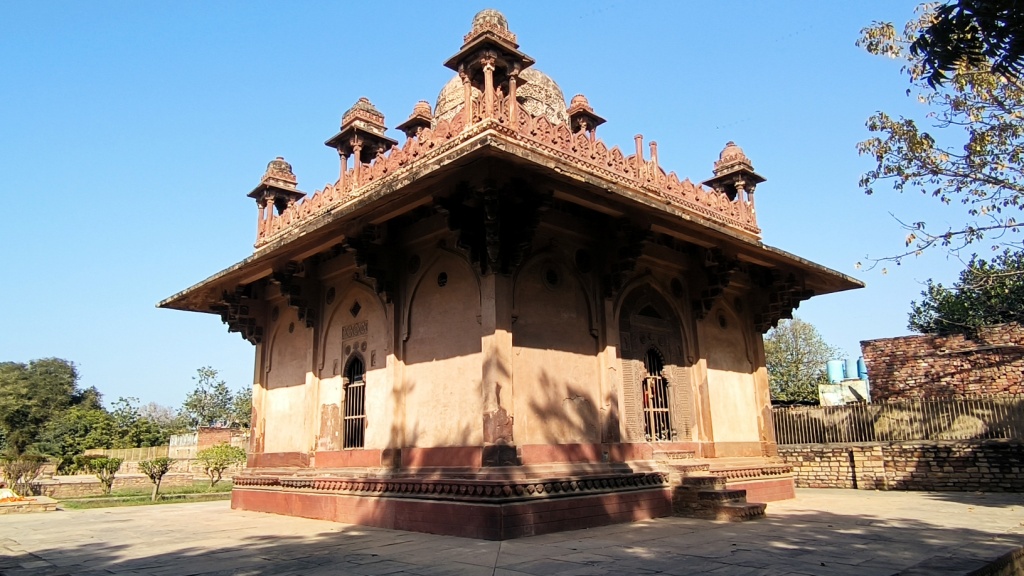
    Tansen’s Tomb: A bit smaller, but equally significant, this marks the resting place of one of the ‘Navratnas’ (Nine Gems) in Akbar’s court and a legendary figure in Indian classical music. Tansen was a shagird (student) of Mohammed Ghaus.

    Tomb Mohammad Ghaus
    Tomb Mohammad Ghaus
    Tomb of Tansen
    Tomb of Tansen

    🏰 Gwalior Fort Complex

    After spending around 30 minutes at the tombs, I walked to the main attraction of the city – The Gwalior fort which is walking distance from the Tombs. Autos and taxis usually drop visitors at the base, followed by a short hike to the top. The entry fee is ₹75, payable via the ASI portal.

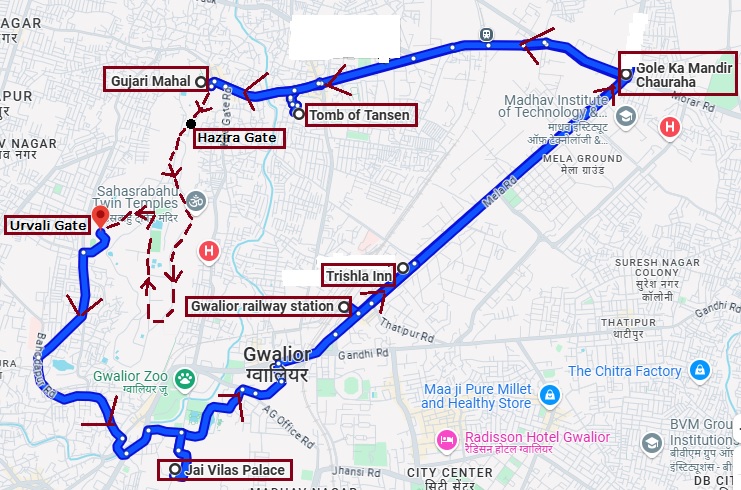
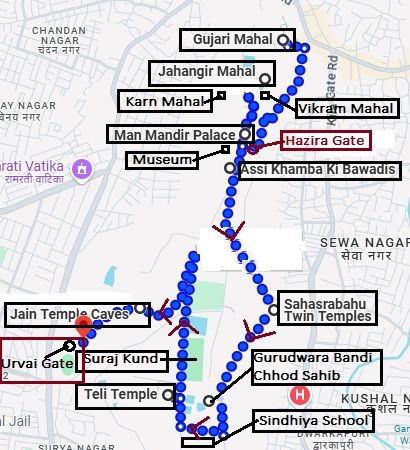
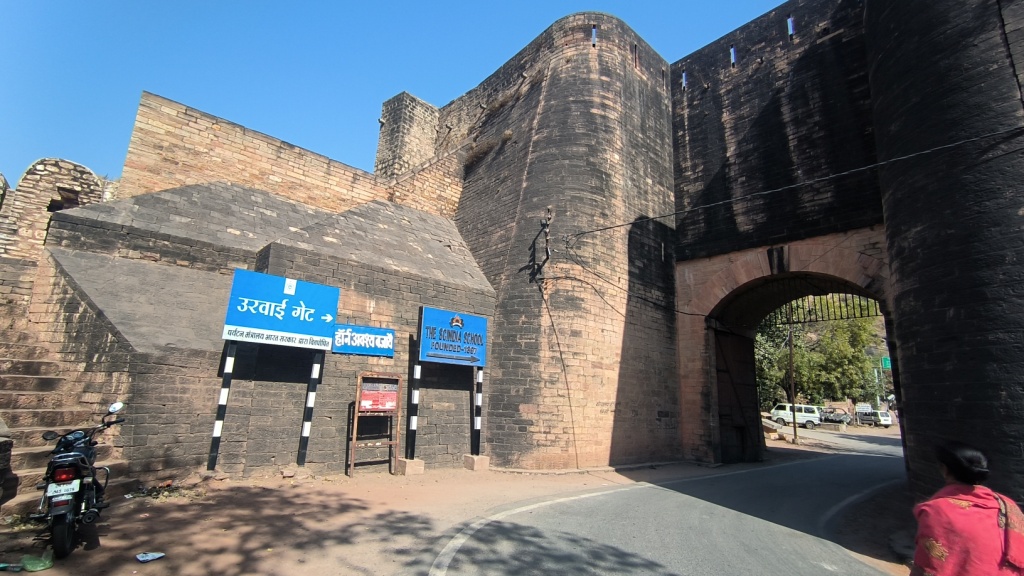
    There are two entrances – Eastern Gate – Hazira Gate. Western Gate – Urvai Gate. Urvai gate allows private vehicles to pass through, so if you are driving by your car, take this gate.  For people coming by taxi or auto-rickshaw you can take either of the gates. The fort complex houses multiple attractions and can be explored on foot. Entering via Hazira Gate, I visited the following in below sequence:

    Gwaliar Fort - PoI
    Gwaliar Fort - PoI
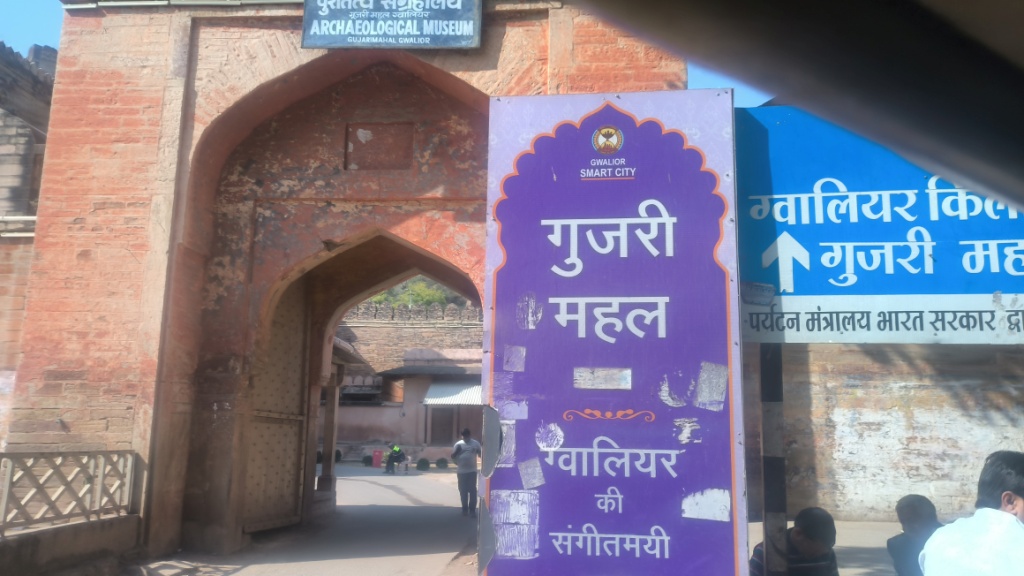
    Hazira Gate & Gujari Mahal
    Hazira Gate & Gujari Mahal

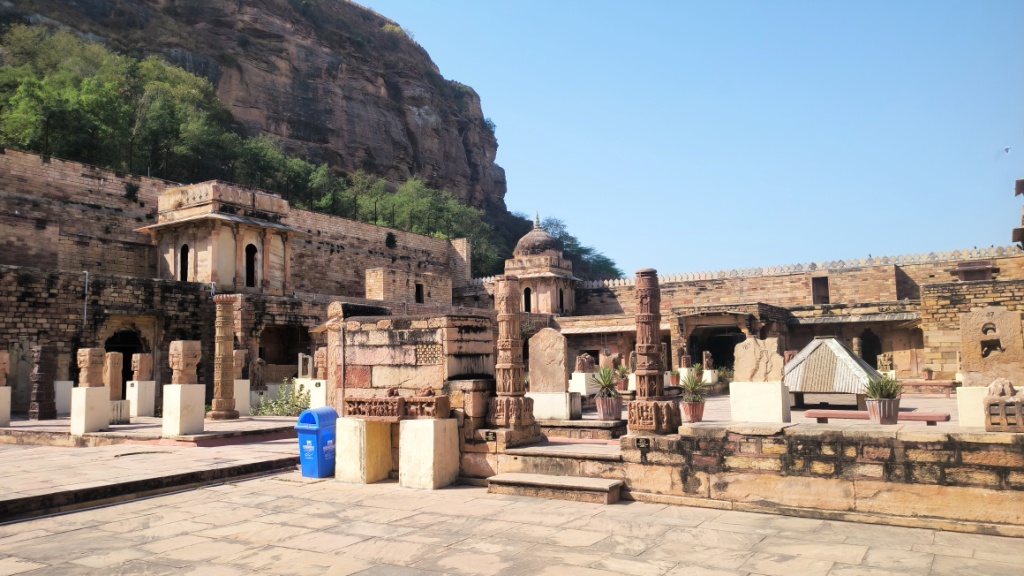
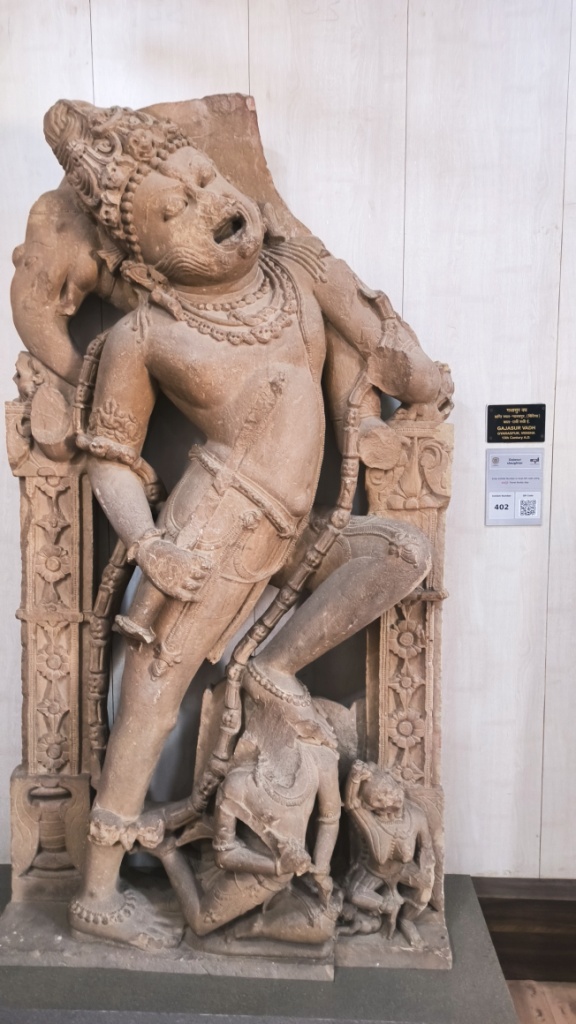
    Gujari Mahal  – Before the hike to the Fort, you find Gujari Mahal which is located at the base of the hill. It was built by Man Singh Tomar for his wife, a Gujjar princess. Now a museum, it houses an excellent collection of artifacts and is considered Gwalior’s second museum.

    Gujari Mahal Courtyard
    Gujari Mahal Courtyard
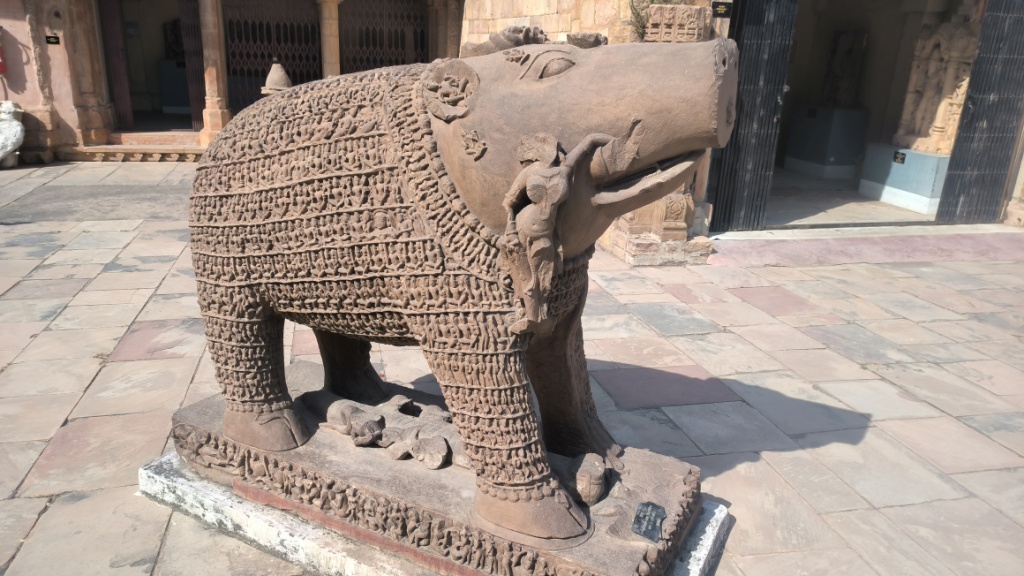
    Varaha Avatar
    Varaha Avatar
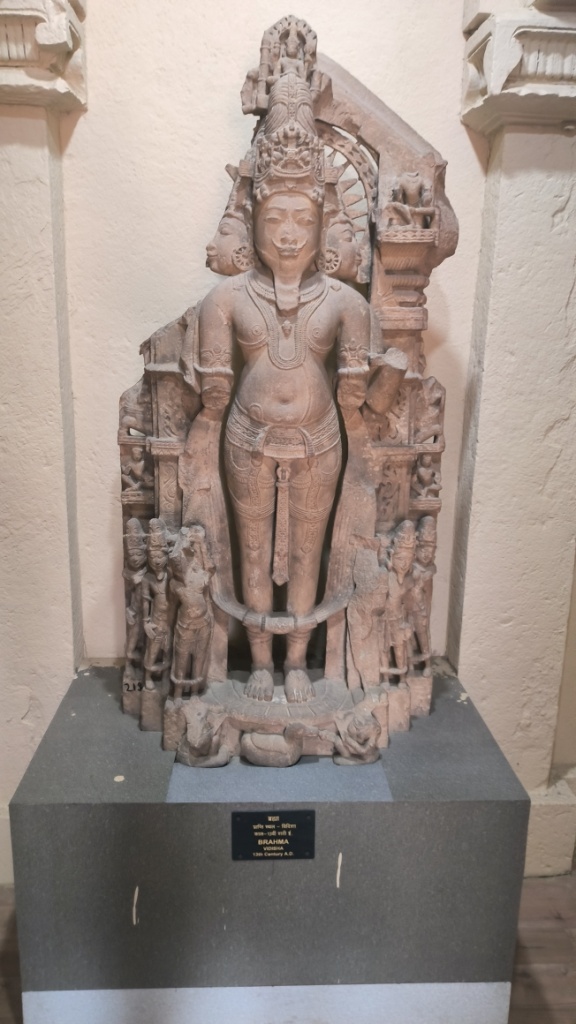
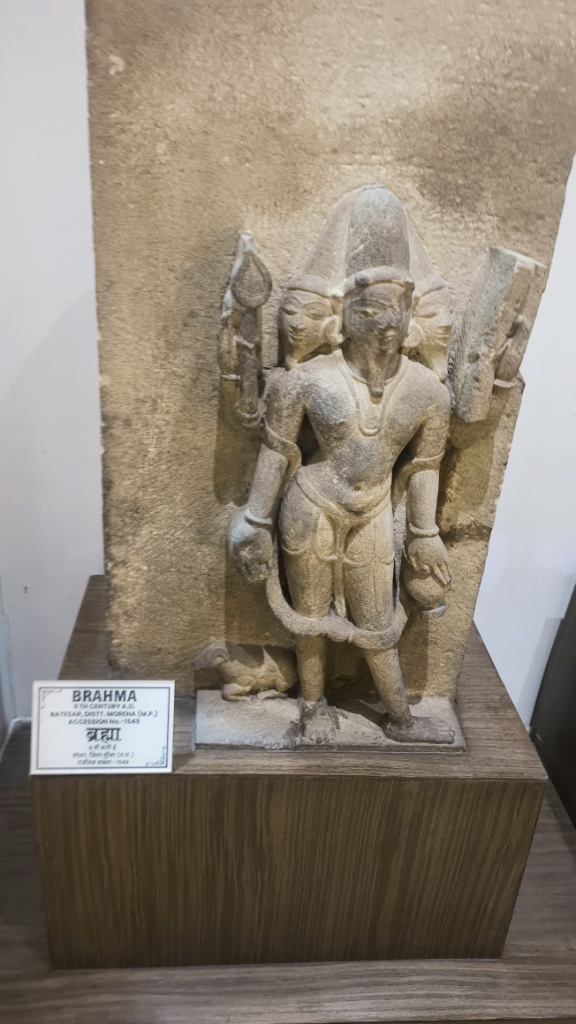
    Brahma
    Brahma
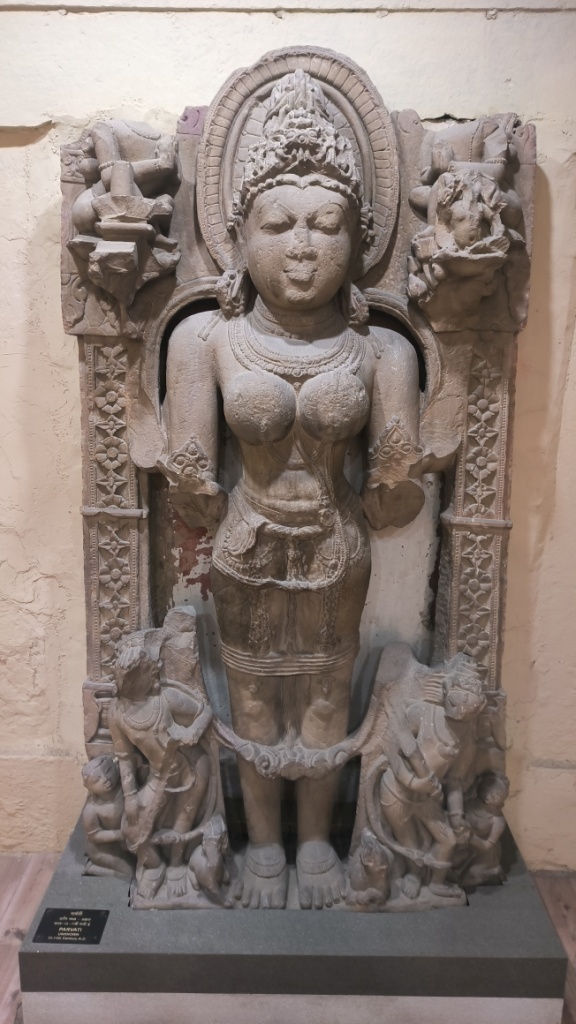
    Parvati
    Parvati
    Gajasur Vadh
    Gajasur Vadh
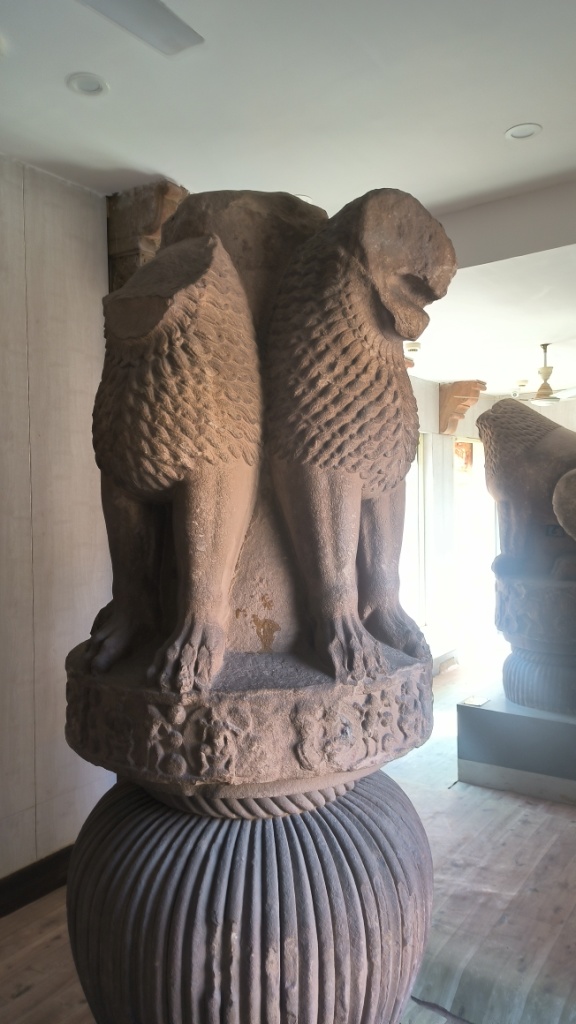
    Head of Ashok Stupa
    Head of Ashok Stupa

    I walked 15 minutes uphill to reach Gwalior Fort, perched majestically on the Vindhyachal range. The fort dates back to the 6th century CE.

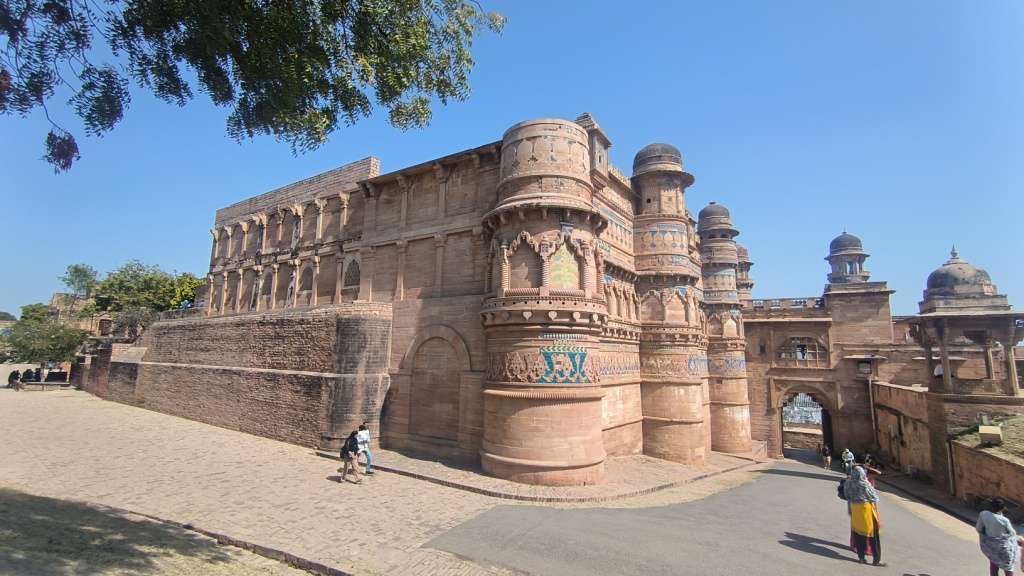
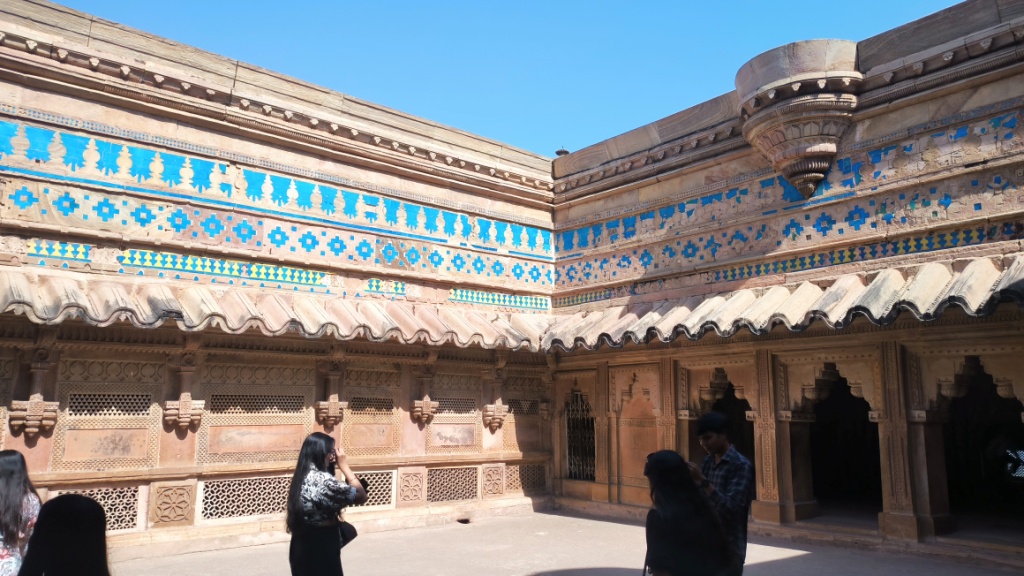
    Man Mandir Palace – The most iconic palace within the fort, constructed by Man Singh for his queen Mrignayani. The palace is known for its elaborate architecture, with blue, green, and yellow tiled walls that enhance its visual appeal.

    Man Mandir Palace
    Man Mandir Palace
    Man Mandir Palace -Courtyard
    Man Mandir Palace -Courtyard

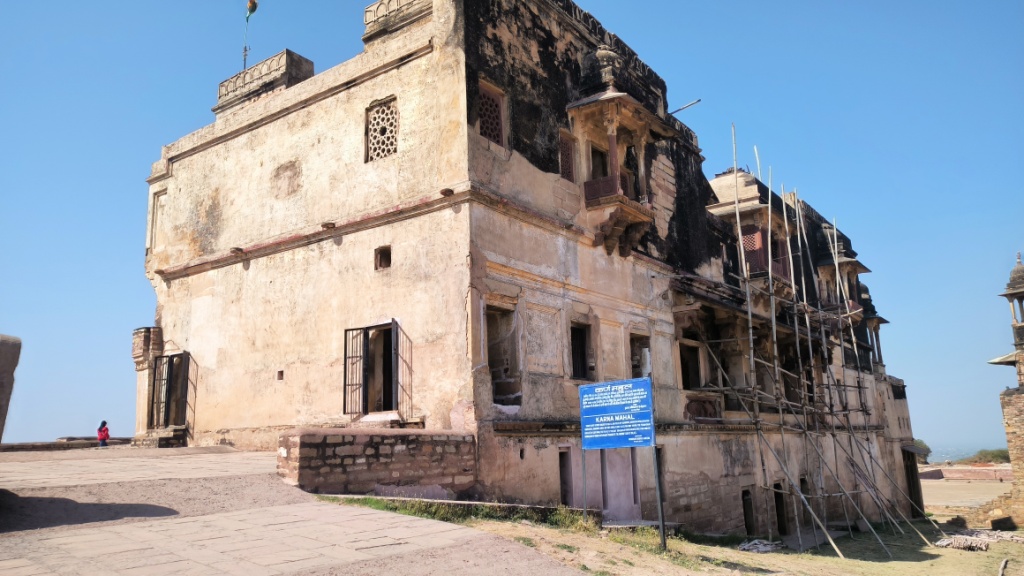
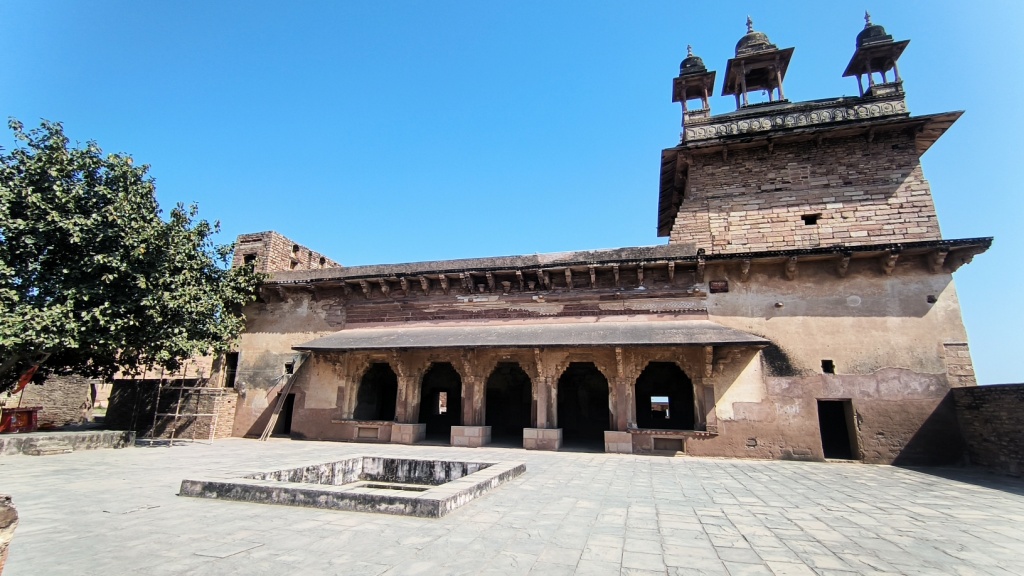
    Palaces of Karan, Vikram, Shahjahan & Jahangir These are adjacent structures, and a separate ticket for ₹20 is required for entry as they are managed by the state government. Karn (Kriti Singh) was the second ruler of the Tomar dynasty. His palace includes a two-story layout with a hamam and public court. Vikramaditya, Man Singh’s elder son, has his palace next door.

    Karn Mahal
    Karn Mahal
    Vikram Mahal
    Vikram Mahal
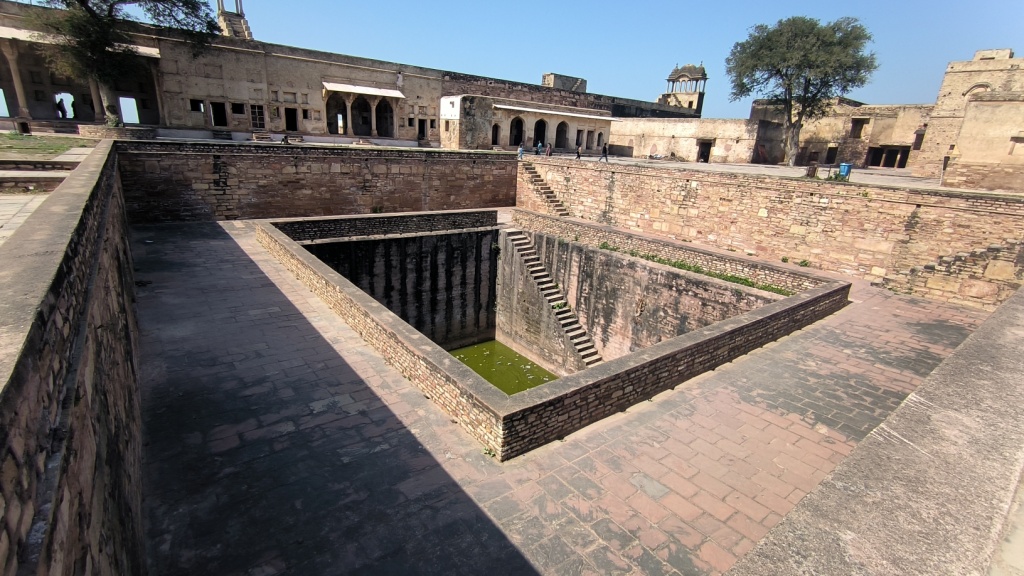
    Jahangir Mahal - Step Well
    Jahangir Mahal - Step Well
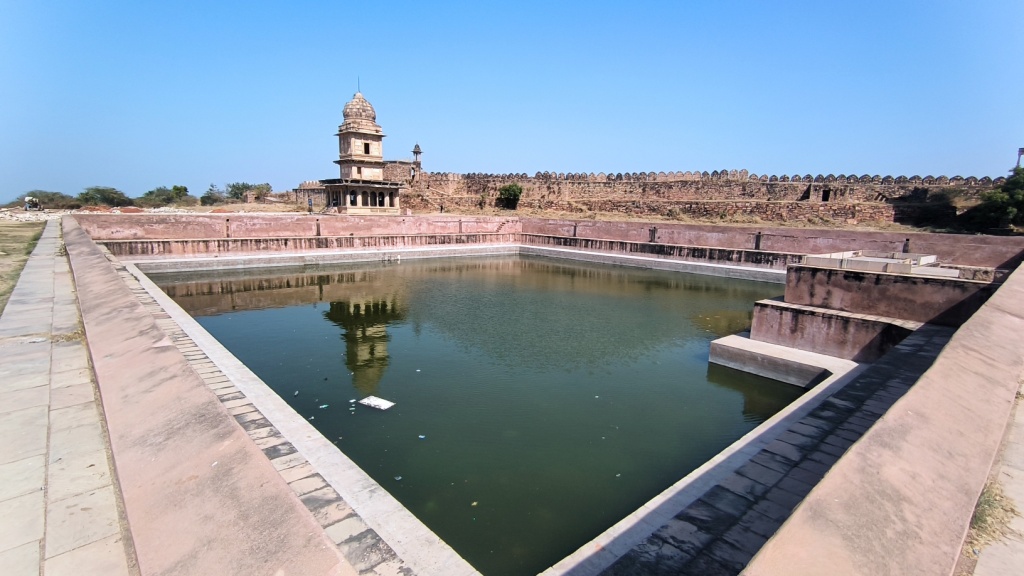
    Jauhar Kund
    Jauhar Kund

    Shahjahan and Jahangir Palaces are positioned side by side. Nearby lies Johar Kund, an ancient water tank with cornered steps. It served as the primary water source for the fort and tragically became the site of mass self-immolation (Johar) by royal women during Iltutmish’s 13th-century siege.

    The architecture around these palaces is modest, especially when compared with other grand structures.

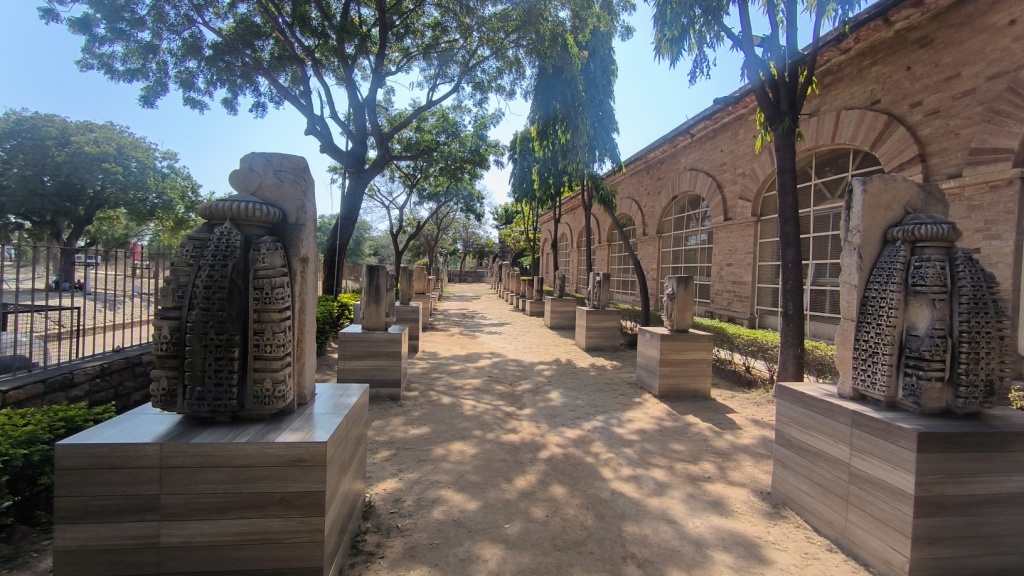
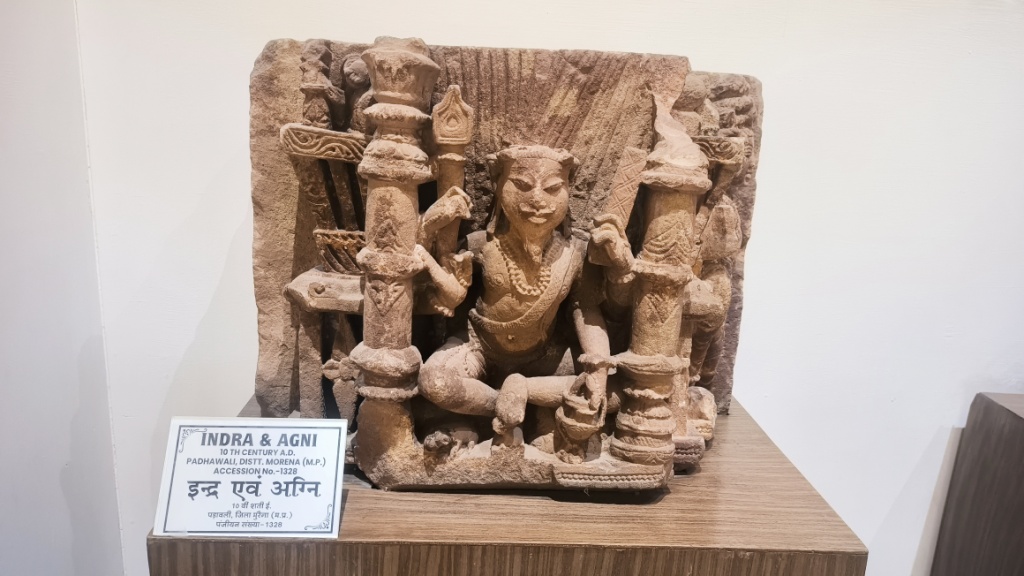
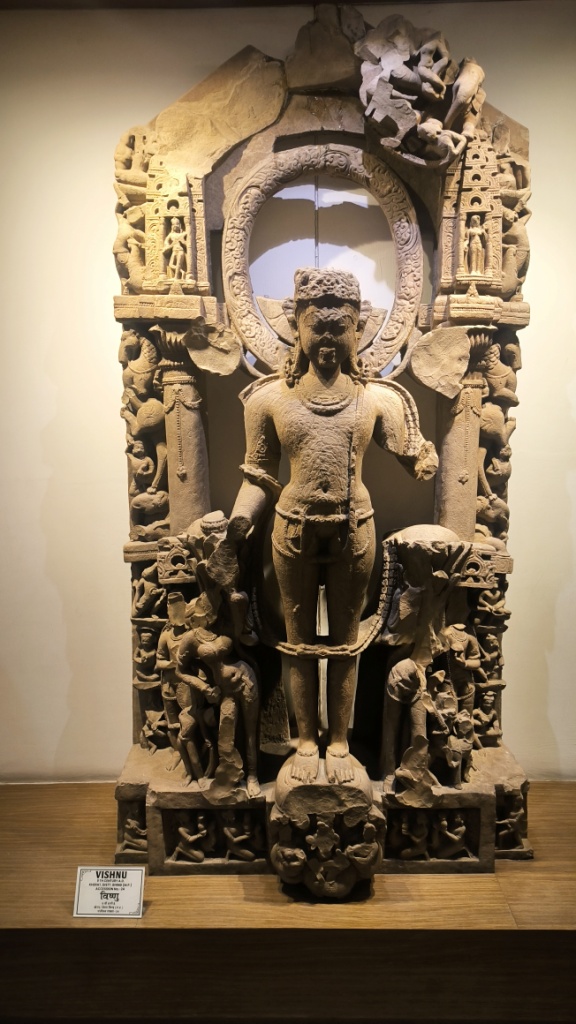
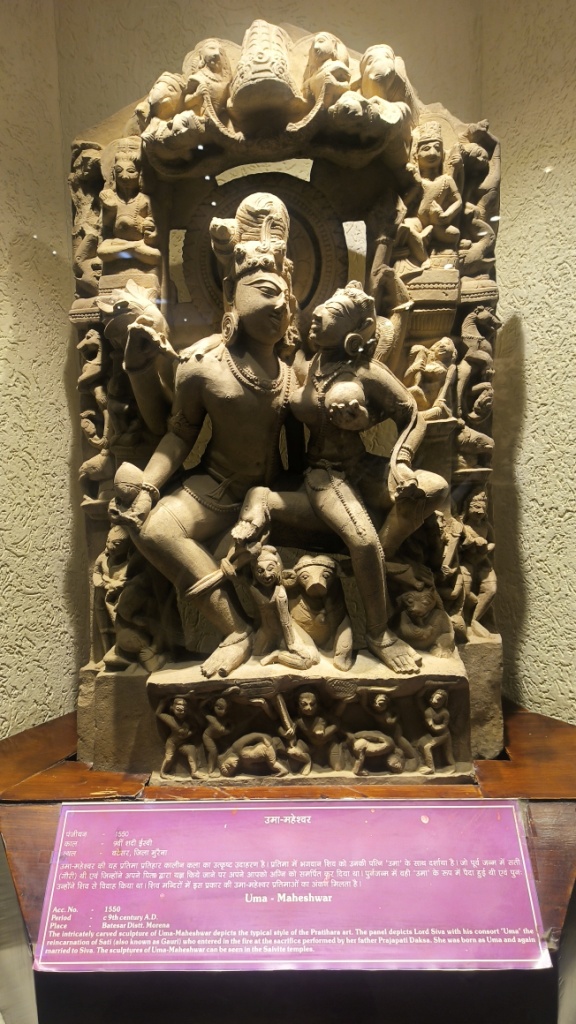
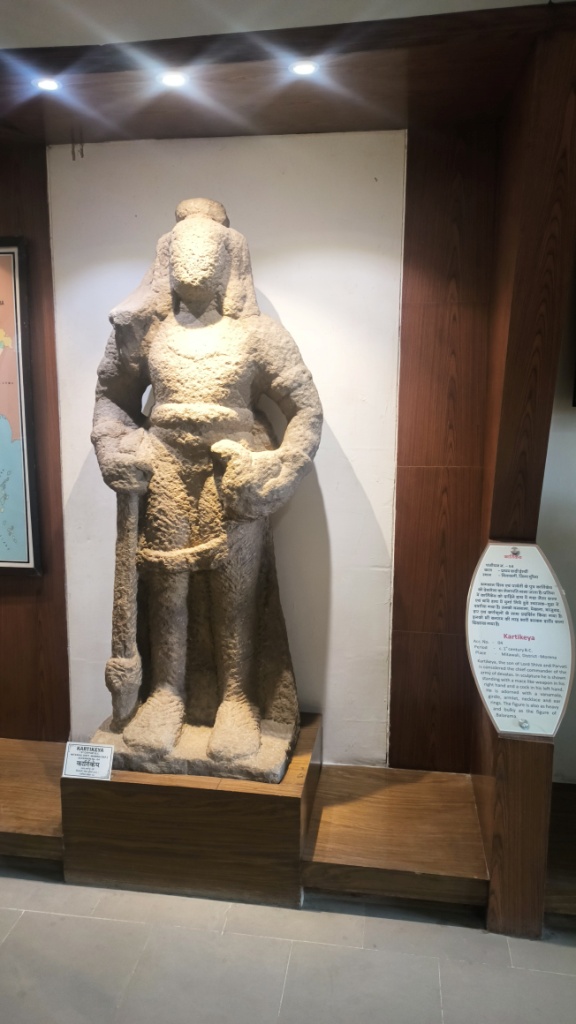
    ASI Archaeological Museum – With a nominal entry fee of ₹5, the museum holds an impressive collection of ruins, sculptures, and artefacts excavated from various sites across Madhya Pradesh.

    ASI Archaeological Museum
    ASI Archaeological Museum
    Indra and Agni
    Indra and Agni
    Vishnu
    Vishnu
    Uma Maheshwar
    Uma Maheshwar
    Brahma
    Brahma
    Kartikeya
    Kartikeya
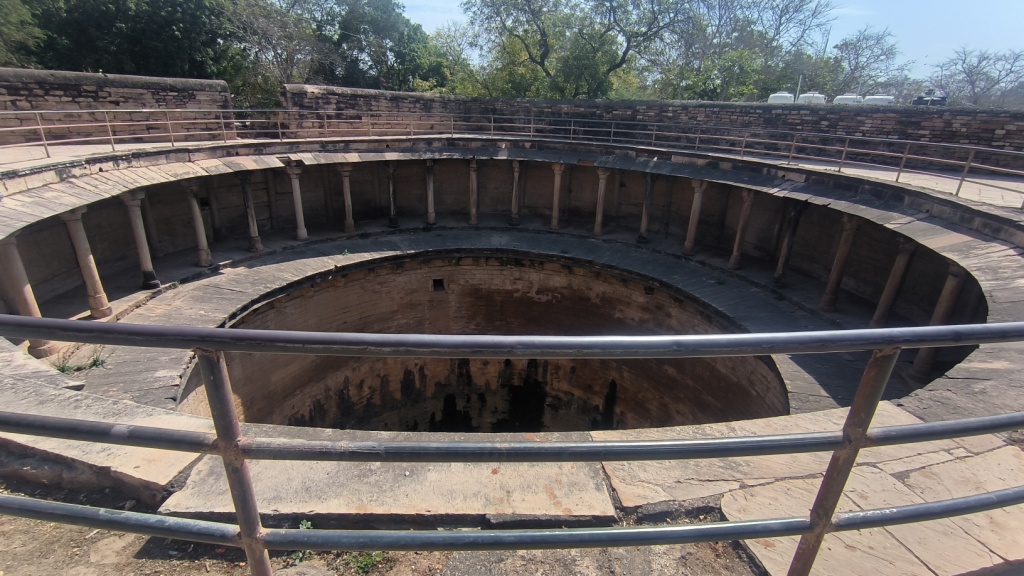
    Assi Khamba Ki Baoli
    Assi Khamba Ki Baoli

    Assi Khamba Ki Baoli –It is next to the museum and was the striking an ancient step well supported by 80 stone pillars. Its bright paintwork and symmetry made for an exquisite sight.

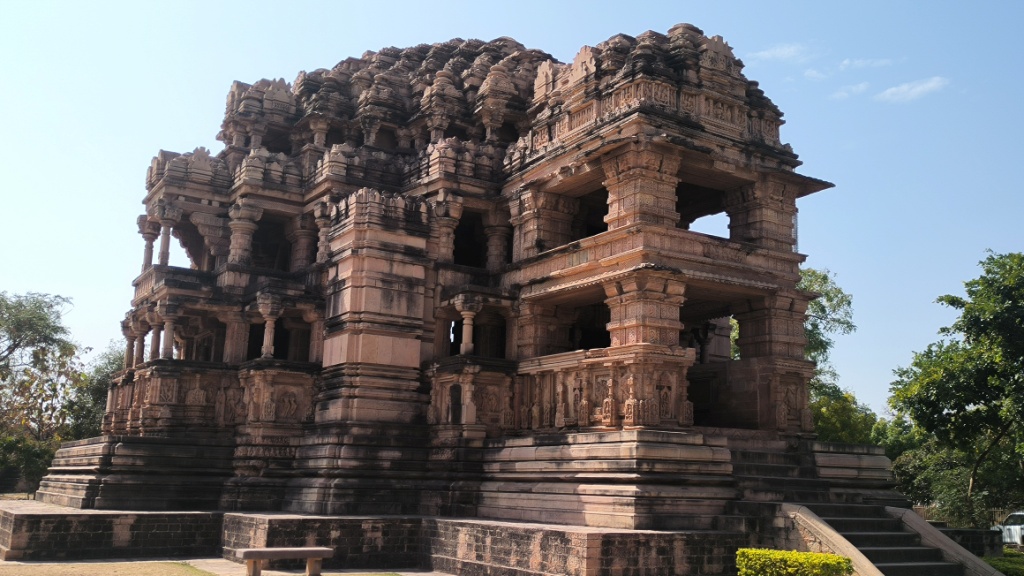
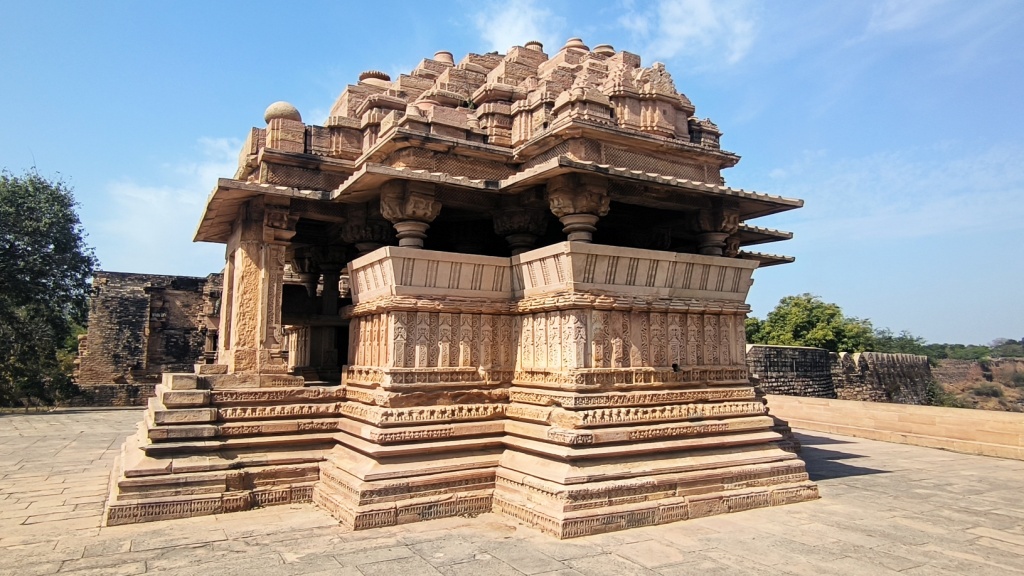
    Saas-Bahu Temple  – A short 500-meter walk brought me to this twin-temple structure. Dating back to the 11th century, built by King Mahipal. It has a The larger temple (Saas) and the smaller temple (Bahu).

    One theory suggests the name is a linguistic distortion of ‘Sahastrabahu’—a form of Lord Vishnu meaning “thousand-armed.” Another theory claims Mahipal’s queen worshipped Vishnu, while his daughter-in-law followed Shiva, prompting separate temples. Despite partial destruction over time, both temples are impressive architectural relics.

    Saas Temple
    Saas Temple
    Bahu Temple
    Bahu Temple
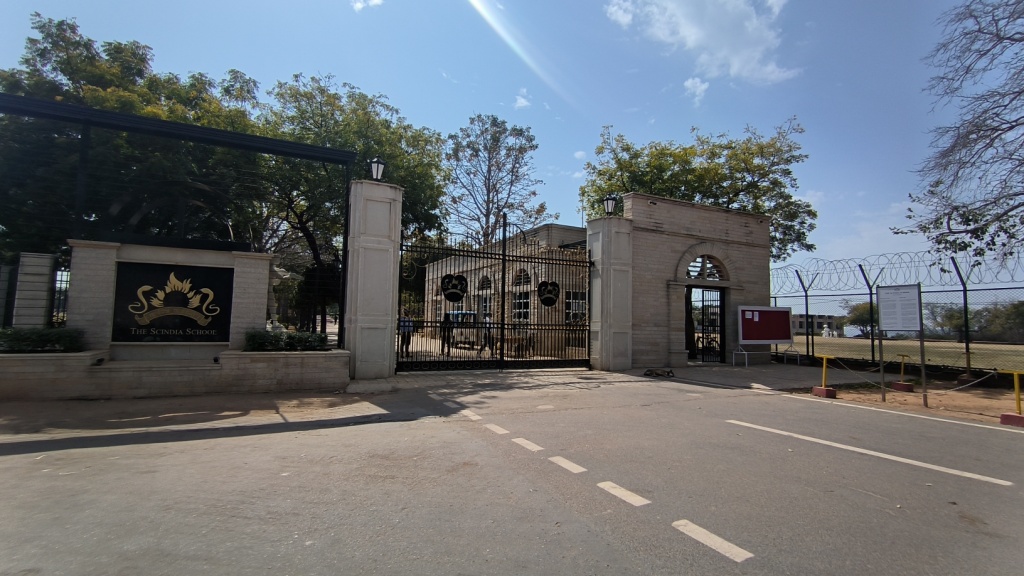
    Scindia School
    Scindia School


    Continuing westward led me to the prestigious Scindia School, a boys’ residential institution originally established for royal families. Today, it boasts renowned alumni like Mukesh Ambani, Sunil Mittal, Anurag Kashyap, and Salman Khan.

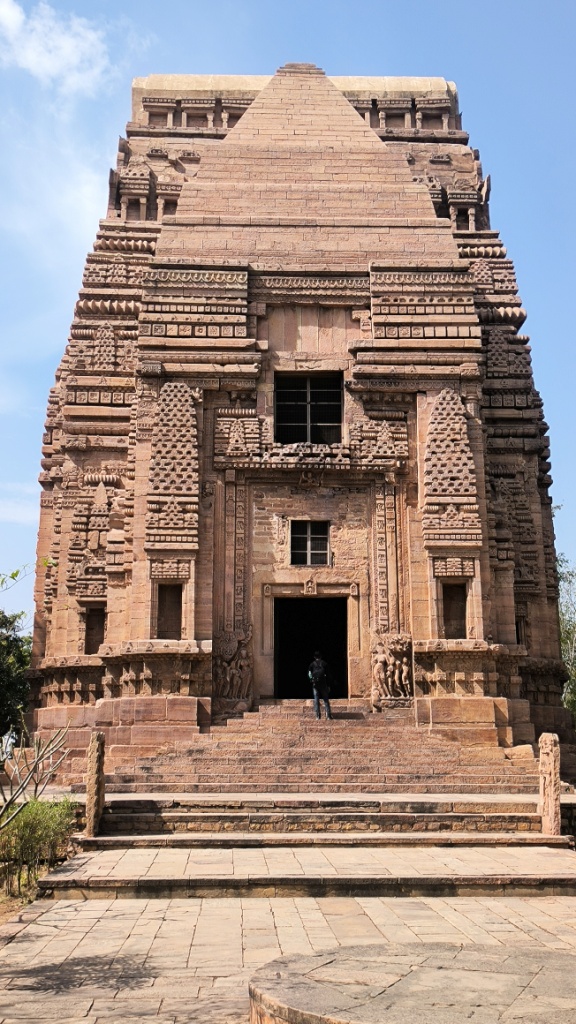
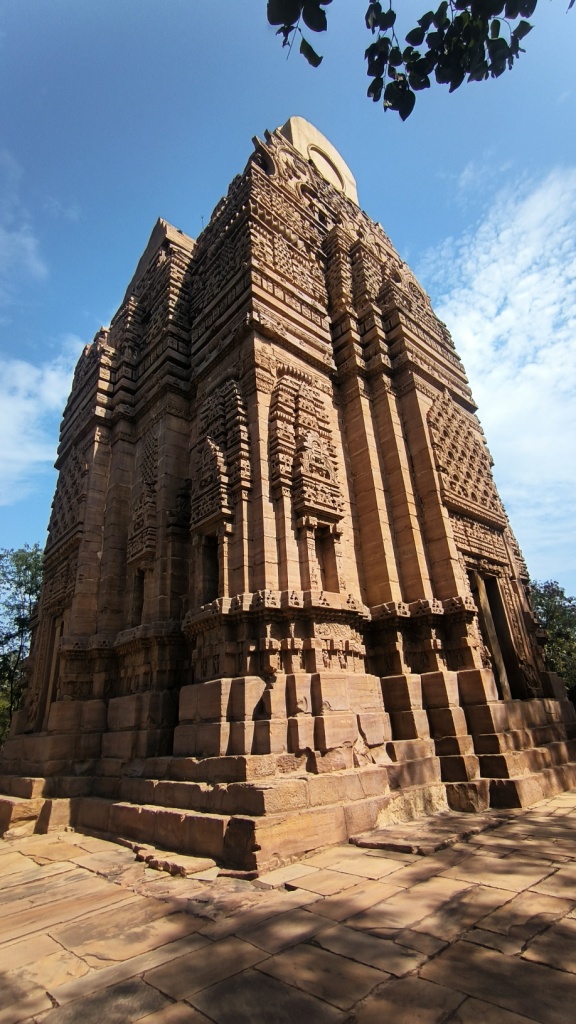
    Teli Mandir
    Teli Mandir
    Teli Mandir
    Teli Mandir

    Not far from here stands the magnificent Teli ka Mandir, believed to be built in the 9th century by Gurjara-Pratihara rulers. Dedicated to Lord Vishnu, it’s a fascinating blend of North and South Indian architecture. The origin of its name might be linked to oil merchants (Teli) or Telang Brahmins who presided over rituals.

    A few meters ahead lies Suraj Kund, a sacred pond whose waters, according to legend, cured Prince Suraj Sen of leprosy—an act that inspired him to build the fort. One must walk barefoot through a temple to reach the pond, but I skipped the visit due to the rough, stony path.

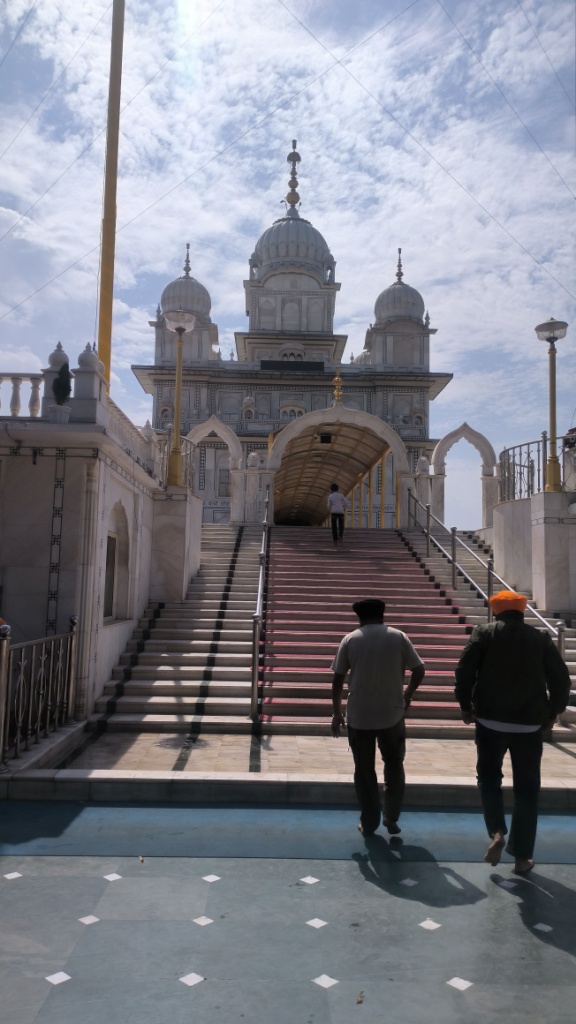
    Near Suraj Kund stands the Gurudwara Bandi Chhod Sahib, steeped in spiritual history. It’s said that Guru Hargobind was imprisoned here by Emperor Jahangir. After a plea from Sufi saint Mian Mir, the Guru was released—along with 52 imprisoned kings—earning the name Bandi Chhor (“Liberator of Prisoners”).

    Gurudwara Bandi Chhod Sahib
    Gurudwara Bandi Chhod Sahib
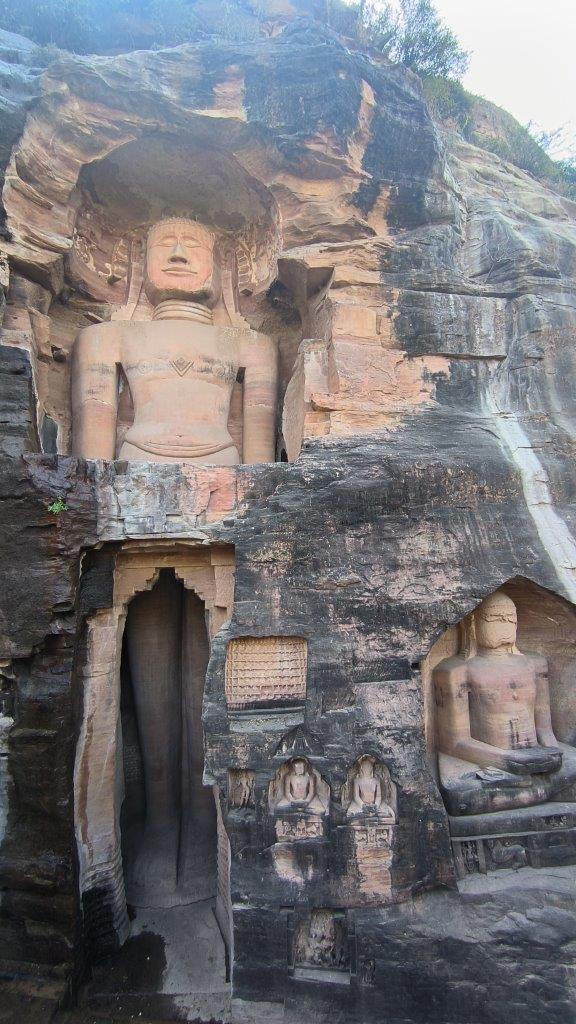
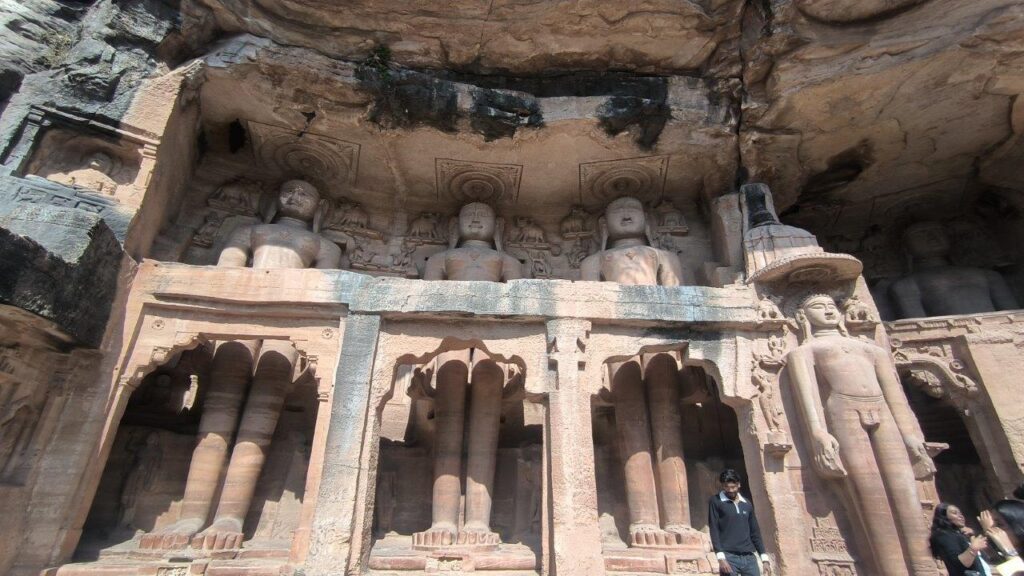
    Rock-cut Jain statues
    Rock-cut Jain statues
    Jain Temple Caves
    Jain Temple Caves
    Urvai Gate
    Urvai Gate

    The Gurudwara marked the final spot of my fort visit, after which I exited via the Urvai Gate, passing the intricately carved Siddhanchal Digambar Jain Temple Caves, showcasing stunning rock-cut Tirthankara statues

    🏛️ Jai Vilas Palace

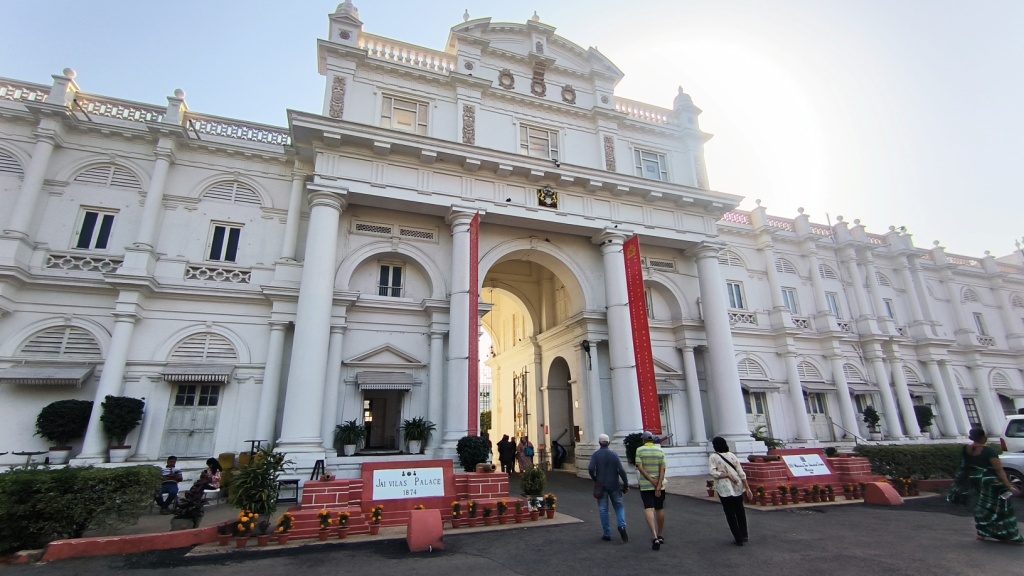
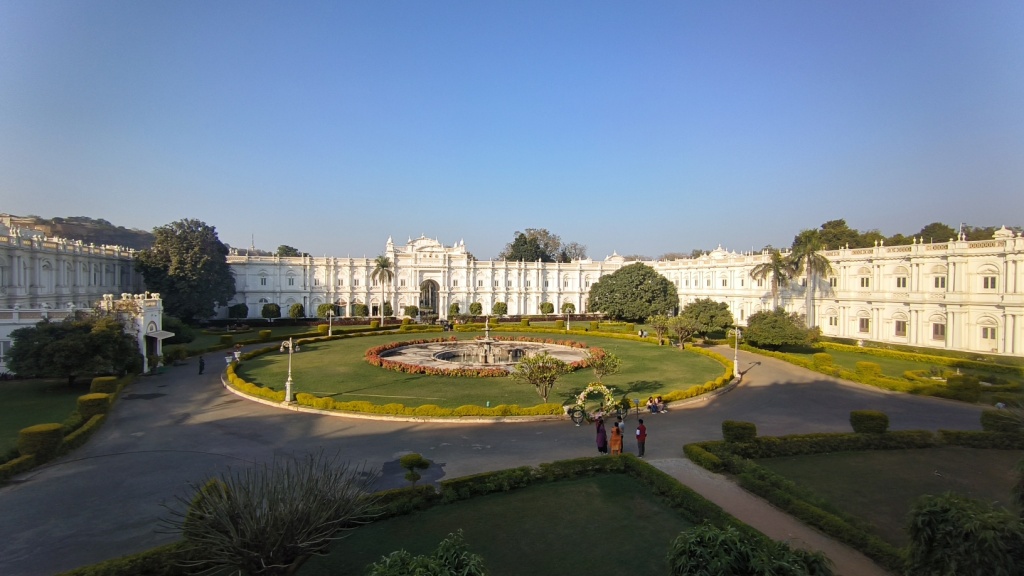
    By 3 PM, I’d wrapped up my fort tour and was ready for my final city stop—the Jai Vilas Palace, which runs 10 AM to 5 PM. I postponed lunch and took a direct auto to the palace. Built in 1874 by the Scindia dynasty, the palace features European and Indian architecture. Part of it functions as a museum, while the rest remains the Scindia family’s residence.

    Jai Vilas Palace-Entrance
    Jai Vilas Palace-Entrance
    Jai Vilas Palace-From Inside
    Jai Vilas Palace-From Inside

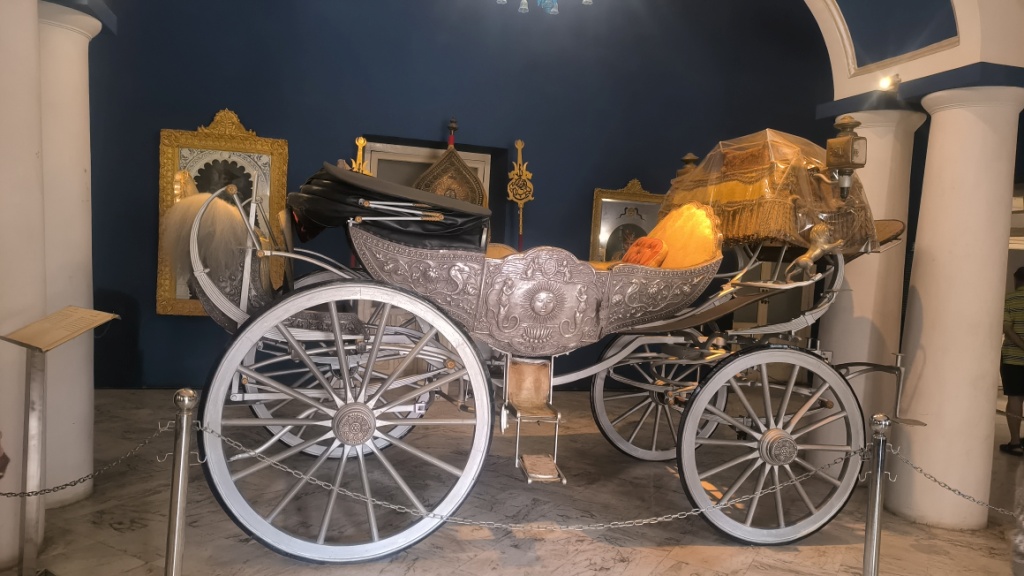
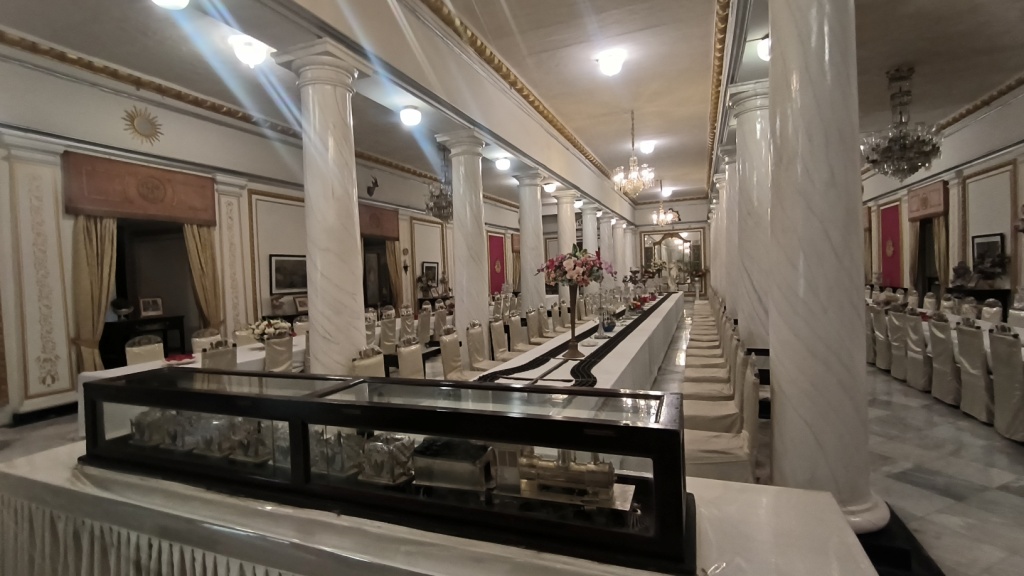
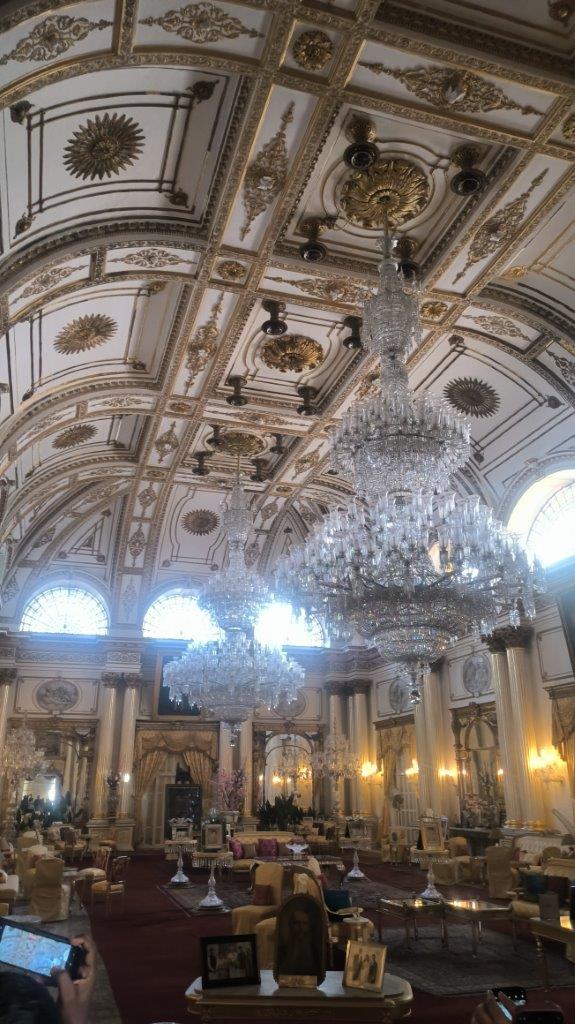
    Entry is ₹300, and only mobile phones are allowed inside. The museum sprawls across 35 rooms, showcasing – Royal costumes, a silver train that served food on the dining table (now enclosed in a glass casing), weapons, paintings, vintage furniture and cars.  You also get to see the Durbar Hall which is lavishly decorated with gold furnishings and painted ceilings. It also features two massive chandeliers, each weighing about 3.5 tonnes.

    Darbar Hall
    Darbar Hall
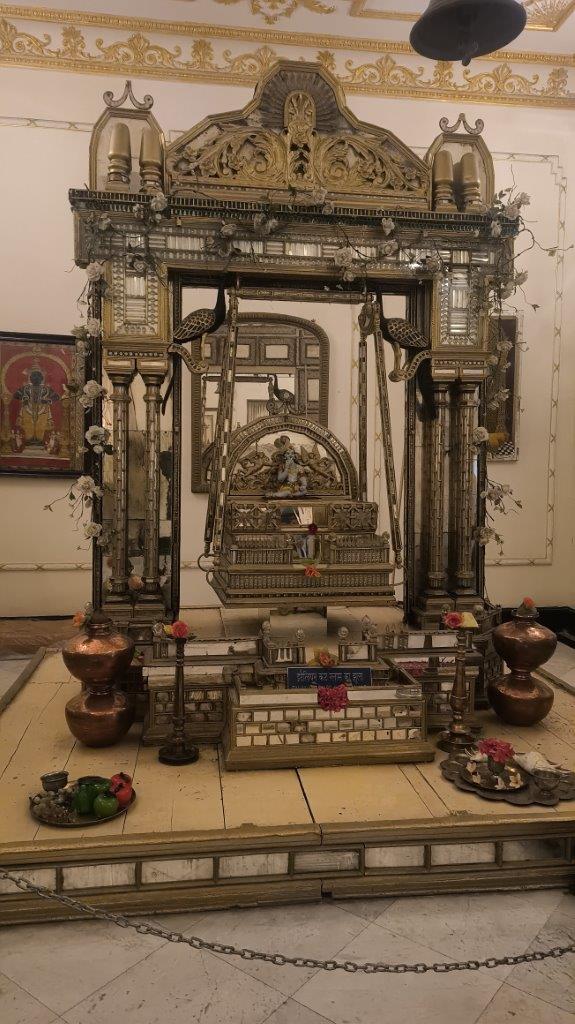
    Shri Krishna Temple
    Shri Krishna Temple
    Silver Buggy
    Silver Buggy
    Banquet hall - Silver Train
    Banquet hall - Silver Train

    I completed my palace tour just before closing time. Hungry and worn out, I spotted Dindayal City Mall on my way back and treated myself with fried chicken and a virgin mojito at KFC. After quick snacks, took a shared auto back to my hotel.

    Later in the evening, I ventured out near the railway station for dinner—a bustling area filled with eateries—and wound down with a simple thali. Exhausted but content, I returned to the hotel and called it a day.

    🚉 Day 4: Gwalior to Jhansi – Exploring Orchha

    With two days left in the trip, my plan was to explore Jhansi and Orchha (20 km away). While planning the trip, I had debated the sequence —Jhansi on Day 4 and Orchha on Day 5—but realized it was safer to visit Orchha first. Since my return to Delhi was from Jhansi, I didn’t want to risk missing the train if I couldn’t get back from Orchha on time. So, Orchha became Day 4, and Jhansi got slotted for Day 5.

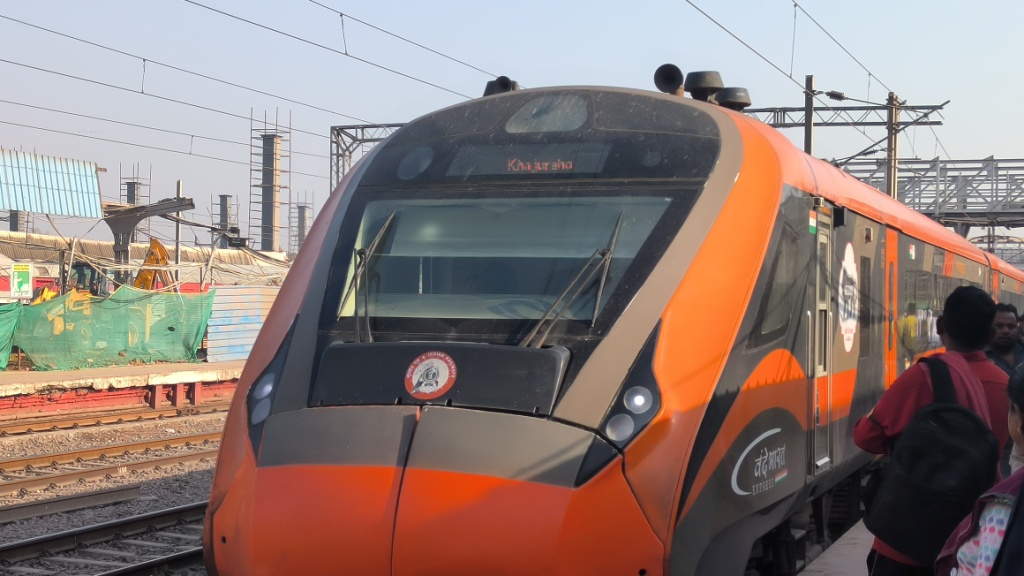
    I caught the 9:00 AM Vande Bharat Express to Jhansi and was served breakfast en route. After about 90 minutes, I arrived at Jhansi. Orchha lies about 20 km from the railway station, and you can either take a direct taxi, or opt for the budget route – a shared auto to the bus stand (₹10), followed by another shared ride to Orchha (₹50)—which I chose.

    Vande Bharat (22470)
    Vande Bharat (22470)
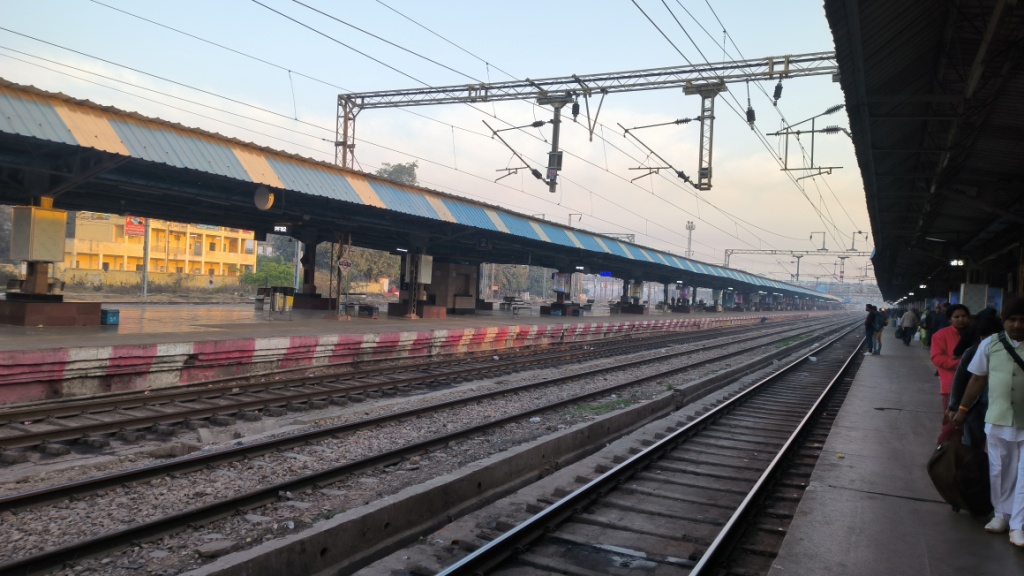
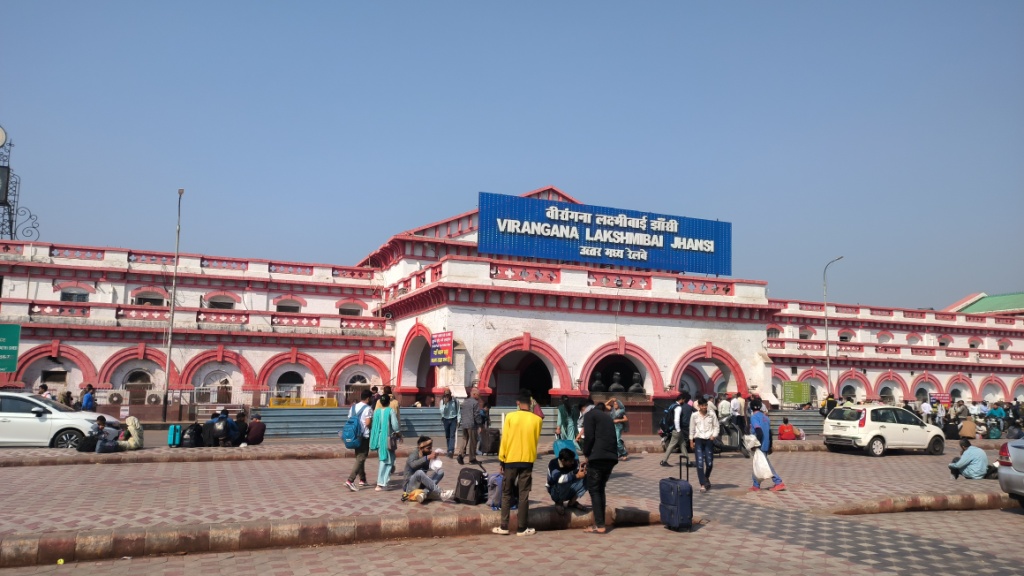
    Jhansi Railway Station
    Jhansi Railway Station

    I reached Orchha bus stop by 11:00 AM, and I must say, this town surprised me in the best way. I hadn’t heard much about it, and yet, it turned out to be the most memorable city of the trip. Orchha is an underrated gem that deserves more attention—it’s compact, full of historic charm, and wrapped in the serene flow of the Betwa River. Add to that stunning sunsets and a laid-back vibe—I’m so glad I included it!

    🏛️ Orchha – History & Architecture

    Orchha was founded in the 16th century by King Rudra Pratap Singh, and served as the capital of the Bundela dynasty till the 18th century, as a defense against frequent Mughal invasions. It flourished under Bundeli rulers, evident from its well-preserved forts and temples. Under British rule, Orchha signed a treaty of alliance and joined independent India in 1950.

    It’s also the birthplace of Bundeli architecture—a graceful blend of Rajput and Mughal styles, reflected in its temples, chhatris (cenotaphs), and palaces. Despite modern growth, Orchha retains its historical character and continues to be a living cultural site.

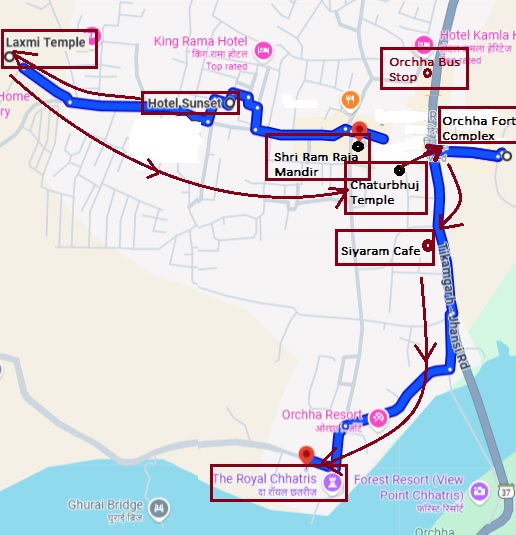
    Orchha-PoI
    Orchha-PoI
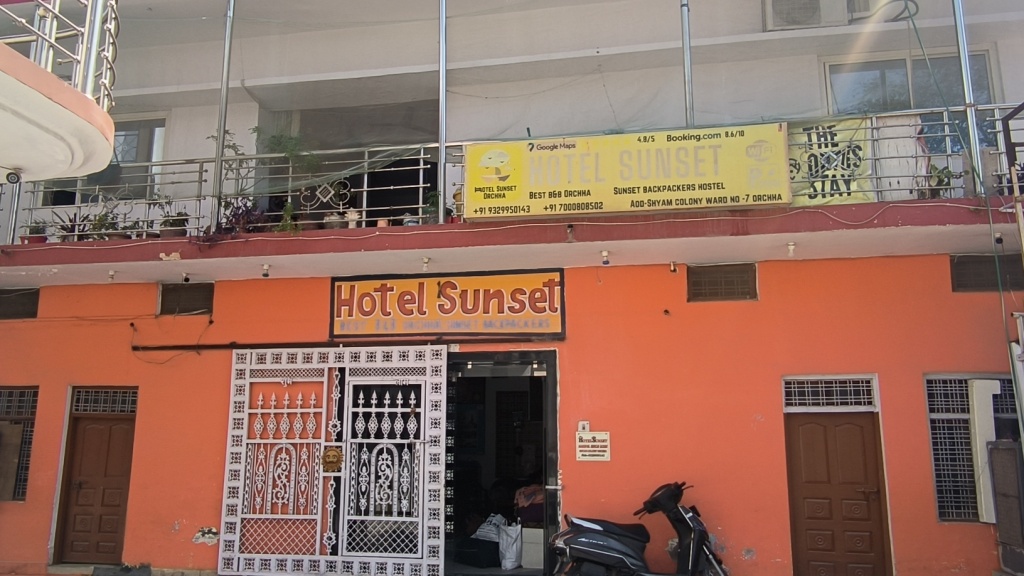
    Hotel Sunset
    Hotel Sunset

    🏨 Finding a Stay

    I checked into Hotel Sunset, a popular pick among solo travellers. I opted for a bunker bed at ₹200/day. It wasn’t fancy, but the hotel was centrally located, with most attractions within walking distance.

    I planned my exploration in the following order – Laxmi Narayan Temple >> Chaturbhuj Temple >> Orchha Fort >> Royal Chhatris (evening) >> Sound & Light Show at the Fort (night). Morning darshan hours at Raja Ram Temple had ended, so I scheduled it for the next day.
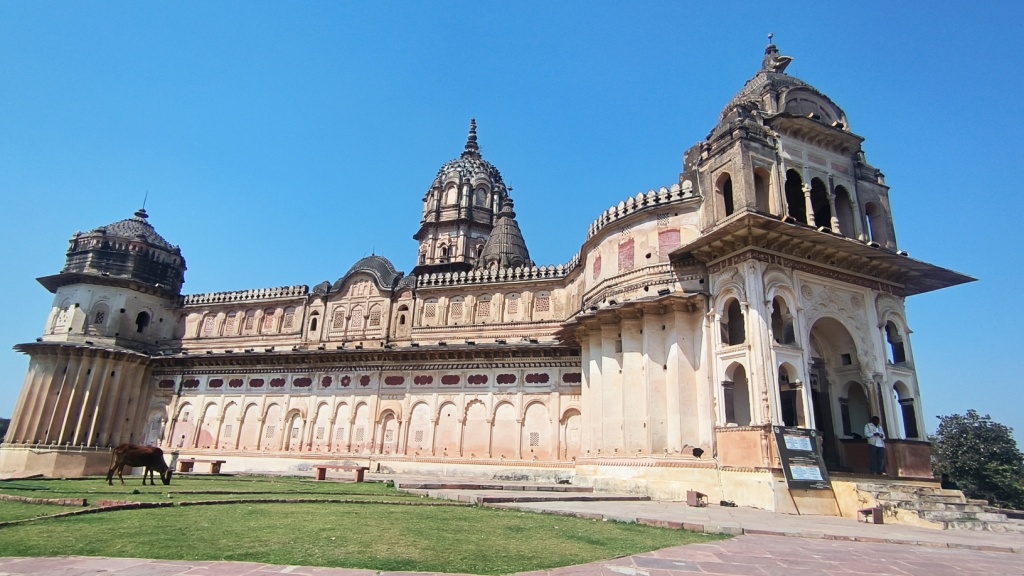
    🕉️ Laxmi Narayan Temple – After dropping my luggage at the hotel, I walked 15 minutes (about 500 meters) to reach the Laxmi Narayan Temple. The ₹50 entry fee, payable online, also covers access to rest of the Orchha attractions- Chaturbhuj Temple and Orchha Fort.

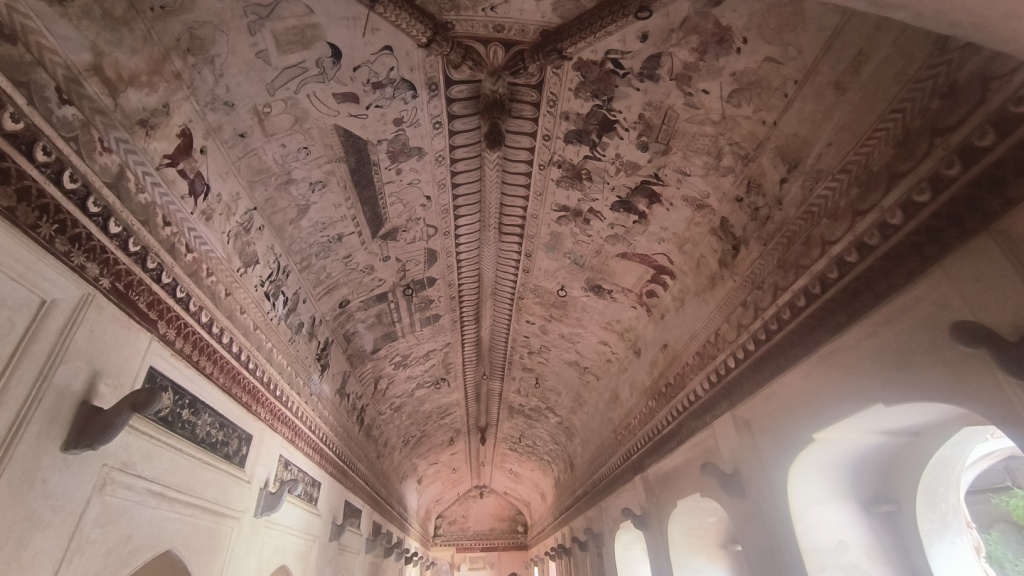
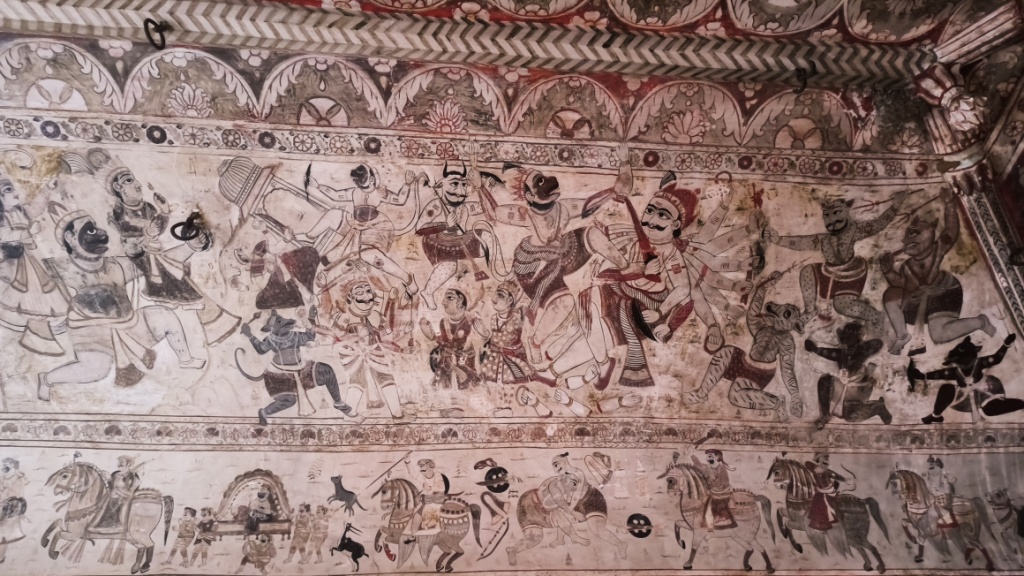
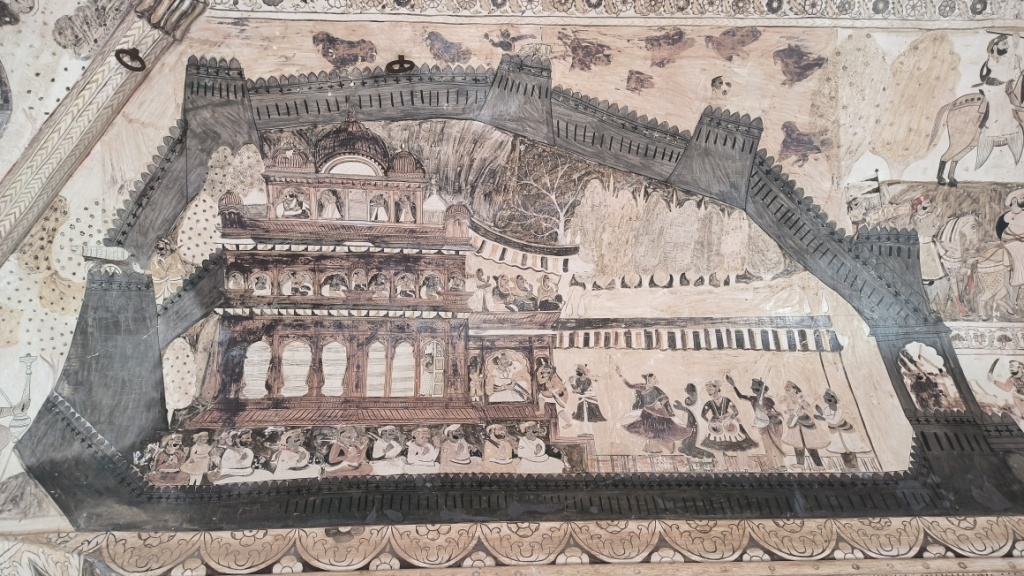
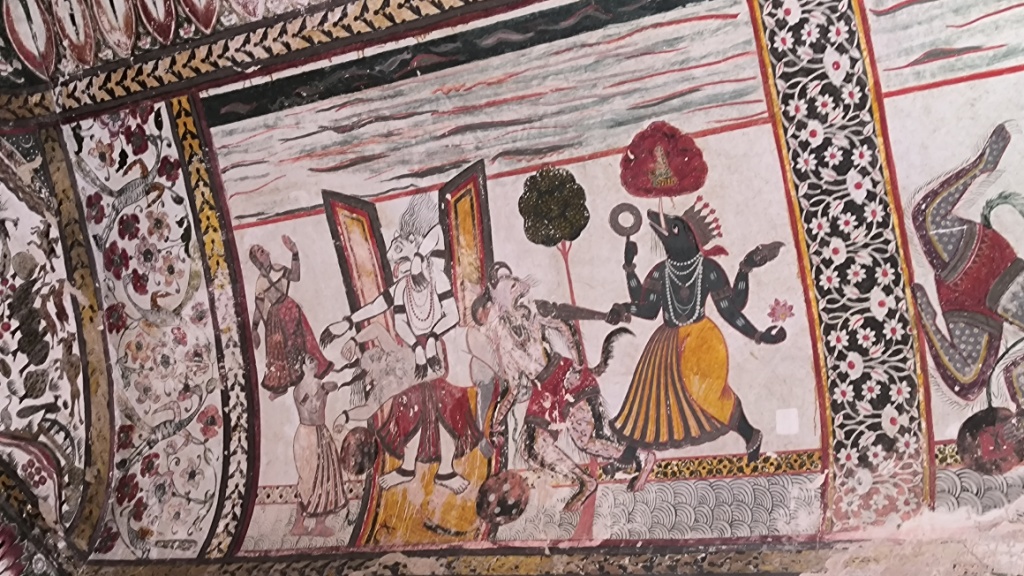
    Though not a functioning temple now, the structure is a fusion of fort and temple design, dedicated to Goddess Laxmi. The interiors feature well-preserved vivid wall paintings across three halls, depicting religious scenes with incredible detail and colour.

    Laxmi Narayan Temple
    Laxmi Narayan Temple
    Wall Paintings
    Wall Paintings
    Wall Paintings
    Wall Paintings
    Wall Paintings
    Wall Paintings

    🌇 Chaturbhuj Temple – Next, I made my way to Chaturbhuj Temple, around 15 minutes from the market. Take a shortcut path from Raja Ram Temple to Chaturbhuj Temple that helps avoid the main road.

    Constructed in the 16th century by King Madhukar Shah, it was initially meant to house an idol of Lord Ram, brought from Ayodhya by his queen, Ganesh Kuwari. That idol, however, was placed in the Rani Mahal, now known as the Raja Ram Temple (scheduled for next day visit).

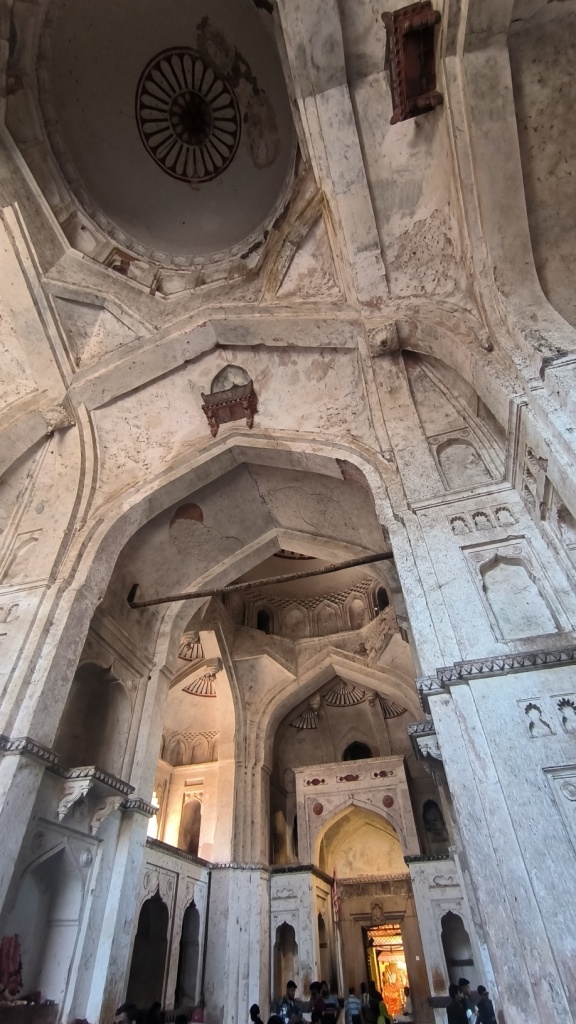
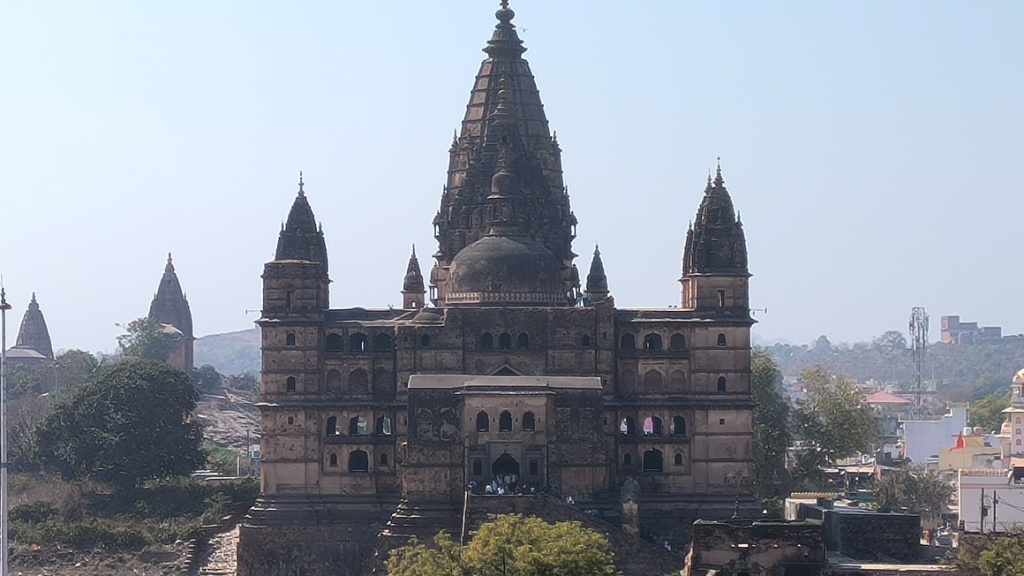
    The temple, dedicated today to Radha-Krishna, is striking with its multiple storeys, towering spire, and grand entrance. The upper floors offer panoramic views of Orchha Fort and the surrounding town. A local guard may ask for ₹20 tip for stair access. 🕗 Visiting hours: 8 AM – 5 PM

    Chaturbhuj Temple - Inside
    Chaturbhuj Temple - Inside
    Chaturbhuj Temple - View from Orchha Fort
    Chaturbhuj Temple - View from Orchha Fort
    Chaturbhuj Temple - Inside

    And just beyond the main road from Chaturbhuj Temple stood the crown jewel —Orchha Fort, ready to welcome me next.

    🏰 Orchha Fort

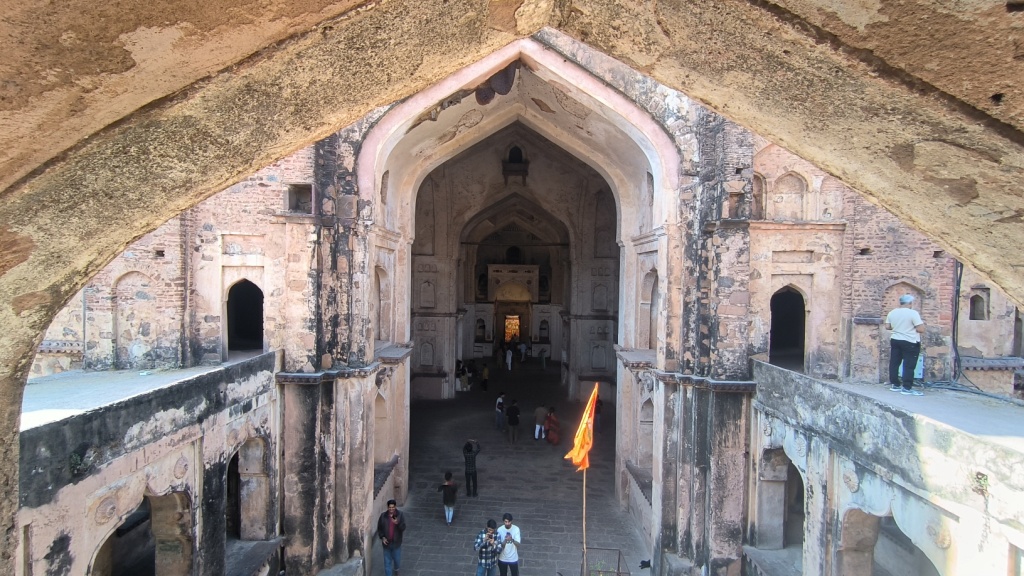
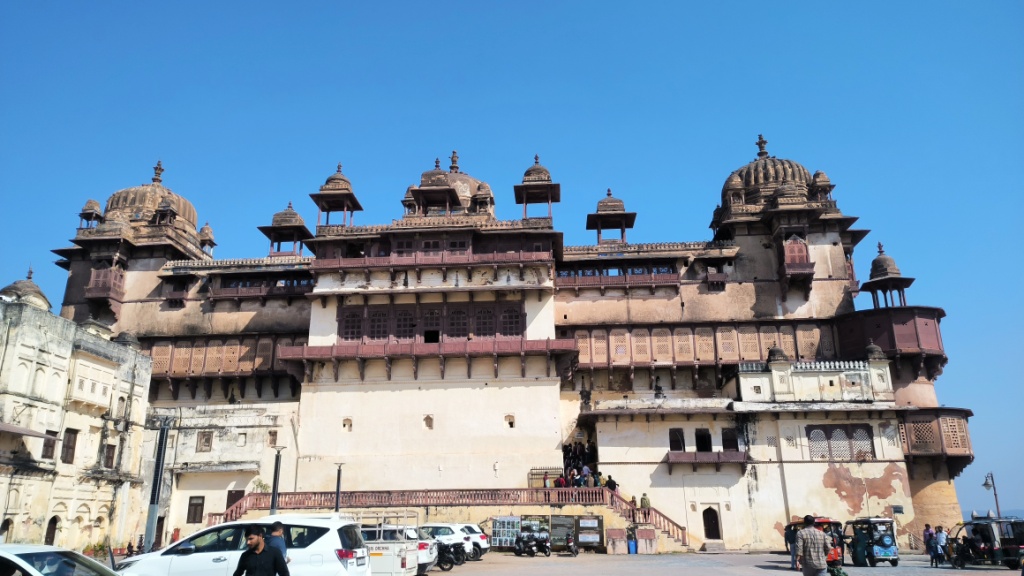
    Orchha Fort began construction in the 15th century, evolving over generations as successive kings added new buildings. The main highlights include – Jahangir Mahal, Raja Mahal, Sheesh Mahal (now a government-run hotel) along with other temples and edifices. 

    🕗 Timings: 8 AM – 5 PM. 🎫 Ticket: Included in the online ticket for all monuments

    Orchha Fort - View from Chaturbhuj Temple
    Orchha Fort - View from Chaturbhuj Temple

    👑 Raja Mahal – Built by King Rudra Pratap and completed by King Madhukar Shah in the 17th century, Raja Mahal was the royal family’s residence. Though simple in design, it showcases:

    • Mughal-inspired architecture: graceful arches and detailed stone jalli work
    • Murals: Mythological and religious scenes painted across walls and ceilings
    • A fantastic view of Chaturbhuj Temple from the upper floors
    Raja Mahal
    Raja Mahal
    Raja Mahal - Zehana courtyard
    Raja Mahal - Zehana courtyard
    Wall paintings - King's living quarters
    Wall paintings - King's living quarters
    Wall paintings - King's living quarters
    Wall paintings - King's living quarters

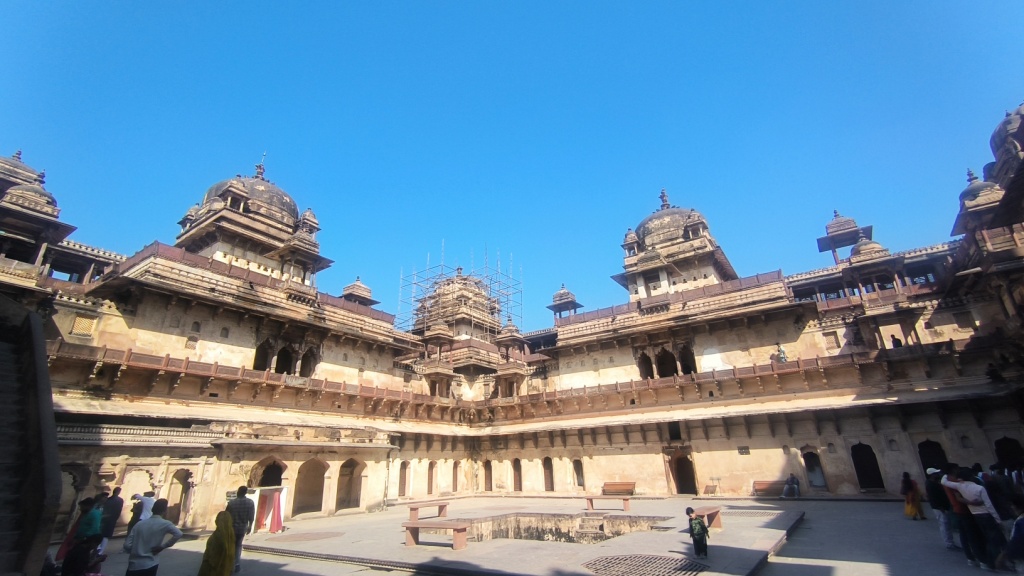
    🏯 Jahangir Mahal – This three-storeyed palace was built in the 17th century by King Vir Singh Deo to honor Mughal emperor Jahangir’s first visit to Orchha. Highlights include:

    • A sprawling square courtyard
    • Elegant blend of Muslim and Rajput architecture
    • Stunning vantage points of the Betwa River, just beyond the fort complex

    I wandered through its rooms, letting history soak in while snapping some great shots.

    Jahangir Mahal
    Jahangir Mahal
    Jahangir Mahal - central courtyard
    Jahangir Mahal - central courtyard
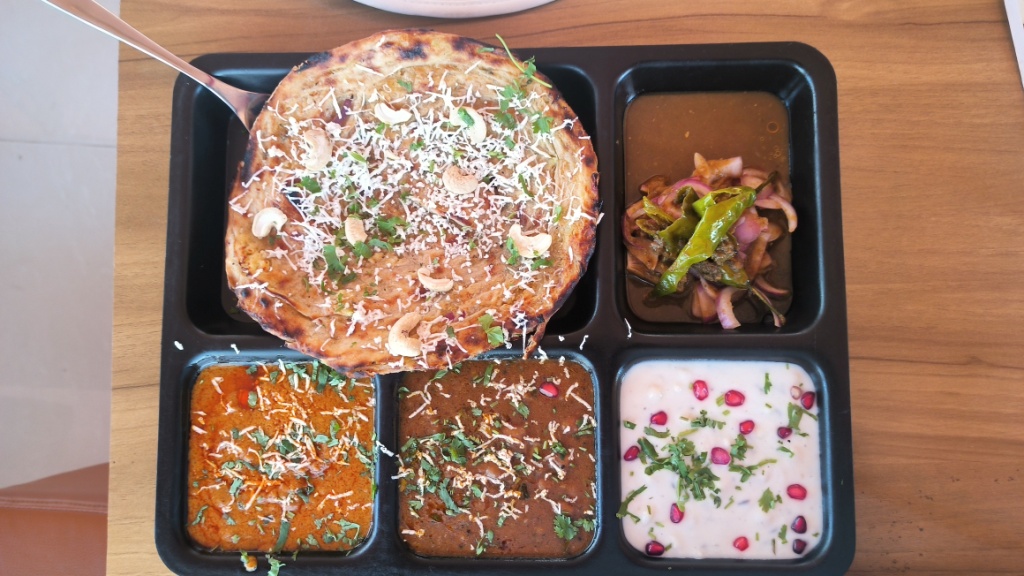
    Aloo Naan at Amritsari Tandoori Kulcha
    Aloo Naan at Amritsari Tandoori Kulcha

    After an hour of exploring, I was famished. Just outside the fort, I spotted a banner for the newly opened ‘Amritsari Tandoori Kulcha & Choor-Choor Naan’, located above Siyaram Café, and walking distance from the Fort.

    I tried their recommended Aloo Naan, served piping hot with paneer, chole, and raita. It was absolutely delicious—so much so, I left a 5-star Google review.

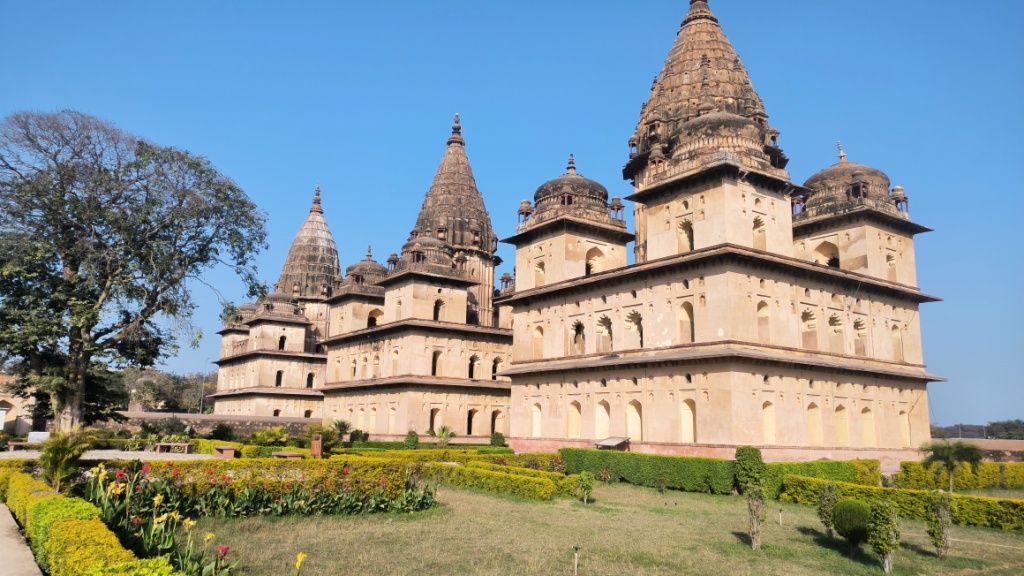
    🌅 Royal Chhatris at Kanchan Ghat – By 4 PM, the timing was perfect to visit Orchha’s famous chhatris (cenotaphs), located about 1.5 km from the fort. Just set your Google Maps—they’re best visited at sunrise or sunset.

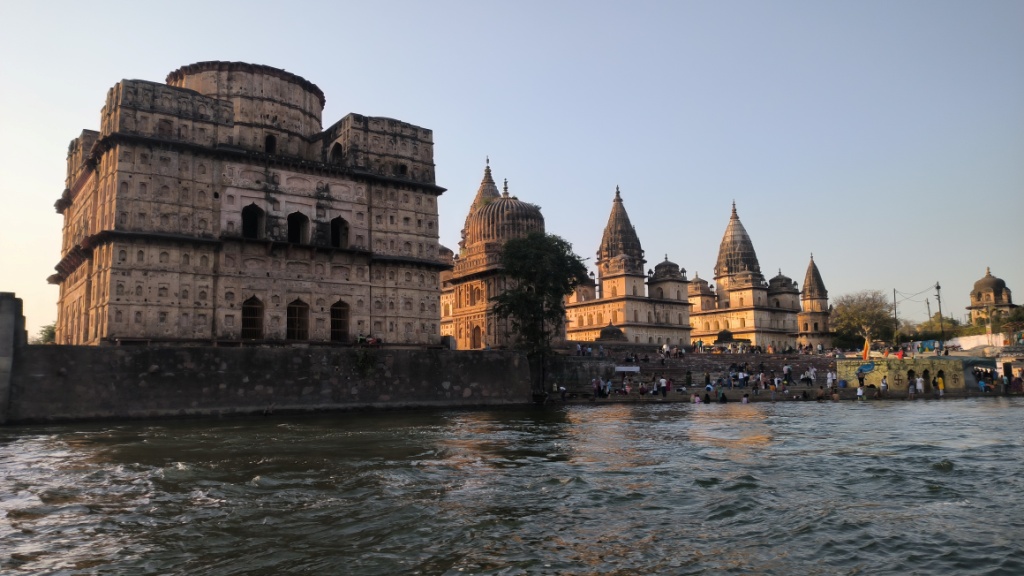
    These royal memorials—not burial grounds—commemorate 14 Bundela kings. Built in Indo-Islamic architectural style, the three-storeyed structures feature – Elevated platforms, Dome-shaped umbrellas and  majestic riverside setting

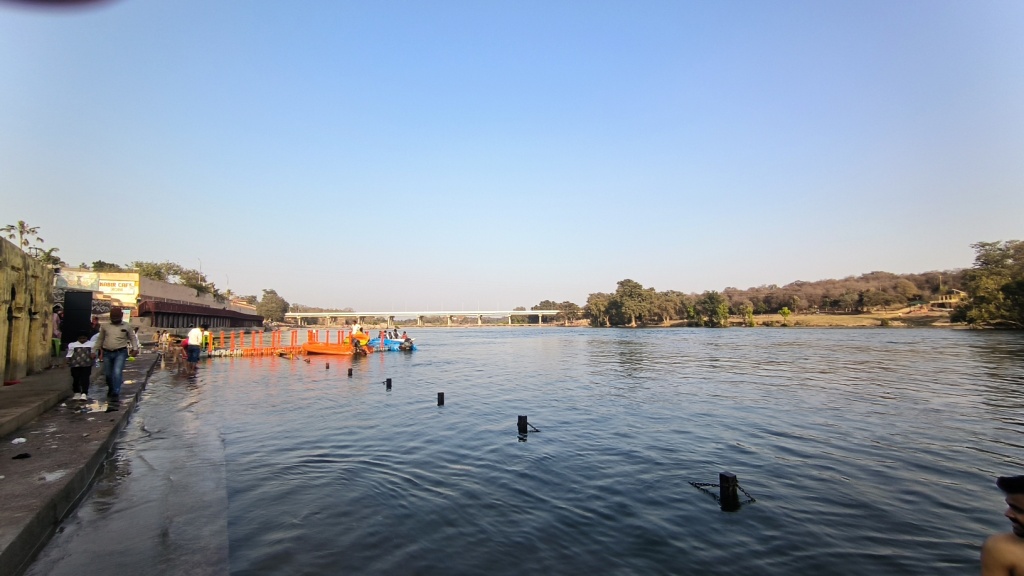
    Kanchan Ghat, where the chhatris stand, offers – Boating and rafting, peaceful spots to sit and enjoy the sunset by the Betwa River. The quiet water, golden skies, and historic silhouettes—pure magic.

    Royal Chhatris
    Royal Chhatris
    Royal Chhatris
    Royal Chhatris
    Chhatris - View from Betwa river
    Chhatris - View from Betwa river
    Kanchan Ghat - Betwa River
    Kanchan Ghat - Betwa River

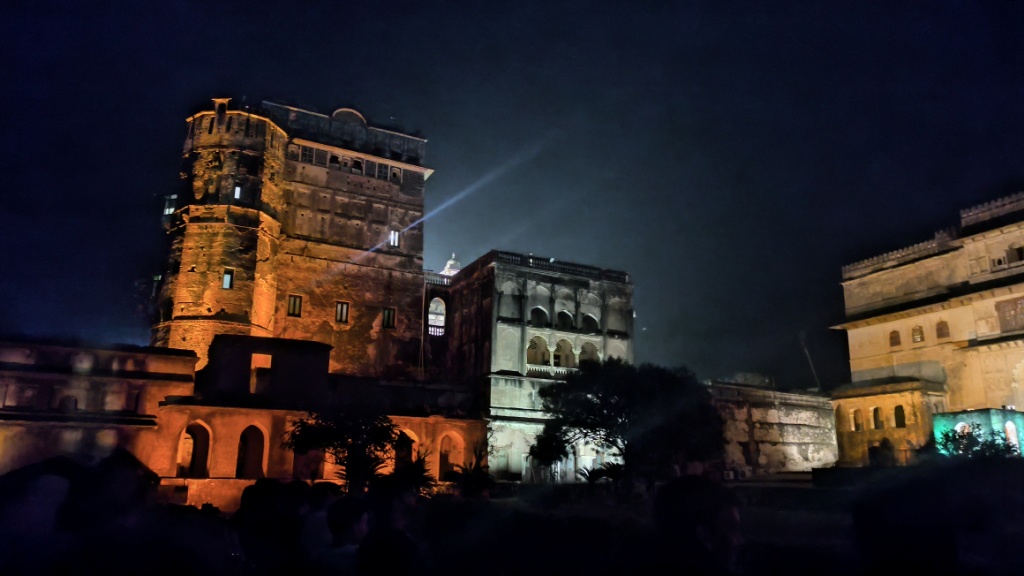
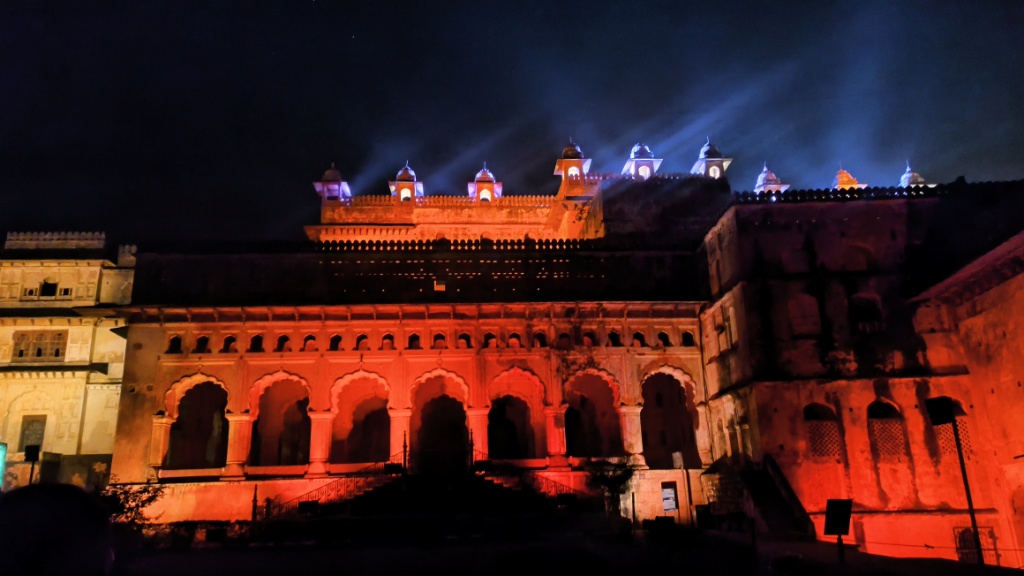
    🎆 Light & Sound Show at Orchha Fort –  By 6 pm, I was back to my hotel and took some rest. At 8:30 PM, I headed back to the fort for the daily Light & Sound Show, and it did not disappoint—informative, immersive, and beautifully produced.

    🎫 Entry Fee: ₹200.  🕖 Show TimingsEnglish: 7:45 PM – 8:30 PM. Hindi: 8:45 PM – 9:45 PM

    Orchha Fort - Light & Sound Show
    Orchha Fort - Light & Sound Show
    Orchha Fort - Light & Sound Show
    Orchha Fort - Light & Sound Show

    🍽️ Ending the Day

    After the show, I grabbed a simple veg thali for dinner at one of the small restaurants near the fort. Then walked back to my hotel and called it a night.

    🛕 Day 5: Exploring Jhansi & Homeward Bound

    The final day of my trip was reserved for Jhansi. One major landmark remained unchecked—Raja Ram Temple, so I woke up early to avoid the daytime rush.⏰ Darshan Timings: Morning: 8:00 AM – 1:00 PM. Evening: 8:00 PM – 10:30 PM

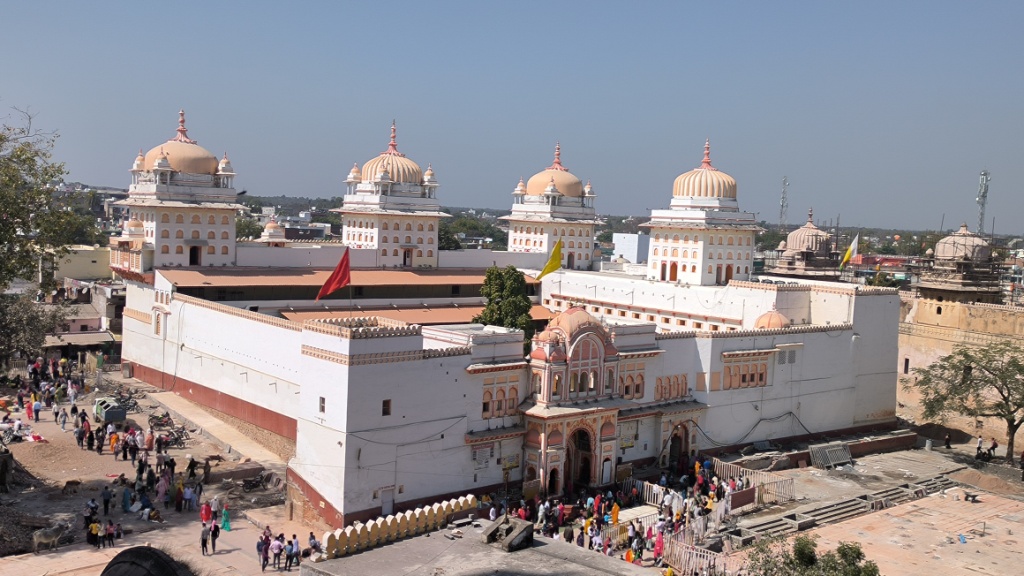
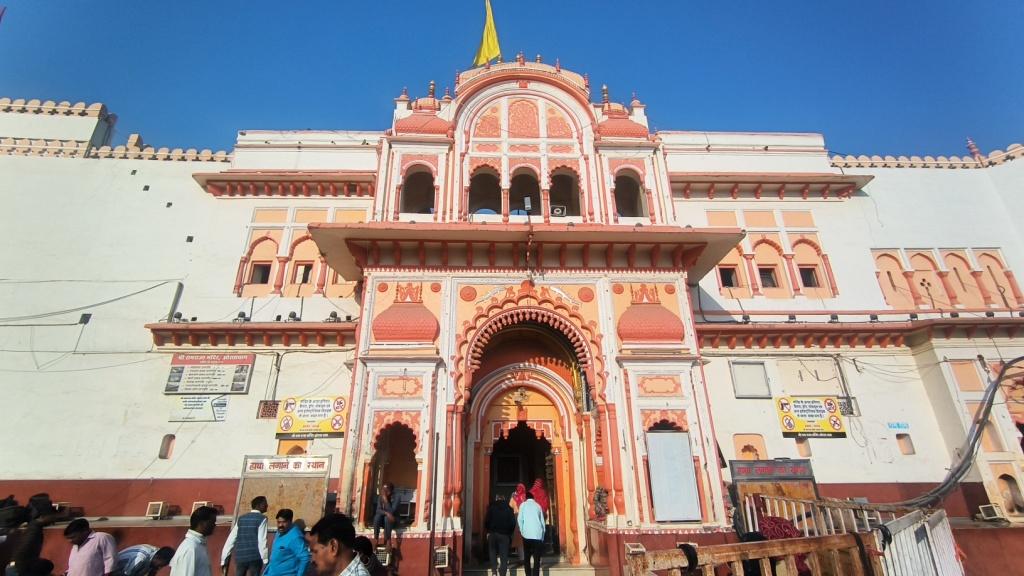
    Unique among Indian temples, Lord Ram is worshipped here as a king—hence the name “Raja Ram.” This temple is part of the Orchha Fort complex and was originally the Rani Mahal, which was later transformed into a sacred space. The light and sound show at the fort offers deeper insights into its history. A guard of honor is held during daily aarti, and armed police guards are stationed for protection. Out of respect, photography inside the temple is discouraged.

    Raja Ram Temple - View from Chaturbhuj Temple
    Raja Ram Temple - View from Chaturbhuj Temple
    Raja Ram Temple - Entrance
    Raja Ram Temple - Entrance
    Breakfast at Orchha
    Breakfast at Orchha
    Jhansi Railway Station - Cloak Room
    Jhansi Railway Station - Cloak Room

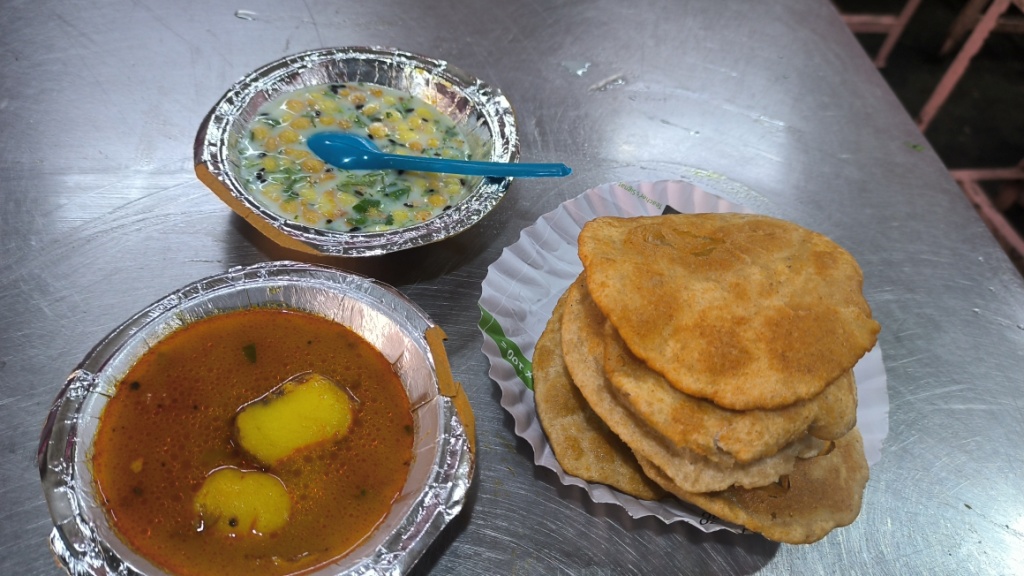
    Outside the temple, several shops offer hot, homestyle breakfasts. For just ₹50, I enjoyed hot  pooris accompanied by sabzi and raita. The flavor was simple but heartwarming—there couldn’t be a better start to the day.
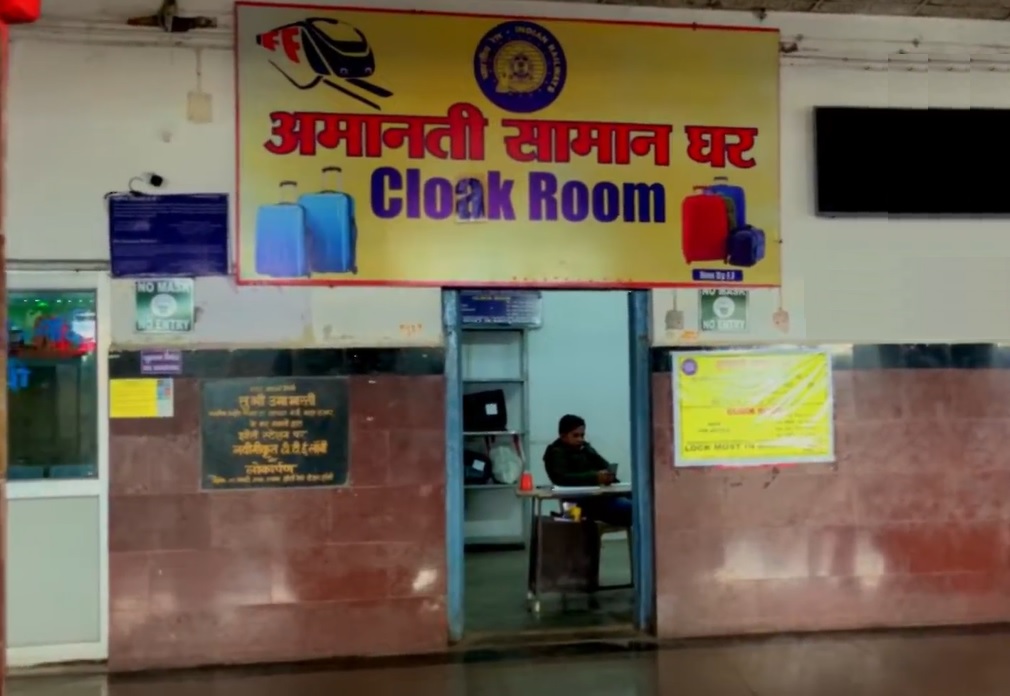
    🚖 Transit to Jhansi : Post-breakfast, I checked out from my hotel and took a shared auto to Jhansi Bus Stop, then transferred to another auto headed for Jhansi Railway Station. With no hotel booked, I stashed my luggage at the station’s cloakroom. It charges  ₹15 for 24 hours. What they ask is the PNR number of your confirmed train ticket to use this service

    Jhansi-PoIs
    Jhansi-PoIs

    🏰 Jhansi Fort:

    With seven hours to explore Jhansi, I chose the iconic Jhansi Fort. I had to skip the State Museum as it is closed on Mondays. I later got a chance to explore the museum during my visit to Jhansi later during November in the same here during my visit to Khajuraho

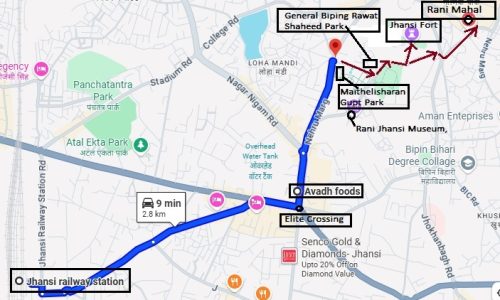
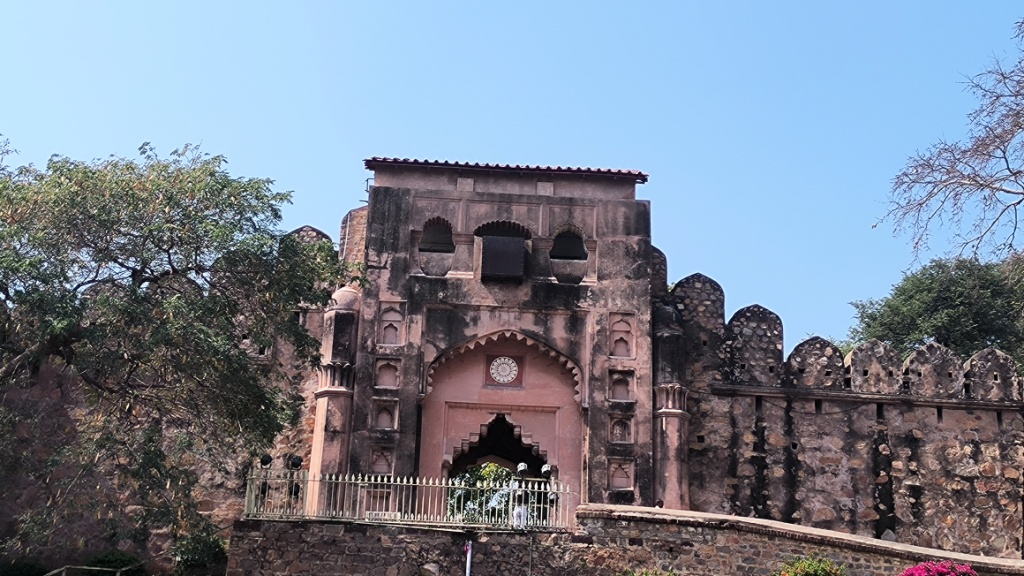
    Cheapest way to reach Jhansi Fort from the Railway Station is via shared auto – hop on to one from the station to Elite Crossing (₹10). From here transfer to another shared auto that drops you at Maithili Sharan Gupt Park (₹10). Adjacent to the park, follow a small lane. You will find 2 overhead water tanks on the way.  A brisk 10-minute walk leads you to the main road. On reaching the road, you’ll see Bipin Rawat Shaheed Park on your left. From here, Jhansi Fort is just 10 minutes away on foot. 🕕 Timings: 6:00 AM – 6:30 PM. 🎫 Entry Fee: ₹15.
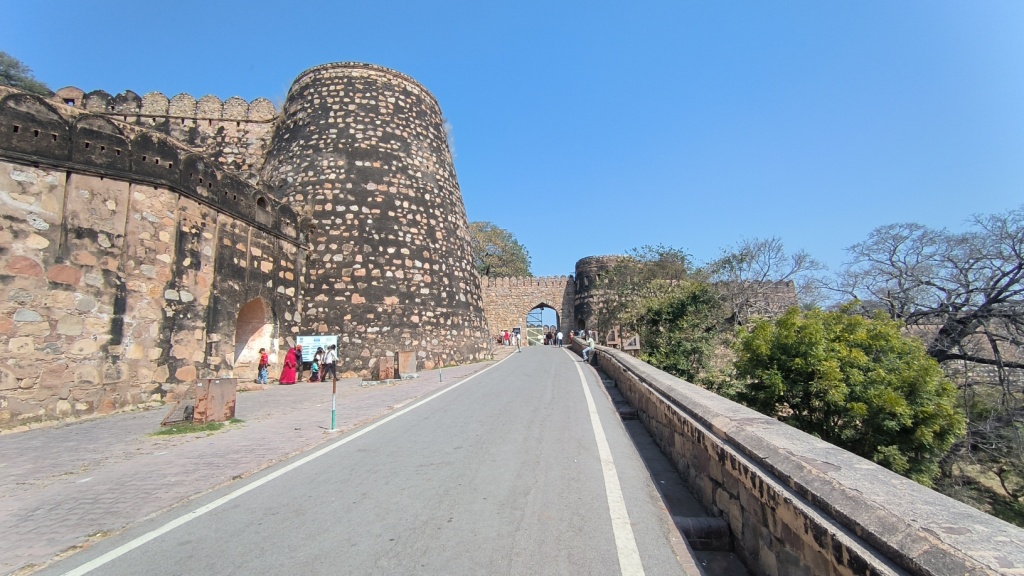
    Built by Raja Bir Singh Deo of Orchha, the fort served as the seat of Chandela Kings until the 17th century, then the Marathas, and later the British. It was famously the home of Rani Lakshmi Bai, who led the 1857 uprising. Key spots inside the fort include:

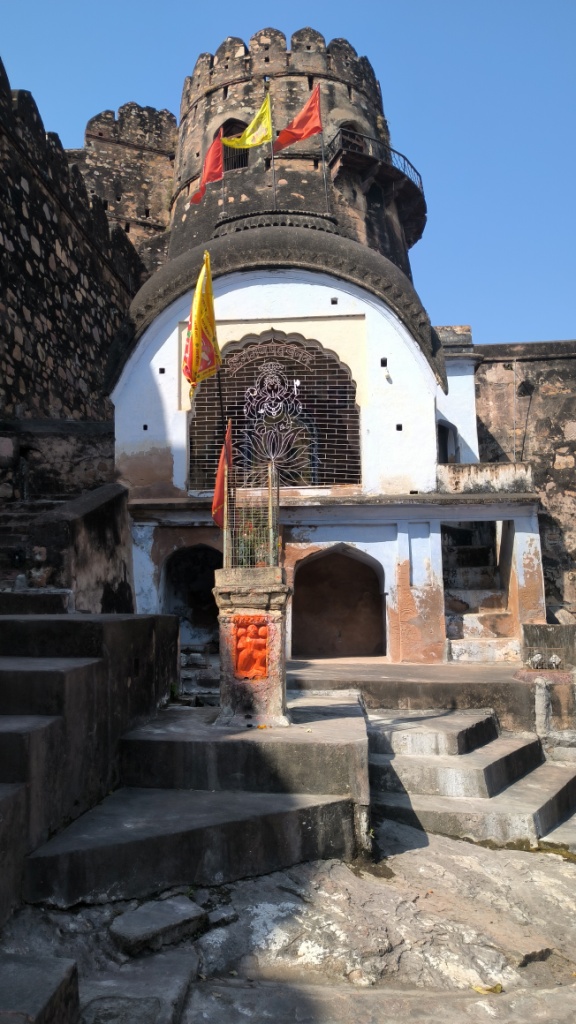
    • Ganesh Mandir: Where she was married and worshipped regularly
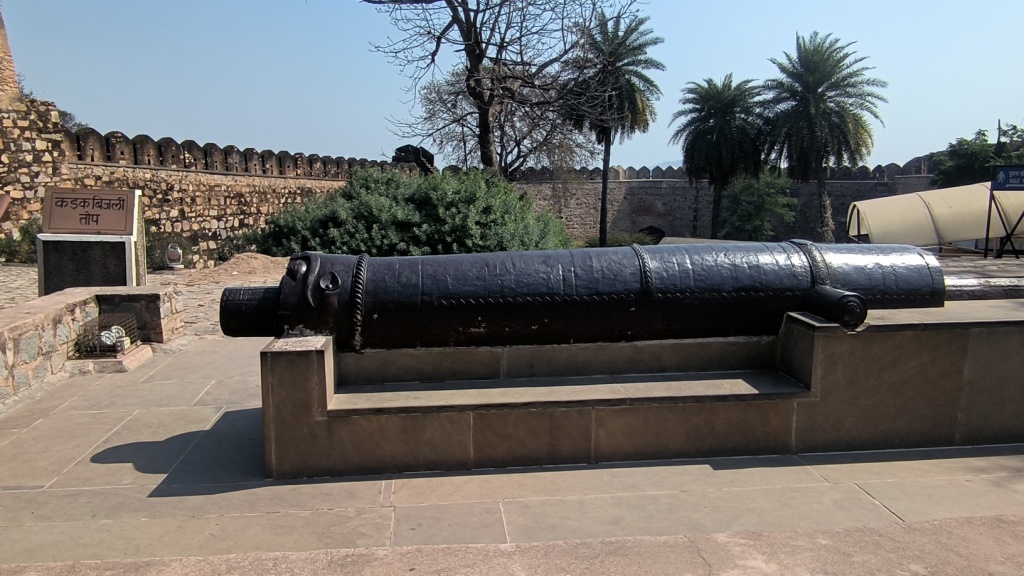
    • Karak Bijli Cannon: A lion-headed weapon operated by her loyal soldier, Ghulam Gauz
    • Panch Mahal: Her residence with Raja Gangadhar Rao
    • Jumping Spot: The escape point used by Rani Lakshmi Bai with her son on horseback

    A Sound & Light Show is held after sunset—worth catching if you stay overnight.

    Jhansi Fort - Entry Road
    Jhansi Fort - Entry Road
    Jhansi Fort - Entry Gate
    Jhansi Fort - Entry Gate
    Karak Bijli Cannon
    Karak Bijli Cannon
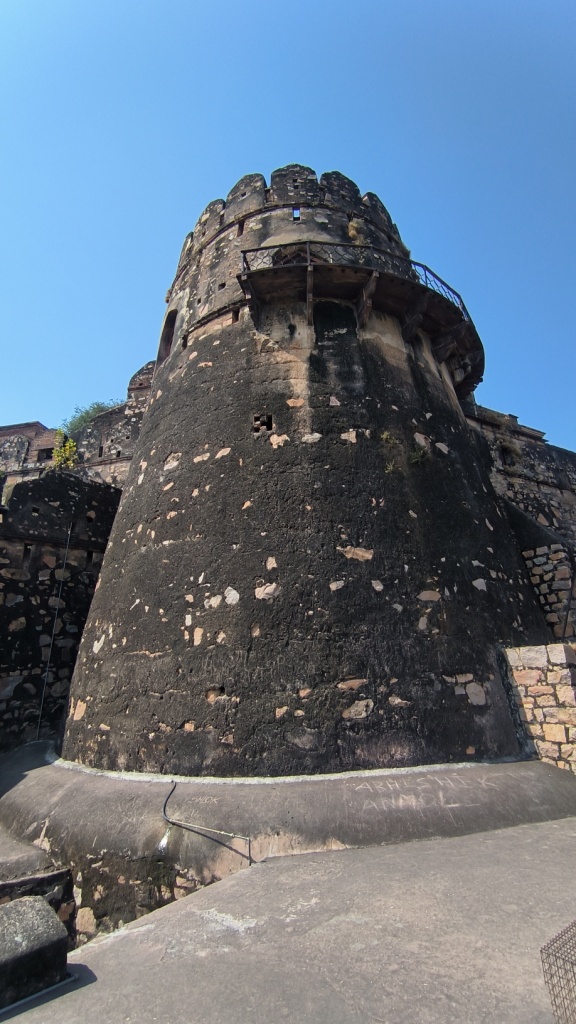
    Fort Bastion
    Fort Bastion
    Ganesh Mandir
    Ganesh Mandir

    🏛️ Rani Mahal

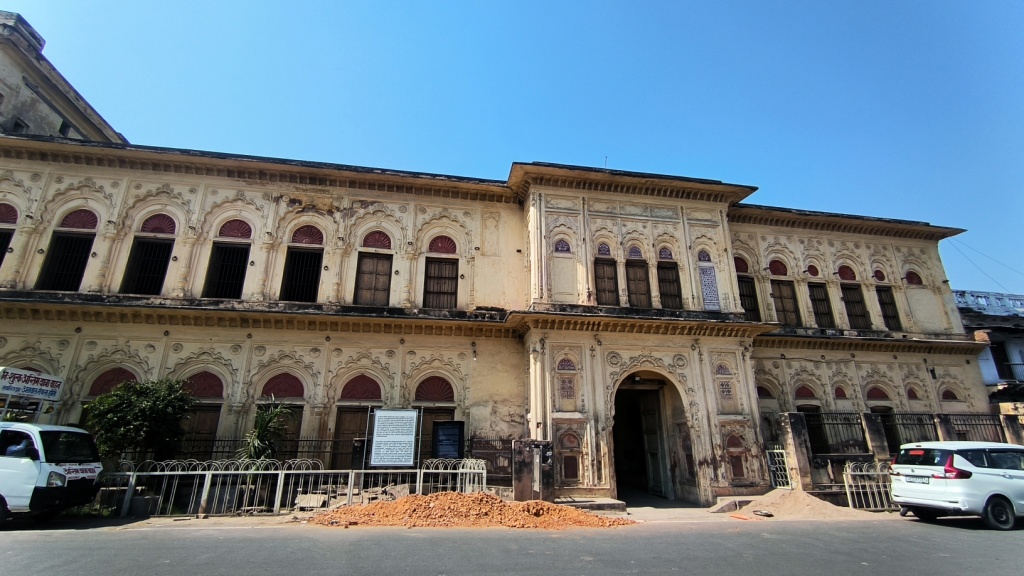
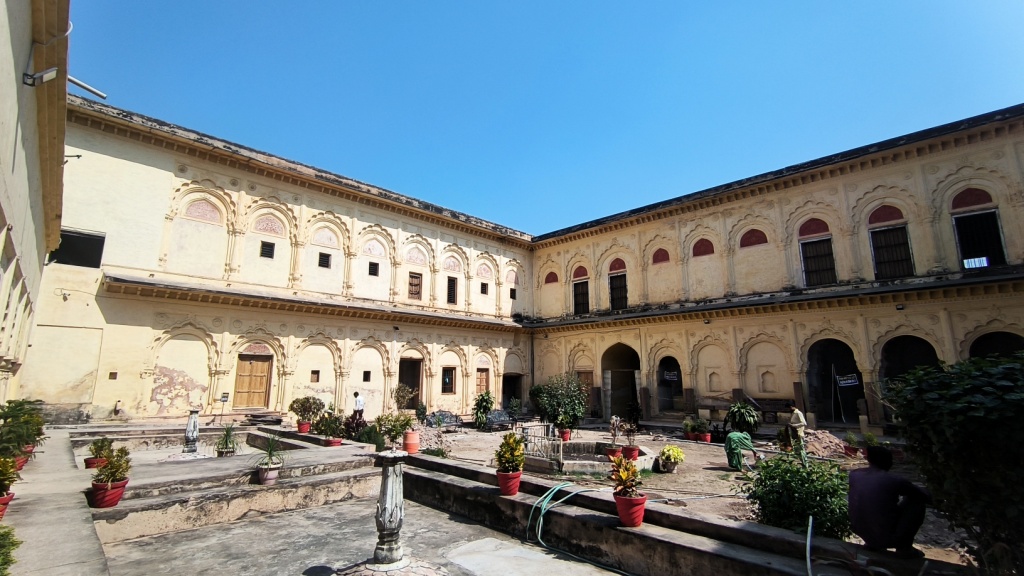
    Just a 10-minute walk from the fort lies the Rani Mahal, built in the late 18th century. This was Rani Lakshmi Bai’s residence between 1853–1857. It has a two-storey, flat-roofed layout. Built around a rectangular courtyard it has halls and corridor-lined galleries
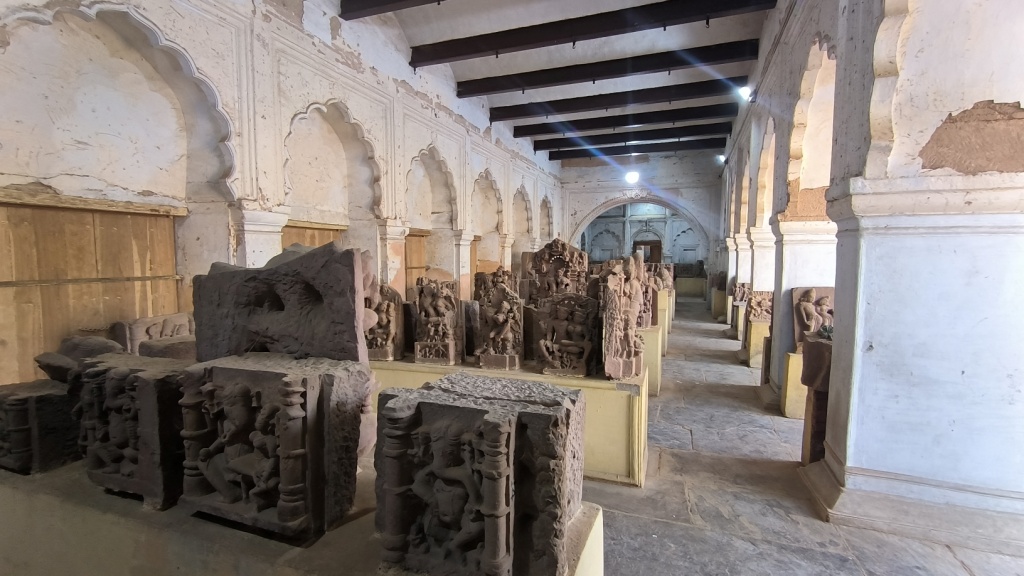
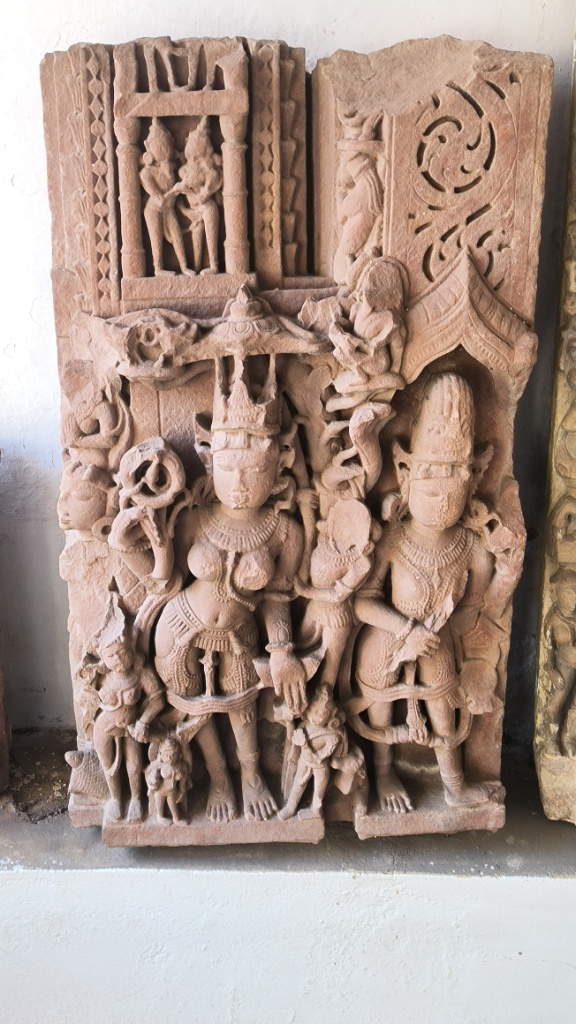
    Today, it houses an archaeological museum managed by the Archaeological Survey of India, with artifacts from the Gupta to medieval periods. During my visit, the entry was limited to the ground floor due to ongoing restoration. The museum has an entry fee of ₹15.

    Rani Mahal
    Rani Mahal
    Rani Mahal - Courtyard
    Rani Mahal - Courtyard
    Rani Mahal - corridor
    Rani Mahal - corridor
    Rani Mahal - artifacts
    Rani Mahal - artifacts
    Rani Mahal - artifacts
    Rani Mahal - artifacts

    🚶 Missed Museum & Food Finds

    Though Jhansi Government Museum was also in my list, I had to skip it as it is closed on Mondays. If you happen to be in Jhansi on any other days, do include it in your itinerary. It is on the way to Maithelisharan Park.

    It was 2:30 and I was hungry. While searching for a good restaurant, a crowd at road side shop – Avadh Food caught my attention. Upon checking, it was offing Lucknow famous biryani, kababs and parathas. The twist was – everything was vegetarian. Having lived in Lucknow for 8 years, I was not sure about the authenticity of the taste, but going by the footfall, I decided to go with Veg Biryani. A plate costing ₹50 was laced with chunks of soya. The dish turned out to be a perfect blend of taste. They also serve veg. kababs with Lucknow famous ‘ulte tave ka paratha’. Give it a try if you are in Jhansi.
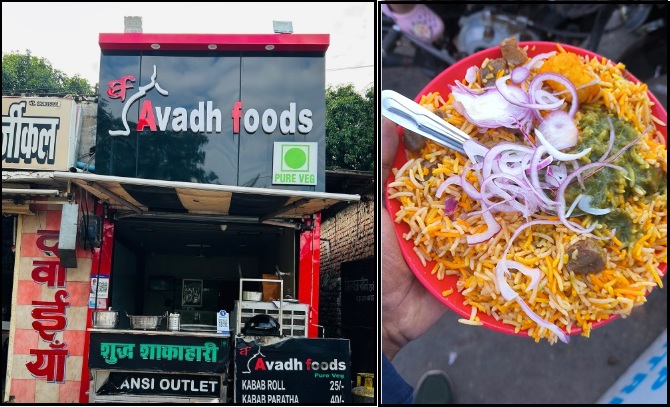
    Avadh Foods - Veg Biryani
    Avadh Foods - Veg Biryani
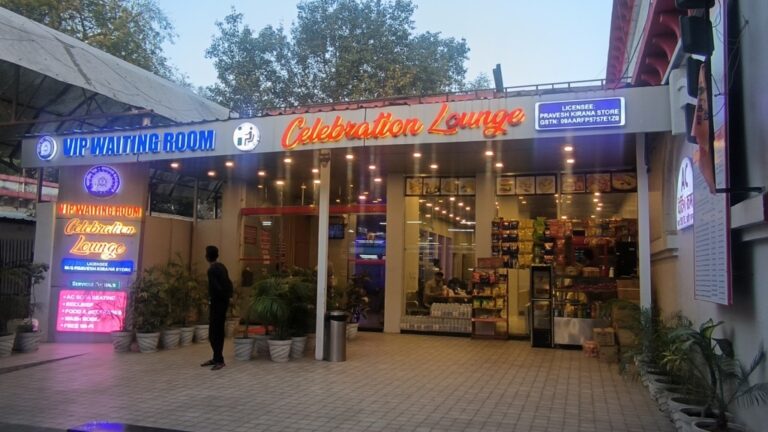
    Jhansi Station - VIP Waiting Lounge
    Jhansi Station - VIP Waiting Lounge

    By 3:30 pm, I was back to railway station. My train to Delhi – Shatabdi Express (no. 12001) arrives at Jhansi at 6:40 pm so I had about 3 spare hours.  Close to cloak room is VIP Waiting Lounge which offers comfortable recliner sofas on hourly basis. They charge ₹150 for first 2 hours and then ₹100 for every additional hours. Took a quick nap before boarding my train for Delhi.

    ✈️ Fly back to Pune – The train arrive on time. Dinner was served en route and dropped at New Delhi Railway Station by 11:50 PM. I took a cab to the airport for my 4 AM flight to Pune. This wrapped up an amazing journey that was rich in history, flavor, and serendipity.